
Solutions for Common GE Refrigerator Compressor Problems
When facing common problems with a GE refrigerator compressor, it’s helpful to check a few key areas. Start by ensuring the power supply is secure, and verify that the temperature settings are right, ideally between 37°F and 40°F. Keep the condenser coils clean to help with airflow, and listen for any strange noises which may indicate issues. If cooling troubles persist, it might be time to seek some professional advice—there’s plenty more to explore on this topic!
Key Takeaways
- Regularly clean the coils and ensure proper airflow around the compressor to prevent overheating and maintain efficiency.
- Check and secure the power supply connections, ensuring that the power cord and circuit breaker are functional.
- Inspect the start relay for continuity; unusual noises may indicate it requires testing or replacement.
- Monitor refrigerant levels and look for hissing sounds, which can indicate leaks needing professional repair.
- Identify error codes displayed on the refrigerator to aid in troubleshooting specific compressor issues; contact a technician if problems persist.
Understanding GE Refrigerator Compressors
Understanding GE refrigerator compressors can feel a bit like solving a puzzle. These vital components help keep your food cold and fresh, but they require attention to work effectively. To keep a compressor running smoothly, it’s important to follow some simple compressor maintenance tips. Always make sure the coils are clean and free of dust—this helps with cooling efficiency. Don’t forget about the compressor’s airflow; it should have plenty of space around it to breathe.
If things go wrong, knowing your compressor replacement options can save the day. It’s helpful to familiarize oneself with parts and brands. Replacement can feel overwhelming, but with the right tools and guidance, it becomes manageable. Remember, you’re not alone in this! With a little patience and care, anyone can tackle compressor issues, ensuring their GE refrigerator continues to keep their food just the way they like it—nice and chilly!
Common Symptoms of Compressor Failure
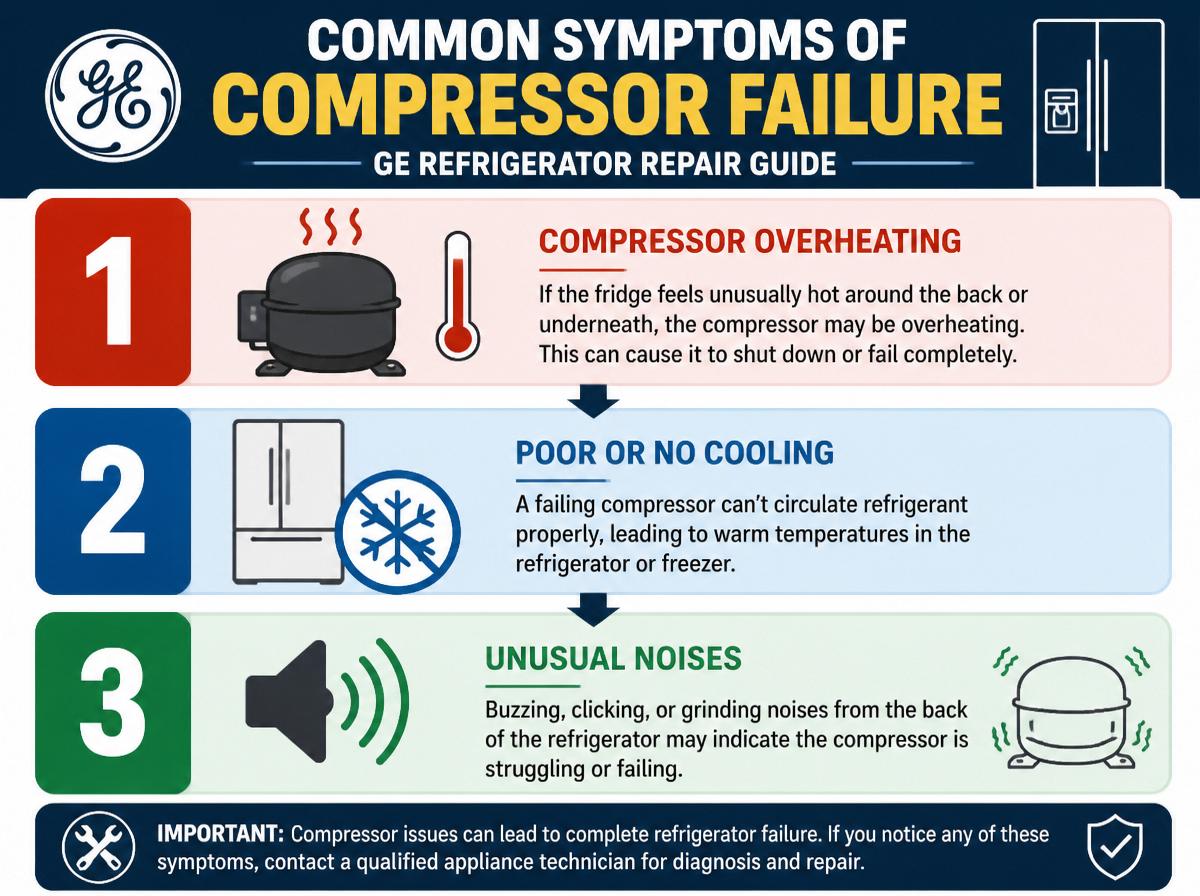
When a GE refrigerator starts acting up, it can be frustrating. One major sign of compressor failure is compressor overheating. If the fridge feels unusually warm or is struggling to keep things cold, this could be a red flag. Additionally, listeners might pick up unusual noises. A healthy compressor hums quietly, but if it starts making loud clanks, rattles, or high-pitched sounds, it’s time to take notice.
These symptoms don’t just pop up for fun—they’re your fridge’s way of asking for help! Remember, catching issues early can save you from bigger problems down the line. Feeling overwhelmed? Don’t worry. It’s okay to start small. Take a moment to observe and list any strange behaviors. This step can help you diagnose the problem better—even if it feels like detective work! Stay calm, and remember, your fridge likely just needs a little TLC.
Inspecting the Power Supply
When tackling issues with a GE refrigerator compressor, inspecting the power supply is a smart place to start. First, it’s important to check that the power cord is securely connected, ensuring a solid link to electricity. Next, verifying the circuit breaker status can reveal if the fridge has accidentally lost power, so let’s get those tools ready and make sure everything is in tip-top shape!
Check Power Cord Connections
Often, the smallest details can lead to big problems, and the power cord of a GE refrigerator is no exception. Power cord maintenance is vital for guaranteeing your fridge runs smoothly. First, check that the cord is firmly plugged into the wall outlet. Loose connections can cause the compressor to malfunction unexpectedly. If the cord is damaged or frayed, it may need replacing. Connection troubleshooting also involves looking for any signs of wear and tear. Sometimes, a quick visual inspection can save a day of frustration. These small steps can prevent bigger issues in the future. So, take a moment to verify that your power cord is in good shape—your refrigerator deserves it, and so do you!
Verify Circuit Breaker Status
Every homeowner knows that electrical issues can sometimes sneak up on them, and the circuit breaker is a common culprit in refrigerator problems. When addressing compressor issues, it’s wise to start with electrical panel troubleshooting. Homeowners should first locate their electrical panel and identify the circuit breaker types installed. If the refrigerator is plugged in but not running, checking for a tripped breaker is essential. Simply flipping the switch back to the ‘on’ position can often solve the problem. However, if it keeps tripping, there may be a more significant issue. Always remember, safe practices are important. If uncertainty arises, calling a professional to inspect the situation can provide peace of mind and help avoid potential electrical hazards.
Checking the Temperature Settings
Checking the temperature settings can make a world of difference in ensuring that a GE refrigerator runs smoothly. Proper temperature calibration is essential for food safety and freshness. If the settings are too high or too low, it can cause problems for the compressor.
| Setting | Recommended Range | Effect on Food |
|---|---|---|
| Refrigerator | 37°F to 40°F | Best for dairy and meats |
| Freezer | 0°F | Ideal for long-term storage |
| Energy Saving Mode | 38°F to 40°F | Saves energy, but check food |
Adjust the knobs to find ideal settings that keep your food fresh while not overworking the compressor. Remember, a happy refrigerator leads to happy food! Taking a moment to check these settings can prevent future headaches. Stay proactive, and your fridge will thank you!
Assessing the Condenser Coils
Though it might seem like a small task, evaluating the condenser coils of a GE refrigerator can greatly improve its efficiency and extend its lifespan. By keeping these coils in top shape, owners can verify their refrigerator runs smoothly. Here are three easy steps to get started:
- Visual Inspection: Check for any dust or dirt covering the coils. If they look grimy, it’s time for some cleaning condenser magic!
- Cleaning Process: Gently use a vacuum or a brush to remove any buildup. Be careful and don’t damage the coils—after all, they’re the refrigerator’s hardworking friends!
- Inspecting Airflow: Verify that there’s clear space around the coils. Good airflow is key to their function, so make sure nothing is blocking them.
Evaluating the Start Relay
When a GE refrigerator has trouble starting, the problem might be with the start relay. This little gadget helps kick the compressor into gear, and if it’s faulty, it could leave the fridge feeling like a sleepy sloth. By identifying any issues and testing the relay’s functionality, one can really boost their chances of getting their fridge back on track and chilling in no time!
Identifying Start Relay Issues
Before diving into the fun of refrigerator repairs, it’s important to understand the start relay, which plays an essential role in getting that compressor running smoothly. A start relay malfunction can prevent the fridge from cooling effectively. Here are three signs that the start relay might need attention:
- Unusual Noises: Clicking sounds or buzzing when starting.
- Freezer Woes: The refrigerator is not getting cold enough, or the freezer is warm.
- Compressor Issues: The compressor is running continuously or doesn’t turn on at all.
If these symptoms appear, the relay replacement guide will be handy. By recognizing these issues, anyone can take a confident first step toward fixing their GE refrigerator and enjoying a well-functioning appliance once again!
Testing Relay Functionality
Understanding how to test the start relay can make a significant difference for those experiencing problems with their GE refrigerator. Relay testing involves checking if the relay functions correctly to start the compressor. First, turn off the refrigerator and unplug it. Remove the relay from the compressor. Using a multimeter, check for continuity. If there’s no continuity, it’s time for relay replacement.
Here’s a simple table to help:
| Step | Action | Outcome |
|---|---|---|
| 1. Turn off power | Unplug the refrigerator | Safe to work |
| 2. Remove relay | Carefully detach it | Access for testing |
| 3. Check continuity | Use a multimeter | Identify relay condition |
Diagnosing Refrigerant Leaks
A hidden refrigerant leak can turn a cheerful refrigerator into a frustrating problem. Detecting this leak early is vital for ensuring the appliance runs smoothly. Here are three helpful steps for leak detection:
- Check for Ice Buildup: If there’s frost or ice on the fridge, it could mean refrigerant is low and leaking.
- Listen for Hissing Sounds: A hissing noise might indicate refrigerant escaping, which is a sign that something is wrong.
- Use Bubble Solutions: Applying a soapy water solution on suspected areas can reveal leaks through bubbling.
Once identified, it’s important to assess refrigerant recovery, as proper handling is key. If these signs appear, it’s wise to call a professional, ensuring the refrigerator can return to its happy, cool self. Taking these steps can lead to better performance and, in the end, a relief from refrigerator worries.
Recognizing Noisy Compressor Issues
When a GE refrigerator’s compressor starts making noises, it can be a bit concerning. Different sounds, like buzzing or rattling, can signal various issues that need attention. Understanding these noises and knowing how to troubleshoot them makes it easier to keep the fridge happy and running smoothly, just like how a little tune-up can brighten a rainy day!
Typical Noise Types
Often, a refrigerator can be a noisy little companion in a kitchen, and its compressor is usually the chatterbox in the bunch. Identifying different compressor sounds helps in diagnosing potential problems. Here are three common noise types to listen for:
- Humming or buzzing – This is normal, but if it’s too loud, noise reduction strategies may be needed.
- Clicking – This sound could indicate that the compressor is trying to start but not succeeding.
- Gurgling – While some gurgling is common, excessive noise suggests that something might be off.
Troubleshooting Techniques
Noticing unusual sounds from a refrigerator’s compressor can feel a bit alarming, but troubleshooting these issues doesn’t have to be stressful! First, listen carefully. If the compressor sounds louder than usual, it may need some compressor maintenance. Cleaning the coils can help improve cooling efficiency, so don’t forget to give them a good wipe down. Next, verify the fridge is level; an unbalanced unit can cause extra noise. If the sounds persist, check for any loose parts or screws, as these can create rattling. Finally, if things seem too tricky, it’s okay to reach out for professional help. Remember, a little care goes a long way in keeping the fridge running smoothly, and soon, it’ll be back to its quiet self.
Troubleshooting Thanks to Error Codes
Many GE refrigerator owners have faced the puzzling moment when their appliance’s performance falters, but the good news is that error codes can serve as helpful guides. These codes shine a light on potential issues, making troubleshooting easier. Understanding the error code meanings can turn confusion into clarity, helping users tackle repairs confidently.
Here’s a simple troubleshooting guide to follow when encountering error codes:
- Identify the Error Code: Check the display or manual to see what the code indicates.
- Research the Code: Look up the specific error code in the manual or online to understand the problem better.
- Follow Recommended Solutions: Use provided solutions in the troubleshooting guide to address the issue efficiently.
When to Call a Professional Technician
Recognizing when to call a professional technician can be an important part of maintaining a GE refrigerator, especially after troubleshooting error codes. While some problems may seem minor, others might require immediate attention. If strange noises or a constant warm interior persist, it’s time to reach out for help.
| Scenario | Action Needed |
|---|---|
| Strange noises heard | Call for emergency repairs |
| Inability to cool items | Consider service contracts |
| Frequent electrical issues | Seek professional guidance |
Knowing when to ask for support is essential. Technicians can handle complex problems better than any DIY enthusiast. Remember, taking action can save time and future costs. Also, having a service contract can bring peace of mind, knowing help is just a call away when you need it most. Don’t hesitate—trust your instincts, and get that fridge back on track!
Frequently Asked Questions
How Long Should a GE Refrigerator Compressor Last?
Typically, a GE refrigerator compressor lifespan ranges from 10 to 15 years. To prolong this duration, regular maintenance tips such as cleaning coils and ensuring proper airflow are essential for ideal performance and longevity.
Can I Run My GE Refrigerator With a Faulty Compressor Temporarily?
Running a GE refrigerator with a faulty compressor temporarily is possible, but not advisable. The compressor functions inadequately, potentially leading to food spoilage and further damage, which could result in costly repairs or replacements later.
What Are Common Causes of Compressor Failure in GE Refrigerators?
Compressor failure in GE refrigerators can stem from overheating due to dust buildup or a blocked condenser. For instance, a family noticed temperature fluctuations and compressor noise, prompting early detection and ultimately saving their food supplies.
Are There Any DIY Solutions for Compressor Issues?
DIY solutions for compressor issues include compressor troubleshooting tips and refrigerant recharge techniques. These approaches can help identify problems and restore functionality, although caution is advised to avoid causing further damage or voiding warranties.
How Much Does It Cost to Replace a GE Refrigerator Compressor?
Compressor replacement costs for a GE refrigerator typically range from $300 to $600. Warranty coverage options may greatly reduce expenses, potentially covering much of the repair cost depending on the specific terms of the warranty.
Conclusion
To sum up, tackling common GE refrigerator compressor problems can feel like a big task, but remember, you’re not alone! With some investigation into power supply, temperature settings, and those pesky condenser coils, you may just solve the mystery. And if the compressor sounds like it’s hosting a heavy metal concert, don’t hesitate to seek professional help. Every appliance has its quirks, just like us! Keep learning, stay patient, and trust in your ability to make things right!
Explore This Topic
- Back to compressor problems
- Back to appliance repair
Related guides in this cluster: