10 Steps to Change Your Refrigerator Compressor Like a Pro
Changing a refrigerator compressor might sound tricky, but it’s really about following the right steps. First, you’ll need to gather your tools and materials. Then, unplug the fridge and empty it out. This task can be a bit messy, but hang in there. With careful preparation, anyone can successfully tackle this job. Soon, you’ll be on your way to restoring your fridge’s functionality, and the satisfaction that comes with it is truly rewarding. Ready to plunge in?
Key Takeaways
- Gather necessary tools and materials, including a new compressor, electrical connections, and safety gear like gloves and goggles.
- Disconnect the refrigerator’s power and remove all items to ensure a clean and safe workspace for installation.
- Access the compressor by removing the back panel, carefully inspect components, and use a refrigerant recovery machine for safe removal.
- Install the new compressor by securing it in place, reconnecting lines and electrical connections, and referring to the manufacturer’s manual for guidance.
- Test the refrigerator after installation, monitoring for unusual sounds, temperature consistency, and checking for any refrigerant leaks.
Gather Your Tools and Materials
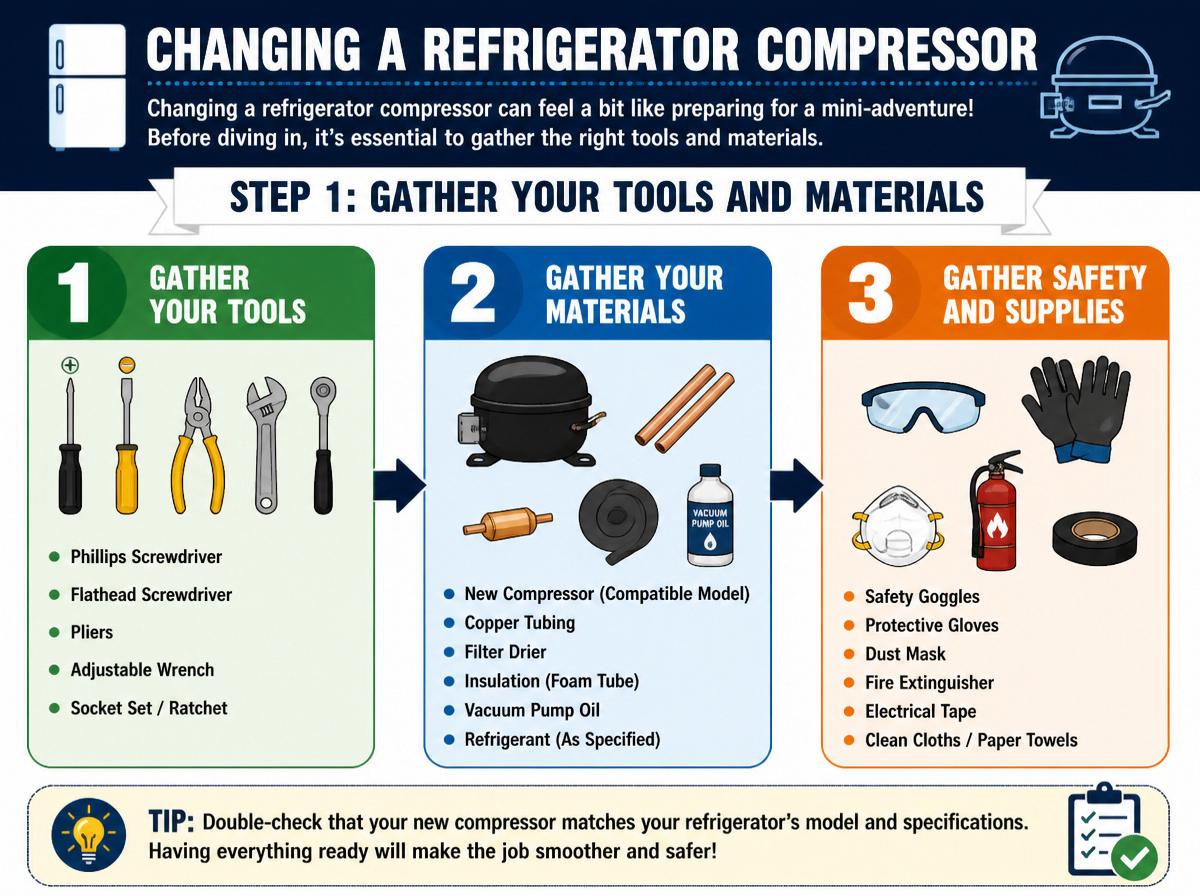
Changing a refrigerator compressor can feel a bit like preparing for a mini-adventure! Before diving in, it’s essential to gather the right tools and materials to make the job smoother. First, a toolkit needs a few basic tool types: screwdrivers, pliers, and a wrench. These trusty helpers will make disassembling the old compressor a cinch. Next, necessary materials include the new compressor, electrical connections, and insulation tape. It’s also smart to have safety goggles and gloves on hand, just like a superhero gearing up! With everything organized and ready, excitement builds as the mini-adventure begins. Remember, preparation is key to success, and having the right items can make this task feel not only manageable but also fun!
Unplug and Empty the Refrigerator
Before starting the compressor change, it’s important to unplug the refrigerator and clear out all the food and items inside. This not only keeps everything safe but also gives you a clean, open space to work in. Remember, a little preparation goes a long way, so take your time to set everything up nicely!
Safety First: Disconnect Power
Safety is the top priority when working on any appliance, and this holds especially true for a refrigerator compressor replacement. Before diving into the work, one should always take necessary safety precautions. Start by locating and disconnecting all power sources connected to the refrigerator. This might mean unplugging the unit directly from the wall or switching off the circuit breaker. It’s essential to guarantee there’s no chance of a shock while handling electrical components. Additionally, freeing the refrigerator of power ensures that nothing accidentally turns on, keeping everyone safe. Remember, a few moments spent prioritizing safety can save a lot of hassle later. With everything powered down, it’s time to proceed with confidence and peace of mind.
Remove Food and Items
Once the refrigerator is safely powered down, it’s time to tackle the next important step: removing food and items from inside. This preparation guarantees a smooth process and keeps everything organized! Start by checking expiration dates and tossing anything old. For effective food storage and item organization, consider these steps:
- Take out perishable items like dairy and meats first.
- Remove condiments and jars, placing them in a box for easy access later.
- Clear out any frozen goods, utilizing a cooler if needed.
- Sort the items by category, readying them for a clean and organized space.
With patience and care, this step lays the groundwork for a seamless compressor change. You’ve got this!
Prepare for Clean Space
To create a clean and organized space for changing the refrigerator compressor, it’s essential to unplug the appliance first. This step guarantees safety, allowing the work to proceed without any electrical hazards. Next, the refrigerator should be emptied completely, creating a clean workspace that makes it easier to maneuver around. It’s helpful to organize tools nearby, making sure that everything is within reach. Keeping screwdrivers, wrenches, and other essential tools sorted saves time and frustration later. A well-prepared area not only aids in the task but also boosts confidence in completing the job. By taking these steps, anyone can feel like a pro, ready to tackle the compressor change with a smile and a sense of accomplishment!
Access the Compressor Unit
Getting to the heart of the refrigerator, the compressor unit is where all the cooling magic happens, but first, it needs to be accessed. Understanding the compressor unit location is crucial for any successful repair. Here are some effective compressor access techniques to make it easier:
- Unplug the Refrigerator: Always verify the refrigerator is disconnected from power for safety.
- Remove the Back Panel: Locate and unscrew the panel at the back of the fridge to uncover the compressor area.
- Clear Surrounding Space: Move any items obstructing your access to the compressor unit.
- Inspect Components: Look for any signs of wear or damage around the compressor unit that may need attention later.
With these steps, accessing the compressor becomes a smooth and confident process!
Disconnect the Old Compressor
Before diving into the task of disconnecting the old compressor, it’s important to remember that every step taken helps make the process smoother and safer. First, turn off the refrigerator and unplug it, ensuring no power is flowing. Next, handle the refrigerant with care. Use a refrigerant recovery machine for safe compressor removal. This step keeps the environment safe and prevents injuries. Carefully detach the electrical wires connected to the compressor, following the labels for easier reconnection later. Don’t forget to remove the mounting bolts! Always wear safety goggles and gloves during this process. By taking your time and paying attention, anyone can successfully disconnect the old compressor without a hitch, proving that DIY doesn’t have to be intimidating!
Prepare the New Compressor
Preparing the new compressor is a crucial step that sets the stage for a successful installation. It is essential to take a few important actions to guarantee everything runs smoothly afterward. Here are some installation tips for various compressor types:
- Check the Model: Make sure the new compressor matches the specifications of your refrigerator.
- Inspect the Parts: Look for any missing or damaged components, as they can lead to installation issues.
- Clean the Area: Make certain the workspace is clean and organized, allowing for easy access during installation.
- Read the Manual: Familiarize yourself with the manufacturer’s instructions for proper installation techniques.
Install the New Compressor
Time to plunge into the exciting task of installing the new compressor! First, it’s essential to choose the right compressor types that match the refrigerator’s model. Quality installation tips can make all the difference in guaranteeing longevity and efficiency.
| Step | Action | Note |
|---|---|---|
| 1. Align | Position the compressor in place | Ensure it is stable |
| 2. Secure bolts | Tighten fasteners snugly | Avoid over-tightening |
| 3. Check alignment | Ensure proper orientation | Double-check stability |
| 4. Connect wires | Attach electrical connections | Follow color codes |
Reconnect the Refrigerant Lines
Once the new compressor is securely in place, reconnecting the refrigerant lines is essential to guarantee the refrigerator works properly. This step confirms the system can maintain the right pressure to keep things cool. Here’s how to do it smoothly:
- Align the refrigerant line connections carefully.
- Use the proper tools to tighten the connections, confirming a snug fit.
- Check for leaks by applying soapy water on the joints; bubbling indicates a problem.
- Once secured, charge the system with refrigerant to reach the necessary system pressure.
Reassemble the Refrigerator Components
With a sense of accomplishment, the next step is to reassemble the refrigerator components, bringing it back to life after the compressor change. First, verify proper compressor alignment; this is essential for its efficient functioning. Carefully position the new compressor in place, making sure it fits nicely. Next, it’s time for reconnecting wiring. Remember to connect every wire and double-check that everything is secure. A loose connection could lead to problems later, and nobody wants that! Once the wiring is all set, replace any other parts that were removed, like the cover panels. It’s like putting together a puzzle, and every piece counts! Take a deep breath and feel proud; you’re almost there!
Plug in the Refrigerator and Test
After carefully reassembling all the parts of the refrigerator, it’s time to plug it in and see the fruits of the hard work! This step is essential to guarantee test reliability and confirm that the new compressor function is working well.
Here are some quick tips for testing:
- Listen for Sounds: Hear if the compressor is running smoothly without strange noises.
- Check the Temperature: Monitor the fridge interior for consistent cooling over several hours.
- Inspect for Leaks: Look around the compressor and refrigerant lines for any signs of leaks.
- Look for Vibration: Make sure the refrigerator is stable and not shaking too much during operation.
With a bit of patience, the results will show just how amazing your skills really are!
Maintain Your Refrigerator for Longevity
How can someone keep their refrigerator running smoothly for years to come? The key lies in regular Refrigerator Maintenance and a little TLC. First, cleaning the coils at the back or bottom helps keep things cool and enhances Energy Efficiency. Dust and dirt can’t have a party in there! In addition, sealing any gaps around the door guarantees cold air stays inside, making it work less. Also, checking the temperature is essential; it should be around 37°F or 3°C. Don’t forget to defrost when ice builds up like a winter wonderland! Finally, give it space to breathe. Finding the right place for it, away from heat sources, keeps it happy. With these tips, anyone can extend their fridge’s lifespan—simple as pie!
Frequently Asked Questions
How Do I Know if My Compressor Needs Replacement?
Signs indicating a compressor needs replacement include unusual noises, insufficient cooling, or frequent cycling. Understanding compressor lifespan and recognizing the type of compressor can help in determining its efficiency and necessity for replacement.
Are There Safety Precautions I Should Take?
Safety precautions are essential during compressor replacement. Individuals should wear appropriate safety gear and observe electrical precautions, guaranteeing power is disconnected, to minimize risks of injury and guarantee a successful and safe handling of components.
Can I Replace the Compressor Myself?
Replacing the compressor oneself is possible for those with adequate DIY refrigeration skills. It is essential to follow compressor maintenance tips carefully to guarantee proper installation and avoid further complications in the refrigerator’s functionality.
What Are Common Symptoms of a Failing Compressor?
Common symptoms of a failing compressor include unusual compressor noise and persistent cooling issues, such as inconsistent temperatures or warm air from inside the refrigerator, indicating potential failure and decreased efficiency in the cooling system.
How Long Does a Compressor Replacement Typically Take?
A compressor replacement generally requires a few hours, depending on the complexity of the task. The delicate balance of compressor efficiency often dictates the time spent addressing those pesky cooling issues that arise.
Conclusion
In the grand adventure of changing a refrigerator compressor, one might expect a drama-filled saga, but really, it’s just a little dance with wires and metal! With the right tools, a bit of patience, and a sprinkle of care, anyone can transform their fridge from a silent freezer to a happy chiller. So, roll up those sleeves and embrace the challenge, because who knew DIY could lead to such cool rewards? Your fridge—and wallet—will thank you!
Explore This Topic
- Back to compressor replacement
- Back to appliance maintenance
Related guides in this cluster: