
Common Temperature Issues in Whirlpool Refrigerators: A Complete Guide
Whirlpool refrigerators can sometimes have temperature problems that affect food freshness, but don’t worry! If items get frost, feel warm, or ice cream turns into a milkshake, those are clear signs. Common causes include blocked airflow, dirty coils, or worn door seals. Testing the thermostat or checking the door gaskets can help. Regular maintenance is key too! Keeping it clean and checking temperatures often will keep things cool. Discover more tips that will help maintain your fridge’s chilly charm!
Key Takeaways
- Common signs of temperature issues include warm food, frost buildup, and soft ice cream, indicating cooling inefficiencies.
- Ensure proper airflow by checking for blockages and aligning shelves to prevent cooling problems.
- Regularly clean condenser coils, as dirty coils can restrict efficiency and lead to temperature fluctuations.
- Inspect door gaskets for wear; any leaks can allow warm air to enter and disrupt cooling.
- Conduct regular temperature checks using a thermometer to monitor different areas of the fridge for consistent cooling.
Understanding the Ideal Temperature Range for Refrigerators
Have you ever wondered what temperature your refrigerator should be set at? Most experts agree that the ideal temperature for your fridge is between 32°F and 40°F. This range is essential for Food Safety, as keeping food too warm can lead to harmful bacteria growth. If your fridge is colder than 32°F, you might discover frozen veggies hiding amongst your groceries!
Moreover, maintaining the right temperature also promotes Energy Efficiency. A well-set fridge not only keeps food fresh but can save you money on your energy bill. Imagine saving cash while keeping your leftovers safe—what a win-win!
Common Signs of Temperature Problems
Often, people may not realize that their refrigerator is experiencing temperature problems until it’s too late. Recognizing common signs can save both food and sanity. Frost buildup in the freezer can indicate an improper cooling issue, while unexpected food spoilage in the fridge often signals trouble ahead.
Here are some common signs to look for:
| Signs of Temperature Problems | What to Look For |
|---|---|
| Frost Buildup | Ice crystals forming on items, especially around the edges. |
| Warm Refrigerator | Foods closer to room temperature, making you raise an eyebrow. |
| Ice Cream Softening | Ice cream turning into a milkshake is a red flag! |
| Spoiled Dairy Products | Spoiled milk or cheese that smells off. |
| Vegetables Wilting or Browning | Greens looking less than fresh can hint at warming issues. |
If you notice these signs, it’s time to investigate further!
Potential Causes of Inconsistent Cooling
Inconsistent cooling in a Whirlpool refrigerator can often be linked to a couple of simple issues. For instance, airflow blockages can prevent cold air from moving freely, much like a traffic jam on a busy road. Additionally, temperature setting errors are easy to overlook; a quick check might just be the fix that keeps food fresh and happy.
Airflow Blockages
While it may seem surprising, airflow blockages can often be the sneaky culprits behind a Whirlpool refrigerator’s temperature problems. These issues can prevent cool air from circulating properly, leaving food warm and unhappy. A few potential causes include:
- Shelf misalignment – When shelves are not positioned correctly, they can block air vents.
- Blocked vents – Items stored too closely to vents can disrupt air flow.
- Dirty condenser coils – Dust and debris can accumulate, hindering the refrigerator’s efficiency.
- Worn door gasket – A faulty door seal can let warm air seep in, impacting cool air circulation.
Temperature Setting Errors
Although many people may not realize it, temperature setting errors can lead to significant cooling issues in a Whirlpool refrigerator. Often, users may not notice that the fridge isn’t on the right setting. This can happen due to confusing interface design or accidentally selecting different default presets.
Here’s a quick reference table to help understand common temperature settings:
| Setting Type | Temperature | Effect |
|---|---|---|
| Refrigerator | 37°F (-3°C) | Ideal for food storage |
| Freezer | 0°F (-18°C) | Keeps items frozen |
| Energy Saver | 38°F (-2°C) | Saves electricity |
| Quick Chill | 33°F (1°C) | Rapid cooling |
Troubleshooting Temperature Issues
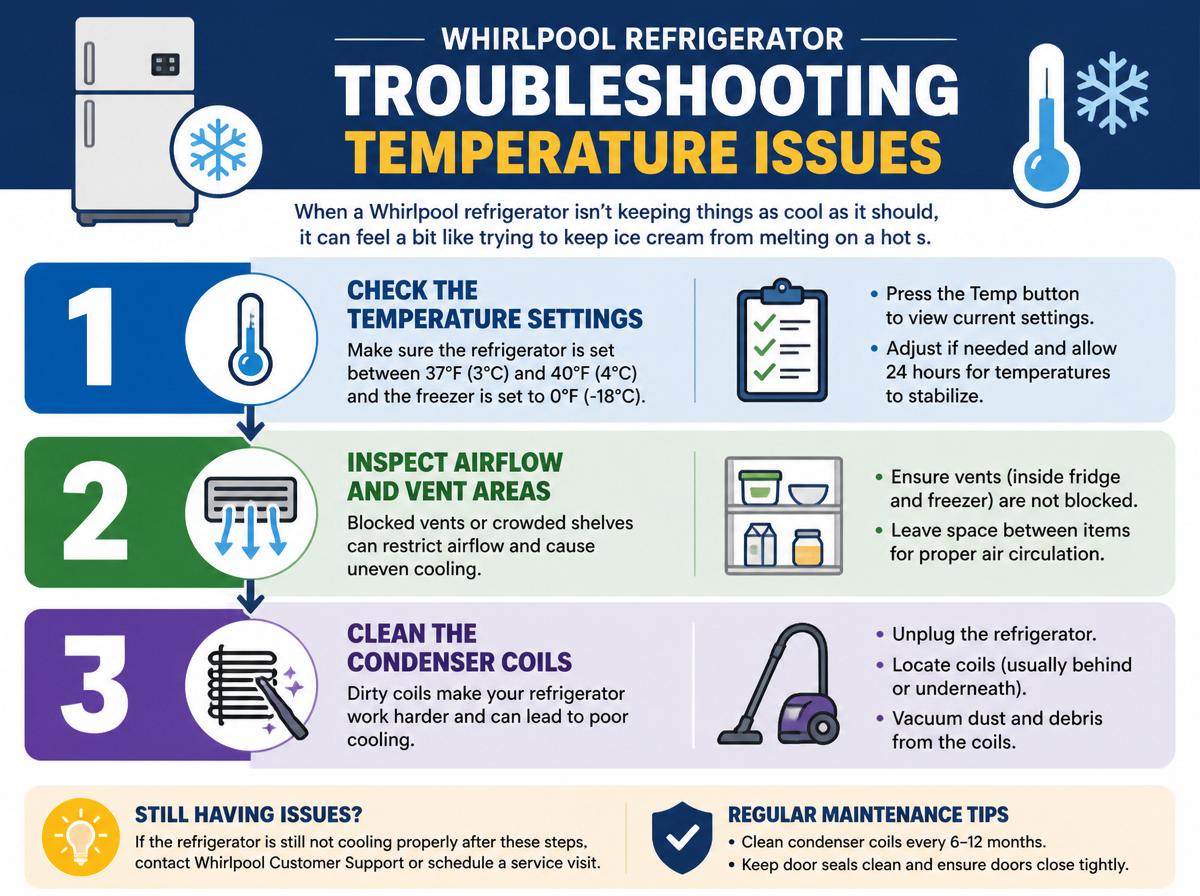
When a Whirlpool refrigerator isn’t keeping things as cool as it should, it can feel a bit like trying to keep ice cream from melting on a hot summer day—frustrating! Fortunately, troubleshooting temperature issues can be easier than it seems. Here’s a handy checklist to guide the way:
- Check the thermostat setting: Make sure it’s set to the recommended temperature, usually between 35°F and 38°F.
- Inspect the door seals: Worn seals can let warm air sneak inside, affecting cooling.
- Conduct sensor diagnostics: Verify the sensors are functioning correctly to read temperature accurately.
- Test the compressor: If the refrigerator is running loudly or not at all, compressor testing might be necessary to diagnose the issue.
Maintenance Tips for Optimal Temperature Control
To keep a Whirlpool refrigerator running smoothly, regular maintenance is key. Checking the temperature every few weeks and cleaning the condenser coils can make a big difference, helping food stay fresh and icy. With just a little effort, anyone can make certain their fridge is a happy home for groceries!
Regular Temperature Checks
How often should someone check their refrigerator’s temperature? Ideally, a person should check it weekly to make sure it stays within the safe range of 37°F (3°C) or lower. Consistent monitoring helps prevent food spoilage and keeps everything fresh! To make this job easier, consider these tips:
- Temperature Logging: Keep a simple log of the temperature readings to spot any patterns.
- Alarm Setup: Use temperature alarms to get alerts if your fridge drifts too warm or cold.
- Frequent Testing: Check different areas in the fridge with a thermometer since temperatures can vary.
- Observe Changes: Note if the temperature fluctuates unexpectedly—this could signal a bigger issue.
Regular checks can keep the fridge working efficiently, helping delightful snacks stay delicious!
Clean Condenser Coils
Cleaning the condenser coils is like giving the refrigerator a revitalizing spa day! When these coils are covered in dust, it affects the temperature control and can even lead to energy waste. Dust composition, like pet hair and kitchen grease, can build up, making the coils work harder. This means the refrigerator struggles to keep its cool!
To clean them, unplug the appliance, then use a soft brush or a vacuum with a brush attachment. Gently remove any debris from the coil materials. Aim to do this every six months for ideal performance. It’s an easy task that helps keep the fridge running smoothly and efficiently. Plus, a tidy refrigerator feels more inviting—it’s a win-win!
When to Call a Professional
While many issues with a Whirlpool refrigerator can be tackled at home, there are times when calling a professional makes sense. Knowing when to seek help is essential for best performance. Here are a few scenarios:
- Persistent Temperature Problems: If fluctuations continue despite your best efforts, it may indicate a deeper issue.
- Unusual Noises: Sounds that are loud or strange can signal a component malfunction that needs fixing.
- Leakage or Water Damage: If you notice pooling water around the fridge, it’s wise to call someone who can diagnose complex problems.
- Warranty Verification: If the refrigerator is still under warranty, contacting an authorized service center may be the best route for repairs at no additional cost.
Preventative Measures to Avoid Future Problems
Taking steps to prevent future problems with a Whirlpool refrigerator can save time, stress, and money. One effective measure is using surge protection. This simple device can safeguard the refrigerator’s electronic components from sudden power spikes. It’s like giving your fridge a cozy blanket during a storm!
Additionally, regular gasket inspection is vital. The gasket is that rubber seal around the door that keeps the cold air in. Checking it for cracks or tears can help make sure the fridge runs efficiently. If a gasket is damaged, it’s like leaving the fridge door slightly open, letting cold air escape.
Frequently Asked Questions
How Often Should I Inspect My Whirlpool Refrigerator’s Temperature Settings?
Inspecting a Whirlpool refrigerator’s temperature settings monthly is essential for peak performance. Incorporating this task into a maintenance calendar guarantees that users remain proactive, preventing potential issues and maintaining the appliance’s efficiency throughout its lifespan.
Can I Use a Thermometer to Check My Refrigerator’s Temperature Accuracy?
A homeowner tested their refrigerator’s temperature with a probe thermometer, revealing discrepancies. To verify probe accuracy, calibration steps involving adjustment to known standards should be followed, confirming proper temperature readings in the appliance for maximum food safety.
Are There Specific Temperature Settings for Different Types of Food?
Specific temperature settings exist for various foods; dairy temperatures should be maintained around 37°F, while meat guidelines recommend temperatures of 34°F to 38°F. Proper settings help guarantee food safety and prolongs freshness for all perishables.
What Should I Do if My Refrigerator Is Making Unusual Noises?
If a refrigerator makes unusual noises, one should check the door seal for leaks and verify there is no fan obstruction. Addressing these issues often resolves the noise and improves overall appliance performance.
Does the Location of My Refrigerator Affect Its Temperature Performance?
Like a plant needing the right light, a refrigerator’s location is vital. Sunlight exposure can cause temperature fluctuations, while adequate airflow clearance guarantees efficient cooling. Together, these factors impact the appliance’s overall temperature performance substantially.
Conclusion
Taking care of your Whirlpool refrigerator is a bit like nurturing a houseplant; both need the right conditions to thrive. Just as a plant wilts without enough sunlight or water, your fridge can struggle if it’s not at the right temperature. By following the tips in this guide, you can keep your fridge running smoothly and your food fresh. Remember, don’t hesitate to ask for help if things get tricky. You’ve got this!
Explore This Topic
- Back to Refrigerator
- Back to fridge maintenance
Related guides in this cluster: