
10 Steps to Troubleshoot Your GE Refrigerator Effectively
Troubleshooting a GE refrigerator can be a breeze! Start by checking the power supply—make sure it’s plugged in and functioning. Next, inspect temperature settings and door seals for perfect closeness. Don’t forget to clean the coils and check the evaporator fan for proper airflow. Monitor the defrost system and test the thermistor too. Any blockages in vents? Clear those! A quick reset of settings may do wonders. Keep going and discover more helpful tips along the way!
Key Takeaways
- Check power supply by testing outlets, surge protectors, and circuit breakers; ensure electricity is connected to the fridge.
- Verify and adjust temperature settings; use a thermometer to ensure the fridge is around 37°F and the freezer at 0°F.
- Inspect door seals for damage using the dollar bill test; replace or clean seals as needed to maintain efficiency.
- Ensure proper airflow by checking for blockages in vents and fan areas; clear any debris and avoid overpacking.
- Examine the compressor and defrost system for performance issues; listen for unusual noises and test components for continuity.
Check the Power Supply
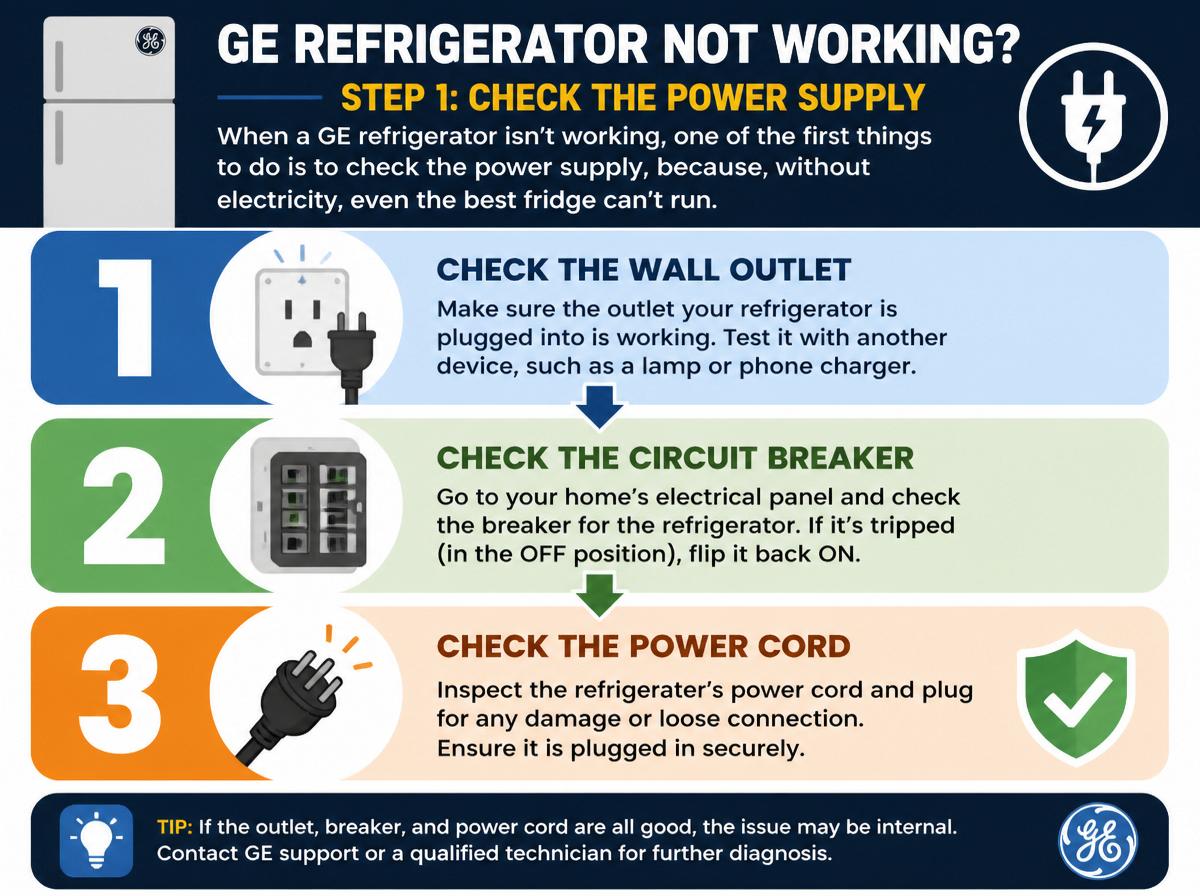
When a GE refrigerator isn’t working, one of the first things to do is to check the power supply, because, without electricity, even the best fridge can’t keep things cool! Start by examining the outlet to see if it’s working. Outlet testing is easy—just plug in a lamp or any device you have handy. If the lamp lights up, the outlet is fine! If not, it might be the outlet itself requiring attention.
Next, check for surge protection. If your fridge is plugged into a power strip or surge protector, verify that it’s functioning properly. Sometimes, these devices can trip or fail, which interrupts the power flow.
If all seems good with the outlet and surge protector, you may need to investigate the circuit breaker. Remember, getting these basics right is a fantastic step towards getting your fridge back in action!
Inspect the Temperature Settings
Have you ever wondered if your refrigerator is simply too warm because the temperature settings are off? Checking the temperature settings is an important first step in troubleshooting. Most GE refrigerators have recommended settings around 37°F for the fridge and 0°F for the freezer. If the readings are higher, food may spoil faster. To check, use a thermometer for accurate results.
If needed, the calibration procedure is often straightforward. Locate the temperature dials inside and adjust them accordingly. Wait at least several hours after making changes, as temperatures can take time to stabilize.
Evaluate the Door Seals
When trouble arises with a GE refrigerator, one important area to check is the door seals. They might seem small, but damaged seals can let cold air escape, making the fridge work harder. Inspecting for visible damage, trying the dollar bill test, and keeping the seals clean can make a big difference, so let’s get started on ensuring those seals are doing their job!
Inspect for Visible Damage
Taking a closer look at the door seals can be a game-changer in troubleshooting a GE refrigerator. These seals are essential for keeping the cold air in and the warm air out. When inspecting, one should look for cosmetic scratches or rust spotting. These little imperfections may seem minor, but they can lead to bigger issues like spoiled food or higher energy bills. If the seals are cracked or damaged, it’s like leaving the door ajar! So, if something seems off with the fridge’s cooling power, check those seals carefully. A quick inspection might save a trip to the repair shop. Remember, anyone can do this—just take a deep breath and start looking! You’ve got this!
Perform the Dollar Bill Test
After giving the door seals a good visual check, it’s time to put them to the test! The “Dollar Bill Testis a simple yet effective test technique. All you need is a dollar bill. Close the refrigerator door on the bill, and try to pull it out. If it slides out easily, your seals might not be doing their job. Remember, a little resistance means a good seal! Now, for result interpretation: if the bill comes out without effort, the seals may need replacing. Don’t worry, this test can save energy and keep your food fresh! With a little effort, you can keep your GE refrigerator in top shape. So, roll up those sleeves and give it a try!
Clean and Maintain Seals
Having clean and well-maintained door seals is essential for a GE refrigerator to run efficiently. Proper seals help keep the cold air in and reduce energy costs. Here are three important steps to keep in mind:
- Inspect the seals for cracks or gaps, as these can diminish adhesive compatibility.
- Clean the seals using warm soapy water to remove dirt and grime. Antimicrobial coatings can help protect against bacteria.
- Lubricate the seals occasionally with petroleum jelly to keep them flexible and prevent wear.
Clean the Condenser Coils
Cleaning the condenser coils can work wonders for a GE refrigerator, helping it run more efficiently and saving energy. Over time, dust and dirt can build up on these coils, making the refrigerator work harder. A little cleaning can go a long way!
Here’s a simple guide:
| Step | Tool Needed | Tip |
|---|---|---|
| 1. Turn off power | – | Safety first! |
| 2. Locate coils | – | Usually at the back. |
| 3. Brush selection | Wide plastic brush | Gentle scrubbing! |
| 4. Vacuum technique | Vacuum cleaner | Suck up the dust! |
| 5. Turn power on | – | Enjoy the cool air! |
Assess the Evaporator Fan
How can a tiny fan make such a big difference in a refrigerator’s cooling power? The evaporator fan is essential for circulating cool air throughout the fridge and freezer. If it’s not working properly, it can lead to warm food and frustrating moments. Here’s how to assess it:
- Listen for Noise: If the fan is buzzing or making odd sounds, it might require a noise diagnosis.
- Check for Obstructions: Make sure nothing is blocking the fan blades. Ice buildup or debris can hinder its movement.
- Test Motor Resistance: You can use a multimeter to measure the motor resistance. If it shows abnormal readings, the fan may need replacing.
Understanding the evaporator fan can help keep your refrigerator running smoothly. Stay calm and tackle the task; your patience will result in cool rewards!
Examine the Compressor
Although it may seem small, the compressor is like the heart of the refrigerator, pumping the refrigerant that cools the entire appliance. To make sure it’s working properly, you can conduct a simple noise analysis. If the compressor makes loud or strange sounds, that could indicate an issue. Listening closely can help detect problems before they become serious.
Another important step is pressure testing. Checking the compressor’s pressure levels can reveal how well it’s functioning. If the pressure isn’t where it should be, it could mean trouble.
Monitor the Defrost System
When it comes to keeping food fresh, the defrost system plays an essential role, as it helps prevent ice buildup in the freezer. A malfunction can lead to freezer trouble, but checking a few key parts can simplify the process.
- Inspect the Defrost Timer: This small device controls the defrost cycle. If it’s not working, the system won’t defrost, leading to ice accumulation.
- Check Heater Continuity: The defrost heater warms the coils to melt any ice. If there’s no continuity, it might be broken, and ice can start to form.
- Look for Ice Build-up: Notice any strange sounds or excessive frost? It may be time to inspect the defrost system further.
Test the Thermistor
After ensuring the defrost system is working properly, attention now turns to another important component of the refrigerator: the thermistor. This little device measures the temperature inside the fridge and sends this information to the control board. To test it, one effective method is resistance measurement. As the temperature changes, the resistance should change too. A good thermistor will show a specific resistance value that corresponds to the temperature it measures.
Another handy technique is temperature simulation. You can place the thermistor in ice water and check its resistance. It should drop as it gets colder. If you notice the resistance doesn’t match the expected values, it might be time for a replacement.
No need to feel overwhelmed; with a little patience and attention, testing the thermistor can help keep your refrigerator running smoothly. Remember, every step you take is a step toward a perfectly working fridge!
Look for Blockages in Vents
When troubleshooting a GE refrigerator, it’s important to check the air vents for blockages. If these vents are blocked by food items or dust, airflow can be restricted, leading to cooling problems. Carefully clear any obstructions to make sure that your fridge stays fresh and chill—think of it as giving your refrigerator a little breathing room!
Inspect Air Vents
While it might seem like a simple task, inspecting the air vents in a GE refrigerator is essential for keeping it running smoothly. Blocked vents can cause cooling issues, leading to spoiled food. Here’s a quick inspection checklist:
- Check Vent Alignment: Make sure the vents aren’t blocked by any items inside the fridge.
- Clean Regularly: Dust and debris can accumulate; a quick wipe down keeps everything flowing.
- Airflow Zones: Identify and keep designated air zones clear for best performance.
Clear Obstructions Carefully
To keep a GE refrigerator working like a champ, it’s important to clear out any obstructions that might block the vents. Start by inspecting the vents carefully for dust or items that could be in the way. Using protective gloves, gently extract any blockages. This might include food packages, ice, or even a mischievous pet toy! Remember, being patient during this process is key. Sometimes, a little gentle extraction is all it takes to restore proper airflow. Once cleared, the refrigerator will run more efficiently, keeping your food fresh and cool. So, roll up those sleeves and get to it! Your fridge deserves that extra TLC, and you’ll feel great knowing you’re keeping it in top shape!
Ensure Proper Airflow
After clearing obstructions from the vents, checking for proper airflow becomes the next important step. Ensuring that air can circulate freely helps maintain a consistent temperature in the refrigerator. Here are three tips to improve airflow:
- Organize Contents: Place items in a way that doesn’t block vents. This allows cold air to flow where it’s needed.
- Check for Blockages: Inspect not only the vents but also shelves and drawers for hidden items that could disrupt airflow patterns.
- Avoid Overpacking: Stuffing the fridge can prevent air from circulating effectively. Instead, keep space for air to move around.
Reset the Refrigerator Settings
Resetting the refrigerator settings can feel like a revitalizing breeze on a hot day! For those moments when the temperature just won’t cooperate, a factory reset might be just what the doctor ordered. This simple action helps clear any technical hiccups, and reestablishes normal functionality.
Before starting the reset process, it’s important to make sure the Control Lock is turned off. Here is a quick reference table for steps to reset the refrigerator:
| Step Number | Action | Notes |
|---|---|---|
| 1 | Locate the control panel | Usually on the front or inside the door |
| 2 | Press “Settings” button | This opens the main settings menu |
| 3 | Select “Factory Reset” | Confirm the reset action |
| 4 | Wait for reboot | The display may turn off briefly |
| 5 | Check the temperature | Confirm it returns to the desired setting |
Eagerly embrace this simple task!
Frequently Asked Questions
How Can I Tell if My Refrigerator Needs Professional Servicing?
A refrigerator may require professional servicing if it emits strange noises or experiences temperature fluctuations. These symptoms often indicate underlying issues, necessitating expert attention to prevent further damage and maintain efficient operation. Prompt action is advisable.
What Should I Do if My Refrigerator Starts to Smell?
If a refrigerator starts to smell, it is essential to identify odor sources. Cleaning with natural deodorizers like baking soda or vinegar can help eliminate unwanted scents and maintain a fresh environment inside the appliance.
Can I Use a Vacuum to Clean the Condenser Coils?
Yes, a vacuum can be used to clean condenser coils, provided proper precautions are taken. Ensuring coil accessibility makes the task easier, while avoiding damage to the appliance’s components helps maintain its efficiency and longevity.
Are There Specific Tools Required for Refrigerator Troubleshooting?
Specific tools required for refrigerator troubleshooting include a Digital Multimeter to test electrical components and a Nut Driver for removing screws. These tools facilitate effective diagnosis and repair of various refrigerator issues encountered by technicians.
How Often Should I Perform Maintenance on My GE Refrigerator?
Maintenance for a GE refrigerator should gracefully embrace seasonal checks every three to six months, ensuring peak performance. Additionally, periodic filter replacements maintain freshness, keeping the appliance humming along smoothly while warding off potential issues.
Conclusion
To sum up, troubleshooting your GE refrigerator doesn’t have to be a challenging task. By following these ten steps, you can uncover simple problems and get your fridge back in shape! Did you know that about 30% of refrigerator issues stem from a lack of proper maintenance? Regular checks can keep your fridge running smoothly. So, roll up your sleeves, stay positive, and remember, a little effort today can prevent bigger headaches tomorrow—let’s keep those snacks nice and cool!
Explore This Topic
- Back to GE appliances
- Back to appliance maintenance
Related guides in this cluster: