
Complete Guide to Whirlpool Refrigerator Water Filters
Whirlpool refrigerator water filters keep your water fresh and tasty by trapping dirt and chemicals. To pick the right one, find your fridge’s model number, then match it to the filter guide, ensuring you avoid cheap fakes that cause trouble. Replace filters every six months or when water tastes off, and flush new ones well after installation. Proper care keeps your fridge happy and your water crisp. Stick around to uncover simple maintenance tricks and eco-friendly recycling tips!
Key Takeaways
- Whirlpool filters remove chlorine, dirt, and harmful particles, ensuring fresh, safe-tasting water and ice with advanced filtration technology.
- Identify the correct filter by locating your refrigerator model number and choosing genuine Whirlpool filters for quality and compatibility.
- Replace filters every six months or when ice and water taste decline, using a simple twist removal and installation process.
- After installation, flush the filter with several cups of water to remove loose carbon and air for optimal performance.
- Maintain filters by storing spares properly, cleaning gaskets, monitoring water pressure, and recycling used filters responsibly.
Understanding Whirlpool Refrigerator Water Filters
Although water filters in Whirlpool refrigerators might seem like simple parts, they play a big role in keeping water and ice clean and tasty. These filters use advanced Filtration Technology to remove impurities like chlorine, dirt, and harmful particles from your drinking water. This technology guarantees each sip is fresh and safe. Behind the scenes, the Manufacturing Process is carefully designed to meet strict quality standards. Each filter is crafted with precision, using materials that trap contaminants but allow water to flow smoothly. Imagine it as a tiny superhero inside your fridge, working hard to protect your health. Understanding these filters helps users appreciate how much effort goes into making clean water easy to access. Knowing what happens inside the filter encourages everyone to replace it regularly, making sure their fridge continues to deliver great-tasting water with every glass and cube of ice. It’s a small change that makes a big difference!
How to Identify the Right Water Filter for Your Whirlpool Model
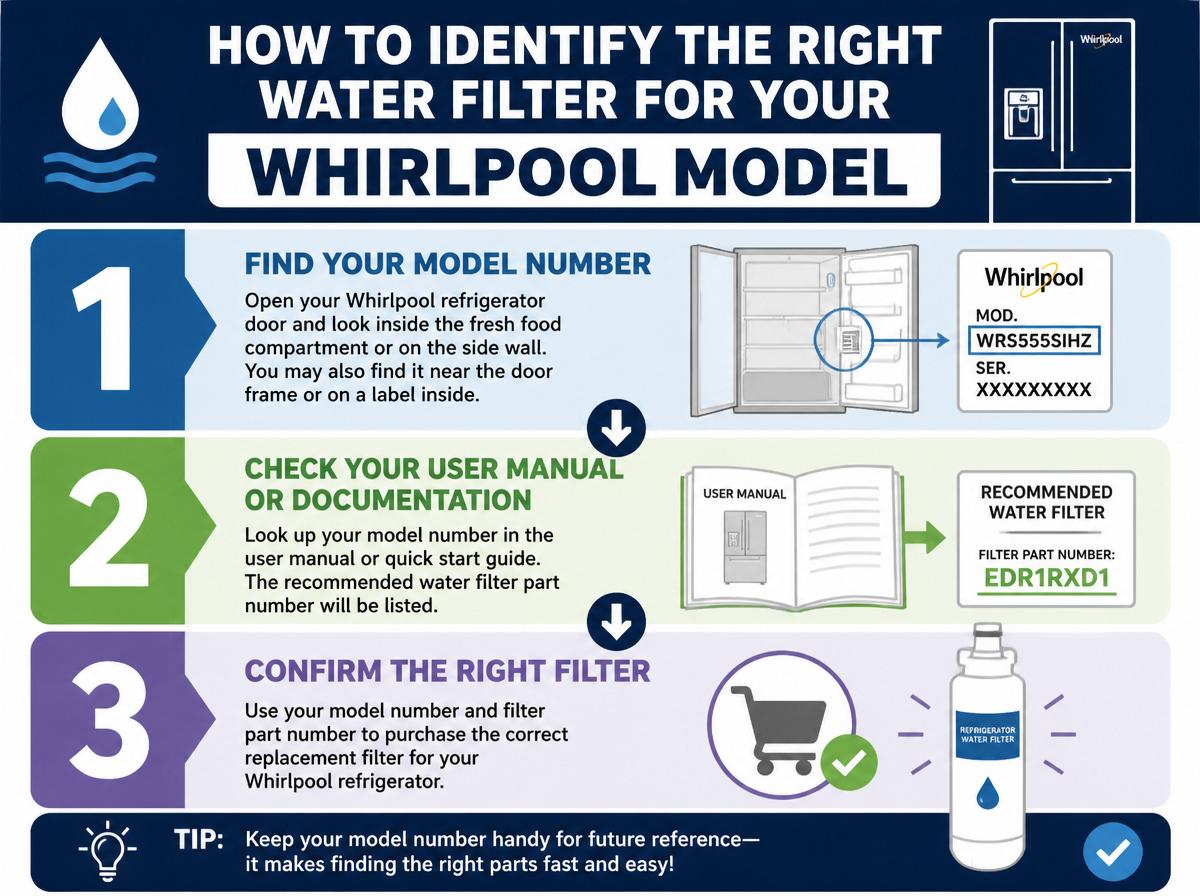
Finding the right water filter for a Whirlpool fridge starts with locating your model number—it’s usually tucked inside the fridge or near the door. Using a filter compatibility guide can save time and headaches, helping match the filter perfectly to that model. And remember, genuine filters might cost a bit more, but they often keep your water tasting fresh and your fridge happy.
Model Number Location
When it comes to choosing the right water filter for a Whirlpool refrigerator, knowing where to find the model number is like holding a secret treasure map—it makes the whole process much easier! To locate it, check these spots:
- Door frame: Look carefully along the inside edges; a small sticker or plate often hides there.
- Cabinet back: The fridge’s rear may have a label with the model number printed.
- Inside walls: Sometimes the number is on the fridge’s inner walls near shelves.
- User manual: If you still have it, the manual lists the exact model number.
Finding this number is a key step. It reveals the right filter choices, saving time and frustration while keeping your water fresh and tasty.
Filter Compatibility Guide
How can someone be sure they’re picking the perfect water filter for their Whirlpool fridge without getting lost in a sea of options? First, it helps to remember that Whirlpool water filters follow international standards, making many compatible across models. Don’t buy into compatibility myths like “one filter fits allor “only branded filters work.Instead, check your fridge’s model number and consult a compatibility list. Here’s a quick guide:
| Whirlpool Model | Compatible Filter Model |
|---|---|
| WRX735SDHZ | EveryDrop EDR3RXD1 |
| WRF535SWHZ | EveryDrop EDR4RXD1 |
| WRT318FZDM | EveryDrop EDR1RXD1 |
This simple step helps avoid confusion and keeps your water fresh and clean, without the headache.
Genuine vs. Generic Filters
Although generic water filters might appear tempting due to their lower price tags, understanding the difference between genuine and generic filters can save a lot of future hassle and a few unhappy taste tests. Genuine Whirlpool filters go through strict supply chain controls, ensuring consistent quality and safety. Packaging differences also help spot authentic filters; genuine ones have clear labels, model numbers, and safety seals.
Here’s how to identify the right filter for a Whirlpool model:
- Check for official Whirlpool branding and holograms on the packaging.
- Verify the model number matches your refrigerator’s requirements.
- Inspect the filter’s build quality and materials for sturdiness.
- Avoid suspiciously cheap filters from untrustworthy sellers.
Choosing genuine filters keeps water tasting great and your fridge happy!
Signs It’s Time to Replace Your Water Filter
Even though a water filter works quietly behind the scenes, signs that it’s time for a refresh rarely go unnoticed. One clear clue lies in the ice texture—if cubes start to look cloudy, small, or oddly shaped, the filter might be struggling. This happens because trapped impurities sneak past the filter, changing the ice’s quality. Another subtle hint is noise changes; unusual sounds when water flows or the ice maker operates may mean the filter is clogged and forcing water through harder. Besides ice and sound, a drop in water taste or flow speed can also signal it’s time to switch filters. Ignoring these signs can make your fridge work harder and your water less clean. Paying attention to them not only keeps your drinks fresh but helps your fridge stay happy and efficient. So, keep an ear out and an eye on your ice—it’s your filter’s way of saying, “Hey, I need a break!”
Step-by-Step Guide to Installing a New Water Filter
Noticing those cloudy ice cubes or slow water flow is a clear nudge that it’s time to swap out the old water filter for a fresh one. Installing a new Whirlpool water filter is simpler than many expect, with only a few required tools like a clean cloth and possibly gloves. The estimated time for this quick task is about 5 minutes.
Here’s how to do it step-by-step:
- Locate the old filter inside the fridge or at the base. Twist it counterclockwise to remove.
- Prepare the new filter by removing any protective covers.
- Insert the new filter and twist it clockwise until it clicks securely.
- Flush water through the dispenser for a few minutes to clear any trapped air or loose carbon.
Following these steps keeps your water fresh and your fridge happy—without needing a plumber!
Tips for Maintaining Your Whirlpool Water Filter
Regular care is key to making a Whirlpool water filter last longer and work better. One simple tip is paying attention to gasket care. The gasket, a small rubber ring that seals the filter, needs to stay clean and free of cracks. Wiping it gently with a damp cloth during filter changes prevents leaks and keeps everything snug. Another important point is following proper storage guidelines. If a spare filter is kept on hand, storing it in a cool, dry place away from direct sunlight helps maintain its effectiveness. Avoid tossing filters in damp spots or near chemicals, as this can damage the materials. Also, flushing the new filter with water before use clears out any loose particles—think of it as giving your filter a fresh start. With these straightforward steps, anyone can keep their Whirlpool water filter in top shape, making sure each sip tastes crisp and clean, just like it should.
Benefits of Regular Water Filter Replacement
Changing a Whirlpool refrigerator water filter regularly keeps your drinks tasting fresh and crisp, like a cool splash on a hot day. It also helps the fridge work smoothly, so it doesn’t have to struggle like it’s running a marathon. Plus, fresh filters guard your health by trapping sneaky contaminants, making every sip safe and clean.
Improved Water Taste
Because water filters play a key role in catching impurities, keeping them fresh helps bring out the best flavors in every sip. Regularly replacing a Whirlpool refrigerator water filter impacts the taste dramatically by influencing Flavor Chemistry and Sensory Evaluation, ensuring water tastes naturally clean and crisp.
- Fresh filters trap contaminants that dull water’s real flavor.
- They maintain ideal mineral balance, enhancing natural water sweetness.
- Cleaner water leads to better-tasting ice cubes and beverages.
- Clearer taste invites more hydration, benefiting overall health.
When these steps are followed, water moves beyond boring to invigorating. It’s like giving your taste buds a little celebration every time you pour a glass. Keeping filters fresh isn’t just smart; it’s the secret to truly enjoyable drinking water. Cheers to better taste in every gulp!
Enhanced Appliance Performance
Beyond just tasting better, clean water filters play a big role in keeping your Whirlpool refrigerator running smoothly. When the filter is fresh, the appliance can work at peak efficiency, meaning it uses less energy and stays cooler without struggling. A clogged or old filter forces the fridge’s system to work harder, which can lead to louder noises or even wear down parts faster—nobody wants that noisy, grumpy fridge! Regularly replacing the water filter helps maintain quieter operation, making your kitchen a more peaceful place. Plus, it reduces the chance of unexpected breakdowns, saving both time and money. So, swapping out your filter on schedule isn’t just good for taste; it’s a simple way to keep your fridge happy and humming along efficiently for years to come.
Health and Safety Benefits
Although a water filter might seem like a simple part, keeping it fresh is a big deal for health and safety. Regular replacement guarantees the water you drink stays clean and safe. Here’s why it matters:
- Bacterial Reduction Old filters can become a playground for bacteria, so changing them helps keep germs out of your water.
- Contaminant Filtration Fresh filters catch harmful chemicals and impurities, making water taste better and safer.
- Preventing Clogs A clean filter stops debris from building up, avoiding potential leaks or damage.
- Maintaining Freshness Regular changes keep your refrigerator’s water tasting crisp and clear, encouraging healthy hydration.
Replacing the filter isn’t just about maintenance; it’s about protecting your family’s health in a simple, effective way.
Common Issues With Whirlpool Refrigerator Water Filters
Dealing with Whirlpool refrigerator water filters can sometimes feel like solving a mini-mystery. Common issues often revolve around leak detection—water spotting under the fridge or inside the filter area might mean the filter isn’t seated properly or the O-ring seal is damaged. These leaks can be sneaky but catching them early prevents bigger messes. Another frequent troublemaker is pressure surges in the water line. Sudden changes can cause the filter to crack or the water flow to stop altogether, leaving thirsty users puzzled and frustrated. Sometimes, a stubbornly slow water dispenser hints at a clogged or expired filter, signaling it’s time for a replacement. Thankfully, most of these problems are easy to fix with a little patience and the right know-how. Keeping a close eye on these signs helps users stay ahead, turning potential headaches into simple, manageable tasks that save time and trouble.
How to Extend the Life of Your Water Filter
Taking simple steps to extend the life of a Whirlpool refrigerator water filter can make a big difference in both water quality and cost savings. Paying attention to factors like water temperature and inlet pressure helps keep the filter working at its best. Here are four easy ways to get the most out of your filter:
- Monitor Water Temperature: Avoid very hot water, which can damage the filter’s materials. Stick to cool or room temperature water whenever possible.
- Check Inlet Pressure: High pressure can strain the filter. If your water pressure is too high, consider installing a pressure regulator.
- Replace on Time: Follow Whirlpool’s recommended replacement schedule, usually every six months. Waiting longer can clog the filter and reduce flow.
- Keep It Clean: Wipe the filter housing gently during replacements to prevent dirt buildup, which can harm filter performance.
These simple habits stretch filter life, saving money and keeping water fresh a win for everyone!
Where to Purchase Genuine Whirlpool Water Filters
Keeping a Whirlpool refrigerator water filter in top shape is a smart way to enjoy fresh, clean water every day. To guarantee the best performance, it’s important to purchase genuine Whirlpool water filters. These can be found at various places, including Whirlpool’s official website, authorized retailers, and well-known online stores. When shopping, it helps to do a pricing comparison to get the best deal without sacrificing quality. Some sellers offer discounts or bundle deals, which can save money in the long run. Shipping options vary as well—some provide free or fast shipping, while others may charge extra. Checking these details before purchasing can make the experience smooth and budget-friendly. Avoiding counterfeit filters is key, so sticking to trusted sellers gives peace of mind. With the right filter bought from the right place, rejuvenating water is always just a twist away—hydration never tasted this easy!
Environmental Impact and Recycling of Used Water Filters
Understanding the environmental impact of used Whirlpool refrigerator water filters is an important step toward greener living. These filters can contribute to microplastic contamination if not properly managed. Luckily, taking care of old filters helps protect the planet.
Here are four helpful ways to lessen their environmental footprint:
- Join recycling programs specially designed for water filters. Many brands offer mail-back options.
- Avoid tossing filters in the regular trash, which sends plastics and tiny particles to landfills.
- Check local stores or community centers for filter recycling drop-off points.
- Choose filters made from eco-friendly materials when replacing, reducing future waste.
Frequently Asked Questions
Can Whirlpool Filters Remove Lead From Drinking Water?
Whirlpool filters can provide lead reduction if they carry the appropriate NSF certification, such as NSF/ANSI Standard 53. Users should verify specific model certifications to assure effective lead removal from drinking water.
How Long Does It Take for Filtered Water to Taste Different?
The taste changes almost immediately after the initial flush, but the full taste timeline varies. Subtle differences become noticeable within hours to days, as the filter removes impurities and water quality steadily improves over time.
Are Whirlpool Water Filters Compatible With Other Refrigerator Brands?
Whirlpool water filters generally lack connector compatibility and matching mounting dimensions with other refrigerator brands. Consequently, they are typically not compatible, as differences in design prevent proper installation and secure fitting in non-Whirlpool models.
Can I Use a Whirlpool Water Filter if My Water Is Extremely Hard?
Using a Whirlpool water filter with extremely hard water is like running a marathon in heavy boots—scale buildup may persist without a softener. Many experts recommend a water softener necessity to protect the filter’s effectiveness and longevity.
Do Whirlpool Water Filters Affect Ice Cube Clarity or Taste?
Whirlpool water filters can improve ice cube taste by reducing freezer odors while maintaining mineral retention, which may slightly affect clarity but enhances overall flavor. This balance supports better quality ice cubes without fully stripping minerals.
Conclusion
Whirlpool refrigerator water filters play a key role in keeping water clean and fresh. Did you know replacing your filter every six months can improve water taste and reduce harmful contaminants by up to 99%? That’s like giving your family a tiny health boost with every sip! Staying on top of filter care may sound tricky, but with simple steps and a bit of routine, anyone can do it—no plumber required. Cheers to fresh water and smart living!
Explore This Topic
- Back to Refrigerator
- Back to filter maintenance
Related guides in this cluster:
