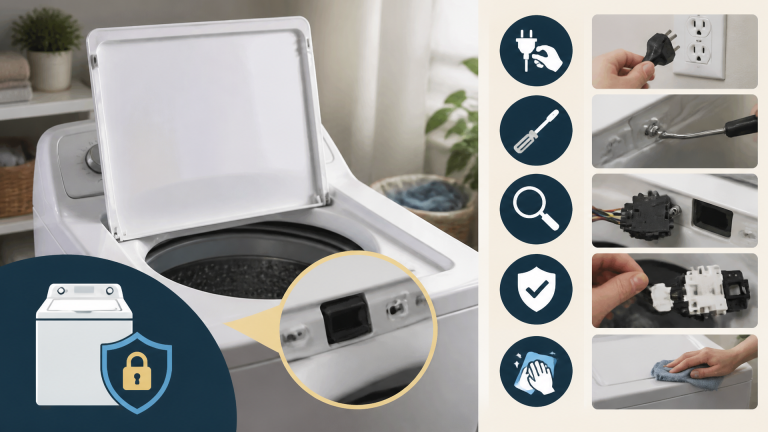
7 Steps to Test Your Washing Machine Drain Pump Effectively
Testing a washing machine’s drain pump might sound tricky, but it’s manageable with a few simple steps. First, gather your tools and make certain the machine is unplugged for safety. Once you access the pump, you can check for blockages or even test its electrical parts with a multimeter. With some patience and care, anyone can tackle this task. So, what are the next steps to guarantee your washer runs smoothly again?
Key Takeaways
- Disconnect the washing machine from power and wear safety gloves and goggles before starting any testing or inspection.
- Access the drain pump by removing the lower front panel and locating the drainage hose.
- Inspect the pump and drain hose for blockages, debris, or small objects obstructing water flow.
- Use a multimeter to check the pump’s electrical continuity and examine the pump capacitor for faults.
- After cleaning and reassembling, run a short wash cycle to monitor the pump’s performance and check for leaks.
Gather Necessary Tools and Safety Gear
Before diving into testing a washing machine’s drain pump, it’s important to gather the right tools and safety gear to guarantee the task goes smoothly. First, having the proper washing machine tools helps make the job easier. Consider gathering a multimeter, screwdrivers, and pliers. Next, safety gear is essential for protection. Donning safety gloves and goggles will help keep hands and eyes safe from any unexpected splashes. It’s a bit like putting on armor before a fun adventure; it makes the job feel more secure! Finally, don’t forget a flashlight to illuminate those tricky spots. With these items, the task ahead will seem much less intimidating, and soon, testing that drain pump becomes an exciting DIY project. You’ve got this!
Unplug the Washing Machine
Before starting any work on a washing machine, it’s essential to unplug the device for safety. This simple step not only protects against electrical hazards but also guarantees that there’s no chance of the machine accidentally turning on while being serviced. Remember, a little precaution today can save you from big problems tomorrow!
Safety First Checklist
To guarantee a safe and smooth experience while testing the washing machine drain pump, it is crucial to prioritize safety first. The first step is to unplug the washing machine. This simple action prevents any electrical hazard, protecting both the user and the appliance. Wearing personal protective gear, like gloves and safety glasses, adds an extra layer of security. It’s also important to practice hazard awareness; keep the work area dry and free from clutter to avoid slips or falls. By taking these precautions, the user sets a solid foundation for a safe testing process. Remember, safety is not just a chore; it’s a friendly companion that guarantees peace of mind during the task. Happy testing!
Power Source Access
When it comes to accessing the power source of a washing machine, the first step is to unplug it, ensuring everyone’s safety before any work begins. Disconnecting the machine from the power outlet protects against electrical shocks and accidents. It’s also wise to check the circuit breaker in case of any issues.
Here are some helpful tips for this step:
- Always pull the plug straight out without yanking the cord.
- Make sure your hands are dry before touching the plug.
- Keep the area around the machine clear of obstacles.
- Double-check that no power is coming through by testing the outlet.
Following these easy steps makes the process safer, allowing anyone to confidently work on their washing machine.
Prevent Electrical Hazards
While tackling the task of checking the washing machine drain pump, ensuring that the machine is unplugged is the most important step to prevent any electrical hazards. No one wants a surprise zap when trying to fix their washing machine! Unplugging the machine is essential for electrical safety and hazard prevention.
Here’s a handy table to remember steps for staying safe:
| Step | Purpose |
|---|---|
| Unplug the machine | Prevent electric shock |
| Wear rubber gloves | Protect against moisture |
| Keep the area dry | Reduce slip hazards |
Access the Drain Pump
Accessing the drain pump of a washing machine might seem a bit intimidating, but with a little patience and the right approach, anyone can do it! First, make sure to gather the necessary tools and materials. Here are some helpful tips for effective drain pump maintenance and troubleshooting:
- Unplug the machine to avoid electrical surprises.
- Remove the lower front panel carefully, usually held by screws.
- Locate the drainage hose connected to the pump, watching for water spillage.
- Document your steps to easily return to the original setup.
With these steps, you’ll feel like a washing machine wizard! Remember, the more you understand your appliance, the easier troubleshooting will be. Keep calm and tackle it one step at a time!
Inspect the Drain Pump for Blockages
When inspecting the drain pump, it’s important to check for any common blockages that might be causing problems. Sometimes, simply removing the pump components can reveal hidden debris, like socks or lint, that may have snuck in. With a little patience and a keen eye, anyone can guarantee their washing machine runs smoothly again!
Identify Common Blockages
Identifying common blockages in a washing machine drain pump is an essential task that can save time and prevent bigger problems down the road. By understanding what might cause issues, one can tackle them head-on! Here are some common blockages to look for:
- Lint and fabric debris: Tiny clothes bits that sneak past the filter can gather in the pump.
- Hair or string: Long strands can entwine in the pump, blocking water flow.
- Small objects: Items like coins or buttons can accidentally make their way into the pump.
- Clogs in the hose: Sometimes, the hose itself gets blocked, preventing proper drainage.
Remove Pump Components
Taking the time to inspect the drain pump is the next step after identifying possible blockages. First, gather your tools and locate the drain pump. Using proper removal techniques, detach the pump from its housing. This may involve unscrewing bolts or unclipping hoses. Remember, gentle yet firm pressure is key; you don’t want to break anything! Advanced pump maintenance not only helps prevent future issues but also keeps your washer running smoothly. Once the components are removed, take a careful look at the pump and surrounding areas. Celebrate this accomplishment; you’re one step closer to a smoothly operating washing machine! Remember, every DIY effort builds your skills, so keep going and enjoy the process!
Check for Debris
A close examination of the drain pump reveals just how much debris can accumulate and cause problems. This can lead to blockages that prevent the washing machine from draining properly. To guarantee the drain pump operates smoothly, it is essential to check for any unwanted materials.
Consider these common culprits of debris:
- Lint from clothes
- Small coins
- Loose threads or fabric
- Hair or pet fur
Using effective cleaning methods can help clear these blockages. Gently remove any visible debris and flush the area with water when possible. Remember, a clean drain pump means fewer drainage issues and a happier washing machine! With these simple steps, readers can maintain their appliances and prevent frustrating laundry days.
Test the Pump’s Electrical Components
Before diving into the inner workings of a washing machine’s drain pump, it’s important to check its electrical components. Start by unplugging the machine, guaranteeing safety first. Then, look for any visible damage to the wires and connectors; frayed wires are like a broken pencil—useless! Next, use a multimeter for pump testing, checking the continuity of the motor. This guarantees electricity flows as it should. If the reading is off, that could mean trouble, and electrical troubleshooting might be needed. Finally, inspect the pump’s capacitor, as a faulty capacitor can prevent the pump from working. With attention to these details, you’re already well on your way to helping your washer run like new! Keep it up; you’ve got this!
Check for Clogs in Drain Hose
Troubleshooting a washing machine can feel like solving a puzzle, and checking for clogs in the drain hose is a key piece! A blocked drain hose can stop water from flowing properly, so it’s vital for effective drain hose maintenance. Start by inspecting the hose for kinks or bends. Next, do a water flow assessment by running the machine and observing how water exits. Here are some useful tips:
- Remove the drain hose and check for debris.
- Use a flashlight to look inside the hose.
- Clean or replace the hose if clogged.
- Verify the hose is installed at the correct height.
With a little patience, readers can conquer any clog and keep their washing machine running smoothly. Happy fixing!
Reassemble and Test the Washing Machine
Once all the parts have been checked and any pesky clogs cleared, reassembling the washing machine can feel like solving a fun puzzle! With careful reassembly techniques, one can guarantee each piece fits snugly in its place. Start by reversing the disassembly steps, attaching the drain hose and securing any clamps. Next, double-check that the pump is aligned perfectly, as this is essential for proper pump testing later on. Once everything is back together, it’s time for the exciting part—testing! Run a short wash cycle to verify the drain pump works smoothly. If the water drains away without a hitch, that’s a win! Remember, each step taken helps build confidence, turning challenges into triumphs.
Frequently Asked Questions
How Do I Know if My Washing Machine Is Under Warranty?
To determine if a washing machine is under warranty, one should check the warranty duration and terms provided at purchase. Documentation, online manufacturer support, or customer service can clarify specific coverage details and expiration dates.
What Should I Do if Water Leaks During Testing?
When faced with a water leak, it’s vital to act quickly. Checking connections and seals are essential troubleshooting tips. If issues persist, consulting a professional might be wise before all hell breaks loose.
Is It Safe to Use the Washing Machine Without a Drain Pump?
Using a washing machine without a functioning drain pump is not safe. The absence of a drain pump can lead to water buildup, potentially causing leaks, mold growth, and damage to the appliance and surrounding areas.
How Often Should I Clean My Washing Machine’s Drain Pump?
Cleaning frequency for a washing machine’s drain pump should ideally occur every three to six months. Regular drain pump maintenance helps prevent clogs and guarantees peak performance, contributing to the machine’s longevity and efficiency.
Can I Fix a Broken Drain Pump Myself?
Yes, a broken drain pump can often be fixed by oneself. Following proper drain pump troubleshooting techniques and utilizing DIY repair tips can empower individuals to resolve issues effectively, potentially saving both time and repair expenses.
Conclusion
In the end, testing your washing machine drain pump can feel like a mini adventure, complete with tools and a bit of detective work. Ironically, you might discover that the most complicated problems often have the simplest solutions, like a tiny sock stuck in the pump! By following these steps, you’ve transformed yourself into a DIY hero. Now, as you reassemble everything and restart the machine, remember: a happy pump means fewer laundry mishaps and more clean clothes!
Explore This Topic
- Back to Internal Components
- Back to drain pump
Related guides in this cluster: