
7 Steps for Checking Your Refrigerator Compressor Like a Pro
Checking your refrigerator compressor can seem tricky, but it doesn’t have to be! With just a few simple steps, anyone can do it. First, gather your tools and unplug the fridge—safety is key! Next, you’ll want to take a close look at the compressor for any issues. It’s like being a refrigerator detective. Curious about the next steps? There’s much more to uncover that can save you from a hot mess in your kitchen!
Key Takeaways
- Ensure the refrigerator is unplugged, and gather tools like a multimeter and screwdriver for safety and efficiency during the assessment.
- Inspect the compressor visually for dents, rust, or frayed wiring connections, and document findings with pictures.
- Listen for normal humming sounds; loud noises may signal strain or issues with other components like the thermostat.
- Check the start capacitor for swelling or leaks, as failure can lead to compressor problems and performance issues.
- Consider consulting a professional if repairs seem complex, ensuring safe and thorough assessment, and reducing the risk of further issues.
Prepare for Your Assessment
Before diving into the world of refrigerator compressors, it’s important to gather the right tools and set the stage for a smooth evaluation. Start by collecting necessary tools like a multimeter, screwdriver, and safety gloves. These helpers will make your job easier! Safety precautions are essential as well. Verify the refrigerator is unplugged to avoid any shocks. Wearing gloves is a smart move, just in case you touch something unexpectedly sharp. Have a flashlight handy; it can help you see any hidden areas. Finally, tidy the surrounding space. A clean work environment not only boosts confidence but also prevents accidents. With everything in place, the journey of evaluating that compressor can be fun and successful. You’re ready to conquer this task!
Locate the Compressor
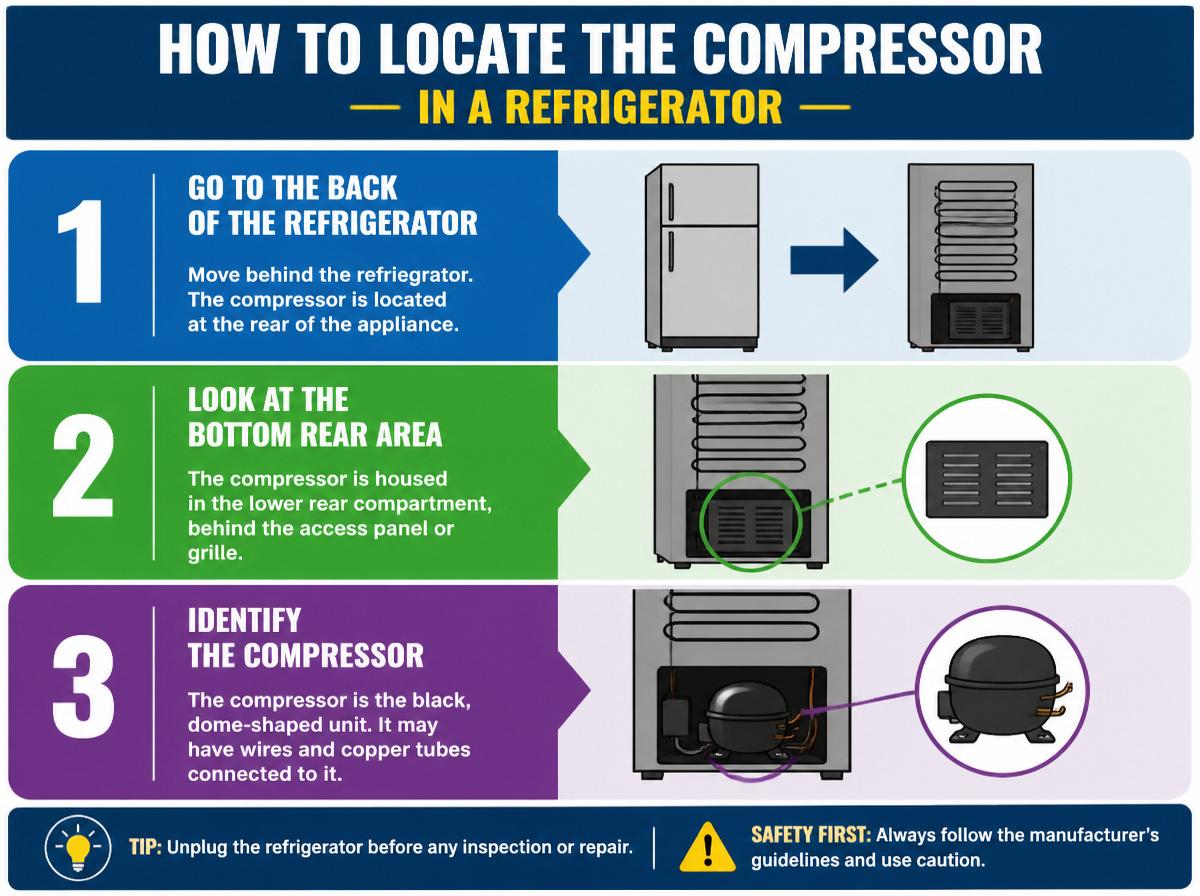
To locate the compressor in a refrigerator, one must typically go to the back of the appliance, where the magic—or in this case, the mechanics—happens. Removing the rear panel can reveal this important component, which plays a key role in keeping the fridge cold. Understanding where the compressor sits and how it functions can make the entire inspection process smoother and less intimidating, like finding the hidden treasure in your kitchen!
Identify Compressor Location
Finding the refrigerator compressor can feel like a treasure hunt, but with a little guidance, it can be both fun and rewarding! To kick off the adventure, know that compressor types can vary based on the refrigerator model. Commonly, they’re located at the back or bottom of the fridge. So, roll up those sleeves and prepare to explore!
First, unplug the refrigerator to stay safe while searching. Peeking behind the fridge or checking inside can reveal this crucial part. Remember, compressor maintenance is essential for keeping the appliance running smoothly. If you’re unsure, don’t worry! With curiosity and patience, you’ll soon find that hidden treasure: your compressor! Happy hunting, and enjoy the process—it’s a skill worth having!
Access Rear Panel
Revealing the mysteries of the refrigerator can be a fun adventure, especially when it comes to accessing the rear panel to locate the compressor. First, ascertain that the refrigerator model you have is understood, as different models may have slightly different designs. Next, unplug the refrigerator to stay safe. Then, carefully move the appliance away from the wall. Look for the rear panel, which is usually a flat surface held with screws. Use a screwdriver to remove the screws gently. Once the panel is off, take a moment to admire your handiwork! You’ll find the compressor, which is an essential part of the cooling system. Just remember, a little patience goes a long way in this handy exploration!
Understand Compressor Functions
The compressor is like the heartbeat of a refrigerator, working diligently to keep your food cold and fresh. Understanding its functions can help anyone maintain their fridge better. Here are some essential points to evaluate when locating the compressor:
- Location: Most compressors are found at the back of the fridge but may also be beneath it.
- Compressor Types: There are different types, like reciprocating and rotary, each affecting energy efficiency in unique ways.
- Sound: A healthy compressor hums softly; loud noises might indicate trouble.
- Heat: Feel for warmth; excessive heat can signal inefficiency or malfunction.
Inspect for Physical Damage
When inspecting the refrigerator compressor, it’s important to check for physical damage that could affect its performance. Look for any dents that might indicate a bump or fall, as well as rust that could signal trouble brewing beneath the surface. Don’t forget to inspect the wire connections; loose or frayed wires can lead to serious issues, and a little attention here can save you big headaches later!
Check for Dents
Inspecting the refrigerator compressor for dents and other physical damage is an essential step in ensuring it runs smoothly. A simple dents analysis can save time and money. Here’s how to complete an exterior inspection effectively:
- Observe the Compressor: Look closely for any obvious dents or dings.
- Check the Edges: Inspect the corners and edges for signs of impact.
- Feel for Sharp Points: Run your hand over the surface to identify sharp protrusions.
- Document Findings: Take pictures of any damage, as they can be helpful for future reference.
Look for Rust
Rust can be sneaky, often creeping up on a refrigerator’s compressor if it isn’t kept in check. This pesky problem can cause big issues, so it is vital to inspect for rust regularly. A quick look can reveal patches of rust, which usually signal trouble. If spotted, rust removal is important for preserving the compressor’s life. Many tools and products are available for this task, ensuring an effective clean-up. Additionally, implementing rust prevention strategies, like regular cleaning and applying protective coatings, will keep rust at bay. Remember, a little effort now saves hassle later! Check your compressor often; don’t let rust sneak up on you. Stay proactive, and your refrigerator will thank you with years of service!
Inspect Wire Connections
Checking the wire connections of a refrigerator’s compressor can be just as important as keeping an eye out for rust. If you want to guarantee smooth operation, it’s crucial to inspect these connections regularly. Here are some key things to look for:
- Wire Insulation: Examine for any cracks or frays that could lead to dangerous shorts.
- Connection Stability: Ensure each connection is snug and not loose to prevent power loss.
- Corrosion: Look for any signs of corrosion on the metal connectors.
- Tightness: Gently pull on the wires to see if they are firmly attached; they shouldn’t budge.
Listen for Unusual Noises
When listening closely, it becomes clear that a refrigerator should hum with a gentle, soothing sound, like a quiet conversation among friends. However, unusual compressor sounds can indicate a problem needing attention. It’s vital for proper appliance maintenance to identify these noises.
| Noise Type | Possible Cause | Action Needed |
|---|---|---|
| Loud Humming | Compressor strain | Check for obstructions or issues |
| Banging / Clanking | Loose components | Inspect and tighten parts |
| Clicking | Thermostat issues | Verify the thermostat is functioning |
Being aware of these unusual noises will help prevent bigger problems down the line. Regularly listen to your refrigerator; it might just be talking to you!
Check the Temperature
A refrigerator needs to keep its cool, and that means maintaining the right temperature inside. To guarantee it’s operating at peak cooling efficiency, checking the temperature settings is essential. Here are four simple steps to follow:
Ensure your refrigerator maintains optimal cooling by regularly checking its temperature settings for peak efficiency.
- Use a thermometer: Place it in the middle of the fridge and wait a few hours for an accurate reading.
- Check for the ideal temperature: The fridge should ideally be between 35°F and 38°F (1.6°C to 3.3°C).
- Adjust settings if necessary: If the temperature is out of range, tweak the dial and give it some time.
- Monitor regularly: Make it a habit to check the temperature every few weeks for consistent performance.
Test the Electrical Components
Testing the electrical components of a refrigerator can feel like a mini adventure for anyone looking to troubleshoot their cooling companion. First, safety is key! Unplug the refrigerator to avoid any electrical mishaps. Next, examine the power cord for any damage. If the cord looks good, use a multimeter to check for power reaching the compressor. Record those test results! Then, inspect the start capacitor; it can often be the culprit in compressor issues. If it’s swollen or leaking, it may need replacing. Remember, electrical safety is critical, so take your time. With patience and determination, anyone can tackle this task successfully. Many feel a sense of accomplishment just by ensuring everything is in working order!
Seek Professional Help if Needed
Sometimes, despite careful checks and tests, a refrigerator may still refuse to cooperate. When this happens, it’s perfectly okay to wave the white flag and seek professional help, especially when criteria assessment suggests more significant issues. Maintenance professionals have the expertise to tackle problems that a DIYer may find intimidating. Here are some signs that it’s time to call in the experts:
- The refrigerator makes strange noises that just won’t stop.
- Frequent or extreme temperature fluctuations occur inside the fridge.
- Ice builds up unexpectedly, turning your freezer into an igloo.
- You just feel overwhelmed and confused by the repairs.
It’s important to remember that getting help isn’t a failure; it’s a smart choice for keeping your fridge happy!
Frequently Asked Questions
How Often Should I Check My Refrigerator Compressor?
One should check the refrigerator compressor at least twice a year. Regular compressor maintenance guarantees ideal cooling efficiency, helping to prevent malfunctions and extending the appliance’s lifespan for effective food preservation and energy savings.
What Tools Do I Need to Check the Compressor?
To check the compressor, essential tools include a multimeter, screwdriver, and protective gloves. A tools checklist guarantees accuracy, while safety precautions, such as disconnecting power, protect against electrical hazards during the inspection process.
Can a Faulty Compressor Affect Food Freshness?
A faulty compressor can greatly impact food freshness, potentially leading to spoilage. Increased compressor noise and reduced energy efficiency often accompany malfunctioning units, indicating a compromised cooling system that fails to maintain ideal storage temperatures.
Is There a Warranty on Refrigerator Compressors?
A refrigerator compressor warranty often serves as a safety net, protecting consumers. Typically, warranty duration ranges from five to ten years, reflecting manufacturers’ confidence in their compressors’ durability and functional reliability.
How Long Do Refrigerator Compressors Typically Last?
Refrigerator compressors typically last around 10 to 15 years. Regular compressor maintenance enhances their longevity and energy efficiency, ensuring ideal performance while reducing energy consumption, accordingly benefitting both users and the environment.
Conclusion
Checking your refrigerator compressor can feel like a treasure hunt, revealing valuable insights about your appliance. With each step, from listening closely to inspecting carefully, you become a real detective of household machinery. Remember, if the task seems challenging, calling in a professional isn’t a failure—it’s smart teamwork! As you nurture your fridge back to health, you’ll learn and grow, just like the food you keep inside. So, roll up your sleeves, and get started—you’ve got this!
Explore This Topic
- Back to home appliance tips
- Back to compressor inspection
Related guides in this cluster: