
10 Simple Steps to Remove a Refrigerator Compressor
Removing a refrigerator compressor might seem tricky, but it can be done in just 10 steps. First, gather your tools and guarantee safety. Disconnecting power is essential to avoid any shocks—nobody wants a surprise there! With patience and care, anyone can tackle this task. By following each step, you will soon have a new compressor in place. Curious to know what comes next? Let’s explore the details of each step!
Key Takeaways
- Always unplug the refrigerator and secure the workspace to prevent accidents before starting the compressor removal process.
- Carefully remove the back cover using a screwdriver to access the compressor and surrounding components.
- Disconnect refrigerant lines and electrical connections, ensuring to follow necessary safety precautions to avoid leaks.
- Unscrew and detach the mounting bolts holding the compressor in place, handling it gently to prevent damage.
- Clean the area thoroughly, check for leaks, and install the new compressor before reconnecting everything and testing functionality.
Gather Necessary Tools and Materials
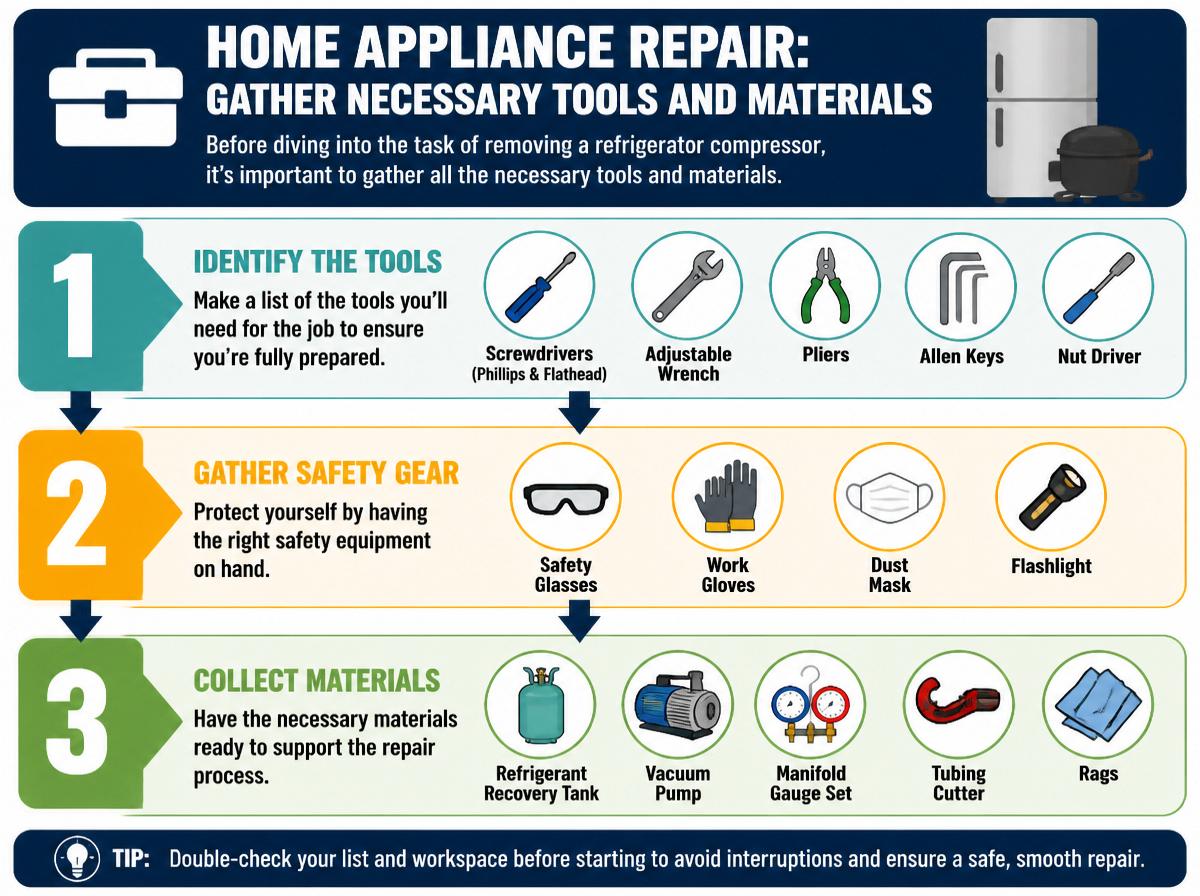
Before diving into the task of removing a refrigerator compressor, it’s important to gather all the necessary tools and materials. First, having a wrench, screwdriver, and safety gloves ready is essential. Different compressor types might require specific tools, so it’s a good idea to check which you need for your model. Maintenance tips suggest taking a flashlight to spot hidden screws or bolts, ensuring nothing is overlooked. A bucket can also be handy for any spills. Don’t forget to have a manual nearby for guidance! Remember, tackling this DIY project might seem intimidating, but with the right tools and a positive attitude, anyone can do it. Embrace the challenge, and soon you’ll be a refrigerator hero!
Disconnect Power to the Refrigerator
Safety comes first when removing a refrigerator compressor, so confirming the power is disconnected is crucial. This step addresses common safety concerns, reducing the risk of electric shock. Here’s how to safely disconnect the power:
Prioritize safety by ensuring the refrigerator is unplugged before removing the compressor to avoid electric shock.
- Locate the Power Cord: Find where the refrigerator plugs into the wall.
- Unplug the Unit: Gently pull the plug from the outlet, confirming no power sources are connected.
- Double-Check: After unplugging, it’s a good idea to verify that the refrigerator isn’t working. You can listen for any humming sounds or try opening the door to confirm the light doesn’t turn on.
Remove the Refrigerator’s Back Cover
Before removing the refrigerator’s back cover, it’s essential to prioritize safety to keep everyone safe and sound. Gather the right tools, like a screwdriver and pliers, to make the job easier and smoother. With the proper precautions and equipment, this part of the process can be straightforward, almost like assembling a puzzle!
Safety Precautions First
The sturdy metal back cover of a refrigerator hides important parts that often need attention, and removing it is a vital first step in the process of replacing a compressor. However, safety should always come first. Before starting, one must take a few essential precautions to protect themselves from electrical hazards.
- Wear safety gear such as gloves and goggles to prevent injuries.
- Unplug the refrigerator to guarantee there’s no power running through it before working.
- Clear the surrounding area of any clutter, making sure there’s enough room to move around safely.
Tools Required List
Having confirmed a safe workspace, it’s time to gather the right tools for removing the back cover of the refrigerator. This step is essential to guarantee professional-looking compressor maintenance. Here’s a simple list of tools that will help with this task:
| Tool | Purpose |
|---|---|
| Screwdriver | To remove screws from the back cover |
| Wrench | For disconnecting pipes |
| Pliers | To grip and pull various components |
| Safety goggles | To protect eyes during the process |
Remember to follow refrigerant handling precautions as you work. Take it slow and steady to guarantee a successful job. You’ve got this, and soon you’ll restore your fridge to its prime condition!
Locate the Compressor
Locating the compressor can feel a bit like a treasure hunt, but it’s easier than it sounds! The compressor plays a key role in cooling your refrigerator, so spotting it is essential. Here’s how to find it:
Finding your refrigerator’s compressor can be a rewarding journey, crucial for keeping your food cool and fresh!
- Check the back: Most compressors are located at the rear of the fridge, near the bottom, hidden away like a secret lair.
- Look underneath: Sometimes, the compressor might be tucked under the appliance. A flashlight will help illuminate this often-overlooked area.
- Identify the signs: If you hear a humming noise or feel warmth on the back, those are compressor signs indicating that it’s hard at work!
With a bit of patience, the treasure is sure to be revealed!
Disconnect the Refrigerant Lines
Before disconnecting the refrigerant lines, it’s important to think about safety first. Using the right tools will make the job easier, so gather everything you need ahead of time. Once ready, readers can confidently tackle this step, feeling like skilled engineers taking charge of their appliances!
Safety Precautions First
Many people might not realize how important it is to disconnect the refrigerant lines before tackling a refrigerator compressor removal. This step helps guarantee safety and makes the job easier. Here are some simple safety precautions to follow:
- Wear Personal Protective Equipment: Always put on goggles and gloves. They protect your eyes and hands from any harmful substances.
- Guarantee Proper Ventilation: Make sure the area is well-ventilated. This helps disperse any gases that might escape during the process.
- Use Proper Tools: While you might be keen to get started, using the right tools will keep everything in control.
Tools Needed Overview
With safety measures carefully in place, it’s time to gather the tools needed for disconnecting the refrigerant lines. First, a wrench or socket set is essential as it will help with different compressor types. A tube cutter or hacksaw can also come in handy for cutting the lines if necessary. Don’t forget safety goggles and gloves! These will protect against any accidental splashes or sharp edges. It is also smart to have a vacuum pump, which can assist in safely removing any remaining refrigerant. Following maintenance tips, remember to have a bucket ready beneath the lines to catch any spills. Approaching this task with patience and focus will lead to success, ensuring that the refrigerator’s compressor is disconnected safely.
Remove the Electrical Connections
Unplugging the refrigerator is the first essential step to safely remove the electrical connections. Doing this guarantees electrical safety and prevents any shocking surprises! Once the refrigerator is unplugged, it’s time to get to work. Following the right steps makes the job easier and safer.
Unplugging your refrigerator is crucial for safe electrical disconnection, ensuring you avoid any unexpected shocks while working.
Here are three important tasks to keep in mind:
- Consult the Wiring Diagram: This will guide you on which wires connect to the compressor, making it easier to avoid mistakes.
- Label Wires: Use tape or sticky notes to label each wire as it’s disconnected; this will help when reconnecting later.
- Carefully Disconnect: Gently pull off the wire connectors; avoid using excessive force to prevent damage.
With these steps, the process can go smoothly!
Unscrew and Detach the Compressor
Now that the electrical connections are safely removed, it’s time to tackle the compressor itself! First, gather your necessary tools—like a wrench and screwdriver—so you’ll be well-prepared. Next, locate the compressor wiring and carefully remove the mounting bolts, freeing that stubborn part like a superhero saving the day!
Gather Necessary Tools
How can one tackle the task of removing a refrigerator compressor effectively? The first step is to gather the necessary tools to guarantee smooth compressor maintenance and tool organization. Having the right items on hand can make the job much easier, turning a challenging task into a fun DIY project. Here’s a quick list of essentials:
- Wrench Set – For unscrewing bolts and nuts.
- Screwdriver – A flathead and Phillips screwdriver help detach the compressor.
- Safety Goggles – Protect those peepers from flying debris!
With these tools ready, the compressor removal process will be like a walk in the park. Remember, preparation is key to success, and soon enough, you’ll have that compressor off like a pro!
Locate Compressor Wiring
Before anyone dives into the process of removing a refrigerator compressor, it’s crucial to locate the compressor wiring first. This part can be tricky, as the compressor is often tucked away behind the appliance. Finding the compressor location should be the first step, and it typically sits at the back or bottom of the fridge.
Once you spot it, double-check the wiring. For safety’s sake, make sure the fridge is unplugged! This guarantees no surprise zaps during the process. Gently trace the wires to see how they’re connected. Identify which wires will need to be detached later. Taking these careful steps not only guarantees wiring safety but also makes the entire task much smoother. Happy DIY-ing!
Remove Mounting Bolts
With a little determination and the right tools, anyone can successfully remove the mounting bolts to detach a refrigerator compressor. The bolt removal process might seem tricky, but it’s quite straightforward. First, gather your tools and get ready to lift out that old compressor!
- Find the correct size socket wrench: This is vital for getting the right fit on the bolts.
- Loosen each mounting bolt: Turn them counterclockwise gently but steadily; don’t rush!
- Carefully lift off the compressor: Once all bolts are removed, take a deep breath and gently lift the compressor out.
Prepare for Compressor Replacement
Although tackling the replacement of a refrigerator compressor may seem challenging, preparing for the task can make it much easier and even fun. First, identify the different compressor types, as this guarantees the right fit for your refrigerator model. Knowing whether it’s a reciprocating or rotary compressor can save time and headaches. Next, research replacement costs to set a budget, avoiding any unexpected surprises. Gathering tools like wrenches, screwdrivers, and safety gear will also help, assuring readiness for the job. Finally, enlisting a friend for support can bring smiles and laughter, making the process enjoyable. When well-prepared, the task transforms from a chore into a rewarding adventure, leading to a cooler kitchen one step at a time!
Clean the Area and Check for Leaks
Ready to plunge into replacing the refrigerator compressor? First, it’s essential to guarantee a clean workspace and check for any leaks. A tidy area makes the job easier and safer. Here’s how to start:
- Clear the Area: Remove any items obstructing the compressor. This prevents accidents and helps you spot issues more easily.
- Perform Area Cleaning: Wipe down surfaces to eliminate dirt and grease. A clean space is a happy space!
- Leak Detection: After cleaning, inspect the hoses and fittings. Look for oily spots or dampness, which might indicate a leak.
Reassemble and Reconnect the Refrigerator
After successfully removing the old compressor, it’s time to reassemble and reconnect the refrigerator. Begin by carefully positioning the new compressor where the old one was. Make certain all connections are tight, as any looseness can lead to reduced refrigerator efficiency. Next, reconnect the power supply and check all electrical connections. Tightening the screws can make a big difference, just like doing some compressor maintenance helps keep things running smoothly. Once everything is connected, give your fridge a moment to get back to work. Finally, test it to confirm it cools properly. Remember, tackling this project not only saves money but also turns you into a refrigerator superhero! Keep it up, you’re doing great!
Frequently Asked Questions
What Safety Precautions Should I Take Before Starting This Process?
Before starting the process, one should wear appropriate safety gear, including gloves and goggles. It is also essential to disconnect the power supply to mitigate electrical hazards, ensuring a safe and accident-free environment.
How Do I Know if My Compressor Is Faulty?
A faulty compressor may exhibit symptoms like excessive noise, inadequate cooling, or frequent cycling. During compressor troubleshooting, note these signs; ultimately, they may signal a need for compressor replacement to restore appliance functionality.
Can I Reuse the Old Compressor After Removal?
Reusing an old compressor is generally not advisable due to diminished compressor lifespan and potential inefficiencies. Instead, consider compressor recycling options to properly dispose of the unit while ensuring environmentally friendly practices are followed.
What Are Common Signs of a Failing Refrigerator Compressor?
Common signs of a failing refrigerator compressor include unusual compressor noise and temperature fluctuations within the fridge. These symptoms indicate that the compressor may be struggling to maintain consistent cooling, potentially leading to further appliance issues.
How Much Does a New Refrigerator Compressor Usually Cost?
A new refrigerator compressor typically costs between $100 and $500, depending on compressor types. Installation tips include ensuring proper sizing and electrical connections, highlighting the importance of professional assistance for ideal performance and warranty considerations.
Conclusion
Removing a refrigerator compressor may seem like a tall order, but with the right steps, anyone can tackle it. Remember, a little confidence goes a long way! After installing the new compressor, give it a test run to make sure everything is humming smoothly. If you follow these steps closely, you’ll be on your way to keeping your fridge chill in no time. So, roll up your sleeves and plunge into this repair—you’ve got this!
Explore This Topic
- Back to DIY appliance maintenance
- Back to compressor replacement
Related guides in this cluster: