
7 Essential Steps to Remove a Compressor From Your Refrigerator
Removing a compressor from a refrigerator may seem tricky, but it’s manageable with the right steps. Just imagine the satisfaction of fixing your own fridge! To start, gather your tools and remember to prioritize safety—gloves and goggles are a must. Next, you’ll make sure the power is off. Curious about what comes next? There are more essential steps to contemplate, making this DIY project a breeze!
Key Takeaways
- Gather essential tools like wrenches, pliers, and screwdrivers, ensuring a well-equipped workspace for a smoother repair process.
- Disconnect the power by unplugging the refrigerator and checking for extension cords to eliminate any electrical hazards.
- Remove the exterior panels using a screwdriver set and socket wrench, being cautious to keep all screws and clips organized.
- Carefully disconnect the refrigerant lines with the appropriate tools while wearing gloves and goggles for protection from refrigerants.
- After ensuring all connections are detached, unscrew the mounting bolts to remove the compressor safely from its base.
Gather the Necessary Tools
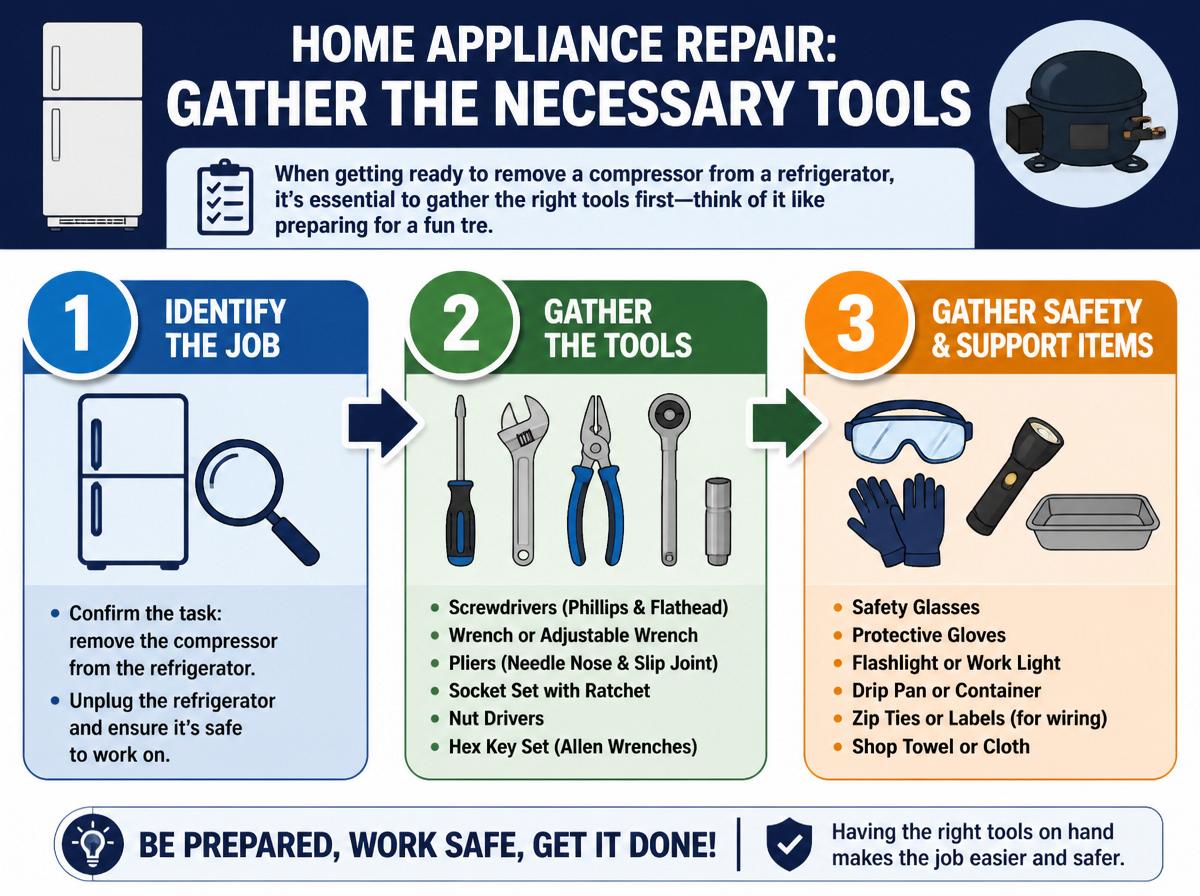
When getting ready to remove a compressor from a refrigerator, it’s essential to gather the right tools first—think of it like preparing for a fun treasure hunt! Each piece of equipment serves a purpose, and their importance cannot be overstated. Depending on the compressor type, you may need a wrench, pliers, or screwdrivers to tackle the screws and connections. It’s like having the right map to find the hidden treasure! A good pair of safety gloves can also be really handy to protect those fingers during the process. By collecting all these tools beforehand, the task becomes much smoother. With all the gear in hand, an exciting adventure awaits, and success is just around the corner! Happy hunting!
Ensure Safety Precautions
Taking a moment to guarantee safety precautions can make all the difference in a DIY project! Before diving into removing a compressor, it’s essential to think about safety gear. Wearing gloves, goggles, and sturdy shoes protects against potential hazards. Sharp edges and heavy parts can cause injuries if not handled with care.
Additionally, working in a well-ventilated area helps avoid inhaling any fumes or gases that might escape. It’s always wise to have a friend around for support, especially when lifting heavy components. Remember, taking these simple measures not only keeps everyone safe but also makes the project more enjoyable! So, gear up, stay alert, and you’ll be well on your way to successfully tackling that refrigerator compressor.
Disconnect Power to the Refrigerator
Before anyone attempts to remove a compressor, safety should always come first. To guarantee everything goes smoothly, the power source needs to be located and switched off properly, preventing any accidental sparks or surprises. Taking a moment to do this step will keep things safe and make the entire process much easier—just like turning off your favorite TV show before unplugging it!
Safety First, Always
Ensuring safety is the most important step in any DIY project, especially when it comes to working with appliances like refrigerators. Before diving into the nuts and bolts of compressor types or refrigerator maintenance, one must prioritize safety. Here’s a simple guide:
- Unplug the refrigerator to cut off electricity completely.
- Wear protective gear, like gloves and goggles, to shield against unexpected mishaps.
- Clear the area around the refrigerator, ensuring a clutter-free workspace to prevent accidents.
- Keep kids and pets away during the process, as curiosity can lead to dangerous situations.
Locate the Power Source
Finding the right power source can feel like a small adventure in the world of refrigerator repair. The first step is to identify the different power source types your fridge might use. Most refrigerators run on either a standard wall outlet or a dedicated circuit, which allows them to operate efficiently without overloading. Ensuring energy efficiency is important, as it can save money and help the environment. To start your adventure, follow the power cord to its source, and make sure to check for any extension cords or multiplugs that could complicate the disconnecting process. Remember, carefully trailing the cord can reveal hidden surprises, and once located, you’ll be on your way to safely tackling your refrigerator project!
Switch Off Properly
Turning off the refrigerator may seem like a simple task, but it’s essential for safety before tackling any repairs, especially when dealing with the compressor. Neglecting this step can lead to shocks or injuries. Different switch types, like wall switches or power strips, can be used.
Here are four important steps to guarantee you switch off properly:
- Locate the main power switch or outlet.
- Set the appropriate power settings to “off.”
- Unplug the refrigerator if possible.
- Wait a few moments to guarantee all power is disconnected.
Taking these steps not only boosts safety but also builds confidence that you’re ready to take on this project. Remember, your security is paramount!
Remove Exterior Panels
Before anyone can get to the compressor, they first need to tackle the exterior panels of the refrigerator. This step requires specific tools to make the job easier, and it’s important to follow safety precautions to avoid any accidents. With a clear step-by-step guide, removing these panels can feel like revealing a hidden treasure, bringing ample excitement to your DIY adventure!
Tools Needed for Removal
Removing the exterior panels of a refrigerator might seem tricky, but with the right tools, it becomes a rewarding task! Each compressor type may require specific removal techniques, but having the right tools makes a world of difference. Here’s what you need:
- Screwdriver Set: Helps in safely loosening screws.
- Socket Wrench: Essential for tackling stubborn bolts.
- Prying Tool: Aids in gently lifting panels without damage.
- Work Gloves: Protects hands during the process.
With these tools ready, anyone can get started! It’s like solving a puzzle; each piece has its place. Remember, follow the steps carefully and take it slow. Before long, those panels will be off, and the compressor can be expertly accessed!
Safety Precautions to Follow
When tackling the task of removing exterior panels from a refrigerator, it’s important to keep safety at the forefront. Utilizing proper safety gear and understanding compressor handling techniques can help prevent accidents.
Here are some essential precautions:
| Safety Gear | Purpose | Additional Tips |
|---|---|---|
| Gloves | Protect hands from sharp edges | Choose cut-resistant gloves |
| Safety goggles | Shield eyes from debris | Make sure they fit well |
| Dust mask | Prevent inhalation of dust | Use one rated for particles |
| Steel-toed boots | Protect feet during work | Slip-resistant preferred |
| Ear protection | Reduce noise exposure | Earplugs can be effective |
Staying safe will guarantee a smooth removal process. Always remember, safety first, and you’ll do just fine!
Step-by-Step Panel Removal
To successfully commence on the journey of removing exterior panels from a refrigerator, it’s helpful to take it step by step. These panels come in various panel types, and understanding them is key! Here’s a simple guide to follow:
- Gather Tools: Find a screwdriver and any other necessary tools for panel removal.
- Identify the Panels: Look for screws or clips holding them in place.
- Remove Insulation: Gently take off any insulation that’s covering your panels; this protects the inside.
- Detach Panels: Carefully unfasten each panel using your tools, remembering to save screws for reassembly.
With patience and focus, anyone can tackle this task. Just think how great it’ll feel when the job is done—like your refrigerator is getting a rejuvenating makeover!
Disconnect Refrigerant Lines
Disconnecting the refrigerant lines is an essential step in removing a compressor from a refrigerator, and it’s easier than it sounds! First, it’s crucial to remember refrigerant safety. Always wear gloves and goggles to protect yourself, as refrigerant can be dangerous. Different compressor types might have unique line connections, so take note.
Here’s a simple table to guide readers on what to reflect upon:
| Step | Important Note |
|---|---|
| Identify the Lines | Locate suction and discharge lines. |
| Use Proper Tools | Use a wrench or flare nut tool. |
| Handle With Care | Avoid damaging the lines. |
| Follow Safety Rules | Check for leaks before proceeding. |
Following these steps will make the process smoother and keep the DIY adventure fun!
Detach the Compressor
With the refrigerant lines safely disconnected, the next step is to detach the compressor from the refrigerator. This process may seem overwhelming, but with careful guidance, it can feel empowering. Here’s how to proceed:
With refrigerant lines detached, detaching the compressor may seem daunting, but it’s a rewarding process with the right guidance.
- Unscrew the mounting bolts to release the compressor from its base.
- Lift the compressor gently, ensuring there are no remaining connections.
- Check for any signs of wear to understand compressor maintenance needs for future reference.
- Explore replacement options that might better suit your needs.
Dispose of the Old Compressor Properly
After safely removing the old compressor, attention must turn to its disposal, which is an important step that should not be overlooked. Proper disposal helps the environment and guarantees safety. Many places offer compressor recycling to handle these devices properly. Additionally, refrigerant disposal is vital since it can harm the ozone layer if not managed correctly.
Here’s a helpful table to guide you through the disposal process:
| Step | Action | Notes |
|---|---|---|
| Check Local Laws | Research disposal regulations | Different areas have different rules. |
| Find a Recycler | Locate a certified facility | Confirm they handle refrigerants. |
| Schedule Drop-off | Set a time to take it in | Avoid leaving it around your home. |
| Verify Disposal | Request a receipt | Keeps records for responsible recycling. |
Taking these steps encourages everyone to take care of our planet!
Frequently Asked Questions
What Are the Signs of a Failing Compressor?
Signs of a failing compressor include unusual compressor noise and cooling inefficiency. If the refrigerator struggles to maintain temperatures or emits strange sounds, these may indicate that the compressor is deteriorating and requires attention.
Can I Replace the Compressor Myself, or Hire a Professional?
Individuals can choose DIY compressor replacement if they possess the necessary skills and tools, while opting for a professional service guarantees proper installation and safety. Weighing expertise against potential risks is essential in making this decision.
How Much Does a New Compressor Typically Cost?
A new compressor typically costs between $100 to $500, depending on compressor brands and specifications. Many brands offer replacement warranties, ensuring buyers receive support and protection against potential defects during the warranty period.
What Happens if Refrigerant Leaks During Removal?
If refrigerant leaks during removal, it poses significant refrigerant safety hazards, including health risks from inhalation and environmental damage. Leakage consequences also include potential equipment damage and increased costs due to necessary repairs and regulatory compliance.
How Long Does the Entire Removal Process Take?
The removal time for a refrigerator compressor typically ranges from one to two hours, depending on the technician’s expertise and the refrigerator model. The process duration can be affected by additional complications or repairs needed.
Conclusion
Removing a compressor from your refrigerator might sound tricky, but with the right steps, it can be as manageable as pie! Just remember—safety first, and take your time. Once you’ve successfully detached the compressor, you’ll feel proud of your handiwork. Maybe you’ll even impress your friends. So, roll up your sleeves and plunge into this DIY project. It’s not just about fixing a fridge; it’s about gaining confidence in your skills. You’ve got this!
Explore This Topic
- Back to compressor removal
- Back to appliance maintenance
Related guides in this cluster: