
Complete Guide to Understanding Dryer Timer Functionality
Understanding dryer timers is key to doing laundry right. These nifty gadgets help control drying cycles, so clothes don’t get too dry or stay damp. There are a few types, like mechanical and smart timers, each with its own abilities. If there’s a hiccup—like the timer not working—there are easy fixes to try. By learning about timer settings, laundry becomes a breeze, saving energy and keeping clothes happy! Stick around to discover even more tips and tricks!
Key Takeaways
- Dryer timers control the drying process by managing cycle times and drying modes, enhancing laundry efficiency and garment care.
- Mechanical, digital, and smart timers vary in features, from tactile dials to IoT connectivity and memory for preferred settings.
- Understanding timer functionality includes recognizing moisture-detection cycles that automatically stop when garments are dry, preventing over-drying.
- Common issues like timer drift or display glitches can affect performance; regular maintenance helps ensure reliable operation.
- Safety precautions, including disconnecting power and careful handling during repairs, are essential for timer replacement and maintenance tasks.
The Basics of Dryer Timers
Dryer timers play an essential role in making laundry day easier and more efficient. These nifty gadgets have come a long way through their historical evolution, starting from simple mechanical dials to today’s advanced digital timers. They help manage drying cycles, ensuring clothes come out just right—not too damp or overly crispy! A handy terminology guide can clarify important terms like “cycle time” and “drying modes,” making it simpler to understand how to use them effectively.
Without a dryer timer, laundry might resemble a guessing game, and nobody wants that! Just imagine pulling out a sock that’s still wet because the timer wasn’t set properly—yikes! With a little practice, anyone can master their dryer timer, transforming laundry into a breeze. So, jump in and explore the world of dryer timers; they’re here to help you tackle that laundry mountain with a smile!
Types of Dryer Timers
When it comes to dryer timers, there are several fascinating types to explore. Mechanical timers click and tick, giving a satisfying feel as they count down, while digital timers offer modern convenience with easy-to-read displays. For those looking to embrace technology, smart timers can even connect to mobile devices, making laundry day a breeze!
Mechanical Timer Features
Many people might not realize that mechanical timers come in different types, each designed to make laundry day a bit easier. One popular type is the classic dial timer, characterized by its simple yet charming dial aesthetics. Users appreciate the tactile feedback it provides, allowing them to feel the satisfying click as they turn it to the desired setting. Another option is the push-button timer, which offers several pre-set cycles for convenience. No matter the type, these timers serve a clear purpose: helping to keep laundry organized while avoiding any surprises. By choosing the right mechanical timer, anyone can feel empowered and more in control of their laundry routine, transforming a mundane chore into a manageable task with just a few simple adjustments.
Digital Timer Advantages
While mechanical timers have their charm, digital timers bring a whole new level of convenience to the laundry experience. One of the main advantages is their advanced firmware security, helping to protect your dryer and keep it running smoothly. Digital timers also feature clear displays, making it easy to see how much time is left, reducing any mystery about when clothes will be ready. Plus, they often come with a modern aesthetic appeal, adding a touch of style to any laundry room. These timers can also remember your preferred settings, making laundry days easier and more efficient. With so many benefits, switching to a digital timer can make doing laundry not just simpler, but also a bit more fun!
Smart Timer Integration
As dryers have advanced, so too have their timers, and smart timer integration is a game changer for laundry routines. These timers connect to the Internet, making them part of the exciting world of the Internet of Things (IoT). With IoT security in mind, users can feel confident that their information stays safe while they control their dryers from anywhere. Imagine starting your dryer with just a simple voice command! Voice control features allow for hands-free operation, making laundry day much easier. Plus, smart timers learn your preferences, helping to create a personalized experience. With these advancements, doing laundry becomes less of a chore and more of a breeze, encouraging users to tackle laundry like a boss!
How Dryer Timers Work
Dryer timers work like the trusty sidekick of your laundry routine, helping guarantee clothes come out perfectly dry every time. They control how long your dryer runs by using an internal clock, which starts ticking when you select the drying time. This means no more guessing how long to dry that pile of clothes!
The journey of dryer timers has an interesting regulatory history, shaped by various safety standards over the years. Exciting patent milestones have paved the way for the advanced timers we see today, ensuring not just efficiency but also safety in our homes.
These timers know when to turn off, preventing clothes from being over-dried, which can save energy and protect your garments. So, the next time you toss in a load, remember that behind the scenes, your dryer timer is hard at work, ensuring your laundry adventure is a success. Keep it simple, and enjoy fresh, dry clothes!
Understanding Drying Cycles
Understanding the different drying cycles is essential for getting laundry done right, especially when every piece of clothing has its own needs. Dryers offer various cycles to accommodate these needs. Some cycles use moisture detection to sense when clothes are dry and stop automatically, preventing damage. Others rely on cycle sequencing, allowing users to select the ideal settings for different fabric types.
| Cycle Type | Purpose | Moisture Detection |
|---|---|---|
| Normal | Everyday items | Yes, stops when dry |
| Delicate | Lightweight fabrics | Yes, gentle finish |
| Heavy Duty | Bulky items | Yes, extra drying time |
Understanding these cycles helps individuals maximize efficiency while keeping clothes in great shape. Choosing the right cycle not only saves time but also makes laundry day a bit more fun!
Common Issues With Dryer Timers
When laundry day arrives, it can be frustrating to face common issues with dryer timers that prevent clothes from finishing their cycle properly. One significant problem is timer drift, where the timer runs longer or shorter than expected. This can leave clothes damp or overly dry, making laundry a hassle. Another issue is display glitches, which may cause the control panel to flash or show incorrect readings. Imagine expecting 30 minutes and suddenly seeing only 10! While it’s easy to feel overwhelmed, identifying these problems is the first step to fixing them. Before running for a technician, it’s important to know that many of these issues can usually be addressed at home with simple checks—like ensuring the dryer is plugged in correctly or rescheduling the cycle. Each problem has a solution, and with a bit of patience and care, every laundry day can shine brighter!
Troubleshooting Timer Problems
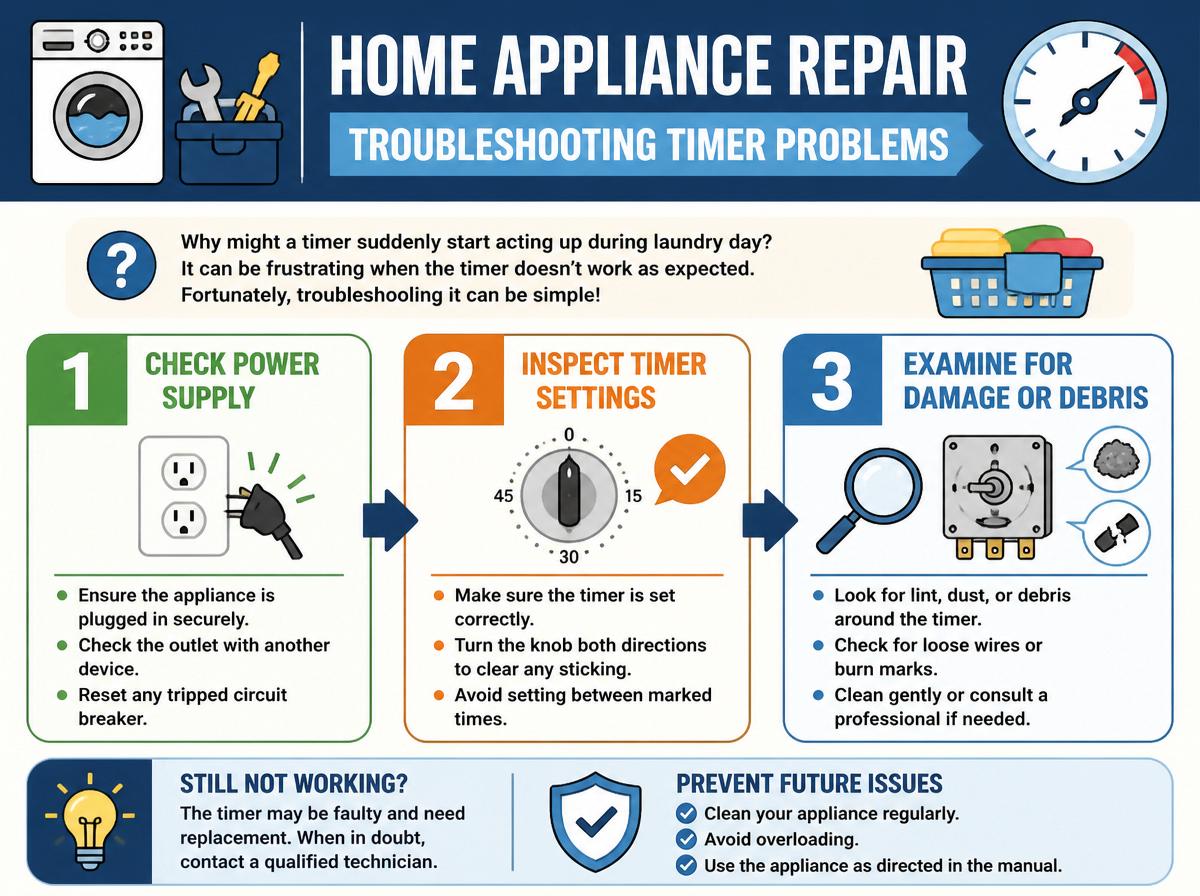
Why might a timer suddenly start acting up during laundry day? It can be frustrating when the timer doesn’t work as expected. Fortunately, troubleshooting timer problems can often be handled without expert help. Here are three steps to follow:
- Check the Power Source: Make sure the dryer is plugged in and check the circuit breaker. Sometimes, power issues can cause timer failure.
- Inspect the Timer Control: Look for signs of wear or damage on the timer dial. Sometimes, a small problem like dust can impact performance.
- Use Diagnostic Tools: Utilize diagnostic tools to identify any electronic issues. This helps determine if professional repair or warranty claims are necessary.
Maintaining Your Dryer Timer
Maintaining a dryer timer is key to keeping it running smoothly, and it’s easier than it sounds! Regular cleaning of timer components can prevent dust and lint from causing issues, while checking electrical connections makes sure everything clicks just right. If the timer starts acting up, don’t worry—replacing the timer mechanism can be a simple fix that gets your dryer back on track, making laundry day a breeze again!
Cleaning Timer Components
Cleaning dryer timer components can be an easy and satisfying chore that helps keep the appliance running smoothly. A few simple nonabrasive techniques will guarantee the timer lasts longer. Here’s a quick guide on how to clean them effectively:
- Unplug the Dryer: Safety first! Always disconnect the dryer before starting any work on it.
- Dust and Debris Removal: Use a soft cloth to gently wipe away dust and dirt from the timer’s exterior.
- Apply Contact Deoxidizer: Lightly spray a contact deoxidizer on the timer’s electrical connections to help improve conductivity.
Checking Electrical Connections
Ensuring the electrical connections of a dryer timer are in good shape is like giving the appliance a special hug! A proper check of these connections starts with circuit labeling, which helps identify the correct wires. This is super important because, without the right connections, the dryer timer won’t work as it should. Next, an insulation inspection is necessary. Checking for any signs of wear or damage in the wiring can prevent future problems. If the insulation looks frayed or cracked, it’s best to address it right away. Remember, taking the time for these inspections can keep the dryer running smoothly and safely—just like a cozy warm hug. So, jump in and keep that dryer happy!
Replacing Timer Mechanism
- Disconnect Power: Always unplug the dryer to guarantee safety.
- Remove the Timer: Access the timer by removing screws or clips, being careful not to damage surrounding components.
- Parts Sourcing: Find the right replacement timer at a local appliance store or online, confirming compatibility with your dryer model.
With a little patience and these steps, anyone can tackle the task confidently. Remember, it’s all about keeping that trusty dryer in tip-top shape!
Enhancing Efficiency With Timer Settings
Improving efficiency in laundry day can begin with the simple act of using timer settings on a dryer. By optimizing the load, users can make sure that each cycle is effective and minimizes wasted energy. This means not overloading the dryer or running it for longer than necessary. With clever planning, one can take advantage of night drying, setting the timer to run when energy costs are lower.
This not only saves money but also helps the environment. Users can pair their timer settings with specific drying cycles, making sure clothes are not over dried, which can damage fabrics. Remember, a well-timed dryer can prevent redoing loads and save them from the dreaded wrinkle circle. With a little effort and thoughtful planning, anyone can make laundry day smoother and more efficient. So, let those clothes dry while the stars shine—because laundry can wait until morning!
Frequently Asked Questions
Can Dryer Timers Be Repaired or Do They Need Replacement?
Dryer timers can often be repaired depending on the issue. A cost comparison between repair and replacement should consider warranty coverage, which may influence the decision to repair or invest in a new timer.
How Do I Know if My Timer Is Faulty?
To determine if a timer is faulty, one should utilize a symptom checklist and conduct multimeter testing. Observing inconsistent dryer cycles or failure to advance are key indicators that the timer may be malfunctioning.
Are There Universal Dryer Timers Available?
Universal dryer timers exist, symbolizing hope for broken appliances. These adaptable components promote brand compatibility and often require aftermarket adapters, ensuring diverse machines can find unity in functionality, transforming laundry challenges into seamless experiences for users.
Will Using a Timer Save Energy Costs?
Using a timer can save energy costs by enabling load optimization and off-peak scheduling. This strategy reduces electricity usage when rates are lower, ultimately leading to more efficient drying cycles and decreased utility expenses.
Can I Use a Non-Dryer Timer for My Dryer?
Using a non-dryer timer for a dryer is like fitting a square peg into a round hole; safety concerns and electrical compatibility issues arise. Adhering to manufacturer guidelines guarantees peak functionality and prevents potential hazards.
Conclusion
In the world of dryers, a stitch in time saves nine! Understanding how dryer timers work can make laundry day smoother and more efficient. By knowing the types of timers, their cycles, and how to troubleshoot problems, anyone can feel empowered to tackle laundry challenges. So, whether you’re a seasoned laundry pro or just starting, remember that with a little knowledge and care, you can keep your dryer running happily for years to come!
Explore This Topic
- Back to Dryer
- Back to appliance maintenance
Related guides in this cluster: