
What Are the Essentials for Frigidaire Ice Maker Care?
Taking care of a Frigidaire ice maker is important for yummy ice! First, understand its parts, like the water reservoir and ice mold. Clean it every three months, and check the water filter every six months. If it makes weird noises or stops working, check for clogs and guarantee it’s plugged in. Remember, good water quality makes better ice, so use a filter! Excited to learn more tips for keeping your ice maker happy?
Key Takeaways
- Perform deep cleaning every three months and a basic cleaning weekly to prevent buildup and maintain ice quality.
- Inspect and change the water filter every six months to eliminate contaminants for better-tasting ice.
- Conduct monthly inspections to ensure all components, including the water inlet valve and thermostat, are functioning properly.
- Check the water supply connection regularly and ensure the ice maker is level to promote consistent ice production.
- Contact a technician for persistent issues like leaks or strange noises, as professional assessment may be necessary for repairs.
Understanding Your Frigidaire Ice Maker Components
When it comes to making ice, knowing the parts of a Frigidaire ice maker can feel like cracking a secret code—one that leads to endless invigorating drinks! Understanding component identification is key to ensuring ice maker functionality. Each part has a special role: the water reservoir holds water, while the ice mold shapes it into frozen cubes. The harvesting mechanism senses when ice is ready and kicks it into the bin, like a helpful little elf!
Also important are the water inlet valve and the thermostat; they work together to keep everything running smoothly. Think of your ice maker as a mini factory—every component plays a part in the revitalizing ice production. When you recognize these pieces, you’re empowered to troubleshoot any issues that may arise, keeping that ice flowing for all your favorite beverages. So, don’t hesitate—embrace your inner ice maker detective and enjoy icy treats all summer!
Essential Cleaning Practices
Keeping a Frigidaire ice maker clean is important for it to work its best and make yummy ice. Regular deep cleaning, checking the water filter, and descaling every now and then can help keep it sparkling and fresh. With just a few essential cleaning practices, ice lovers can enjoy their favorite cool treats without a hitch!
Regular Deep Cleaning
Although ice makers are often an overlooked appliance, regular deep cleaning is vital for keeping them functioning at their best. To guarantee proper ice maker sanitization, it’s recommended to clean every three months. This helps prevent build-up and keeps every crystal clear! Here’s a quick guide to cleaning frequency:
| Action | Frequency |
|---|---|
| Basic Cleaning | Weekly |
| Deep Cleaning | Every 3 months |
| Thorough Inspection | Monthly |
| Check for Ice Build-up | Every use |
Check Water Filter
A well-functioning ice maker relies on a clean and efficient water filter, often overlooked but absolutely essential for great-tasting ice. Checking the water filter regularly is vital for ensuring high water quality—after all, ice made from poor-quality water can taste funny! It is important to know when to replace the filter; most should be swapped out every six months, but following the manufacturer’s guidelines is key. A proper filter not only keeps the ice crisp and invigorating but also protects the machine from harmful contaminants. So, take a moment to inspect that filter. A little attention can lead to delightful ice and a happy ice maker. Remember, happy ice makers make everybody smile!
Descale Periodically
After verifying the water filter is in top shape, focusing on descaling can help keep an ice maker working smoothly. Descaling techniques are essential to remove mineral buildup, which can affect ice quality. Regular descaling not only promotes cleaner ice but also extends the life of the machine. It’s recommended to descale every six months, depending on water hardness and maintenance frequency.
For easy descaling, a mixture of vinegar and water often works wonders. Users should run this solution through the ice maker, followed by a clean water rinse to verify no residue lingers. By staying on top of descaling, ice maker owners can enjoy delicious, crystal-clear ice while making their unit perform like new!
How to Properly Maintain Your Ice Maker
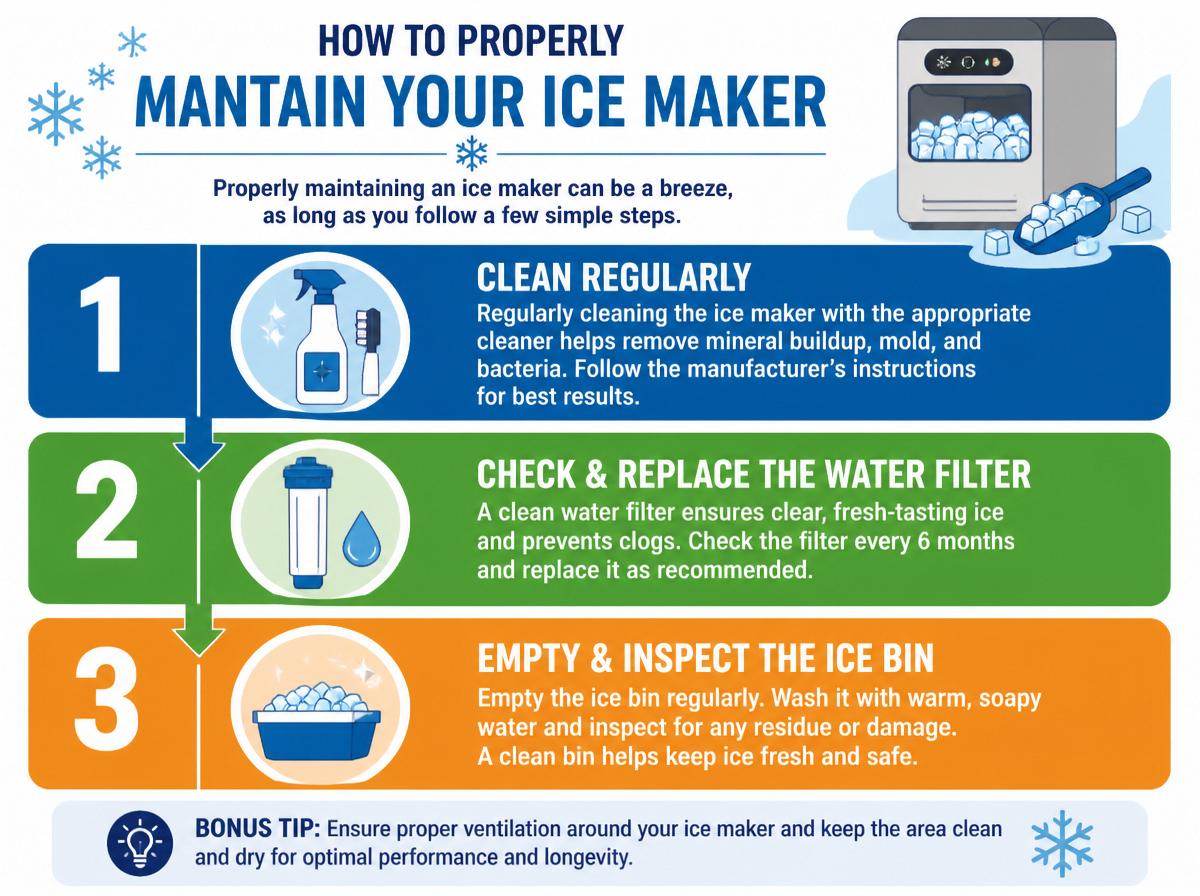
Properly maintaining an ice maker can be a breeze, as long as you follow a few simple steps. Begin by regularly cleaning the ice maker with the appropriate maintenance tools, like a soft cloth and a gentle cleaner. This guarantees that the parts stay neat and tidy, helping with ice production.
Next, check and replace water filters when necessary, as dirty filters can decrease ice efficiency. Ascertain the machine is level to avoid uneven ice and listen for any unusual sounds—it might just be a sign it needs a little extra love.
Lastly, run a test cycle each month. If the ice looks cloudy or smells strange, it may be time for a thorough deep clean! These small maintenance efforts keep the machine running smoothly, making life a little easier and your drinks a lot cooler. With a bit of care, the ice maker can be a shining star in your kitchen!
Troubleshooting Common Issues
When an ice maker starts acting up, it can be frustrating, but don’t worry—most issues can be solved with a little investigation! Common ice production issues often arise from simple problems. First, check if the water supply is connected and flowing well. If it’s not, ice production can take a vacation. Another common culprit is the ice bin; if it’s full, the maker may stop producing more ice.
For troubleshooting tips, inspect the ice maker for any clogs or debris that might block the mechanism. A dirty filter can also hinder performance, so consider giving it a clean. Finally, verify that the ice maker is plugged in and turned on—it’s easy to overlook!
Setting the Right Temperature
Finding the right temperature for a Frigidaire ice maker is essential for making clear, delicious ice. The ideal operating temperature helps guarantee the ice freezes properly, while knowing how to adjust the temperature can make all the difference. With a few simple tips and tricks, anyone can become an ice-making expert in no time!
Ideal Operating Temperature
Setting the ideal operating temperature for a Frigidaire ice maker is essential, as it helps guarantee that ice forms quickly and remains clear and tasty. The perfect temperature for most ice makers typically falls within a satisfactory range of 0 to 5 degrees Fahrenheit. When set correctly, the ice maker can efficiently freeze water, producing delightful ice cubes that are not just pretty but also practical! If the temperature is too warm, the ice may be cloudy or even melt before it’s fully formed. A well-maintained ice maker makes gatherings more enjoyable and invigorating. So, setting the ideal temperature is like giving your ice maker a big hug, helping it perform at its best when you need it most!
Temperature Adjustment Tips
Adjusting the temperature on a Frigidaire ice maker can be like giving it a little TLC, certainly guaranteeing it keeps on making those frosty cubes. Setting the right temperature is essential, as the ice maker exhibits temperature sensitivity that can affect ice production. Here are some helpful tips for properly adjusting the thermostat:
- Check the Manual: Start by reviewing the ice maker’s manual for specific temperature settings and recommendations.
- Monitor Ice Quality: If ice appears cloudy or too soft, it may need a cooler setting.
- Observe Surroundings: Guarantee the ice maker isn’t near heat sources, as this can impact temperature settings.
Water Quality and Its Impact on Ice Production
When it comes to making ice, water quality plays an essential role, and it’s important not to overlook it. Water hardness, which refers to the amount of minerals in the water, can markedly affect ice production. High levels of hardness can create cloudy or less appetizing ice cubes. On the other hand, soft water guarantees clear, crisp ice that’s a delight to use.
Chlorine levels in the water are another factor to take into account. While chlorine helps keep drinking water safe, too much can lead to ice that tastes unpleasant. To combat this, many people choose to use a water filter or allow tap water to sit for a while before freezing it.
Regular Maintenance Schedule
A well-planned maintenance schedule can make a big difference in keeping an ice maker running at its best. Establishing weekly reminders can help keep this important task at the forefront of one’s routine. A solid maintenance checklist can guarantee nothing is missed. Here are three simple steps to follow:
- Clean the Ice Maker: Use a mild detergent and warm water every month to remove any buildup that could affect ice quality.
- Check Water Supply: Regularly examine the water line for leaks or blockages, maintaining a steady flow of fresh water.
- Inspect the Filter: Change or clean the water filter every six months to maintain peak performance.
Tips for Preventing Ice Maker Malfunctions
Keeping an ice maker in tip-top shape can definitely prevent frustrating malfunctions that could leave anyone high and dry during warm days or celebrations. Regular care is essential for maintaining ice production efficiency. Here are some friendly tips to keep your ice maker running smoothly:
| Tip | Reason |
|---|---|
| Check Water Supply | Guarantee proper water flow. |
| Clean Ice Maker Regularly | Remove buildup and debris. |
| Use Quality Ice Maker Accessories | Improve performance and efficiency. |
| Monitor Temperature Settings | Maintain ideal ice-making conditions. |
These actions help avoid common issues, guaranteeing a steady supply of cool ice. By staying proactive, one can enjoy icy treats without any hassle. Remember, a little care goes a long way, and soon you’ll feel like the ice-making superhero at every get-together!
When to Seek Professional Help
Even with all the proactive measures in place, there may come a time when an ice maker needs more than just the usual TLC. Knowing when to seek professional help can save both time and frustration. Here are some common repair signs that indicate it’s time to call in a technician:
- Ice Maker Not Producing Ice – If it’s silent as a mouse, something is wrong!
- Leaking Water – A puddle near your ice maker? Not cool!
- Strange Noises – Any clunks, bangs, or whirs that sound unusual should raise a flag.
In these situations, technician recommendations can provide valuable insights. Experts can diagnose underlying issues that DIY fixes might miss. It’s always better to ask for help when in doubt. Remember, a working ice maker means cold treats, happy gatherings, and invigorating drinks! Don’t hesitate to reach out.
Frequently Asked Questions
How Long Does an Ice Maker Typically Last?
An ice maker typically lasts around 5 to 10 years. Proper maintenance tips, such as regular cleaning and checking components, can greatly enhance the ice maker lifespan, ensuring reliable performance throughout its operational years.
Can I Use Bottled Water in My Ice Maker?
Yes, using bottled water in an ice maker is acceptable. High-quality water enhances ice clarity and taste, ensuring better quality ice. However, consistent maintenance remains essential for ideal performance and longevity of the appliance.
What Is the Ideal Ambient Temperature for an Ice Maker?
The ideal ambient temperature for an ice maker ranges from 50°F to 90°F. Striking this balance guarantees optimum ice production, preventing malfunctions. Coincidentally, maintaining the correct temperature can enhance the efficiency and longevity of the appliance.
Do I Need to Unplug My Ice Maker During Cleaning?
Yes, it is advisable to unplug the ice maker during cleaning methods to guarantee safety precautions are followed. This helps prevent electrical hazards and secures the proper functionality of the appliance during maintenance activities.
How Do I Dispose of Old Ice?
Like a melting snowman in spring, old ice should be disposed of locally. Guarantee proper local disposal methods are followed, or consider ice recycling options provided by some municipalities to minimize environmental impact.
Conclusion
Caring for your Frigidaire ice maker is essential for crystal-clear cubes and cool convenience. By understanding its components, practicing proper cleaning, and scheduling regular maintenance, you can keep your ice maker in top shape. Remember, diligent attention to details like water quality and temperature can prevent pesky problems. So, stay savvy, smile at your cold creations, and enjoy endless ice adventures. When in doubt, don’t hesitate to seek professional support for spectacular service.
Explore This Topic
- Back to ice maker care
- Back to Frigidaire ice maker
Related guides in this cluster: