Essentials of Care and Maintenance for Your GE Ice Maker
Taking care of a GE ice maker means keeping it clean, checking water connections, and knowing your model’s special needs. Clear space around it for airflow, clean with mild solutions, and replace filters regularly to avoid funky tastes or leaks. Tighten water fittings gently to stop drips, and watch for odd noises or misshapen ice—signs it needs a little TLC. Follow these tips, and your ice maker will keep chilling happily. Curious about troubleshooting and lifespan tricks?
Key Takeaways
- Identify your GE ice maker model number to understand specific features and maintenance needs for optimal performance.
- Ensure proper placement with good ventilation and dry surroundings to prevent overheating and prolong appliance life.
- Maintain a clean water supply connection with compatible fittings and monitor water pressure to avoid ice formation issues.
- Regularly clean the ice bin, replace water filters with certified ones, and use mild cleaners for odor control and hygiene.
- Refer to the user manual for troubleshooting, error codes, and call professional service when persistent issues arise.
Understanding Your GE Ice Maker Model
Getting to know a GE ice maker model can feel like unraveling a small, chilly mystery in your kitchen. To start, model identification is key—each GE ice maker has a unique number that reveals its specific features and care needs. Finding this number, usually on a label inside the unit, helps owners understand what makes their machine special. Once identified, feature comparison becomes a helpful step. Some models boast quick-freeze options, while others focus on energy efficiency or quiet operation. Comparing these can make it easier to appreciate what your particular ice maker does best. This understanding turns a simple appliance into a reliable kitchen helper. While it may seem tricky at first, exploring model details empowers users, making maintenance and troubleshooting more manageable. So, take a moment, find that model number, and celebrate the clever contraption quietly producing ice in your home. It’s not just a machine—it’s a frosty friend worth knowing.
Setting Up Your Ice Maker Properly
Choosing the right spot for a GE ice maker makes all the difference—good airflow keeps it running smoothly, while poor ventilation can make it overheat faster than a snowman in summer. Connecting the water supply correctly is just as important; a steady, clean flow guarantees ice cubes form quickly and taste fresh. With a little care in setup, even beginners can enjoy a steady stream of perfect ice without fuss.
Location and Ventilation
Where should an ice maker live to work its best? It needs a spot with good airflow clearance—this means enough space around it so air can move freely. Proper ventilation helps keep the machine cool, especially since warm conditions make it work harder. Ambient temperature matters too; a room that’s too hot can slow ice production or cause the ice to melt faster. Think of your ice maker like a pet that loves a cozy but breezy place. Avoid cramped corners or crowded cupboards. Giving it breathing room keeps everything running smoothly, saving energy and extending its life. So, clear the clutter, keep the area open, and your ice maker will happily churn out ice, ready for all your cool moments.
Water Supply Connection
Connecting the water supply to an ice maker might sound tricky, but with a little patience, it can be a smooth, even satisfying task. First, ensuring material compatibility is key—using tubing that works well with your water type prevents leaks and keeps everything flowing nicely. Next, installing a backflow prevention device is essential; it stops dirty water from sneaking back into your clean supply, protecting your home and health. Take time to tighten connections firmly but don’t overdo it—think “gentle but firm,like shaking hands. Remember, the right tools and a bit of care go a long way. With a steady hand and some focus, anyone can set up this essential water link and enjoy fresh ice in no time!
Routine Cleaning Procedures
Keeping a GE ice maker clean isn’t just about sparkle—it’s about making sure every cube tastes fresh and pure. Routine cleaning procedures help keep the machine running smoothly, preventing any funky smells or germs. Start by unplugging the ice maker to keep things safe. Then, gently wipe down all surfaces with a soft cloth and a mild cleaning solution to sanitize surfaces. Don’t forget the ice bin; it’s a prime spot for unwanted odors to hide. For odor elimination, a mixture of water and vinegar works wonders—just wipe or run it through a cleaning cycle if your model allows. Rinse well with clean water afterward to avoid any lingering vinegar taste. Aim to clean your ice maker every 1 to 3 months, depending on use. This small effort keeps your ice fresh and your machine happy, making every glass of water or lemonade thirst-quenching and ice-cold. Easy and worth it!
Replacing and Maintaining Filters
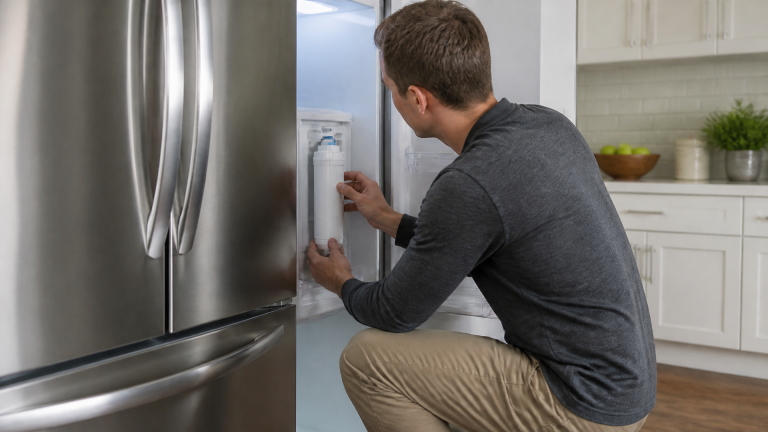
Regularly replacing and maintaining filters plays a starring role in keeping a GE ice maker running smoothly and delivering crisp, clean ice. These filters trap impurities, which means when they’re refreshed with certified replacements, the ice tastes better and the machine lasts longer. Always choose filters with proper filter certification to guarantee top quality and safety. Swapping out old filters before they get too clogged avoids strain and keeps water flowing right.
When it’s time to say goodbye to your used filter, proper filter disposal is important. Don’t just toss them in the trash—check local recycling programs or manufacturer recommendations to avoid environmental oopsies. Handling replacement is usually straightforward: twist out the old, pop in the new, and reset any alerts. Keeping up with this simple routine brings big benefits—better ice, fewer breakdowns, and a happy ice maker humming along. In no time, filter maintenance becomes a quick, rewarding habit that helps ice stay fresh and clear, just like you like it.
Checking Water Supply and Connections
A steady flow of water is what keeps an ice maker happy, so checking the water line for cracks or leaks is a smart first step. Water pressure needs to be just right—not too weak to make tiny ice cubes, and not too strong to cause a flood. Taking a few minutes to inspect these connections can save a chilly surprise later and keep your ice crisp and clear.
Inspecting Water Line Integrity
Although it might seem like a small detail, inspecting the water line for the GE ice maker is an important step in making sure your appliance works smoothly and keeps delivering crystal-clear ice. Water lines can suffer from corrosion, which can cause leaks or weird tastes in your ice. Vibration damage from daily use might loosen connections or create tiny cracks that are easy to miss but cause big problems over time.
Here’s how to keep your water line happy and healthy:
- Look closely for any signs of corrosion or rust.
- Check if the line feels loose or moves when the machine runs.
- Inspect for cracks or wear, especially near connectors.
- Listen for unusual humming or vibrating sounds.
- Tighten all fittings gently, but don’t overdo it!
Taking a moment for this inspection saves headaches later.
Ensuring Proper Water Pressure
How can one tell if the water pressure feeding a GE ice maker is just right—not too weak to freeze slowly, nor too strong to cause leaks? It starts with a quick check using a pressure gauge, making sure gauge calibration is spot-on for accurate readings. Ideal water pressure usually falls between 20 and 120 psi, but it’s crucial to confirm during peak demand times, like when the household uses lots of water. If pressure dips too low, ice production slows, frustrating anyone craving cubes fast. Too high, and leaks could sneak in, causing surprise puddles. Regularly inspect supply lines and connections—tighten gently but firmly, avoiding over-torque. Taking these simple steps keeps the ice maker happy, producing perfect ice while preventing annoying water woes. A little care makes a big chill-worthy difference!
Identifying Common Ice Maker Issues
Why does an ice maker sometimes stop making ice, or produce cubes that are tiny or misshapen? Several common issues can cause this, and knowing them helps keep the ice flowing smoothly. Error codes displayed on the unit often signal specific troubles, like a water supply problem or a sensor glitch. Ice discoloration, whether cloudy, gray, or yellowish cubes, can indicate impurities in the water or outdated filters, which affects taste and safety.
Here are some common signs to watch for:
- No ice production or very slow freezing
- Small, misshapen, or hollow ice cubes
- Ice discoloration or unusual odors
- Visible error codes flashing on the display
- Water leaking inside or around the ice maker
Understanding these issues helps users feel confident in spotting problems early, encouraging timely maintenance and avoiding bigger headaches later.
Steps for Troubleshooting Minor Problems
Tackling minor issues with a GE ice maker doesn’t have to feel like a mystery wrapped in frost. The first step is to consult the diagnostic checklist provided in the user manual. This handy tool guides users through simple checks—like ensuring the water supply is on and the ice bin is correctly positioned. Next, if the ice maker flashes or beeps, referencing error code decoding can quickly reveal specific problems, such as low water pressure or sensor glitches. With these codes decoded, users avoid guessing and address issues promptly. It’s important to keep the process lighthearted—after all, ice makers can be a bit moody, just like us on a chilly morning! Patience pays off. Following the checklist step-by-step, testing after each fix, and knowing what each error code means often resolves common hiccups without stress or calls for help. Confidence grows with each successful troubleshooting, turning confusion into clarity.
When to Call a Professional Technician
When should one decide it’s time to call in a professional technician for a GE ice maker? If the ice maker is still acting up after trying basic troubleshooting, it’s best to get expert help. Sometimes, fixing it yourself can void warranties or complicate future repairs. Plus, if your unit is covered under service contracts, calling a pro guarantees the agreement stays valid. Also, if the problem might relate to damage covered in insurance claims, having a technician assess the issue can support your case.
Consider reaching out when you notice:
- Ice maker won’t produce ice despite power supply checks
- Water leaks forming under or around the unit
- Strange noises that simple fixes can’t stop
- Ice cubes are oddly shaped or partial
- Frequent error lights with no reset effect
Calling a qualified technician saves time, avoids stress, and helps keep your ice maker running smoothly for years ahead!
Tips for Extending the Lifespan of Your Ice Maker
Although ice makers are built to be reliable, giving a little extra care can make a big difference in how long they last. One smart move is using surge protection to guard against electrical spikes that might zap the machine’s delicate parts. This simple step can prevent unexpected breakdowns and save money on repairs. Staying up to date with software updates is another key tip. These updates often improve the ice maker’s functions and fix bugs that could cause hiccups in performance. Regularly cleaning the ice maker, checking water filters, and keeping the area dry also play major roles in extending its life. Think of your ice maker like a friendly robot that appreciates some attention and protection—it will thank you by serving up perfect ice for years. Taking these small actions shows the ice maker some real TLC, making every chill that much cooler and hassle-free.
Frequently Asked Questions
Can I Use Flavored Water to Make Ice Cubes?
Flavored water can be used to make ice cubes; however, the ice maker may experience taste transfer and odor retention, potentially affecting the flavor of subsequent ice batches. Careful cleaning is recommended to prevent lingering flavors.
Are GE Ice Makers Energy Efficient Compared to Others?
Surprisingly, GE ice makers often outperform many competitors in Energy Ratings, revealing lower Power Consumption than expected. This efficiency reassures users seeking eco-friendly and cost-effective appliances, ultimately enhancing satisfaction without sacrificing ice quality or speed.
What Type of Ice Cube Shape Does GE Ice Maker Produce?
GE ice makers produce both crescent cubes and full cubes, depending on the model. Crescent cubes are hollow and crescent-shaped, while full cubes are solid, offering consumers options for various uses and preferences in ice shape.
How Noisy Is the Ice Maker During Operation?
GE ice makers typically operate around 40-50 decibel levels, comparable to a quiet conversation. Vibration sources from the compressor and water inlet can cause occasional noise but generally remain unobtrusive in typical kitchen environments.
Can I Use My Ice Maker Outdoors in Warm Climates?
Outdoor installation of the ice maker in warm climates requires adequate heat protection to prevent overheating. Proper ventilation and shading are essential to maintain performance and longevity, ensuring the unit functions efficiently despite higher ambient temperatures.
Conclusion
Caring for a GE ice maker is like nurturing a small garden—consistent attention helps it thrive. By following simple steps such as regular cleaning, checking filters, and watching water connections, users can enjoy fresh ice without worries. When problems arise, a little troubleshooting often does the trick, but knowing when to call a pro keeps hassles away. With these easy tips, anyone can keep their ice maker humming happily for years to come.
Explore This Topic
- Back to ice maker
- Back to appliance maintenance
Related guides in this cluster: