
Your Guide to Identifying Right Appliance Parts
Identifying the correct appliance parts is fundamental for effective repairs. Each appliance’s model number provides specific information on compatibility and features. Understanding common components, like thermostats and heating elements, is necessary for accurate diagnosis. Yet, locating the right parts can be challenging. Knowing where to source these components and ensuring they match specifications is essential. The process involves more than just a part number; it requires careful consideration of various factors.
Key Takeaways
- Understand the appliance’s model number format to ensure compatibility with the correct parts.
- Use reliable local retailers or online suppliers for OEM and aftermarket parts sourcing.
- Check packaging and material quality to differentiate between genuine and aftermarket parts.
- Conduct thorough troubleshooting to identify specific damaged or malfunctioning components.
- Document and compare appliance maintenance history to guide future part selections effectively.
Understanding Your Appliance Model Number
How can understanding an appliance’s model number enhance the identification of its parts? Knowing the specific model number formats allows users to trace compatibility for replacement components. Each appliance brand may employ different conventions in their model numbers, often incorporating letters and numbers that signify design variations, manufacturing dates, or specific features. For instance, brands like Whirlpool and Samsung utilize distinct patterns, reflecting their engineering philosophies and part organization strategies. By deciphering these formats, users can efficiently access part catalogs and manuals, ensuring they acquire the correct components. Additionally, being aware of brand variations in model number organization aids in distinguishing similar models, thereby preventing errors in part selection and enhancing maintenance efficiency for diverse appliances.
Common Appliance Parts and Their Functions
Understanding the specific model number of an appliance not only aids in identifying compatible parts but also facilitates a clearer comprehension of the common components within these appliances and their respective functions. Each appliance type requires specific parts to guarantee peak functionality. The following are fundamental components found across various appliance types:
- Thermostat: Regulates temperature to maintain the desired setting, essential in appliances like refrigerators and ovens.
- Compressor: A significant part of cooling systems, it circulates refrigerant and maintains the cooling cycle in refrigerators and air conditioners.
- Heating Element: Responsible for generating heat in appliances such as ovens and dryers, making sure that food is cooked or textiles are dried to perfection.
Understanding these parts helps improve part compatibility and enhances appliance longevity.
Troubleshooting Common Appliance Issues
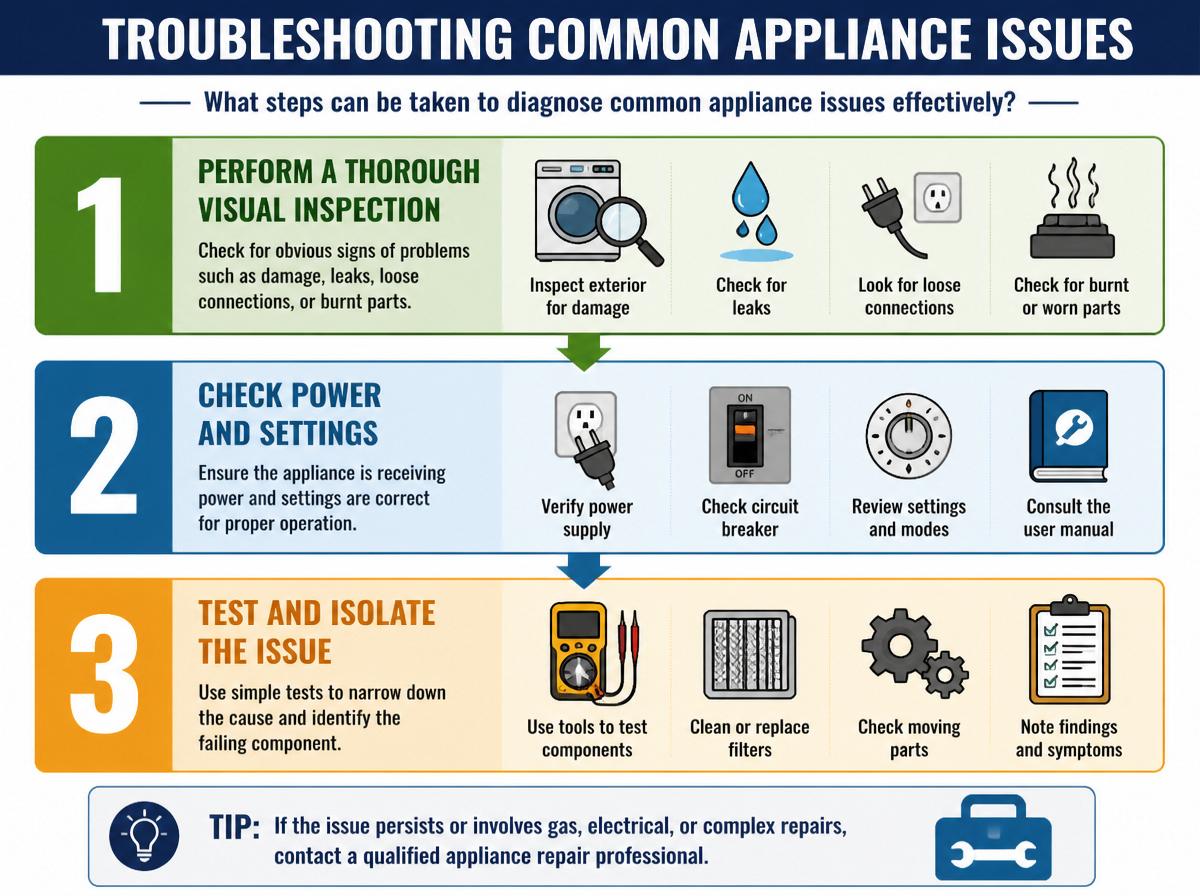
What steps can be taken to diagnose common appliance issues effectively? First, one must perform a thorough visual inspection, checking for obvious signs of wear, damage, or blockages. Next, consulting the appliance’s manual can provide specific troubleshooting guidance tailored to the model. Utilizing a multimeter can aid in diagnosing electrical problems by testing continuity and voltage at critical components. For mechanical failures, evaluating moving parts for friction or unusual noises is essential. It is also important to assess power supply issues, including blown fuses or tripped breakers. Properly documenting symptoms helps in identifying patterns, facilitating more accurate diagnosis. Finally, researching common failures associated with the appliance type can assist in fixing appliances more efficiently, leading to a successful resolution.
Where to Find Appliance Parts
While various sources exist for acquiring appliance parts, identifying the most suitable options is essential for efficiency and accuracy. Here are three key sources to evaluate:
- Local Appliance Retailers: These outlets often stock original manufacturer parts, ensuring quality and compatibility. Their staff can provide expert advice specific to particular appliances.
- Online Suppliers: Many e-commerce platforms offer a wide range of appliance parts, including OEM (Original Equipment Manufacturer) and aftermarket options, facilitating convenient comparison and ordering.
- Second Hand Marketplaces: Platforms like eBay or Facebook Marketplace can yield rare or discontinued parts at reduced prices, making them a valuable option for cost-conscious consumers.
Tips for Taking Accurate Measurements
Accurate measurements are essential for successfully identifying and procuring appliance parts. Employing precise measuring methods is critical; for instance, using a caliper provides measurements down to the millimeter, ensuring reliability. When measuring lengths, it is advisable to measure from one edge to another at the widest point to account for variance in parts. For internal dimensions, a flexible measuring tape can help reach tight spaces effectively. Utilizing accurate tools such as digital measuring devices can enhance the precision of the measurements further by minimizing human error. It is also important to take multiple measurements and record them systematically to verify consistency. Consistency in measurements ultimately aids in the accurate selection of appliance components, streamlining the repair or replacement process.
Identifying Genuine vs. Aftermarket Parts
How can one effectively distinguish between genuine and aftermarket appliance parts? Proper identification is essential for ensuring compatibility and performance.
- Labeling and Packaging: Genuine parts typically come with brand-specific labeling and high-quality packaging, while aftermarket parts may have generic packaging and inconsistent labeling.
- Material Quality: Genuine parts are often made from higher-quality materials, ensuring durability. In contrast, aftermarket parts may use substandard materials, affecting their lifespan and performance.
- Price Comparison: While aftermarket parts may be more affordable, a markedly lower price compared to genuine parts can indicate compromised quality.
Understanding these distinctions helps consumers make informed decisions, ensuring best functionality and reliability of their appliances.
Utilizing Online Resources for Part Identification
Utilizing online resources for appliance part identification can greatly enhance accuracy in locating specific components. Manufacturer websites often provide detailed diagrams and part numbers, while online parts catalogs streamline the search for compatible pieces. Additionally, appliance repair forums serve as valuable platforms for sharing experiences and insights, further aiding users in the part identification process.
Manufacturer Websites Resources
Although many consumers may overlook the value of manufacturer websites, these platforms serve as essential resources for accurately identifying appliance parts. By leveraging manufacturer support, users can obtain precise part specifications and verify compatibility with their appliance models. These websites often provide all-encompassing tools and information, including:
- Part Diagrams: Visual aids that display specific components, facilitating correct identification.
- Model Number Lookup: A feature that allows users to enter their appliance’s model number, retrieving relevant part information directly.
- Technical Support: Access to expert guidance for troubleshooting and part identification, increasing the likelihood of selecting the correct component.
Utilizing these resources effectively can streamline the process of locating the right appliance parts, ultimately enhancing repair accuracy and efficiency.
Online Parts Catalogs
Where can consumers find thorough and organized information about appliance parts? Online parts catalogs serve as extensive resources, consolidating detailed specifications and diagrams for various appliance components. Users can utilize online search tips to enhance their queries, such as including the appliance model number for precise results. Many catalogs also feature parts comparison tools, enabling users to evaluate multiple options based on criteria like price, compatibility, and manufacturer reputation. These tools streamline decision-making, allowing for informed purchases tailored to individual needs. Additionally, the user-friendly interfaces of these catalogs often include sorting and filtering capabilities, making it effortless for consumers to locate specific parts, thereby facilitating a more efficient repair process.
Appliance Repair Forums
Appliance repair forums serve as a valuable resource for consumers seeking assistance in identifying specific parts for their appliances. These platforms enable users to share experiences, provide appliance repair tips, and discuss effective troubleshooting techniques. Participants may benefit from the collective knowledge gathered in the following ways:
- Expert Opinions: Access advice from seasoned technicians and experienced hobbyists.
- Visual Aids: Users often upload images of parts, aiding in accurate identification and understanding.
- Specific Case Studies: Forum discussions frequently explore individual appliance malfunctions, offering insights that can direct users to the correct components.
Utilizing these resources fosters community learning and enhances the possibility of successful repairs, ultimately leading to more informed and confident appliance maintenance.
Understanding Warranty Implications
Understanding warranty implications is essential for appliance owners when identifying parts. Specific warranty coverage limits dictate the extent of protection provided, while certain exclusions may affect claims related to part replacements. Familiarity with the claim process steps can facilitate a smoother experience when addressing warranty-related issues.
Warranty Coverage Limits
While many consumers assume that warranties cover all potential issues with their appliances, it is essential to recognize the specific limitations that often accompany these agreements. Understanding the warranty terms and the limitations on coverage duration can help prevent misunderstandings later.
- Defined Coverage: Warranties typically specify which parts are covered, often excluding components prone to wear and tear.
- Time Constraints: Most warranties have a specified duration, with many providing coverage only for one year, highlighting the importance of timely repairs.
- Conditional Clauses: Manufacturers may impose conditions such as proper maintenance to qualify for warranty services, further complicating claims.
Exclusions to Consider
Although warranties are designed to provide assurance against defects, they often contain specific exclusions that consumers must be aware of to avoid misunderstandings. Common exclusions include damages resulting from improper installation, misuse, or lack of maintenance, which can lead to potential cost implications for the consumer. Furthermore, wear and tear from regular use typically falls outside warranty coverage. Understanding these exclusions is essential, as they can impact the consumer’s financial responsibility when claiming a repair or replacement. Additionally, manufacturer return policies may further limit the circumstances under which a warranty can be invoked. Consumers should thoroughly review warranty documents and manufacturer guidelines to guarantee compliance and mitigate unforeseen expenses associated with appliance parts.
Claim Process Steps
Successfully guiding the claim process for appliance warranties involves several critical steps that consumers must follow to secure proper coverage. Proper understanding of these procedures guarantees the efficiency of claims and minimizes delays.
- Gather Claim Documentation: Collect all necessary documents, including proof of purchase, warranty details, and a detailed description of the issue.
- Submit the Claim: Follow the manufacturer’s specified submission process, providing all required information accurately to facilitate efficient processing.
- Monitor Approval Timelines: Be aware of the anticipated approval timelines and maintain communication with customer service to address potential issues promptly.
Adhering to these steps can greatly enhance the likelihood of a successful claim, guaranteeing that warranty benefits are fully realized.
Keeping Track of Your Appliance Maintenance History
Maintaining an extensive record of appliance maintenance history is essential for ensuring longevity and optimal performance of household devices. Appliance documentation should encompass details such as service dates, parts replaced, and technician notes. This meticulous record-keeping aids in tracking common issues and identifying patterns that may signify underlying problems. Additionally, implementing a maintenance reminder system can prompt timely inspections and servicing, preventing minor issues from escalating into costly repairs. Regular updates to the documentation facilitate an informed assessment of appliance conditions, enabling homeowners to make data-driven decisions regarding replacements or upgrades. Ultimately, systematic tracking of maintenance history contributes to peak function, efficiency, and cost savings in appliance management.
Knowing When to Call a Professional
Determining when to call a professional is essential to guarantee appliance safety and functionality. Indicators of severe damage, the necessity for complex repairs, and potential safety concerns should prompt immediate consultation with a qualified technician. Ignoring these signs may exacerbate issues, leading to further complications and risk.
Signs of Severe Damage
Although many appliance issues can be resolved with basic troubleshooting, certain indicators suggest the presence of severe damage that warrants immediate professional evaluation. Recognizing these signs early can prevent further complications and guarantee safety.
- Excessive Noise: A sudden increase in operational noise can indicate mechanical failure or internal damage, requiring expert assessment.
- Unusual Odors: The presence of burning smells or gas odors is a critical warning sign that should never be ignored and necessitates swift action.
- Failure to Operate: Complete appliance malfunction, where it fails to turn on or respond, often points to deeper electrical or mechanical problems.
Acknowledging these signs can facilitate timely repairs and prevent extensive damage.
Complex Repair Requirements
Severe damage indicators not only necessitate prompt attention but also highlight the complex nature of certain appliance repairs. Determining when to seek professional help is vital, especially in instances of high repair complexity. Advanced troubleshooting techniques may be insufficient for intricate issues.
| Repair Scenario | Recommended Action |
|---|---|
| Electrical failure | Consult a licensed technician |
| Refrigerant leaks | Engage a certified specialist |
| Control board issues | Seek an experienced technician |
| Major structural damage | Hire a qualified repair expert |
Homeowners should assess both the symptoms of appliance failure and their proficiency in addressing them. When uncertainty arises, calling a professional can prevent exacerbating the situation and guarantee a reliable resolution.
Safety Concerns and Risks
Recognizing the potential safety hazards associated with appliance repairs is essential for homeowners. Engaging in unauthorized repairs can lead to significant risks, warranting a careful risk assessment before any intervention. The following considerations can guide the decision to call a professional:
- Electrical Hazards: Exposed wires or faulty circuits can pose severe risks, potentially leading to electrocution.
- Gas Leaks: Improper handling of gas appliances can result in hazardous leaks, resulting in fire or explosion risks.
- Lack of Experience: Homeowners unfamiliar with appliance internals may inadvertently compromise safety, highlighting the importance of proper safety precautions.
In cases of uncertainty, consulting a professional is advisable to guarantee safety and compliance with legal standards.
Frequently Asked Questions
How Can I Extend the Lifespan of My Appliance Parts?
To extend appliance part lifespans, individuals should implement preventative maintenance and conduct routine inspections. Regular cleaning, timely repairs, and adhering to manufacturer guidelines greatly reduce wear and tear, thereby enhancing overall durability and functionality of appliance components.
What Are the Most Common Signs of Appliance Part Failure?
Common signs of appliance part failure include unusual noises, inconsistent functionality, and visible wear. Adhering to appliance maintenance tips and repair frequency guidelines can help detect these issues early, ensuring peak performance and prolonging appliance lifespan.
Can I Use Non-Brand Parts Without Voiding My Warranty?
Using aftermarket parts may void warranty implications, as manufacturers often require original parts for coverage. It is advisable to consult the warranty terms and conditions before substituting components to guarantee compliance with the manufacturer’s policies.
Is It Safe to Install Parts on My Own?
Installing parts independently can be akin to maneuvering through a labyrinth without a map; safety guidelines are paramount. Professional assistance guarantees proper installation, minimizing risks and enhancing appliance longevity while preventing potential hazards from mishaps or incorrect fittings.
What Tools Do I Need for Appliance Part Replacements?
To replace appliance parts, essential tools include various screwdriver types, such as flathead and Phillips, ensuring part compatibility. Additional tools may involve pliers, wrenches, and a multimeter for electrical components, enhancing installation efficiency and accuracy.
Conclusion
In summary, accurately identifying appliance parts is essential for effective maintenance and repair, much like traversing a treasure map in search of hidden gems. By understanding model numbers, common parts, and troubleshooting techniques, users can guarantee longevity and peak performance of their appliances. Additionally, leveraging both local and online resources allows for a seamless procurement process. Ultimately, regular maintenance, thorough record-keeping, and recognition of when professional assistance is needed will safeguard against unexpected appliance failures.
Explore This Topic
- Back to Maintenance & Repair Procedures
- Back to appliance repair
Related guides in this cluster: