
Testing the Heating Element in Your Dishwashing Machine: A Step-by-Step Guide
Testing the heating element in a dishwasher can feel a bit intimidating, but it’s actually quite simple. This important part helps guarantee your dishes come out sparkling clean. With just a few tools, some safety precautions, and a multimeter, anyone can check if the heating element is working properly. Curious about how to get started? Let’s break it down step by step and take the mystery out of this handy appliance!
Key Takeaways
- Disconnect the dishwasher from power and wear protective gear before starting the testing process.
- Use a multimeter set to the correct resistance setting to test the heating element.
- Attach the multimeter probes to the heating element terminals, checking for a resistance reading near zero.
- Ensure the multimeter is calibrated properly to avoid inaccurate readings during the test.
- If the heating element fails the test, follow the manual for safe replacement procedures.
Understanding the Role of the Heating Element
The heating element is like the superhero of a dishwashing machine, working hard behind the scenes to keep everything running smoothly. Its main function is to heat the water. This hot water guarantees that dishes come out sparkling clean, fighting off any stubborn food residue. Without a properly working heating element, dishwasher performance plummets. Cold water can’t effectively tackle greasy pots or baked-on stains, making this little hero indispensable. When you flip that switch, it’s the heating element that springs into action, helping your dishes get the pampering they deserve. Remember, keeping an eye on this component helps maintain your machine’s efficiency. So, give a cheer for the unsung hero of your kitchen, and check that heating element today!
Safety Precautions Before Starting
Before diving into testing the heating element of a dishwasher, a careful approach is essential. This guarantees safety and helps avoid electrical hazards. Readers should prioritize their well-being by taking a few simple precautions first.
- Gather Safety Gear: Always wear rubber gloves and goggles to protect against potential shocks and splashes.
- Unplug the Dishwasher: Make sure the machine is unplugged before starting any inspections. This step eliminates the risk of accidental electrocution.
- Read the Manual: Familiarize yourself with the dishwasher’s manual. It contains important safety tips and can help you avoid mistakes.
Tools You’ll Need for Testing
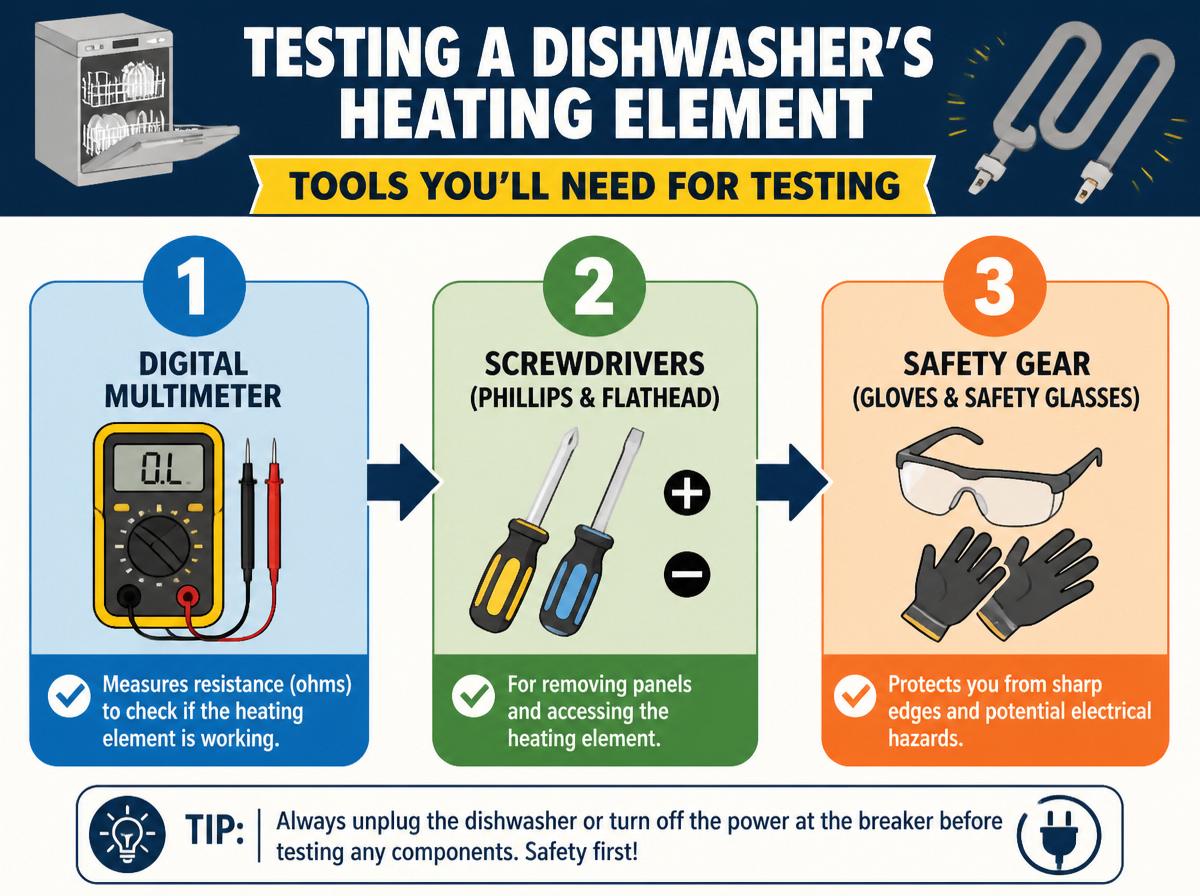
While testing a dishwasher’s heating element might seem challenging, having the right tools can make the process much smoother and even a bit fun. Gathering the necessary testing equipment and repair tools is essential for success. Below is a helpful list to guide the process:
| Tool | Purpose | Where to Buy |
|---|---|---|
| Multimeter | Measures electrical current | Hardware stores |
| Screwdriver set | Removes panels | Home improvement stores |
| Pliers | Grips and twists wires | Online retailers |
| Insulation resistance tester | Checks safety of wiring | Electrical supply stores |
Having these tools ready will build confidence while ensuring a safe and effective testing experience. So, let’s roll up those sleeves and get to work!
Locating the Heating Element in Your Dishwasher
Finding the heating element in a dishwasher is like going on a little treasure hunt. Exciting, isn’t it? The heating element location can differ based on the dishwasher model. Here are three common places to check:
- Bottom of the Dishwasher: Many dishwashers have their heating element at the bottom. Look for a metal piece that’s usually round or rectangular.
- Near the Door: Some models place it near the door, making it easier to heat during cycles.
- Side Walls: Occasionally, the heating element may be found along the side walls, so keep an eye out!
No need to fret, as finding this treasure will lead to better dishwashing results! Happy hunting!
Disconnecting Power for Safety
Before getting started on testing the heating element, safety comes first. It’s essential to disconnect the power to the dishwasher to avoid any shocking surprises. Following the right steps to guarantee everything is safe can make the process smooth and worry-free, so let’s get ready!
Importance of Safety First
Safety always comes first when tackling any home repair, including checking the heating element in a dishwasher. Prioritizing safety gear helps prevent electrical hazards that can occur during the process. Here are three essential steps to guarantee a safe environment:
- Wear safety goggles: Protect those peepers from any flying debris.
- Use insulated tools: These will help keep electrical shocks at bay.
- Keep the work area dry: Avoid slippery spots to reduce any chances of an accident.
Taking these precautions makes the task not just manageable, but safe. It’s like wearing a superhero cape while fixing things up. So, gear up and remember that safety leads to successful DIY adventures!
Power Disconnect Procedures
Once the safety gear is on and the workspace is ready, it’s time to focus on something very important: disconnecting the power. First, locate the power sources of the dishwashing machine, usually found under the sink or in an electrical panel. It’s essential to turn off the circuit breaker or unplug the machine completely. This helps avoid any shock while troubleshooting the heating element. If uncertain, handy troubleshooting tips suggest using a voltage tester to verify no electricity is flowing. Remember, there’s no rush! Taking these steps carefully helps keep everyone safe. With the power disconnected, the real work can begin. So, take a deep breath and feel confident. You’ve got this!
Testing the Heating Element With a Multimeter
Testing the heating element in a dishwasher can feel like a challenging task, but with the right tools and a bit of confidence, anyone can do it! Using a multimeter can simplify this process. Here are some troubleshooting tips to make it easier:
Testing a dishwasher’s heating element is straightforward with a multimeter and some confidence—anyone can master it!
- Set up the multimeter: Make sure it’s on the correct setting for measuring resistance.
- Connect the probes: Touch the red probe to one terminal and the black probe to the other on the heating element.
- Check the reading: A value close to zero indicates the element is working properly.
With these simple steps, users can gain confidence in their multimeter usage. Remember, it’s all about taking it one step at a time, and soon, the heating element will be tested like a pro!
Interpreting Your Multimeter Readings
While examining the multimeter readings, a user might find themselves wondering what those numbers really mean. Understanding these values is vital for effective reading interpretation. For instance, a typical heating element should show a resistance between 10 to 30 ohms. If the readings are considerably higher, the element may be malfunctioning. It’s essential to guarantee proper multimeter calibration before taking any measurements, as an uncalibrated tool can give incorrect results. Remember, numbers that seem confusing might actually be a treasure map guiding the way to a functional dishwasher! So, don’t panic if things look off just double-check those readings and recalibrate if necessary. With a little patience and practice, anyone can master the art of multimeter reading!
Replacing the Heating Element if Necessary
If the multimeter readings indicate a problem with the heating element, it’s time to roll up those sleeves and get ready for some hands-on work! Replacing the heating element can feel intimidating, but with a few simple steps, anyone can tackle it. Here’s how:
- Gather Supplies: You’ll need a new heating element, screwdrivers, and possibly pliers to help with the job.
- Safety First: Always unplug the dishwasher to avoid any nasty surprises. Safety is key!
- Follow Instructions: Refer to the appliance manual or a reliable online guide for specific replacement instructions. Troubleshooting tips can also be helpful during this process.
With a bit of patience and effort, anyone can successfully complete this heating element replacement and enjoy a properly functioning dishwasher once again!
Frequently Asked Questions
How Often Should I Test My Dishwasher’s Heating Element?
Frequency recommendations suggest testing a dishwasher’s heating element annually. Regular inspections contribute to ideal performance. Maintenance tips include observing cycle efficiency and ensuring water temperature aligns with manufacturer’s specifications to prevent issues and enhance longevity.
What Are Symptoms of a Faulty Heating Element?
Could a faulty heating element be causing broken dishes? Symptoms include consistently wet or poorly dried dishes, suggesting inconsistent drying performance, leading to potential damage and dissatisfaction with the dishwasher’s efficiency and effectiveness in cleaning.
Can I Clean the Heating Element?
Yes, the heating element can be cleaned using various cleaning techniques. Regular maintenance tips suggest detaching it, using a soft brush or cloth, and applying descaling solutions to remove mineral deposits and guarantee efficient operation.
Are Replacement Heating Elements Universal?
Replacement heating elements are not universally compatible. Different heating element types exist, designed for specific dishwashing machines. It’s crucial to verify compatibility with the manufacturer’s specifications to guarantee proper functionality and avoid potential damage.
How Much Does a New Heating Element Cost?
A new heating element typically costs between $30 to $150, depending on the brand and model. Additional replacement costs may arise during the installation process, which could require professional assistance for best results.
Conclusion
Now that you’ve tested your dishwasher’s heating element, you’re like a modern-day knight, ensuring your trusty appliance fights grime effectively! If the element is working, you’re set for clean dishes ahead. If not, don’t worry—it’s just a small bump in your quest. Remember, with patience and a little help, you can replace it yourself. So, roll up your sleeves and let your dishwasher shine like a well-polished sword. Happy washing, brave DIY-er!
Explore This Topic
- Back to dishwasher repair
- Back to appliance maintenance
Related guides in this cluster: