
Step-by-Step Solutions for Common GE Profile Washing Machine Problems
Many people face common problems with GE Profile washing machines, but there are easy, step-by-step solutions! For noisy operation, check for balance and clear foreign objects. Spin cycle troubles? Make sure the door is closed and clothes are evenly distributed. If drainage is slow, inspect hoses for clogs. Regular cleaning helps, too! Troubles aren’t scary; just follow these tips, and you’ll feel like a laundry superhero. There’s even more helpful advice ahead!
Key Takeaways
- Check power connections and ensure the lid is securely closed for machines that won’t start.
- Inspect for kinks or clogs in the drain hose to resolve drainage issues efficiently.
- Redistribute clothes evenly in the drum to alleviate spin cycle problems and prevent imbalance.
- Regularly clean the filter and drum to maintain good hygiene and prevent mold growth.
- Seek professional help for persistent issues like strange noises or leaking water to ensure safe and effective repairs.
Understanding Common GE Profile Washing Machine Issues
Have you ever wondered why your GE Profile washing machine isn’t working quite right? You’re not alone! Many users face common malfunctions that can leave them feeling frustrated. This may include issues like not spinning properly, leaking water, or the door not locking. Don’t worry; these problems are often fixable!
First, check the user manual for troubleshooting tips specific to your model. It is filled with helpful information that can guide you through many issues. For instance, if your washer won’t start, verify it’s plugged in and the lid is closed securely.
Troubleshooting Noisy Operation
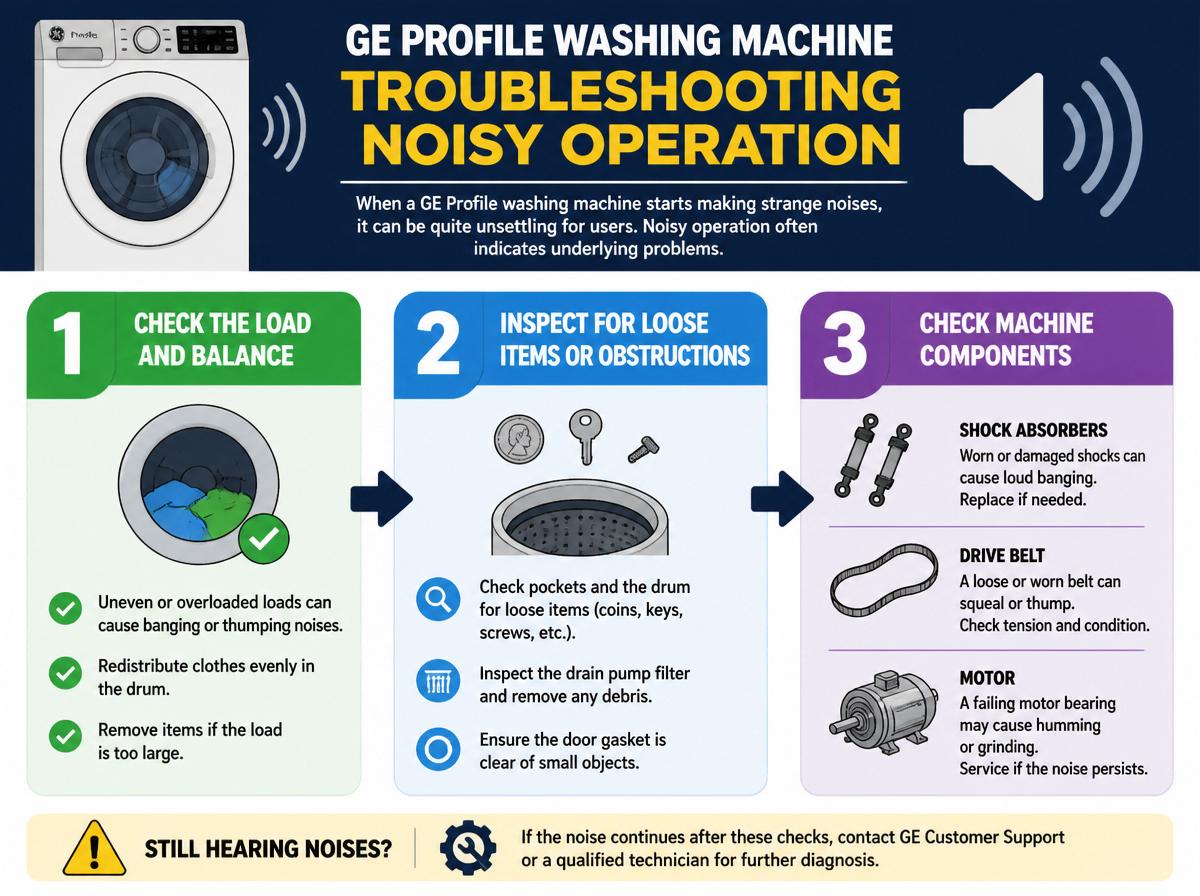
When a GE Profile washing machine starts making strange noises, it can be quite unsettling for users. Noisy operation often indicates underlying problems. First, check if the machine is balanced on the floor; sometimes, it just needs a little shimmy to stop those vibration issues. Uneven floors or overloaded drums can cause excess noise. Next, inspect the drum for foreign objects like coins or small items that could be rattling around. Don’t forget to check the water inlet and drain hoses—if they’re too tight or kinked, they may contribute to the noise. Finally, give the machine a little TLC. A gentle cleaning and lubrication of parts can make a world of difference. Remember, a little troubleshooting goes a long way in transforming your washing experience. You’ve got this! Enjoy the peacefulness that comes from a well-functioning washer.
Resolving Spin Cycle Problems
Although spin cycle problems can be frustrating, there are often simple fixes that anyone can tackle. Many issues arise from imbalance problems during the spin cycle. If clothes are unevenly distributed, the washer may stop spinning altogether. Here’s a handy guide to help:
| Issue | Quick Fix |
|---|---|
| Clothes clumping together | Redistribute clothes evenly |
| Washer shaking | Verify it’s level and steady |
| Cycle won’t start | Check door is fully closed |
| Excessive vibration | Look for loose items in the drum |
First, check the load size and what you’ve placed inside. Next, adjust or redistribute items for better balance. Finally, confirm the washer is on a flat surface. With these tips, you can easily resolve spin cycle issues and get back to fresh laundry in no time!
Addressing Drainage Issues
Drainage issues can be just as pesky as spin cycle problems, often causing frustrations during laundry day. When a GE Profile washing machine won’t drain, the first suspects are usually the drain hose and the filter. A blocked drain hose can prevent water from leaving the machine, like a traffic jam for your laundry! It’s essential to check for any kinks or clogs. Simply disconnect the hose and gently clean it out; you might be surprised by what you find!
Next, a clogged filter can also cause drainage delays. Most filters are located at the front bottom of the machine. Clearing out lint and debris can make a world of difference!
With patience, these steps can help resolve drainage issues. With a little elbow grease and persistence, laundry day can return to its happy, spinning glory! Remember, every problem has a solution—stay positive!
Fixing Error Codes on the Display
Have you ever looked at your washing machine’s display and felt a little puzzled by the error codes flashing across it? Understanding these codes can be frustrating, but fear not! Here are some effective error code solutions that will assist you in decoding their meanings and get your machine back on track.
- Read the Manual: Your washing machine manual often lists error codes and their meanings.
- Reset the Machine: Many errors can be fixed by unplugging the machine for a few minutes and then plugging it back in.
- Check Connections: Inspect power and water connections to ascertain everything is secure.
- Clean Filters: Blocked filters can cause error codes. Regular cleaning can help prevent issues.
Dealing With Water Leakage
Water leakage from a washing machine can feel like a mini-disaster, especially when it seems to happen out of nowhere. When spotting a puddle, it’s time to investigate the water source. First, check the hoses connected to the machine. Are they tight and free of cracks? If a hose is damaged, replacing it can be an easy fix. Next, inspect the door seal. Sometimes, a simple cleaning can help prevent leakage.
Don’t forget to look at the detergent drawer—too much soap can cause overflow! Regular maintenance is key for leakage prevention. Checking connections regularly will guarantee everything stays secure and dry. If water continues to seep out despite these efforts, consulting a professional might be wise. Remember, dealing with washing machine issues can feel challenging, but with small steps and a bit of patience, those leaks can be managed! Keep going; you’ve got this!
Restoring Power and Functionality
Everyone can face moments when their washing machine decides to take a break, leaving clothes unwashed and feeling a bit anxious. Restoring power and functionality is simpler than it might seem! Start with these helpful steps:
- Power Reset: Unplug the machine for a few minutes, then plug it back in. This can refresh the settings.
- Circuit Check: Inspect your circuit breaker to verify it hasn’t tripped. A simple reset can work wonders.
- Inspect Power Cord: Look for any visible damage on the power cord, as frayed wires can cause issues.
- Test the Outlet: If the machine still won’t start, try plugging it into a different outlet to rule out problems there.
With patience and a little detective work, restoring functionality can turn your anxious moment into a triumphant “I did it!experience! Keep up the good work; your laundry will be back on track in no time!
Cleaning and Maintaining Your Washing Machine
Keeping a GE Profile washing machine in top shape is easier than it sounds! Regular filter cleaning, drum maintenance, and preventing mold growth are essential tasks that can boost both performance and lifespan. With just a little effort, anyone can enjoy cleaner laundry and a happier machine—it’s like giving a spa day to your washer!
Regular Filter Cleaning
Cleaning the filter of a GE Profile washing machine is like giving it a revitalizing gust of new air! Regular filter maintenance is essential for smooth operation. By sticking to a good cleaning frequency, users can avoid issues like poor drainage and unexpected errors. Here are four easy steps to guarantee the filter stays in top shape:
- Locate the filter—usually found at the front or back of the machine.
- Remove the filter carefully—use a cloth to catch any water.
- Clean the filter—rinse it under running water to remove lint and debris.
- Reinstall the filter—make sure it’s secured properly before closing everything up.
With regular cleaning, washing machines will run better and last longer, making laundry day a breeze!
Drum Maintenance Tips
Maintaining a GE Profile washing machine’s drum can feel like initiating an exciting adventure that guarantees every laundry day is a success! Regular drum cleaning is essential for keeping clothes fresh and the machine running smoothly. To start, users should wipe down the drum with a soft cloth and a mild detergent, removing any lint or debris. Next, running a hot water cycle with a cup of vinegar can help break down residue and odors. This not only keeps the drum clean but also contributes to noise reduction during cycles, ensuring a quieter laundry experience. Remember, a little maintenance goes a long way in preventing future issues. So, get ready to set out on this journey, and enjoy cleaner clothes with a well-cared-for washing machine!
Preventing Mold Growth
When it comes to enjoying fresh-smelling laundry, preventing mold growth in a GE Profile washing machine is essential! Mold can create a musty smell and ruin clean clothes. Practicing good washing machine hygiene fosters a positive laundry experience. Here are some mold prevention tips to keep your GE machine fresh:
- Leave the door open after the wash cycle to allow air to circulate.
- Wipe down the rubber gasket regularly to remove moisture.
- Run a hot water cycle with vinegar monthly to eliminate lingering odors.
- Use the right detergent—too much can lead to residue buildup.
When to Seek Professional Help
Sometimes, a washing machine can seem like a puzzle, especially if it begins to make strange noises or refuses to spin. In such cases, it might be time to seek professional help. This is especially true if someone has tried basic troubleshooting but the problem persists. A technician with the right qualifications can use advanced diagnostic techniques to pinpoint the issue accurately, making repairs quicker and safer.
It’s important to remember that some problems are beyond DIY fixes. If the machine leaks water or makes alarming sounds, reaching out for help can save stress and further damage. Professionals not only have the experience but also the right tools to handle delicate situations. So, if confusion arises, don’t hesitate! Calling in the experts can turn the puzzle back into a functioning machine, keeping your laundry routine on track and your clothes clean. After all, it’s always okay to ask for a little help!
Frequently Asked Questions
How Can I Improve the Efficiency of My GE Washing Machine?
To improve the efficiency of a GE washing machine, one should focus on load optimization by using full loads and applying maintenance tips such as regularly cleaning the filters and checking hoses for clogs or wear.
What Detergent Is Best for GE Profile Washing Machines?
The best detergent for GE Profile washing machines includes high-efficiency (HE) liquid or powder types. Following washing tips such as using the appropriate amount enhances cleaning performance and maintains the machine’s longevity and efficiency.
Can I Use Dryer Sheets in a Washing Machine?
Dryer sheet usage in washing machines is not recommended; they can cause residue buildup. For softer fabrics and fresh scents, consider fabric softener alternatives like liquid softeners or dryer balls to maintain cleanliness without complications.
How Often Should I Clean My Washing Machine?
Experts recommend cleaning a washing machine every one to three months to guarantee peak performance and hygiene. Regular cleaning frequency is essential for effective machine maintenance, preventing odors, and extending the appliance’s lifespan.
Are There Warranty Options for GE Profile Washing Machines?
Warranty options for GE Profile washing machines can be extensive, offering coverage that feels endless. Customers navigate the claims process to address issues, ensuring peace of mind with their investment in durable and reliable home appliances.
Conclusion
In the world of GE Profile washing machines, troubles can feel overwhelming. However, many common issues are fixable with just a bit of patience and guidance. Think of it as a fun puzzle! By understanding problems like noise or drainage, and exploring straightforward solutions, anyone can become a mini washing machine expert. Remember, if things get too tricky, there’s no shame in asking for help. With a little effort, you’ll have your machine running smoothly again in no time!
Explore This Topic
- Back to GE washing machine
- Back to appliance troubleshooting
Related guides in this cluster: