
Step-by-Step Solutions for Frigidaire Ice Maker Common Problems
When Frigidaire ice makers have problems, it’s important to check a few things. First, verify the water supply is clear and flowing well. Then, inspect the ice maker assembly for any cracks or loose parts. Make certain the freezer is cold enough and clean any ice jams if needed. Regular maintenance helps too! With these steps, users can tackle most issues easily, and there’s much more to explore for successful ice-making solutions.
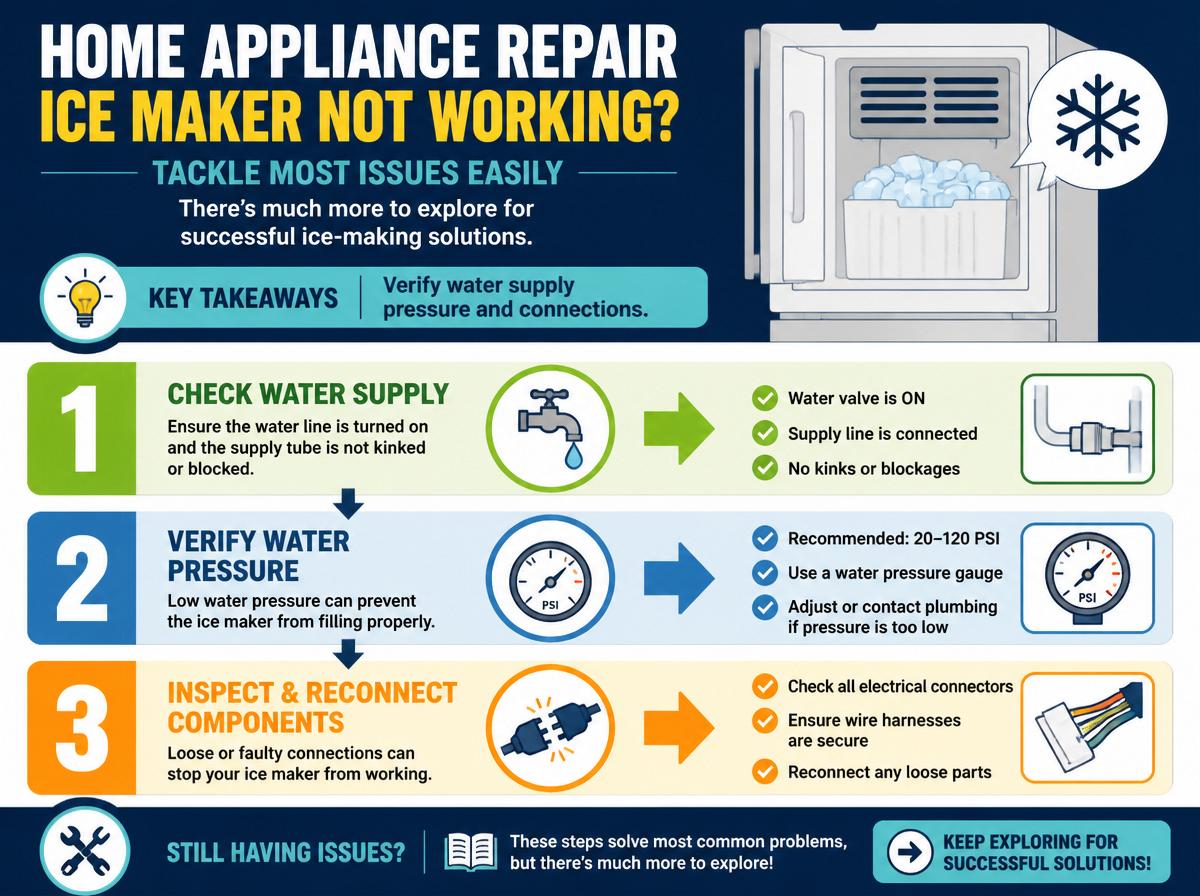
Key Takeaways
- Verify water supply pressure and check for kinks or blockages to ensure proper flow for ice production.
- Unplug the ice maker, remove it, and inspect for cracks, rust, or loose connections in the assembly and control module.
- Maintain a freezer temperature around 0°F (-18°C) and check door seals for optimal cold air retention.
- Clear any visible ice jams using warm water, and clean ice trays with soapy water before reassembling.
- Monitor ice production frequency and quality, and perform regular maintenance checks to ensure efficient operation.
Checking Water Supply Issues
When checking for water supply issues in a Frigidaire ice maker, it’s important to remember that a little problem can lead to big frustrations. First, verify the water pressure is adequate. If it’s too low, your ice maker may struggle to fill, leading to disappointing ice production. Checking the water supply line for hose kinks is a crucial step as well. A kink can crimp the flow, causing delays and potential ice maker issues longer down the line. It’s like trying to drink through a bendy straw—frustrating, right? If you spot any kinks, gently straighten them out to restore normal flow. Don’t forget to examine the connections for leaks, as even the smallest drip can result in big water waste! Remember, staying calm and thorough will help you troubleshoot effectively. With a little effort, you’ll have your Frigidaire ice maker back to creating ice like a champ in no time!
Inspecting the Ice Maker Assembly
While inspecting the ice maker assembly may sound intimidating, it’s actually a straightforward task that anyone can tackle with a little patience and the right approach. First, unplug the appliance for safety, then gently remove the ice maker from its compartment. As you conduct your ice maker inspection, take care to examine the various assembly components, such as the motor, gears, and ice mold. Look for cracks, rust, or any strange noises that could indicate a problem. Checking for proper connections can also reveal issues. Remember, even the tiniest part could be the culprit! If you encounter anything unusual, take notes, and don’t hesitate to consult the manual for guidance. With a bit of attention, you’ll become quite the expert in ice maker assembly. So gather your tools, take a deep breath, and get ready to troubleshoot! You’ve got this!
Addressing Temperature Settings
After checking the ice maker assembly, it’s time to think about the temperature settings. Making sure the ice maker is at the right temperature is key for great ice production. First, look for the temperature control dial or digital setting, usually located inside the freezer section. This is where the magic happens!
For ideal cooling settings, many experts suggest the freezer temperature should be around 0°F (-18°C). This helps the ice maker work efficiently and create plenty of ice. If it’s too warm, the ice will nip at your hopes and dreams of perfectly formed cubes.
Remember these simple temperature regulation tips: avoid overloading the freezer with warm foods, and check door seals to keep the cold air in. With these adjustments, you’ll keep the ice flowing! Stay patient and keep experimenting—soon, you’ll master your ice maker like a pro!
Clearing Clogs and Ice Buildup
Clearing clogs and ice buildup can feel like an intimidating task, but with the right approach, it becomes a breeze! Ice buildup causes like temperature fluctuations and moisture can lead to frustrating blockages in your Frigidaire ice maker. Thankfully, a few simple clearing techniques can help restore smooth functioning.
- Unplug the ice maker. Safety first! Unplugging guarantees a safe workspace.
- Inspect for ice clogs. Look for any visible ice jams that may be causing the problem.
- Use warm water. Pour warm water over the affected areas to melt clogs gently.
- Dry thoroughly. Make sure the area is dry to prevent future ice buildup.
With these easy steps, ice maker troubles can be tackled head-on. Remember, persistence pays off! Keeping your ice maker clear is a step towards enjoying fresh, clean ice when you need it most. Go on, give it a try!
Testing the Ice Maker Mechanism
Once the ice maker has been cleared of any clogs, it’s time to check if the mechanism is working properly. First, review the manufacturer’s guide to locate the testing ice function. This feature can help determine if the mechanism is generating ice as it should. Observe the ice maker closely while it’s running. Listen for any unusual sounds, which might indicate mechanism faults. If it’s not producing ice, try gently tapping around the unit; sometimes a little encouragement can work wonders! Be sure to check the ice mold for any ice residue that might be stuck; that could block new cubes from forming. Finally, verify the water supply is steady, as low pressure can hinder production too. With these simple steps, a functioning ice maker can make those hot days a little cooler. Stay patient and positive—you’ve got this!
Examining the Control Module
Understanding the control module of a Frigidaire ice maker is key to keeping the ice flowing smoothly. This small but mighty component can be tucked away in various spots, so knowing where to look is half the battle! If power issues arise or a reset is needed, readers will find that troubleshooting the control module can be quick and easy, like a fun weekend project.
Control Module Location
The control module is like the brain of the Frigidaire ice maker, and finding its location is the first step to giving your appliance a little TLC. Knowing where to look can help fix control panel errors and guide you in module replacement. Here are some tips to help you locate it:
- Check the Ice Maker: The control module is usually found inside the ice maker unit itself.
- Look Behind the Front Panel: Often, it’s tucked away just behind the front panel of your ice maker.
- Consult the Manual: Always a helpful resource, the manual may have diagrams showing the control module’s exact position.
- Stay Safe: Remember to unplug the appliance before starting any work.
With these tips, locating the control module can be a breeze!
Troubleshooting Power Issues
Have you ever wondered why your Frigidaire ice maker suddenly stopped working? It could be a power issue, particularly with its control module. First, verify the power source is functioning. Then, perform voltage testing to check for any faults.
| Testing Step | Action |
|---|---|
| Check Power Source | Verify it’s plugged in and on. |
| Inspect Connections | Look for loose or damaged wires. |
| Voltage Testing | Use a multimeter for testing. |
| Reset Module | Check if resetting is necessary (discussed later). |
Resetting the Control Module
Sometimes, after checking the power supply and ensuring everything is plugged in, it becomes apparent that the ice maker sits idle due to a control module that needs a little resetting. A simple reset procedure can often solve this issue and get the ice maker back to work, making those revitalizing cubes again!
Here’s how to reset the control module:
- Unplug the ice maker from the power source.
- Wait for about five minutes to allow the system to clear any errors.
- Plug the ice maker back in and check the control settings.
- Test the machine by selecting the ice-making function.
Following these steps should bring the ice maker back to life, ready to serve cold drinks and delight the family!
Performing Regular Maintenance
Regular maintenance is key to keeping a Frigidaire ice maker running smoothly and efficiently. This means cleaning the ice maker to avoid any surprises, like unexpected ice cubes that resemble igloos, and checking the water supply lines to guarantee everything flows just right. By staying on top of these tasks, anyone can guarantee their ice maker remains a reliable source of chilly refreshment!
Cleaning the Ice Maker
Cleaning the ice maker can feel like a big task, but with a little effort, it can become a simple and rewarding routine. Regular ice maker cleaning is essential for keeping the machine running smoothly and producing delicious ice. Here are some maintenance tips to make it easier:
- Disconnect Power: Always unplug the ice maker before cleaning to guarantee safety.
- Remove Ice Bins: Take out any ice trays or bins to clean them separately.
- Wash with Soap: Use warm, soapy water and a non-abrasive cloth to wipe the parts.
- Rinse Thoroughly: Confirm all soap is rinsed away, and dry the components before reassembling.
Checking Water Supply Lines
Checking the water supply lines is another important part of keeping the ice maker in top shape. A steady water supply makes all the difference! First, examine the lines for any twists or kinks; these can block water and make your ice maker grumpy. Next, verify the water pressure is just right. If it’s too low, your ice maker might slow down or stop making ice altogether. Look for any supply blockages caused by dirt or frozen water. Don’t fret! Most issues can be easily fixed. Clear out obstructions carefully, and keep those lines clean. Regular checks will help your ice maker stay happy, producing ice for all your cool drinks! You’ve got this!
Frequently Asked Questions
How Long Should It Take for the Ice Maker to Produce Ice?
Ice production speed varies, but typically, an ice maker can produce its full capacity within 90 minutes to three hours. Factors affecting this include ambient temperature, water supply, and the model’s specifications.
Can a Fridge’s Temperature Affect the Ice Maker’s Performance?
Yes, a fridge’s temperature considerably affects ice maker performance. Warmer refrigerator conditions can lead to higher ice temperature, reducing ice production efficiency. Proper temperature settings are essential for ideal ice making and consistent ice quality.
What Indication Shows the Ice Maker Is Malfunctioning?
A malfunctioning ice maker typically indicates reduced ice production or irregular ice shapes. Faulty sensors may fail to detect proper temperatures, leading to inconsistent operation and diminished ice output, signaling the need for troubleshooting or repair.
Is It Normal for Ice Makers to Make Noise During Operation?
It is normal for ice makers to make noise during operation, with almost 60% of users reporting various ice maker sounds. However, unusual noises may indicate underlying issues that require further investigation or maintenance.
How Often Should I Clean My Ice Maker?
Ice maker maintenance typically requires cleaning every six months to prevent buildup and guarantee peak performance. Regularly scheduled cleaning frequency helps maintain ice quality and extends the lifespan of the appliance, enhancing overall functionality.
Conclusion
To sum up, tackling common Frigidaire ice maker issues can feel like a puzzle—but with patience and a little guidance, anyone can solve it! It’s like being a detective in your own kitchen. By checking the water supply, inspecting the assembly, and keeping everything clean, you’re on the right track. Remember, ice makers are just machines, and with a little love, they’ll serve you fresh ice for your drinks. Keep trying, and soon, you’ll be an ice-making expert!
Explore This Topic
- Back to ice maker
- Back to Frigidaire
Related guides in this cluster: