
7 Essential Steps to Check GE Refrigerator Compressor
To check a GE refrigerator compressor, start by gathering tools like a multimeter and some safety gear, including gloves and goggles. Locate the compressor, usually found at the back or bottom. Check the power supply and verify voltage is stable. Clean the condenser coils for better efficiency. Inspect the compressor relay for any damage. Test the compressor motor for unusual sounds. Finally, reassemble everything and monitor the performance. Excited to tackle this? There’s more to explore!
Key Takeaways
- First, ensure your workspace is safe by gathering tools, wearing PPE, and unplugging the refrigerator to avoid electrical hazards.
- Locate the compressor at the back or bottom of the refrigerator, checking for access variations based on the model.
- Perform a visual inspection of the compressor, looking for wear signs such as cracks and ensuring all components are present.
- Conduct electrical checks by verifying the plug connection, inspecting the circuit breaker, and examining the relay for damage.
- Clean the condenser coils and check for vibrations and noises to assess compressor health before reassembling and monitoring performance.
Gather Necessary Tools and Safety Gear
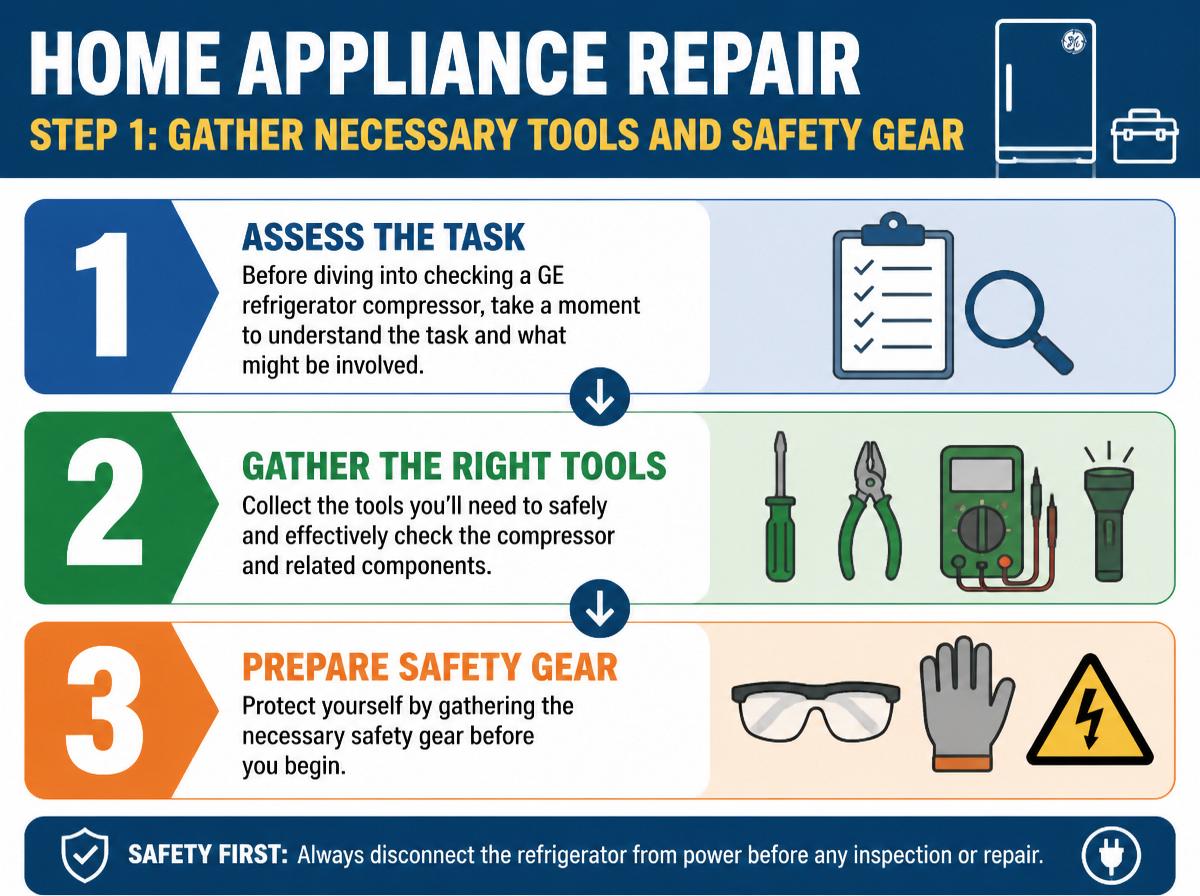
Before diving into the task of checking a GE refrigerator compressor, it’s important to gather the right tools and safety gear. First, take a moment to create a PPE checklist. This list should include gloves, safety goggles, and non-slip shoes to keep you safe while working. Safety first, right?
Next, focus on tool organization. You’ll need a multimeter, a screwdriver set, and a flashlight. Having these tools organized in one spot helps avoid last-minute scrambles. Imagine searching for that tiny screwdriver under the fridge—frustrating!
Once everything is ready, take a deep breath. You’re capable of this task! With your PPE on and tools organized like a pro, you’ll be set to tackle the compressor. Remember, each step counts, and you’re making progress. Keep your spirits high, and soon you’ll be checking that compressor with confidence!
Locate the Compressor
Finding the compressor in a GE refrigerator is an important step in troubleshooting. This component is usually located at the back or bottom of the unit, so it’s important to know where to look. Remember to take safety precautions, like unplugging the fridge and wearing gloves, because a little caution can go a long way in ensuring a safe and successful check!
Understand Compressor Location
Locating the compressor in a GE refrigerator is an important step in troubleshooting cooling issues, and it’s easier than it might seem! The compressor is usually found at the back of the refrigerator, near the bottom. However, it can vary based on design variations and model differences. Some models might have a cover or panel that needs removal before you can see the compressor, while others might have it exposed. Don’t worry; it’s just a matter of following the manufacturer’s guide! By knowing where to look, you can save time and get on the right track to fixing any problems. Remember, you’ve got this, and soon your fridge will be running cool again!
Safety Precautions Needed
Checking the compressor of a GE refrigerator can seem intimidating, but with the right safety precautions, anyone can do it! First, it’s important to wear gloves to protect hands from sharp edges and electrical components. Make sure to unplug the refrigerator to avoid any electrical shocks. Keeping a fire extinguisher nearby is a smart step for fire prevention, just in case something unexpected happens. It’s also wise to familiarize yourself with emergency procedures, ensuring you know what to do if issues arise. Finally, work in a well-ventilated area to avoid breathing in any dust or fumes. With these tips, anyone can tackle the task with confidence, feeling like a true appliance hero!
Accessing the Unit
Where can one find the mighty compressor in a GE refrigerator? The compressor hides in a special place, usually at the back of the fridge. Finding it can be easier with a few tips. Here’s a quick list to guide the way:
- Look Behind the Fridge: The compressor is most often located behind the bottom panel. Gently pull your fridge away from the wall.
- Check the Bottom: It’s usually nestled low, requiring some crouching or kneeling to see well.
- Inspect the Side Panels: Sometimes, it can be found on the side—just remember to check for warranty considerations and make certain you meet regulatory compliance while working.
These steps will help locate the compressor, empowering readers to tackle their refrigerator challenges!
Inspect the Power Supply
To kick things off, ensuring that the power supply to the GE refrigerator is in good shape is crucial for its performance. First, check if the unit is plugged in properly; a loose plug can cause big issues. Next, look for voltage fluctuations. These can lead to the compressor not working correctly or even packing up entirely. A steady supply of power is essential for keeping things cool and fresh inside!
It’s also important to check the circuit breaker. Sometimes, it might trip due to overload, which can stop the refrigerator from working. A quick reset could solve this problem, but if it happens often, it might be time to call a professional. Remember, a happy refrigerator means happy food! Taking a little time to inspect these electrical basics can save a lot of headaches in the long run, ensuring your fridge runs smoothly and efficiently.
Check the Condenser Coils
Checking the condenser coils is a essential step in keeping a GE refrigerator running smoothly. When these coils are clean, the refrigerator can do its job better, saving energy and preventing overheating—kind of like how a swimmer performs better in clear water! Using the right tools and regularly maintaining these coils will guarantee that the fridge stays happy and efficient, making it easier for everyone at home.
Importance of Clean Coils
Although many people might not realize it, keeping the condenser coils of a GE refrigerator clean is essential for its smooth operation. Clean coils not only help the fridge run better but also contribute to its overall health. Here are some important reasons to maintain those coils:
- Longevity Benefits: Clean coils can extend the lifespan of the refrigerator, saving you the heartbreak of an early breakdown.
- Cost Savings: A refrigerator that is free of dust and dirt operates efficiently, leading to lower energy bills.
- Better Cooling: When the coils are clean, the refrigerator can cool food more effectively, keeping it fresher and tastier.
Cleaning Tools Required
Keeping the condenser coils clean is a small task that can make a big difference in how well a GE refrigerator runs. To tackle this, a few basic cleaning tools are needed. First, an old toothbrush or small brush can help remove dirt and dust. Next, eco-friendly detergents are fantastic options for wiping down the coils. They’re gentle yet effective, making cleanup a breeze. Odour neutralizers can also be handy; they keep any unpleasant smells at bay while cleaning. Additionally, a vacuum with a brush attachment can reach those tricky spots. By gathering these simple tools, anyone can easily maintain their fridge’s efficiency while also being kind to the planet and their noses! So, let’s get cleaning!
Frequency of Maintenance
Regularly checking the condenser coils on a GE refrigerator can greatly improve its efficiency and longevity. By sticking to a seasonal schedule, owners can prevent dust buildup and make sure their fridge runs smoothly. Here’s a simple maintenance checklist:
- Spring: Clean the coils to prepare for warmer temperatures.
- Summer: Inspect for any obstructions or damage during peak usage.
- Fall: Perform a thorough cleaning before winter and check for warranty considerations.
These steps not only enhance the refrigerator’s performance but also extend its lifespan. Keeping up with maintenance can save money in energy bills and repair costs. With a little effort, anyone can keep their GE refrigerator humming happily, making home life just a bit sweeter!
Assess the Compressor Relay
How can someone tell if the compressor relay is working properly? First, note that the compressor relay is vital for a GE refrigerator, as it helps the compressor start and run effectively. To assess the relay, one can perform simple relay diagnostics. This involves checking for any visible burn marks or other signs of damage. The relay ratings found on the device can provide helpful clues; verify these match the specifications required for the refrigerator.
A buzzing or clicking sound from the relay can indicate it’s failing. Don’t worry! If you notice anything unusual, it’s often an easy fix. Always remember to unplug the refrigerator before doing any checks. A little caution goes a long way! Understanding if the relay is functioning properly is a key step to maintaining the fridge’s overall health. This simple act can save time and money down the road, making one feel accomplished and confident!
Test the Compressor Motor
Is it time to give that compressor motor a little check-up? A healthy compressor motor is key to keeping the refrigerator running smoothly. To make sure it’s in good shape, a few simple tests can help:
- Vibration Analysis: Gently place your hand on the motor. If it’s vibrating more than a good rock band, there could be a problem. Steady vibrations are normal, but excessive shaking means it might need a closer look.
- Acoustic Testing: Listen carefully. A loud humming or buzzing sound can indicate trouble. A well-functioning motor should hum quietly, like a gentle lullaby, instead of a loud concert.
- Visual Inspection: Look for any signs of wear, such as cracks or loose parts. Just like shoes, motors need to be in good condition!
Keep these steps in mind, and your fridge will thank you with cold drinks and fresh food!
Reassemble and Monitor Performance
After giving the compressor motor a thorough check-up, it’s time to put everything back together and see how the refrigerator performs. The first step is confirming proper gasket alignment to prevent leaks. Misaligned gaskets can let warm air in, making the compressor work harder. Once everything is aligned, reattach the compressor cover and secure it tightly.
Next, vibration monitoring is essential. Unusual vibrations can indicate issues with the compressor setup. Confirming the compressor sits level helps reduce vibrations.
To keep track, here’s a simple table to remind users what to focus on:
| Step | Description | Reminder |
|---|---|---|
| Gasket Alignment | Confirm gaskets are properly aligned | No gaps are visible |
| Reattach Components | Securely put back all parts | Double-check all screws |
| Check Power | Make sure it’s plugged in correctly | Look for lights on panel |
| Vibration Test | Observe for any unusual sounds | Should be quiet and smooth |
| Monitor Performance | Watch the temperature over time | Is it cool enough? |
Stay patient and attentive during this process!
Frequently Asked Questions
How Often Should I Check My Refrigerator Compressor?
It is advisable to conduct monthly checkups on a refrigerator compressor, with additional seasonal inspections. This routine helps guarantee peak performance, extending the appliance’s lifespan and minimizing the risk of unexpected failures or breakdowns.
What Are Common Symptoms of a Failing Compressor?
Like a heartbeat faltering, a failing compressor reveals itself through a warm interior and strange noises echoing in the silence. These signs, ominous as storm clouds, beckon attention before further disaster unfolds.
Can a Dirty Condenser Coil Affect Compressor Performance?
Yes, a dirty condenser coil can substantially affect compressor performance by hindering heat transfer and causing airflow restriction. This leads to increased strain on the compressor, resulting in potential overheating and eventual failure over time.
Do I Need Professional Help for Compressor Issues?
Professional help is recommended for compressor issues, as safety precautions are vital during repairs. Additionally, cost estimates vary widely based on the problem’s complexity, making expert assessment essential for effective resolution and safety.
Is There a Warranty for My Refrigerator Compressor?
The warranty for a refrigerator compressor typically covers defects for a specified period. Warranty transferability depends on the manufacturer, and common manufacturer exclusions may apply, so it’s important to review the warranty terms for specifics.
Conclusion
To wrap up, checking your GE refrigerator compressor can feel like a mini adventure, where each step reveals secrets about your appliance’s health. With tools in hand and a sprinkle of patience, you’ve become a detective in the world of cooling! Just like exploring a treasure map, every inspection brings you closer to solving the mystery. Remember, whether it’s a whir or a hum, you’re now equipped to keep your fridge happy and working well. Happy cooling!
Explore This Topic
- Back to GE refrigerator
- Back to appliance troubleshooting
Related guides in this cluster: