
How to Reset GE Refrigerator Compressor: Essential Methods and What They Do
Resetting a GE refrigerator compressor can be simple and helpful. First, unplug the fridge to keep things safe. After a minute, plug it back in; this can help the compressor start fresh. Alternatively, find the power button inside and hold it for about 15 seconds. This reset can help with cooling issues and save food from turning into a science experiment! If problems persist, there’s more helpful info waiting to be discovered.
Key Takeaways
- Unplug the refrigerator to ensure safety before attempting to reset the compressor and remove any food items to avoid spoilage.
- Locate the power button on the control panel or inside the fridge and hold it for 15 seconds for a hard reset.
- After pressing the power button, unplug the refrigerator for one minute to fully reset the compressor’s electrical components.
- Reconnect the refrigerator by plugging it back in and verify the temperature settings for optimal cooling performance.
- Regularly maintain the appliance to prevent compressor issues and ensure efficient operation, which prolongs the refrigerator’s lifespan.
Understanding the Role of the Compressor in Your GE Refrigerator
When you open the door to a GE refrigerator, it’s easy to overlook one of its most important parts: the compressor. This hardworking little hero keeps your food cool and fresh by pumping the refrigerant through the system. Understanding how the compressor functions can make a big difference in keeping your appliance running smoothly. It compresses the refrigerant gas and pushes it into the coils, creating a cycle that chills your groceries.
To help your compressor do its job effectively, follow some simple maintenance tips. Keep the area around the refrigerator clear for proper airflow, and regularly clean the coils to prevent dust buildup. Don’t forget to check the temperature settings—keeping it set correctly can save energy and keep everything nice and cool. Remember, a happy compressor means happier food! So, treat it with care, and it will work hard for you.
Signs Your Refrigerator Compressor Needs Resetting
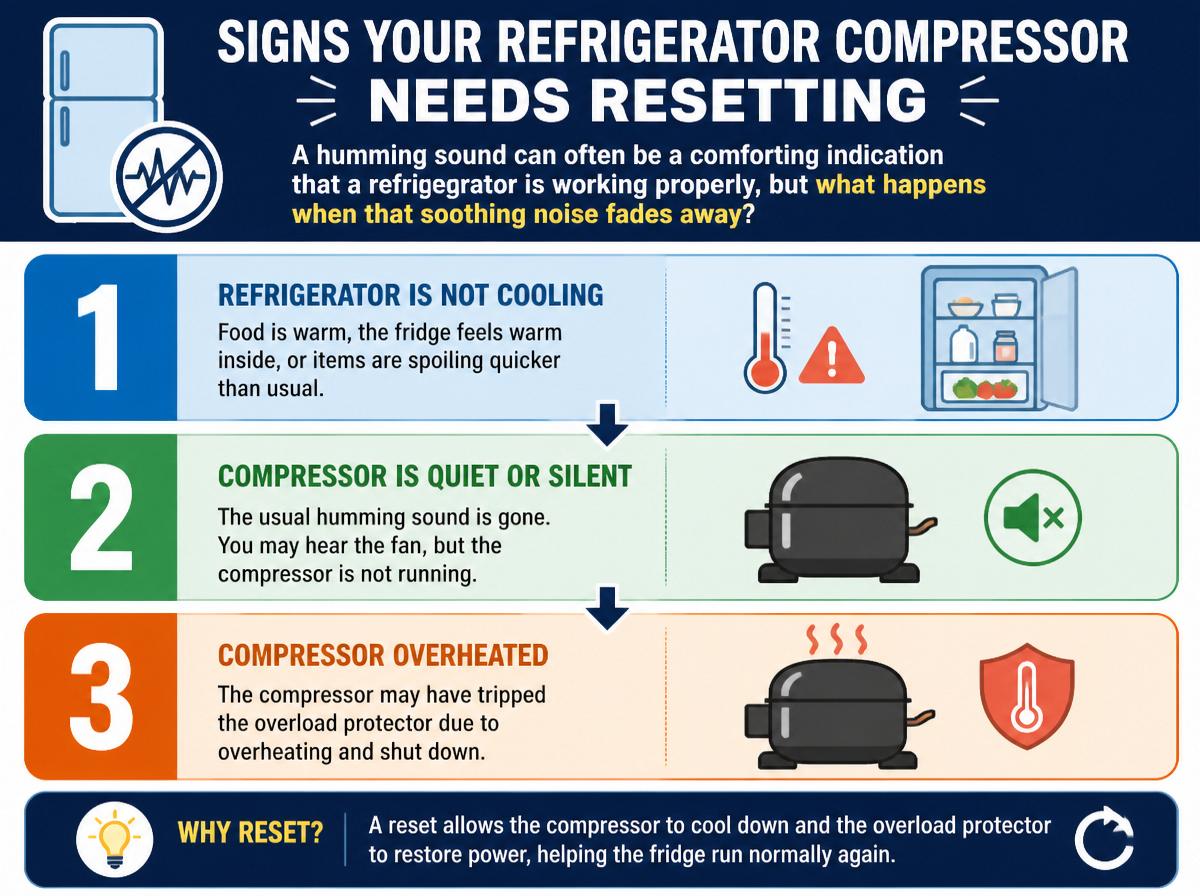
A humming sound can often be a comforting indication that a refrigerator is working properly, but what happens when that soothing noise fades away? It’s vital to pay attention, as a quiet or unusual refrigerator can signal issues with compressor health. Here are four signs that it might need resetting:
- Inconsistent Cooling: Food is warmer than usual.
- Frequent Cycling: The refrigerator turns on and off too often.
- Overheating: The compressor area feels hot to the touch.
- Strange Noises: Clicking or rattling sounds disrupt the peace.
Identifying these signs early can save you from more significant repairs. Regular maintenance tips, like cleaning coils and ensuring airflow, are important for keeping that hum alive. So, if your fridge starts acting up, don’t hesitate—resetting might just bring back its cheerful song!
Safe Steps to Power Down Your Refrigerator
Powering down a refrigerator may feel intimidating, but it can be done safely with just a few simple steps. First, gather your safety precautions: unplug the refrigerator from the wall outlet to avoid any electrical hazards. Before doing so, remove all food items to prevent spoilage—think of it as a mini-adventure in organizing. Next, give your fridge space to breathe by ensuring all vents are clear. This makes the job easier when you come back for refrigerator maintenance later on.
If the fridge has a water filter, turn off the supply to avoid leaks. Once the refrigerator is unplugged, wipe down surfaces to maintain cleanliness. After you’re done with any resets, remember to plug it back in and wait a bit for it to cool down. With these easy steps, you’ll feel like a refrigerator superhero, ready to tackle anything!
How to Reset the Compressor Using the Power Button
To reset the compressor using the power button, one must first locate the power button on the front of the refrigerator. Once found, performing a hard reset is as simple as pressing it for several seconds, bringing a sigh of relief as the fridge restarts. After this, checking the temperature settings guarantees everything is just right, keeping food fresh and happy!
Locate Power Button
Finding the power button on a GE refrigerator can feel like a small treasure hunt, but it’s an important first step in resetting the compressor. Once you understand its button location, you’ll be on your way to restoring your fridge’s power source. Here are some helpful tips to guide your search:
- Check Inside the Fridge: Sometimes, the button hides behind the control panel or inside the fridge itself.
- Look at the Freezer: Don’t forget to peek in the freezer section; it may be tucked away in there.
- Inspect the Control Board: This is often right above the fridge doors.
- Consult the Manual: If all else fails, the manual usually has the exact button location.
Keep exploring; you can find it!
Perform Hard Reset
After locating the power button, resetting the refrigerator compressor becomes a simple task. This hard reset can enhance compressor maintenance, boosting energy efficiency. Here’s how to do it:
- Press the Power Button: Hold the button for about 15 seconds.
- Wait: Keep the refrigerator unplugged for a minute.
- Plug it Back In: Turn the power back on.
| Step | Description |
|---|---|
| Press the Button | Hold for 15 seconds |
| Unplug for a Minute | Let it rest briefly |
| Plug It Back In | Restore power |
Following these steps can help your refrigerator run smoothly. A well-maintained compressor not only keeps your food fresh but also helps save on energy bills! Remember, you’ve got this!
Check Temperature Settings
Have you ever wondered why your refrigerator isn’t keeping food as cold as it should? Sometimes, the answer lies in the temperature settings. Incorrect settings can lead to temperature fluctuations that affect food freshness. Here’s how to check:
- Locate the temperature control panel.
- Verify the setting is between 37°F and 40°F for the fridge.
- Check if temperature sensors are working properly.
- Adjust the temperature settings as needed, and wait 24 hours to see changes.
If the problem continues even after adjustments, resetting the compressor using the power button may help. Remember, understanding these settings can make your fridge work better, and your food will thank you! So don’t fret, you’ve got this!
Alternative Method: Resetting by Unplugging
Sometimes, a simple unplugging can do wonders for a GE refrigerator’s compressor, offering a refresh just like a long deep breath. This unplugging technique is not only easy but also very effective. To start, simply pull the refrigerator’s plug out of the wall and leave it unplugged for about five to ten minutes. This reset duration allows the compressor to recalibrate, clearing any minor glitches.
After the time is up, plug the refrigerator back in and watch as it whirs back to life. This method is like giving your fridge a little vacation! It helps in resetting the system, often resolving small issues without needing anything complicated. Remember, though, if problems continue, it may be time to seek more help. Don’t despair; everyone faces hiccups with appliances! With patience and the right techniques, most issues can be tackled successfully. Happy fixing!
Troubleshooting Common Compressor Issues
When a GE refrigerator compressor starts acting up, it can be quite concerning. Common issues, like the compressor not starting or making strange noises, can often be fixed with a little troubleshooting. Don’t worry—most problems have simple solutions that you can tackle with patience and a positive attitude!
Compressor Not Starting
Dealing with a refrigerator that seems to be on permanent vacation is frustrating, but a little troubleshooting can bring it back to life! When a compressor won’t start, it’s usually a sign of compressor issues or neglect in compressor maintenance. Here’s a checklist to help you out:
- Power Supply: Verify the fridge is plugged in properly and the outlet works.
- Thermostat Settings: Check to see if the thermostat is set correctly.
- Defrost Timer: Look for the defrost timer stuck in a cycle—resetting it might help.
- Compressor Relay: Inspect the compressor relay; if it’s faulty, it could be preventing the compressor from starting.
With these tips, your fridge can get back to cooling in no time! Keep your chin up; you’ve got this!
Unusual Noises Coming
Unusual sounds from a refrigerator can feel alarming, and they often signal that something is not quite right with the compressor. These weird noises, like buzzing or clicking, might indicate that the compressor is struggling. It’s crucial to pay attention, as this could lead to a bigger problem later. Regular refrigerator maintenance helps prevent issues, so check the fan and verify that the fridge is level. Sometimes, cleaning coils or reducing clutter around the compressor can solve the problem. If the noises persist, it might be time to call a technician. Remember, a well-maintained fridge is a happy fridge! So, don’t ignore those sounds—take action and keep your refrigerator running smoothly!
When to Call a Professional for Help
Recognizing when to call a professional can be a game-changer for anyone tackling refrigerator troubles. While tackling common issues at home is great, some situations need expert assistance. Here are four signs that it may be time to reach out for help:
- Unexplained Leaks: Puddles of water pooling beneath the fridge could signal a refrigerant leak, which should be handled by a pro.
- Frequent Compressor Cycling: If the compressor turns on and off too often, it might indicate a deeper problem.
- Unusual Sounds: Strange noises can be signs of issues that a technician can diagnose efficiently.
- Inconsistent Temperature: If food keeps spoiling or freezing unexpectedly, it’s time for a professional opinion.
Frequently Asked Questions
How Long Should I Wait to Reset the Compressor After Unplugging It?
The recommended compressor reset timing typically involves waiting at least 5 to 10 minutes after unplugging the refrigerator. This duration facilitates proper drainage and prevents potential damage during refrigerator troubleshooting tips.
Can I Reset a GE Refrigerator Compressor Without Turning off the Power?
Without turning off the power, attempting to reset a GE refrigerator compressor may still influence its functionality, but it often requires proper power cycling to guarantee intended performance. Results can vary, leading to uncertainty.
Will Resetting the Compressor Fix Temperature Issues in My Fridge?
Resetting the compressor may improve temperature consistency, yet it primarily addresses compressor performance issues. Identifying temperature fluctuation causes, such as inadequate airflow or faulty components, is essential for achieving ideal cooling and preventing future malfunctions.
Is There a Risk of Damaging My Refrigerator by Resetting the Compressor Repeatedly?
Repeatedly resetting the compressor can risk damaging the refrigerator, shortening compressor longevity. Frequent interruptions disrupt temperature stability, potentially leading to overheating and failure. Experts advise minimizing resets to maintain peak performance and extend appliance lifespan.
What Tools Do I Need to Reset the GE Refrigerator Compressor?
To reset a GE refrigerator compressor, one typically requires a screwdriver, multimeter, and possibly a jumper wire for specific resetting techniques. These tools help identify and address common compressor issues effectively during the process.
Conclusion
To sum up, resetting your GE refrigerator compressor isn’t just a task—it’s like giving your fridge a revitalizing spa day! With the right steps, you can coax it back to life and avoid unwanted melty ice cream disasters. Remember, your fridge is a hardworking superhero, and sometimes it needs a little break. If all else fails, don’t hesitate to call for reinforcements—like a trusty repair professional. You’ve got this, and your fridge will thank you in frosty delights!
Explore This Topic
- Back to GE refrigerator
- Back to compressor reset
Related guides in this cluster: