
Step-by-Step Fixes for Common LG Dryer Issues
Common LG dryer issues can be tackled with some straightforward fixes. For a dryer that isn’t heating, start by cleaning the lint filter and checking for blockages. If clothes aren’t drying, make sure not to overload the machine. Unusual noises might mean there’s something stuck or a part needs a look. Error codes indicate specific problems to address. With a bit of patience and the right steps, anyone can troubleshoot their dryer successfully. More helpful tips await around the corner!
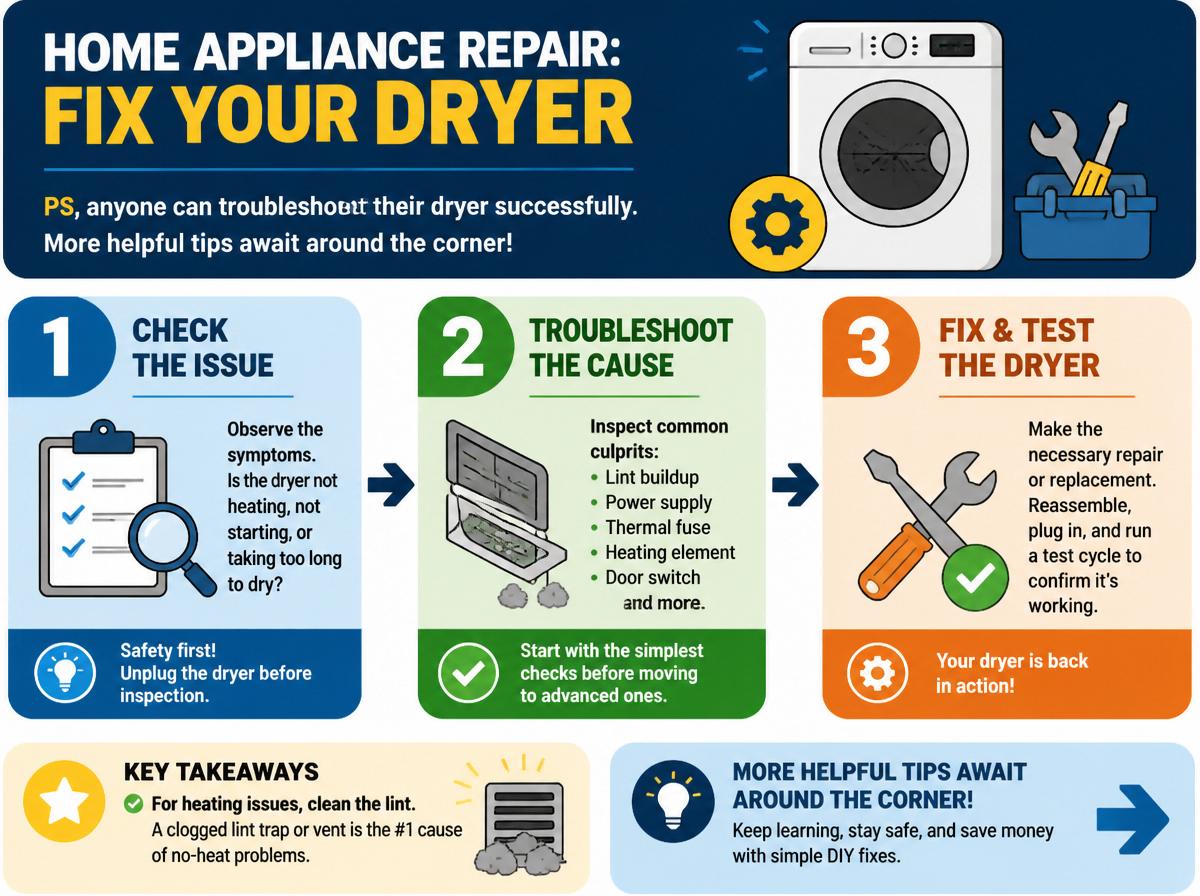
Key Takeaways
- For heating issues, clean the lint filter and check the vent for blockages before considering the heating element for replacement.
- Ensure clothes are not overloaded and verify the exhaust vent for moisture traps to improve drying efficiency.
- Diagnose unusual noises by identifying the type: rumbles may mean unbalanced loads, while squeaks could indicate worn parts.
- Inspect the dryer drum belt for breaks and ensure the motor engages, as these can prevent drum spinning.
- Familiarize yourself with LG error codes like D80 and D90 to swiftly identify and resolve airflow issues.
Dryer Not Heating
A malfunctioning dryer can be a real headache, especially when it refuses to heat up and your clothes come out damp. It can be frustrating, but don’t worry! There are some simple dryer maintenance tips that can help. First, confirm that the dryer’s lint filter is clean. A clogged filter can block airflow, preventing it from heating properly. Next, check the dryer vent for any obstructions. Sometimes, a quick clean can make a world of difference!
If these steps don’t solve the problem, the heating element may need replacement. This might sound tricky, but with a little guidance, it can be done. Always remember to unplug the dryer before working on it. Watch a tutorial video if you need help! With patience and these tips in hand, anyone can tackle a dryer that won’t heat up. Remember, you’re not alone in this!
Dryer Not Drying Clothes Completely
- Confirm the lint filter is clean to allow proper airflow.
- Verify that the load isn’t too heavy; overcrowded dryers struggle!
- Inspect the exhaust vent for any obstructions that may trap moisture.
- Review the moisture settings to confirm they match your clothes’ fabric types.
Dryer Making Unusual Noises
When a dryer suddenly starts making strange noises, it can feel like a surprise party no one wanted. These sounds might signal a problem, which requires careful diagnosing noises to avoid future issues. Identifying the source of the noise is essential for noise prevention and keeping your dryer in top shape.
| Type of Noise | Possible Cause |
|---|---|
| Loud rumbles | Unbalanced load or worn-out belt |
| High-pitched squeaks | Worn drum rollers or idler pulley |
| Clunky thuds | Foreign objects in drum |
| Humming | Motor or electrical issue |
| Thumping noise | Improper leveling or feet issues |
Dryer Producing Error Codes
When an LG dryer shows error codes, it can feel frustrating, but understanding these symbols can make a big difference. Common error codes hint at specific issues, while simple troubleshooting steps can often resolve the problems quickly. Plus, resetting the dryer might just clear the error and get things back on track, so don’t lose hope—help is just a button away!
Common Error Codes
Steering through the world of LG dryers can feel like a puzzle, especially when those pesky error codes pop up to throw a wrench in the laundry routine. Understanding these error code meanings is crucial for a smoother troubleshooting process. Here are four common error codes that can leave anyone feeling puzzled:
- D80 This code means there’s a blocked vent.
- D90 Indicates that the vent has a blockage of 90%.
- D95 Shows a blockage of 95%, which is serious!
- tE Reveals a temperature sensor issue.
Recognizing these codes can empower users to take the next steps. By becoming familiar with error codes, frustrating laundry days can transform into successful laundry adventures!
Troubleshooting Steps
How can one tackle error codes on an LG dryer without losing hope? First, it’s essential to understand that even common LG models experience hiccups from time to time. Keeping a calm mind while following some dryer maintenance tips can make a difference. Begin by checking the user manual to decode those pesky error messages. Often, there’s a simple solution! Next, inspect the lint filter and vent for blockages; clean filters can lead to smoother operation. Regularly checking these areas can ward off many problems. Finally, remember that patience is key; troubleshooting may take a few attempts. With encouragement and a bit of persistence, anyone can conquer error codes and get their dryer running smoothly again!
Resetting the Dryer
Resetting an LG dryer can feel like a small adventure, but it’s often the key to banishing those frustrating error codes. When your dryer isn’t working right, a simple dryer reset might just do the trick! Here’s how to tackle it with confidence:
- Unplug the dryer for at least five minutes.
- Press and hold the “Startbutton for about five seconds.
- Plug the dryer back in and close the door securely.
- Turn on the dryer to see if the problem persists.
This appliance troubleshooting step is essential for many error codes. Don’t lose hope! A fresh start can make all the difference. With a little patience and these steps, anyone can conquer their dryer issues with ease.
Dryer Drum Not Spinning
When someone finds that their LG dryer drum isn’t spinning, it can feel quite frustrating, especially after a long day of laundry. First, it’s essential to check the drum belt. This rubber band is important for spinning the drum, and if it’s broken or worn out, the dryer won’t function properly. A quick visual inspection can reveal if the belt needs replacement.
Next, consider potential motor issues. Sometimes, the motor may not be engaging properly, which could stop the drum from moving. If there’s no noise when the dryer is on, it may signal a motor problem.
Fear not! Fixing these issues isn’t rocket science. With some patience and the right tools, one can diagnose and solve these problems. Taking small steps can lead to tackling this hurdle, ensuring that laundry day remains smooth and cheerful. Remember, every problem has a solution!
Dryer Overheating
Although using a dryer should make laundry easier, sometimes it can get too hot, leading to worries about clothes coming out scorched! Dryer overheating is a concern that impacts dryer safety and temperature control. Luckily, there are steps to take to keep everything cool:
- Clean the lint filter regularly—lint buildup can block airflow and cause overheating.
- Check the venting system—make sure it’s clear, without kinks or obstacles, to keep hot air moving.
- Avoid overloading—stuffing the dryer can trap heat and lead to overheating.
- Inspect the thermostat—a malfunctioning thermostat might not regulate heat properly.
If a dryer becomes too hot, it’s essential to take action. Addressing these issues not only extends the dryer’s lifespan but also keeps clothes safe and fresh. So, take a deep breath, follow these steps, and your laundry will be back on track!
Dryer Door Not Latching Properly
Have you ever noticed that the dryer door won’t stay shut, leaving clothes tumbling around like they’re in a wild dance? This common problem often stems from door latch issues. If the latch is misaligned or damaged, it can easily fail to catch, resulting in an uncooperative door. First, it’s important to inspect the latch for wear and tear. If it looks broken or bent, a latch replacement may be necessary, and there are several latch replacement options available online or at appliance stores.
To fix alignment issues, gently adjust the door or the strike plate where the latch fits. Tightening screws can also help guarantee a snug fit. Remember, a properly latching door keeps clothes safe and efficient drying on track. So, take a moment to check this simple fix—it’s a small step that may save your laundry from an unexpected drama!
Dryer Vent Blockage Issues
Dryer vent blockage can lead to serious problems, like longer drying times or even fire hazards, so it’s important to keep an eye on it. Identifying these blockages is the first step, and some simple cleaning techniques and tools can make the job easier than expected. With a little effort and the right approach, anyone can tackle this task and keep their dryer running safely and efficiently!
Identifying Vent Blockages
Identifying vent blockages is a crucial step in keeping an LG dryer running efficiently. Regular vent maintenance is essential for peak performance. To assess airflow, look for these signs:
- Long Drying Times: If clothes take forever to dry, a blockage might be to blame.
- Hot Dryer Housing: A hot exterior can be a signal that airflow is restricted.
- Lint Accumulation: If lint gathers near the vent, it could mean trouble brewing.
- Burning Smells: Any unusual smells can indicate overheating, definitely a red flag.
Cleaning Techniques and Tools
Regularly cleaning the dryer vent can greatly improve efficiency and safety. To tackle vent blockages, one can use essential cleaning tools like a vacuum attachment, a flexible brush, and a lint trap cleaning cloth. First, disconnect the dryer, and gently pull it away from the wall. Then, use the vacuum to remove lint from the vent opening. Next, insert the flexible brush deeper into the vent to dislodge stubborn clogs. Don’t forget to check the dryer’s lint trap too! Maintenance tips include cleaning the vent every few months and ensuring nothing blocks airflow. Keeping the vent clear not only makes the dryer work better, but it also prevents dangerous fires. So roll up those sleeves and get to work—you’ve got this!
Frequently Asked Questions
How Can I Improve the Lifespan of My LG Dryer?
To improve the lifespan of an LG dryer, one should optimize dryer usage and prioritize energy efficiency. Regular maintenance, cleaning vents, and ensuring proper load sizes also contribute greatly to prolonging the appliance’s durability and performance.
What Maintenance Should I Perform on My LG Dryer Regularly?
Like tending a garden, regular cleaning of the LG dryer guarantees its longevity. Routine dryer maintenance includes cleaning lint screens, inspecting vents, and checking for moisture build-up, ultimately fostering a healthier, more efficient appliance for years.
Can Using Dryer Sheets Affect My LG Dryer’s Performance?
Using dryer sheets can lead to buildup in the LG dryer, potentially affecting performance. Alternatives to fabric softeners, such as wool dryer balls, may prevent this while maintaining fabric softness without compromising the dryer’s efficiency.
What’s the Best Way to Clean the Dryer Lint Filter?
Like a painter preparing a canvas, one should regularly clean the lint filter by removing accumulated lint under running water, ensuring proper dryer cleaning. This simple act enhances efficiency and extends the dryer’s life, promoting smoother cycles.
Does LG Offer a Warranty on Their Dryers?
LG typically offers a warranty on their dryers, which includes specific warranty terms detailing coverage for parts and labor. Customers should review their purchase agreement to understand the extent of the dryer coverage provided.
Conclusion
In the world of dryers, it’s true what they say: “Where there’s a will, there’s a way!” By tackling these common LG dryer issues, you’re taking charge and becoming your own repair hero. Remember, every problem has a solution, whether it’s a snug door or a drum that won’t spin. Stay patient and keep your humor alive while you fix things up. With a bit of effort, your dryer will be back to work in no time!
Explore This Topic
- Back to Dryer
- Back to appliance maintenance
Related guides in this cluster: