
Complete Guide to Kenmore Dryer Belts
A Kenmore dryer belt is a key part that helps the drum spin and tumble your clothes. If the dryer makes strange noises or the drum won’t turn, it may need a new belt. Checking for wear, like fraying or cracks, is important. Replacing the belt isn’t too hard, and it can save you some cash! With the right tools and steps, you can do it yourself. Stick around to discover even more helpful tips!
Key Takeaways
- Understand the belt’s role in the Kenmore dryer, transferring power from the motor to the drum for efficient drying.
- Common symptoms of belt wear include drum not spinning, unusual noises, and burning rubber smells.
- Regular maintenance involves checking for fraying, cracks, and ensuring proper tension on the belt.
- Installation requires safely unplugging the dryer, removing panels, and routing the new belt according to the original path.
- Seek professional help for severe issues like burning smells, grinding noises, or if the drum fails to turn while the motor runs.
Understanding the Function of a Dryer Belt
When it comes to understanding how a dryer belt works, it’s like uncovering the secret to a perfectly dried load of laundry. The dryer belt is an unsung hero, crafted from durable material compositions, designed to withstand tension while allowing smooth movement. It wraps around the drum and the motor pulley, creating a connection that turns the drum with the help of rotational dynamics.
As the motor spins, the belt moves, making your clothes tumble gently within the drum. This magic happens because the belt transfers power, ensuring that your laundry dries efficiently. Think of it as the silent conductor of an orchestra, harmonizing every spin and tumble. If you’re keen to keep your dryer in top shape, understanding this part’s function is the first step. Happy drying awaits, and with a bit of knowledge, you’ll have the confidence to tackle any laundry challenge!
Common Symptoms of a Worn-Out Dryer Belt
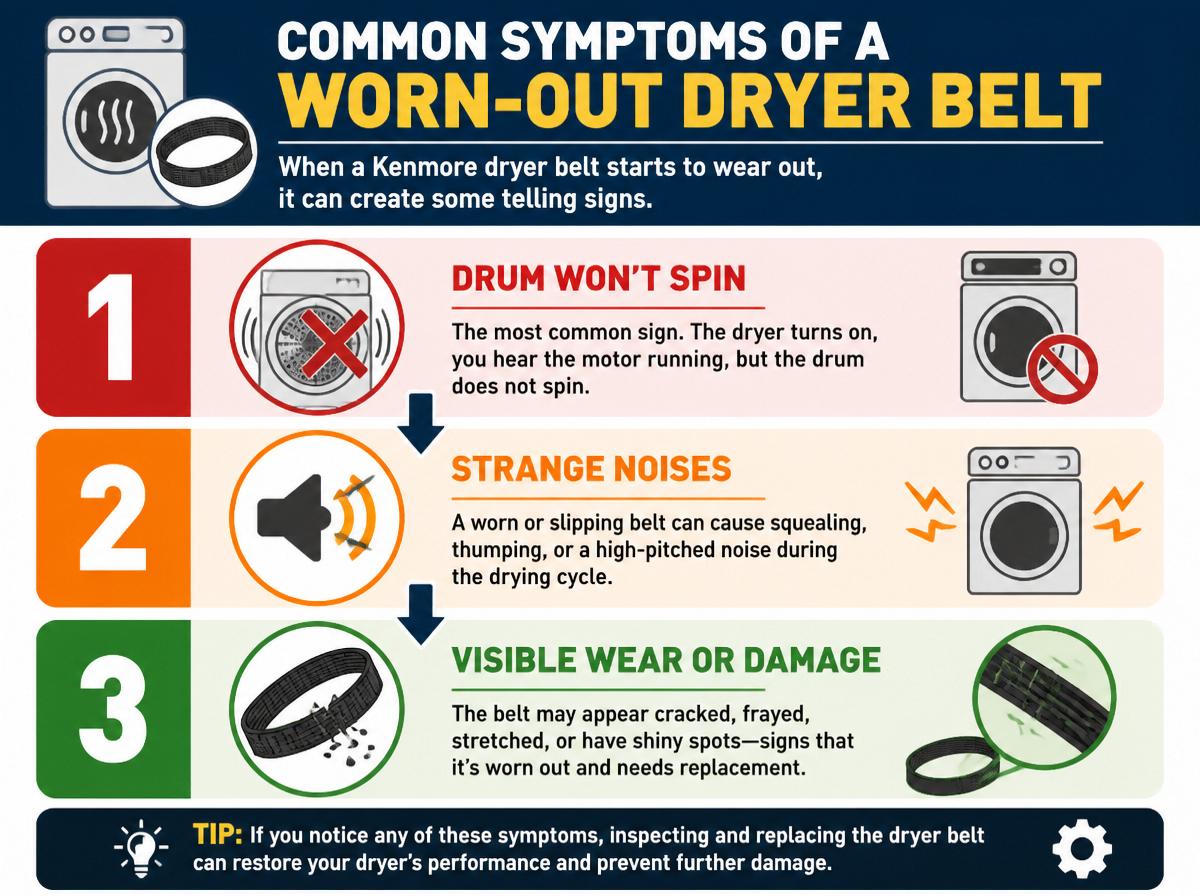
When a Kenmore dryer belt starts to wear out, it can create some telling signs. For instance, a drum that refuses to spin, strange noises that seem like a bad joke, or even the whiff of burning rubber might indicate trouble. Recognizing these symptoms early can help prevent bigger issues, so don’t lose heart—paying attention can keep your laundry on track!
Drum Not Spinning
Have you ever opened the dryer door, only to find that the drum isn’t spinning like it used to? This can be frustrating! One possible reason is a worn-out dryer belt. Before worrying, check the door switch. If it’s not functioning, the dryer won’t run. Also, verify that the power supply is connected properly. Sometimes, a simple plug check can save the day! If these parts seem okay, it might be time for a belt replacement. A humming sound can indicate the motor is trying to work, but without a functional belt, the drum stays still. Remember, you’ve got this! It may seem tricky, but with patience and determination, you can troubleshoot and solve the issue. Happy drying!
Unusual Noises Present
Could it be that the dryer is trying to communicate something important? Unusual noises like bearing chatter or an idler squeal can indicate a worn-out dryer belt. If you hear these sounds, be sure to pay attention. Ignoring them may lead to bigger problems down the road.
Here’s a quick reference table to understand the sounds better:
| Noise Type | Possible Cause |
|---|---|
| Bearing Chatter | Worn bearings affecting function |
| Idler Squeal | Idler pulley belt wear |
| Rattling Noise | Loose components |
| Thumping Sound | Unbalanced drum |
| High-Pitched Squeal | Frayed or worn-out belt |
If your dryer is making any of these noises, it’s time to take action and assess the belt condition. You’ve got this!
Burning Rubber Smell
The presence of a burning rubber smell is often a telltale sign that something is wrong with the dryer belt. This odor can indicate excessive friction, commonly caused by a worn-out belt. When the belt becomes too slack or damaged, it may rub against other parts, leading to electrical arcing and possibly resulting in insulation breakdown. If you notice this smell, it’s important to act quickly! Turn off the dryer and check the belt for signs of wear. Remember, understanding these issues can save you from more costly repairs down the line. Staying safe is key, so don’t hesitate to ask for help if needed. You’ve got this!
Inspecting Your Dryer Belt for Damage
When someone notices that their Kenmore dryer isn’t working as it should, a quick check of the dryer belt can be a smart first step. Inspecting the belt for damage can save time and hassle. Here’s how to do it:
- Look for edge fraying: Examine the edges of the belt for any signs of wear. Fraying can lead to bigger problems.
- Perform tension testing: Make sure the belt has the right tension. A loose belt can slip, causing inefficient drying.
- Check for cracks: Inspect the surface of the belt for any cracks or splits that could worsen over time.
- Listen for unusual sounds: If the dryer makes funny noises, it could indicate a belt issue.
How to Remove and Replace a Kenmore Dryer Belt
After checking the dryer belt for damage, the next step is to think about how to remove and replace it if needed. First, unplug the dryer to guarantee safety. Open the dryer door and remove the screws holding the front panel in place. Once the panel is off, the belt is visible. Take note of how it loops around the dryer drum, as this will be important for reassembly. Gently slide the old belt off and replace it with the new one, making sure it mirrors the original path. Next, reattach the front panel and secure it with screws. Don’t forget to register your warranty for the new parts; this guarantees protection if issues arise. Finally, adding some aesthetic customization, like a fresh coat of paint on the dryer, can make laundry day a little brighter! Now you’re all set to dry those clothes effectively!
Choosing the Right Replacement Belt for Your Model
Choosing the right replacement belt for a Kenmore dryer can feel a bit tricky; however, it doesn’t have to be overwhelming. With a little research and care, anyone can find the perfect fit. Here are some helpful steps to guide the process:
- Model Identification: Check the dryer’s manual or the label inside the door for the model number.
- Material Comparison: Look for belts made of durable materials like rubber or polyester, ensuring they can handle wear and tear.
- Supplier Reviews: Read reviews of suppliers to see which ones provide reliable belts that last long.
- Purchase Options: Consider buying from authorized dealers or reputable online platforms for peace of mind.
Tools Needed for Dryer Belt Replacement
Replacing a dryer belt can be a straightforward task, especially with the right tools on hand. To start, one might need a set of screwdrivers both flathead and Phillips to open up the dryer. A pair of pliers is handy for gripping and tugging. Ergonomic tools, designed for comfort, can make the job easier and more enjoyable, especially if someone is working for an extended time.
If the tools aren’t available, tool rental places offer great options. Renting saves money and provides all the necessary tools. A socket set can also be beneficial for more complicated models. Don’t forget a flashlight to see better inside the dryer! With these tools ready, anyone can approach the project confidently. So gather those tools, and soon enough, a working dryer will be back in action, bringing relief to laundry days!
Step-by-Step Installation Guide
When it comes time to install a new dryer belt, having the right tools and knowing the steps can make a big difference. First, it’s important to remove the front panel carefully, as this step reveals the inner workings of the dryer, like a surprise opening in a gift. Finally, replacing the old belt with a new one is like putting on a fresh pair of sneakers—once it’s done, the dryer will be ready to run smoothly again!
Required Tools and Materials
A few essential tools and materials are needed to tackle the task of replacing a Kenmore dryer belt. Preparing ahead will make the process smoother and more enjoyable. Here are the key items to gather:
- Screwdriver set A Phillips and flathead screwdriver for removing screws.
- Pliers Handy for gripping and twisting parts as needed.
- Replacement dryer belt Don’t forget to check for vendor comparison to find the best one for your model.
- Warranty verification documents Having these on hand helps confirm you know if any parts are covered before purchasing.
With these tools ready, readers can approach the dryer belt replacement task with confidence and a sense of accomplishment!
Removing the Front Panel
Ready to explore into the world of dryer repairs? Removing the front panel of a Kenmore dryer is an essential step. First, unplug the dryer for safety. Next, use a screwdriver to carefully remove the screws securing the control overlay. Once the screws are out, gently lift the control panel. This may require a bit of wiggling to achieve proper hinge alignment. After the control panel is free, locate the screws on the front panel. Remove these screws, then gently pull the front panel away from the dryer body. Be careful not to damage any wires attached to it. With patience and care, this task becomes an easy part of your repair journey!
Installing the New Belt
Now it’s time to install that shiny new belt! This is an exciting step in repairing a Kenmore dryer. By following these simple steps, anyone can achieve perfect belt alignment and tension calibration.
- Position the Belt: Start by threading the new belt around the drum and making sure it’s seated properly.
- Align the Pulleys: Carefully place the belt over the motor and idler pulleys, aligning it snugly.
- Check the Fit: Spin the drum gently to make sure everything is turning freely.
- Tension Calibration: Adjust the idler pulley to confirm the belt has the correct tension—too loose may cause slipping!
With these steps, anyone can breathe new life into their dryer. Keep up the great work, and you’ll be drying clothes in no time!
Maintenance Tips to Extend Belt Lifespan
While taking care of a Kenmore dryer, it’s important to remember that the belt, which helps everything run smoothly, needs some love too. To extend the lifespan of the dryer belt, proper loading is vital. Avoid overloading the dryer, as it puts extra stress on the belt. Instead, load it with a manageable amount of laundry to keep things balanced and happy!
Vent maintenance is another key aspect. Keeping the dryer vents clean allows for proper airflow, which can reduce the strain on the belt. Clogged vents can cause the dryer to work harder, leading to wear and tear on the belt.
Additionally, check for any unusual noises during operation. If something sounds off, it could indicate a problem. By following these simple maintenance tips, Kenmore dryer owners can help their belts last longer, ensuring they remain dependable for years to come. Remember, a little care goes a long way!
Troubleshooting Other Dryer Issues
What should one do when the dryer starts acting up? First, don’t panic; it happens to everyone. Troubleshooting common issues can help restore order to the laundry routine. Here are some simple steps to follow:
- Check for Power Issues: Make sure the dryer is plugged in and the circuit breaker is not tripped. Sometimes, that’s all it takes!
- Inspect the Door: Make sure the dryer door is closing properly. If it’s not, the dryer won’t start.
- Perform Vent Cleaning: Clogged vents can prevent your dryer from working efficiently. Clean the lint trap and vent system regularly.
- Listen for Unusual Noises: If the dryer is making odd sounds, it could indicate a problem. Pay attention to these clues!
When to Seek Professional Help
Knowing when to call in a pro can save time and frustration with a Kenmore dryer. If there are signs of serious damage, like odd noises or burning smells, it’s best not to ignore them, as these could point to bigger problems. Additionally, some repairs are quite complex and could lead to more issues if attempted without proper expertise, so seeking help might just be the smartest solution!
Signs of Serious Damage
When a Kenmore dryer starts making strange noises or doesn’t heat up like it should, it can be a bit worrying. Recognizing signs of serious damage is critical. Here are some red flags that should prompt a call to a professional:
- Motor overheating If the dryer feels excessively hot, it could mean trouble.
- Strange sounds Loud grinding or squeaking often indicates issues.
- Pulley seizure If the drum doesn’t turn but the motor runs, this might be the cause.
- Burning smells Any scent of burning can signal a serious malfunction.
Addressing these issues early can save a lot of time and money. Seeking expert help guarantees that the dryer remains safe and functional for future loads of laundry.
Complex Repair Procedures
While tackling dryer repairs can be a rewarding challenge, some situations call for professional expertise. When dealing with complex issues, such as understanding electrical schematics, it’s wise to contemplate getting help. If the dryer won’t start or there are strange sounds, these might point to deeper problems. Furthermore, attempting repairs beyond one’s skill level can lead to warranty implications. This means that fixing something incorrectly could void the warranty, leaving the user with costly expenses. It’s important to weigh the options carefully. If something feels difficult or overwhelming, reaching out to a professional can save time, money, and stress. Remember, asking for help is a sign of strength, not weakness! Feeling supported can make all the difference in the repair journey.
Frequently Asked Questions
How Long Does a Kenmore Dryer Belt Typically Last?
A Kenmore dryer belt typically lasts between 5 to 7 years, depending on usage and maintenance. Seasonal variation in laundry loads may affect this lifespan, with increased wear during peak laundry seasons potentially shortening durability.
Can I Use a Non-Kenmore Belt for My Dryer?
Using a non-Kenmore belt may compromise compatibility and performance. Users should consider compatibility tips from manufacturers and be aware of warranty implications, as using alternative parts could potentially void existing warranties on the dryer.
What Causes a Dryer Belt to Break Prematurely?
Premature dryer belt failure can result from tension misalignment and bearing wear. Improper tension can stress the belt, while worn bearings increase friction, leading to accelerated degradation and eventual breakage of the dryer belt.
Are Dryer Belts Universal for All Kenmore Models?
Dryer belts are not universal for all Kenmore models due to manufacturing variations that affect model compatibility. Each model may require a specific belt, so confirming part numbers is essential for proper replacement.
How Much Does It Cost to Replace a Dryer Belt?
Replacing a dryer belt typically costs between $15 to $50, depending on the model. With warranty coverage, some repairs might be covered, while DIY savings can further reduce overall expenses by eliminating labor costs.
Conclusion
In the journey of fixing a Kenmore dryer, the belt often stands as the unsung hero. Just like life, sometimes it takes a little wear and tear to notice what truly holds things together. Remember, with the right tools and tips, anyone can replace that trusty belt. If a fix seems tricky, don’t hesitate to ask for help! After all, teamwork makes the dream work—oven-fresh socks and all! Keep your dryer happy, and it will keep you cozy!
Explore This Topic
- Back to Dryer
- Back to appliance repair
Related guides in this cluster: