
Troubleshooting Common Dryer Moisture Sensor Problems and Solutions
Dryer moisture sensors help clothes dry just right. Sometimes, they can act up, leaving clothes damp or over-dried. If this happens, check for signs like longer drying times or error codes. It might be dirty, damaged, or just worn out. Cleaning the sensor carefully can help. If the problems stick around, testing the connections is smart. And remember, if you’re really stuck, there’s no shame in calling an expert for help. Stick around to uncover more handy tips!
Key Takeaways
- Check the moisture sensor for dirt and lint buildup; clean it regularly to ensure accurate detection and prevent inconsistent drying cycles.
- Inspect electrical connections for damage or looseness, as faulty connections can hinder sensor functionality and cause drying issues.
- Perform voltage testing to ensure the sensor is receiving the correct voltage, identifying potential electrical problems that may affect performance.
- If clothes remain damp after a complete cycle, consider replacing the moisture sensor, especially if it’s showing signs of wear.
- Seek professional assistance if troubleshooting fails, ensuring safety and expertise in resolving persistent moisture sensor issues.
Understanding How Dryer Moisture Sensors Work
When it comes to understanding how dryer moisture sensors work, it’s quite fascinating, as these little devices play a big role in ensuring clothes dry evenly and efficiently. Moisture sensor technology detects how wet your laundry is. As clothes tumble, sensors measure the moisture, signaling the dryer when to stop or keep running. There are different dryer sensor types: some use electrical conductivity, while others employ more advanced techniques. These sensors are like your laundry’s best friends, keeping an eye on things to prevent over-drying and save energy. Imagine if your favorite shirt ended up crispy instead of cozy! It’s important to appreciate these clever tools, as they help maintain the fabric’s quality. By understanding this technology, readers can troubleshoot better, ultimately making laundry days less of a chore. So, next time you dry your clothes, take a moment to thank those hardworking moisture sensors!
Signs of a Malfunctioning Moisture Sensor
When a dryer’s moisture sensor is not working right, it can lead to some frustrating situations. People might notice that their clothes are still damp after a full drying cycle, or worse, the dryer could show random error messages. Spotting these signs early can help prevent bigger problems, so staying alert to any irregular drying behavior is key!
Inconsistent Drying Cycles
Inconsistent drying cycles can be a frustrating puzzle for many people. One moment, the clothes feel damp, and the next, they are so dry they could crack! It often appears that dryer settings aren’t working properly. This inconsistency can stem from a malfunctioning moisture sensor, which might not accurately detect when clothes are dry. If the sensor isn’t working, the dryer may keep running, leading to unexpected dryness or leaving clothes damp. To tackle this issue, it’s crucial to check the sensor for dirt or damage. A little cleaning or inspection might just help restore balance. Remember, tackling these small problems can lead to big successes in laundry day! Keep at it; your dryer can be a reliable companion again!
Excessive Moisture in Clothes
Sometimes, clothes tumble out of the dryer still feeling damp, leaving people scratching their heads in confusion. This excessive moisture in laundry often hints at a malfunctioning moisture sensor. When clothes retain moisture, it may relate to an overloaded dryer or faulty components. Here are some signs to watch for:
- Clothes remain wet after a full cycle.
- The dryer stops before clothes are dry.
- The sensor fails to detect dampness correctly.
- There is an unusual odor from the appliance.
If any of these occur, it’s essential to address the issue promptly. A little troubleshooting can save time and energy. After all, no one wants to wear damp clothes! Stay cheerful, and remember: you got this!
Error Messages Displayed
Error messages on the dryer can feel a bit like mysterious riddles waiting to be solved. When these error message types appear, they might indicate trouble with the moisture sensor. Sometimes, the dryer doesn’t sense moisture correctly, leading to issues with drying clothes. First, check the message displayed—if it suggests a sensor issue, it’s time to engage in some troubleshooting steps. Start by cleaning the sensor with a soft cloth, eliminating lint or debris. Next, verify the dryer is level; an uneven dryer can throw off readings! If the messages persist, consulting the user manual can provide clarity. Remember, tackling these little challenges can make laundry day a breeze! You’re not alone—most DIYers face this too, and solutions are within reach!
Common Causes of Moisture Sensor Issues
When it comes to moisture sensor issues in dryers, several common causes can create problems. Sometimes, the sensor itself can malfunction, leading to confusing readings, or environmental factors, like humidity levels in the laundry room, can play a role. Identifying these causes is the first step to ensuring your dryer gets back to working its best, so don’t worry—you’ve got this!
Sensor Malfunction Causes
Moisture sensors in dryers can sometimes be tricky to understand, especially when they don’t seem to work right. Several factors may contribute to sensor malfunction. Here are a few common causes:
- Sensor wear: Over time, moisture sensors can wear out, making them less effective.
- Dirt buildup: Lint and debris can accumulate on the sensor, blocking its ability to detect moisture.
- Temperature fluctuations: High or low temperatures can confuse the sensor, affecting its readings.
- Loose connections: Wires that connect to the moisture sensor may become loose or damaged, leading to improper functioning.
Addressing these issues can breathe new life into a struggling dryer, ensuring laundry days remain hassle-free and enjoyable.
Environmental Impact Factors
Though many people might not realize it, the environment can play a big role in how well a dryer’s moisture sensor works. Factors like humidity, temperature, and even air quality can affect your dryer’s energy efficiency and resource conservation. Here’s a quick look:
| Environmental Factor | Impact on Sensor Performance |
|---|---|
| High Humidity | Can cause false readings |
| Low Temperature | Slows drying process |
| Poor Air Quality | Blocks venting, trapping moisture |
Understanding these environmental impacts can help users troubleshoot problems. Keeping your dryer in a controlled space can guarantee it works better. By considering these factors, you can help your dryer function efficiently and save energy, leading to resource conservation as well!
How to Clean the Moisture Sensor
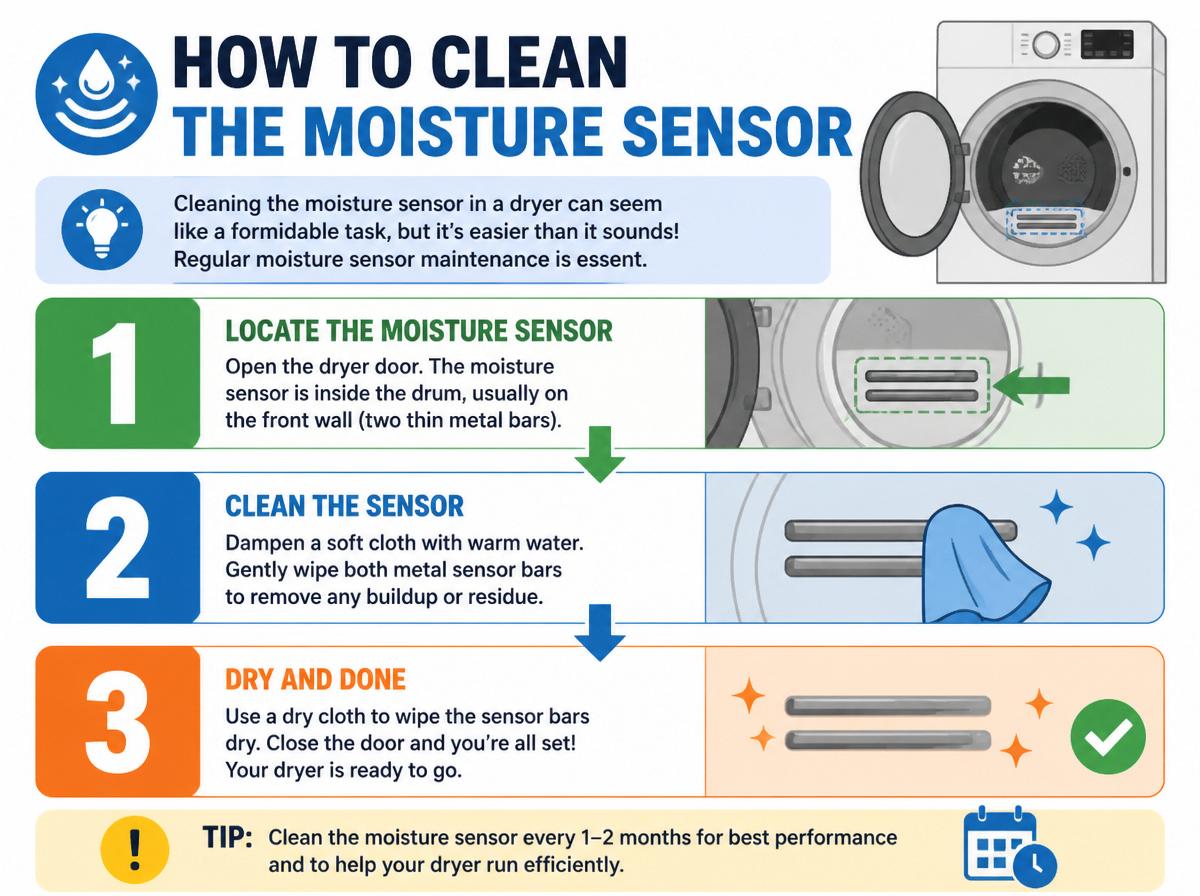
Cleaning the moisture sensor in a dryer can seem like a formidable task, but it’s easier than it sounds! Regular moisture sensor maintenance is essential for an efficient appliance. Here are some simple cleaning techniques to follow:
- Unplug the dryer – Safety first! Always disconnect the power before doing any work.
- Locate the moisture sensor – Typically found inside the drum, it’s usually two metal strips.
- Use a soft cloth – Moisten it with a gentle cleaning solution. Avoid harsh chemicals that could damage the sensor.
- Wipe gently – Clean the strips thoroughly, removing any lint or residue that may affect performance.
Testing Your Dryer Moisture Sensor
Testing a dryer’s moisture sensor is a fantastic way to guarantee it’s working properly! To begin moisture sensor testing, users can gather a few common items: a multimeter, safety gloves, and their trusty dryer manual. First, they should unplug the dryer for safety. Next, they can locate the moisture sensor, usually found near the lint filter. With the multimeter set to measure resistance, they can check the sensor’s readings. If the readings are outside the specified range in the manual, it may indicate an issue. This dryer performance evaluation is essential because a faulty moisture sensor can lead to damp clothes or excessive drying times. While testing may sound complicated, it’s a hands-on way to connect with your appliance! With these steps, anyone can feel more confident and ready to tackle their dryer troubles. Remember, every little effort counts in keeping laundry day fun and breezy!
Diagnosing Electrical Problems in the Sensor
Identifying electrical problems in a dryer’s moisture sensor can feel a bit like solving a mystery, but with the right approach, it’s an adventure worth taking! To diagnose issues, one should start with two key tests: circuit continuity and voltage testing. Follow these steps to uncover the truth:
- Check Connections: Confirm all wires are securely connected—loose wires can create a barrier to success.
- Test Circuit Continuity: Use a multimeter to check circuit pathways. If there’s no continuity, it might be time to replace parts.
- Perform Voltage Testing: Look for proper voltage at the sensor. Without it, the sensor can’t work its magic.
- Inspect for Damage: A visual examination can reveal frayed wires or burned components that signal trouble.
When to Replace the Moisture Sensor
After investigating any electrical issues with the moisture sensor, it’s important to evaluate whether a replacement is necessary. If the sensor still doesn’t work after troubleshooting, it might be time for a moisture sensor replacement. Signs to watch for include clothes coming out of the dryer still wet or the dryer running longer than usual without drying them completely. These could mean that the sensor is no longer doing its job.
Tips for Preventing Future Moisture Sensor Problems
While no one enjoys dealing with the frustrations of a malfunctioning dryer, there are several simple steps that can help prevent moisture sensor problems in the future. Being proactive with preventive maintenance can save time and energy. Here are four helpful tips to keep in mind:
- Clean the lint filter regularly. This guarantees proper airflow and helps the sensor work correctly.
- Avoid overloading the dryer. Large loads can lead to uneven drying and confuse the moisture sensor.
- Use appropriate drying techniques. Separate heavier items from lighter ones for the best results.
- Check the venting system. Make sure it’s clear of obstructions to prevent moisture buildup.
Professional Help: When to Call a Technician
When should someone consider calling a technician for dryer moisture sensor issues? If attempts to troubleshoot the problem have failed, it may be time to seek professional help. When the dryer is still not functioning properly after checking the moisture sensor or cleaning the lint filter, a qualified technician can offer insights that a homeowner might not have. It’s important to check for technician qualifications, such as relevant certifications or experience in appliance repair, ensuring they know their way around dryers.
Additionally, a technician can provide valuable assistance in estimating costs for repairs. Knowing the potential costs in advance can help avoid any financial surprises. Ultimately, calling for help is about ensuring safety and efficiency. After all, a well-functioning dryer not only saves time but can also prevent problems down the road. So, if the dryer continues to act up, don’t hesitate—reach out!
Frequently Asked Questions
Can I Use Alternative Methods to Check Moisture Levels in My Dryer?
Yes, individuals can use alternative methods for moisture checking in their dryer. Options may include the towel test, which involves placing damp towels in the dryer, or using a hygrometer to measure ambient humidity levels.
Are There Specific Brands Known for Better Moisture Sensor Reliability?
Moisture sensor comparisons reveal that certain brands, like LG and Samsung, demonstrate superior brand performance in reliability. User reviews often highlight their efficient sensors, resulting in consistent drying and reduced energy consumption compared to lesser-known brands.
What Types of Fabrics Affect Dryer Moisture Sensor Performance?
Certain fabric types, like heavy towels or dense blankets, can overwhelm dryer moisture sensors, greatly diminishing sensor sensitivity. In contrast, lightweight fabrics typically allow for ideal sensor performance, ensuring effective moisture detection and drying efficiency.
How Does Lint Buildup Impact the Moisture Sensor’s Efficiency?
Lint accumulation greatly impairs the moisture sensor’s functionality. As lint obstructs airflow and coats the sensor, it obscures readings, leading to inaccurate moisture detection and potentially resulting in incomplete drying cycles or excessive energy consumption.
Can Dryer Settings Influence the Function of Moisture Sensors?
Dryer settings considerably influence moisture sensor functionality. Improper settings may affect sensor calibration, leading to inaccurate moisture detection. Ensuring appropriate dryer settings enhances the sensor’s efficiency, resulting in ideal drying performance and reduced energy consumption.
Conclusion
In summary, keeping your dryer’s moisture sensor in tip-top shape doesn’t have to be an intimidating chore. With a little cleaning here and a test there, most troubles can be easily fixed! Just remember, it’s always okay to ask for help if things get tricky. Think of it like calling a superhero when your cape gets tangled. Stay proactive in caring for your dryer, and you’ll be on your way to warm, cozy laundry in no time!
Explore This Topic
- Back to dryer sensors
- Back to Dryer
Related guides in this cluster: