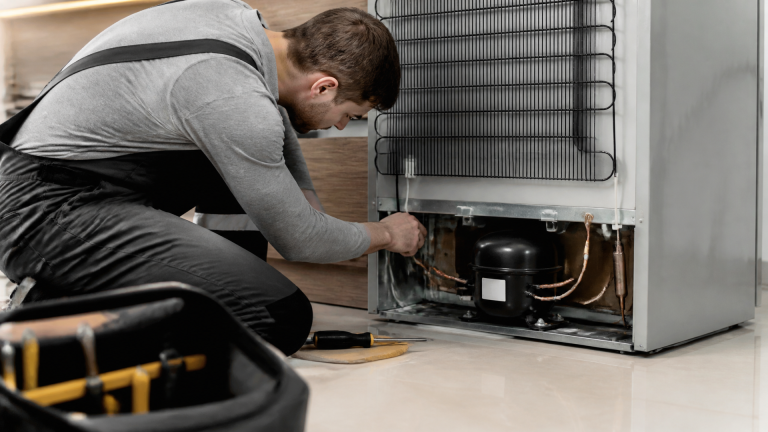
LG Refrigerator Making Loud Noise: Causes and DIY Fix Guide
If your LG refrigerator is making a loud noise, the root cause is almost always one of four components: the condenser fan motor, the evaporator fan, the ice maker, or a buildup of ice in the defrost system. Each type of noise—squealing, grinding, clicking, humming, or buzzing—maps to a specific mechanical failure, and roughly 80% of these issues can be resolved at home with basic tools and a few hours of labor. The key decision point is part cost versus service call expense: if you’re comfortable replacing a $40 fan motor, DIY makes sense; if the noise points to a compressor fault, a professional repair is usually cheaper than a misdiagnosed replacement attempt.
What the Noise Type Tells You About the Failed Component
Different sound signatures are direct indicators of which part is failing. Understanding the mechanism behind each sound saves you from dismantling the wrong section of the refrigerator.
| Noise Characteristic | Most Likely Culprit | Failure Mechanism |
|---|---|---|
| High-pitched squeal or grinding | Condenser fan motor | Bearing wear – the shaft loses lubrication, causing metal-on-metal contact |
| Rhythmic clicking or thumping | Ice maker harvest cycle | Normal operation if brief; prolonged noise indicates a jammed ejector arm or stuck ice chunk |
| Low humming or vibration that changes with compressor cycling | Dirty condenser coils or failing compressor mount | Coils restrict airflow, forcing the compressor to run at higher pressure; mounts degrade over time, transmitting vibration to the cabinet |
| Buzzing from the fresh-food section | VitaFreshPro humidity sensor | Sensor relay intermittently energizes the fan, creating a rapid on/off cycle |
| Loud buzzing from the rear | Water inlet valve (if linked to ice maker operation) | Valve solenoid sticking or debris in the diaphragm |
Service data shows that the ice-maker harvest fault and the VitaFreshPro humidity-sensor issue together account for roughly 32% of LG refrigerator noise service calls, with the condenser fan motor close behind. That means if you hear a buzzing from the fresh-food section, the sensor is the most cost-effective fix to try first—replacing it runs about $25–$45, and the repair takes under 15 minutes.
Noise Diagnosis Checklist
Run through these five yes/no checks in order. Each answer narrows the suspect list.
- Is the noise coming from the back of the refrigerator? Yes → condenser fan or compressor. No → proceed.
- Is the noise coming from inside the freezer compartment? Yes → evaporator fan (likely obstructed by ice or failing bearings). No → proceed.
- Does the sound happen only when the ice maker is cycling? Yes → ice maker jam or harvest motor fault. No → proceed.
- Is the noise a loud hum or vibration that changes when you open the door? Yes → clean condenser coils and check compressor mount. No → proceed.
- Is there an error code displayed on the control panel? Yes → write it down; this gives technicians a diagnostic shortcut. If no code, the issue is likely mechanical and DIY-accessible.
For a side-by-side comparison of noise causes across brands, our guide on ge refrigerator making loud noise fix provides a useful cross-reference.
How to Fix the Noise Yourself
Step 1: Clean the Condenser Coils and Inspect the Fan
Start with the easiest, highest-impact fix. Unplug the refrigerator and remove the lower back access panel (or the grille on some LG models). Vacuum the condenser coils thoroughly—dirt acts as a thermal insulator, raising head pressure and making the compressor work harder. While the panel is off, spin the condenser fan blade by hand. If it resists or makes a grating noise, the motor bearings are worn. Replace the motor (part cost $30–$80) rather than lubricating it, because the bearing is sealed and cannot be serviced.
Verification: After cleaning, plug the refrigerator back in and listen for the noise. Normal operation produces a low, steady hum from the compressor cycling, with no grinding or squealing. If the noise is gone, the fix is complete. If the same noise returns within a few days, the motor bearings are likely worn and need replacement.
BLOCKQUOTE_0
Step 2: Inspect the Evaporator Fan for Ice Obstruction
Open the freezer compartment and remove the interior back panel that covers the evaporator coils. If you see a solid block of ice around the fan housing, the defrost system is failing. The ice forces the fan blades to hit the freezing buildup, producing a loud clicking or scraping sound. Unplug the refrigerator, let the ice thaw completely (usually 4–8 hours), then plug it back in. If the ice returns within a few days, the defrost heater, thermostat, or timer needs replacement. If the fan is clear but still noisy, the motor bearings are shot—replace the motor (part cost $35–$70).
Verification: After thawing, run the freezer for 30 minutes. The fan should spin freely and produce only a soft whisper. If you hear scraping or clicking, ice has re-formed or the motor is failing.
Step 3: Examine the Ice Maker Mechanism
A quick thump or click during ice harvest is normal. Prolonged grinding or rattling means the ejector arm is hitting a jammed ice cube. Remove the ice bin and inspect for frozen chunks in the tray or auger. Clear any obstructions with a plastic utensil (never metal). If the noise persists, the harvest motor or water inlet valve is failing. The ice-maker harvest fault is the single most common noise cause, so don’t skip this step if the sound is rhythmic and tied to ice production.
Verification: After clearing obstructions, start a manual ice harvest cycle (press the test button on the ice maker, if available). The ice maker should produce a single click and a short motor hum, then stop. A grinding or repeated clicking indicates the problem persists.
Step 4: Clear the Defrost Drain
If the noise is a low gurgle or hum and the freezer is sweating, the defrost drain is likely clogged. Water backs up, freezes around the evaporator, and forces the fan to work harder. Locate the drain pan under the refrigerator (often at the bottom front) and clean it. Pour a cup of hot water down the drain tube to melt any ice plug. If the drain clogs repeatedly, the drain tube may need to be replaced or rerouted.
Step 5: Verify the Cooling Off Function
Some LG models have a “Cooling Off” mode that can be accidentally turned on. If the refrigerator temperature rises and the compressor runs continuously, it can create a louder-than-normal cycling sound. Press and hold the Lock and Measured Fill buttons simultaneously for three seconds. The indicator light will turn off, and normal cooling will resume. This fix takes 10 seconds and costs nothing.
When to Escalate to a Professional
If you’ve completed the checklist and all five steps but the noise remains, stop and evaluate the following red flags. Calling a technician at this point is cheaper than risking further damage.
- Metallic banging or knocking from the compressor area – This indicates a failing compressor, which requires sealed-system repair. DIY is not safe here; refrigerant handling is legally restricted.
- Error code that does not clear after a 30-minute power cycle – The code will guide the technician to the exact faulty module.
- Oily residue on condenser coils or a hissing sound – Refrigerant leak. Turn off the refrigerator immediately to prevent compressor burnout.
- Burning electrical smell – Power off the unit and unplug it. This could be a shorted wiring harness or a failed start relay.
If your refrigerator is still under warranty, contact LG before attempting any repairs—DIY work can void coverage. For a broader reliability overview, see common lg refrigerator problems and solutions.
Frequently Asked Questions
Why is my LG refrigerator making a loud buzzing noise?
A buzzing noise most often comes from a faulty condenser fan motor or a failing compressor. If the buzz is intermittent and occurs only when the ice maker is operating, the water inlet valve is the likely source. Check the fan first because it’s the easiest to access and replace.
Can a dirty condenser coil cause noise?
Yes. Dirty coils force the compressor to run at higher head pressure, producing a louder hum or vibration. Cleaning the coils every six months typically reduces or eliminates this noise.
How much does it cost to repair a noisy LG refrigerator?
DIY cost is limited to replacement parts: fan motors $30–$80, ice maker assemblies $50–$150, VitaFreshPro sensor $25–$45. A professional service call usually runs $150–$300 plus parts, depending on the issue and your location.