
7 Essential Tips for Your Appliance Inspection Checklist
Keeping appliances in tip-top shape is super important! Start by checking for leaks and moisture around them. Next, inspect the electrical cords for any wear or damage. Don’t forget to clean filters and vents—this helps them run better! Check hoses and belts for wear and replace them if needed. Test how well each appliance works. Review user manuals for tips on care. Finally, know when to call in the pros. There’s more to make sure your appliances stay happy!
Key Takeaways
- Regularly inspect for leaks and moisture around appliances to prevent mold growth and structural damage.
- Check electrical cords for frayed insulation or exposed wires, and replace as necessary to avoid hazards.
- Clean filters and vents to improve appliance efficiency and reduce energy use while enhancing indoor air quality.
- Evaluate hoses and belts for wear patterns; replace any that show signs of excessive wear to prevent appliance breakdowns.
- Document inspection findings and schedule follow-ups to ensure consistent maintenance and demonstrate care for your appliances.
Check for Leaks and Moisture Around Appliances
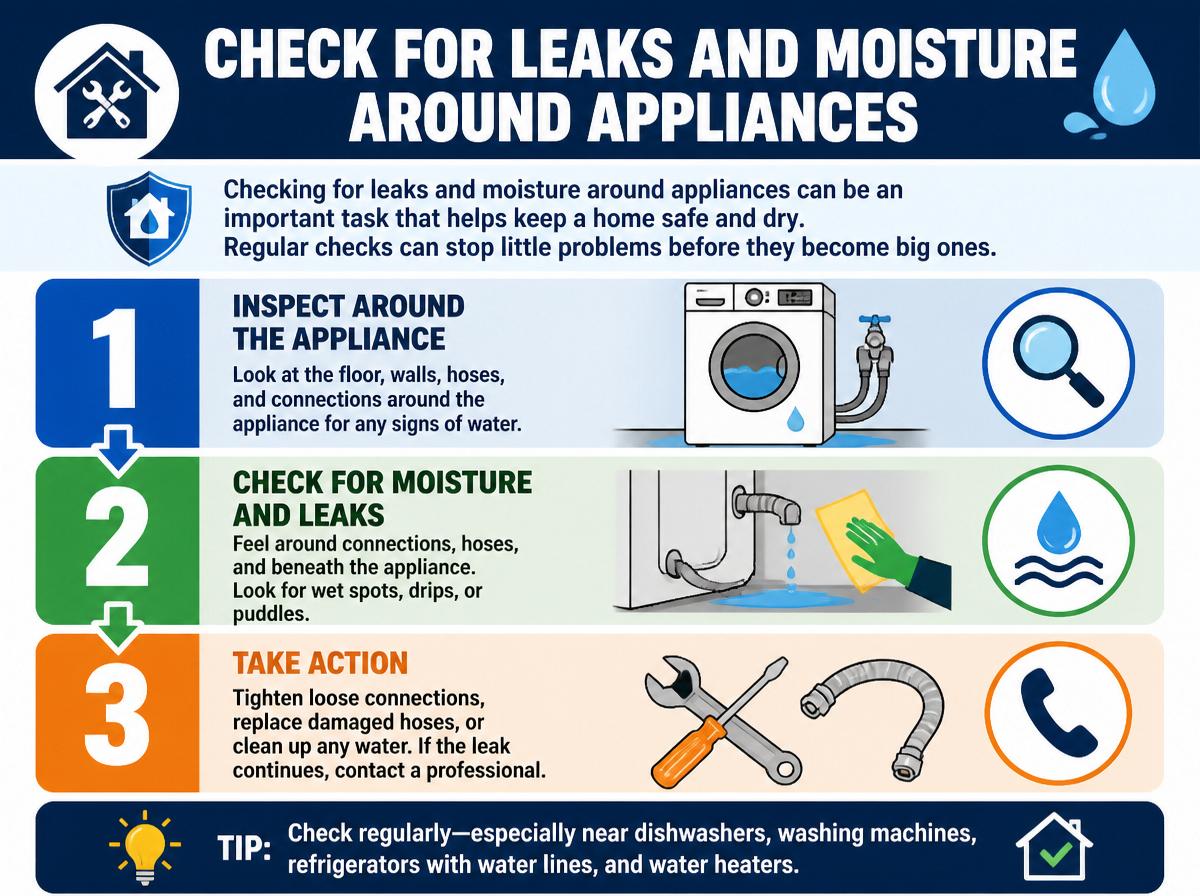
Checking for leaks and moisture around appliances can be an important task that helps keep a home safe and dry. Regular checks can stop little problems from spiraling into costly structural damage. Homeowners should inspect areas near sinks, refrigerators, and washers, looking for dampness or water stains. Even tiny leaks can cause trouble over time, leading to mold growth, which is not only unsightly but also harmful to breathe.
If moisture is found, it’s time to take action! Fixing leaks quickly can prevent those pesky mold spores from taking over. Just remember, a dry home is a happy home. Encouragement is key; you can do it! Turning maintenance into a fun routine makes the task feel less overwhelming. So, gather some tools, don your detective hat, and set out on your moisture hunt. Your home will thank you, staying safe, sound, and snug!
Inspect Electrical Connections and Cords
After confirming a moisture-free space around appliances, the next step involves taking a careful look at electrical connections and cords. Keeping an eye on these can prevent accidents and help the appliances work well. Look for frayed insulation on cords, as this can lead to shocks or fires. Corroded terminals might seem harmless, but they can disrupt power flow and cause appliances to malfunction.
| Issue | What to Look For | Action Required |
|---|---|---|
| Frayed Insulation | Exposed wires or wear | Replace cords effectively |
| Corroded Terminals | Rust or discoloration | Clean or replace terminals |
| Loose Connections | Wobbly plugs or exposed wiring | Tighten or fix connections |
Clean Filters and Vents
Regularly cleaning filters and vents can greatly improve the efficiency of appliances while also keeping homes safe and fresh. When filters are clogged with dust and debris, appliances have to work harder, which often leaves your energy bills higher. Plus, cleaning those filters can help with allergen reduction, making the air around you healthier.
For example, removing lint from dryer vents doesn’t just prevent fires; it also allows your clothes to dry faster! A little effort goes a long way. It’s like giving your appliances a nice revitalizing spa day!
Regular checks, even for a few minutes, can make a big difference. Encourage your family to help and turn your cleaning routine into a fun game. Remember, a clean filter and vent can save money and keep everyone safe. So, roll up those sleeves and let’s keep the appliances humming along!
Evaluate the Condition of Hoses and Belts
While clean filters and vents lay the groundwork for appliance efficiency, the condition of hoses and belts plays a pivotal role in keeping everything running smoothly. Neglecting these parts can lead to appliance breakdowns. Here’s a simple checklist to evaluate hoses and belts:
- Inspect for wear patterns: Look closely for cracks, fraying, or shiny spots that indicate excessive wear.
- Check material compatibility: Verify the materials of the hoses and belts are suitable for the specific appliance to avoid costly failures.
- Test flexibility: Gently bend hoses and belts. If they don’t seem pliable, it might be time for a replacement.
- Look for leaks: Check hoses for any signs of leaks, which can lead to water damage or inefficiency.
Test Functional Operation of Each Appliance
When testing the functional operation of each appliance, it’s important to start by checking if they have power. Make sure they perform well and use energy efficiently, as this can save money and keep them running longer. Also, take a moment to inspect control settings; making sure everything is set correctly can be a game changer for getting the best results from your appliances!
Check Power Supply Status
Checking the power supply status is an essential first step in testing each appliance’s functional operation. Ensuring that everything receives proper supply voltage and maintains power stability can prevent common issues. Here are some handy steps to follow:
- Inspect Power Cords: Look for any visible wear or damage.
- Check Outlets: Test outlet functionality using a simple plug-in device, like a lamp.
- Verify Voltage: Use a multimeter to measure the voltage level, ensuring it matches the appliance’s requirements.
- Look for Flickering Lights: Notice any fluctuations that might indicate power instability.
Evaluate Performance and Efficiency
How well does each appliance perform and use energy efficiently? Testing your appliances is key to understanding their effectiveness. Energy benchmarking helps measure performance, while usage analytics identifies usage patterns that can save costs.
Here’s a quick table to visualize testing:
| Appliance | Performance Goal |
|---|---|
| Refrigerator | Maintain cold temp |
| Washing Machine | Wash and rinse well |
| Oven | Heat evenly |
Each appliance should run smoothly and use electricity wisely. Don’t forget, regular checks can make your home feel cozy and even help save money! So, grab your checklist, stay focused, and enjoy the process—making your appliances work better can be quite rewarding!
Inspect Control Settings Compliance
Inspecting the control settings on each appliance is an important step to guarantee everything runs just right. Verifying regulatory compliance and conducting firmware verification can help avoid unexpected issues. Here’s a quick guide to make this task easier:
- Check Control Settings: Confirm each appliance is set to its recommended defaults.
- Test Functional Operation: Turn on each appliance and observe its operation.
- Confirm Safety Features: Verify that all safety features are activated and working properly.
- Document Observations: Note any discrepancies or malfunctions for future reference.
Completing this checklist not only boosts appliance performance but also helps in maintaining a safe environment. Celebrate each successful inspection; you’re one step closer to a smoother-running home! Happy inspecting!
Review User Manuals for Maintenance Guidelines
Have you ever wondered where to find the best tips for keeping your appliances in top shape? The answer often lies in the user manuals. These handy guides not only offer manufacturer recommendations but also hold the secrets to warranty interpretation. Understanding what’s covered can save money and headaches later on.
When reviewing your manuals, look for sections on maintenance and care. These instructions are tailored to guarantee your appliances work efficiently and last longer. For instance, a washing machine manual may suggest cleaning filters regularly to prevent blockages.
Additionally, those manuals might reveal what specific items should never go in your appliance—like a shoe in the dryer!
Making a habit of consulting these guides will empower you to tackle appliance care confidently. So, gather your manuals and get ready to uncover the secrets to smooth and effective appliance use!
Schedule Professional Inspections When Necessary
While it may seem easier to handle appliance troubles on your own, scheduling professional inspections can really save the day. Certified technicians are trained to spot problems you might miss. They also know how to fix things safely, which is a big plus! Here are some times when you should consider calling in the pros:
- Frequent Breakdowns: If an appliance keeps acting up, it’s time for a professional evaluation.
- Unusual Noises: Strange sounds might be a cry for help!
- Old Age: Appliances over 10 years old deserve a check-up to confirm they’re still safe and efficient.
- Service Agreements: If you have one, regular inspections can keep your appliances running smoothly.
Making this choice shows you care about your appliances and home. Don’t hesitate to ask for help; it can save you time, money, and energy in the long run!
Frequently Asked Questions
What Tools Do I Need for an Appliance Inspection?
For an appliance inspection, essential tools include a thermal camera to detect heat anomalies and a multimeter for measuring voltage, current, and resistance. These instruments are vital for identifying potential issues within appliances effectively.
How Often Should I Perform Appliance Inspections?
Appliance inspections should occur at least twice a year, aligning with a seasonal schedule. Additionally, warranty considerations may necessitate more frequent checks to verify compliance, preventing unexpected costs and maintaining appliance longevity. Regularity promotes reliability.
Can I Inspect Appliances Without Professional Help?
Yes, individuals can inspect appliances without professional help; however, they should be cautious of warranty implications and potential legal liability arising from improper evaluations or undocumented issues that might escalate into larger, more costly problems.
What Red Flags Indicate Appliance Replacement Is Necessary?
Frequent breakdowns and energy inefficiency often signal the need for appliance replacement. If a once-reliable unit consistently falters, revealing its age and diminished performance, the decision to replace may soon loom larger than anticipated.
Are There Specific Safety Precautions During Inspections?
Specific safety precautions during inspections include personal protection measures, such as wearing appropriate gear, and ensuring electrical isolation of appliances to prevent accidents. Adhering to these guidelines helps maintain safety throughout the inspection process.
Conclusion
Following this appliance inspection checklist is like giving your home a superhero cape! With regular checks for leaks, cleaning out filters, and testing how well your appliances run, you’ll keep everything in top shape. Don’t forget to peek at user manuals and call for professional help when needed. You’re not just maintaining machines; you’re protecting your home and family! So grab your tools and get started—your appliances will thank you with every beep and whirl!
Explore This Topic
- Back to Home Inspection
- Back to appliance maintenance
Related guides in this cluster: