
Complete Guide: What Is a Fan Thermostat and How Does It Work?
A fan thermostat is a clever gadget that keeps rooms comfy by switching fans on or off based on temperature. It uses sensors to detect heat, activating the fan when it gets too warm, then turning it off to save energy. This smart cycling not only protects electronics but also reduces bills and noise. Installing and troubleshooting it is straightforward with the right tools and patience. Keep going to discover handy tips and tricks for mastering your fan thermostat.
Key Takeaways
- A fan thermostat controls fan operation based on room temperature to maintain comfort and protect electronics from overheating.
- It continuously senses temperature, activating the fan when exceeding a preset level and turning it off once the desired temperature is reached.
- Key components include temperature sensors, control relays, relay switches, and wiring for fast, reliable fan control.
- Using a fan thermostat saves energy, reduces electricity bills, extends fan lifespan, and ensures quiet, automated temperature management.
- Proper installation and regular maintenance, including wiring checks and sensor cleaning, ensure optimal fan thermostat performance and durability.
What Is a Fan Thermostat?
A fan thermostat might sound like a fancy gadget, but it’s actually a simple tool that helps keep a room’s temperature just right. Over time, the design evolution of fan thermostats has made them smaller, smarter, and easier to use. Early models were bulky and basic, but modern versions meet strict industry standards, ensuring both safety and reliability. These devices work by turning fans on or off according to the room’s temperature, so spaces stay cool without wasting energy. Thanks to clear design improvements, fans controlled by thermostats can now save money on bills and protect electronics from overheating. While they might seem technical, fan thermostats are straightforward, blending technology and comfort in a friendly way. This ongoing progress shows how clever tools can quietly make homes more pleasant, proving that even small gadgets have a big impact on daily life. Keeping cool has never been simpler—just a switch away!
How Does a Fan Thermostat Operate?
How exactly does a fan thermostat know when to spring into action? This clever device has roots stretching back to the early 20th century, evolving alongside heating and cooling technologies. It senses the room’s temperature and decides when to turn the fan on or off, keeping spaces comfy without wasting energy. Market trends now favor smarter, more accurate fan thermostats, highlighting their growing role in energy efficiency.
Here’s a quick look at how it operates:
| Step | What Happens |
|---|---|
| 1. Temperature Sensed | The thermostat reads the room’s temperature. |
| 2. Threshold Check | It compares this to the preset temperature. |
| 3. Fan Activation | Fan turns on if the room is too warm or cold. |
| 4. Fan Deactivation | Fan switches off once desired comfort is met. |
This smart cycle guarantees a cozy home, saving energy and money—a win-win for everyone!
Key Components of a Fan Thermostat
Understanding the key components inside a fan thermostat is like peeking under the hood of a clever little machine—each part works together to keep the air just right. At the heart of this device are different sensor types, like thermistors or bimetallic strips, which detect temperature changes. These sensors are the thermostat’s “eyes,always watching the air. When the sensor spots a change, it sends a signal to the control relay. Think of the control relay as a helpful traffic cop, deciding when to turn the fan on or off to maintain the perfect temperature. Inside the relay, a small switch opens or closes the fan’s power circuit depending on what the sensor says. Together, these parts form a smart team, responding quickly and accurately. For anyone curious about how a fan thermostat keeps rooms comfy, understanding these parts is the best way to start it’s science and simplicity working hand in hand.
Benefits of Using a Fan Thermostat
Even though it might seem like a small gadget, a fan thermostat offers big advantages that make everyday life more comfortable and energy-friendly. This clever device controls fan operation based on temperature, which means it turns the fan on and off at just the right moments. People quickly notice these benefits:
- Energy Savings: By only running the fan when necessary, it cuts down electricity use, lowering bills and helping the environment—your wallet and the planet cheer!
- Improved Comfort: It keeps rooms at a steady temperature. No more sudden blasts of cool or lingering heat, so everyone stays cozy without fiddling with controls constantly.
- Longer Fan Life: Less constant wear means the fan works better for longer, saving money on repairs or replacements.
With these advantages, a fan thermostat is a smart, simple upgrade that brings ease and efficiency to daily life. Who knew such a tiny gadget could pack such a punch?
Common Applications for Fan Thermostats
The benefits of a fan thermostat are clear, but where do these handy devices really shine? Fan thermostats are perfect for places where temperature control matters a lot. For example, in greenhouse ventilation, they keep plants comfy by turning fans on or off when it gets too hot or cold. This helps plants grow healthy without stressing over too much heat or chill. Another smart use is in server racks, where computers need cool air to work right. Fan thermostats kick in just when the equipment starts warming up, preventing overheating that could cause costly damage. They’re also useful in homes, workshops, and any space needing steady airflow and temperature control. These devices are like tiny, attentive helpers, always working quietly behind the scenes, making sure machines and plants stay in their best shape, without needing constant human checks. This makes life easier and gives peace of mind—it’s a win-win!
How to Install a Fan Thermostat
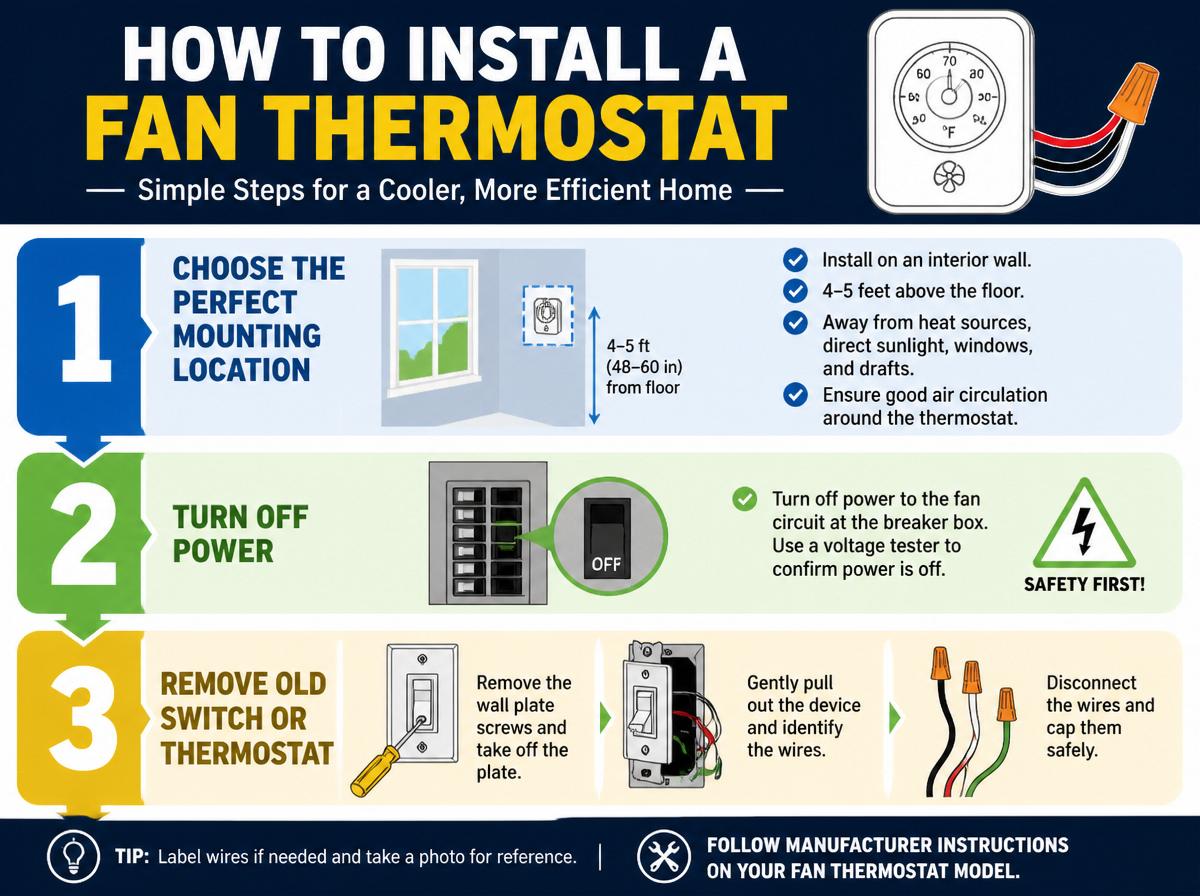
When someone decides to install a fan thermostat, a little preparation goes a long way toward success. First, choosing the perfect mounting location is key. It should be away from direct heat, moisture, or airflow that could trick the sensor. Next, assembling a tool checklist guarantees no surprises—think screwdrivers, wire strippers, and a voltage tester. Finally, safety first: always turn off power before starting.
Here’s a simple step-by-step:
- Secure the thermostat to the selected mounting location using screws from your tool checklist.
- Connect the wiring carefully, matching colors and following the manufacturer’s diagram.
- Double-check connections, then turn power back on to test the fan and thermostat operation.
With patience, this DIY task feels rewarding—imagine the comfort of perfect room temperature with your own handiwork! It’s friendly, smart, and surprisingly easy once the prep work is done right.
Troubleshooting Fan Thermostat Issues
When a fan thermostat acts up, it can feel like a mystery, but many common problems have simple fixes. By following clear diagnostic steps, anyone can figure out what’s wrong without turning into a detective. Whether it needs a quick repair or a full replacement, troubleshooting is a chance to learn and keep cool—literally!
Common Malfunctions
Although fan thermostats are designed to work smoothly, they sometimes act up, leaving a home feeling stuffy or too chilly. Common malfunctions can frustrate anyone, but recognizing these issues early helps keep comfort steady. Here are three frequent problems to watch out for:
- Sensor failure: When the thermostat’s sensor malfunctions, it might not read the temperature correctly, causing the fan to run too much or stop suddenly.
- False cycling: This happens when the fan switches on and off rapidly, wasting energy and making the home’s temperature unstable.
- Wiring issues: Loose or damaged wires can disrupt signals, resulting in unpredictable fan behavior.
Understanding these glitches encourages confidence, turning a baffling problem into a fixable hurdle, keeping homes cozy without stress.
Diagnostic Steps
Even if a fan thermostat seems tricky at first, tackling diagnostic steps can turn confusion into clarity. Start with basic safety checks: always unplug the device and wear gloves to avoid shocks. Once safe, examine connections for loose wires or damaged parts. Signal tracing is next—a method to follow the path of electrical signals through the thermostat to spot interruptions or faults. Using a multimeter helps confirm if signals pass correctly, highlighting where problems may hide. If signals don’t flow as expected, it’s a clue the thermostat might be acting up. Remember, patience is key; these steps help readers feel empowered, turning mystery into manageable problems. With clear guidance and a touch of humor, troubleshooting becomes less intimidating and more a fun detective game.
Repair and Replacement
With the signals traced and problems spotted, it’s time to tackle fixing that fan thermostat hiccup head-on. Repairing or replacing a fan thermostat can feel tricky, but a clear plan helps. First, check for simple fixes—like cleaning dust or tightening loose wires. Second, if the thermostat is beyond repair, carefully remove it, keeping warranty considerations in mind to avoid voiding coverage. Finally, responsibly handle the old thermostat through proper recycling options to protect the environment. Remember, patience is key. Here’s a quick checklist:
- Inspect and clean the thermostat for obvious issues.
- Remove and replace with a compatible unit, noting warranty rules.
- Recycle old parts properly to keep Earth happy.
Stick with it—you’ve got this!
Frequently Asked Questions
Can a Fan Thermostat Be Used With Smart Home Systems?
A fan thermostat can be used with smart home systems if it supports protocol compatibility such as Zigbee or Z-Wave. Voice integration through assistants like Alexa or Google Assistant further enhances its usability and convenience within smart environments.
How Energy-Efficient Are Fan Thermostats Compared to Other Controls?
In a commercial office, setpoint optimization using fan thermostats reduced energy use by 15% compared to manual controls. Lower standby losses make fan thermostats more energy-efficient, contributing to sustained energy savings in HVAC systems.
Do Fan Thermostats Require Regular Maintenance or Calibration?
Fan thermostats do require periodic inspection to verify accuracy, as sensor drift can affect performance over time. Regular maintenance and occasional calibration help maintain reliable temperature control and enhance overall system efficiency.
Are Fan Thermostats Compatible With All Types of Fans?
Like a key fitting a specific lock, fan thermostats are not universally compatible. Their AC compatibility and DC compatibility depend on design, requiring careful selection to match fan type, voltage, and electrical specifications for proper function.
What Safety Certifications Should I Look for in a Fan Thermostat?
The individual should look for fan thermostats with UL Listing to assure electrical safety and RoHS Compliance to confirm environmentally responsible materials. These certifications guarantee reliability, safety, and adherence to regulatory standards in various applications.
Conclusion
A fan thermostat acts like the brain guiding a fan’s cooling dance, keeping temperatures just right. Understanding its parts and functions empowers anyone to install and troubleshoot it confidently. Like a trusty sidekick, it makes life cooler and comfier with little fuss. With a bit of patience and this guide, tackling fan thermostats feels less like a chore and more like a smart fix, inviting success without the sweat. Happy cooling!
Explore This Topic
- Back to energy efficiency
- Back to Appliance Characteristics & Context
Related guides in this cluster: