Troubleshooting GE Refrigerator Common Problems and Solutions
Troubleshooting common GE refrigerator problems involves checking temperature settings and seals, cleaning condenser coils, and addressing unusual noises. If ice builds up in the freezer, keep the door closed and regularly maintain it. Water leaks could come from clogged drains or loose ice maker connections. Don’t forget to replace burnt-out light bulbs! Remember, many issues can be fixed with a simple reset, but if they persist, help is available. There’s much more to explore to keep things running smoothly!
Key Takeaways
- Check temperature settings and calibrate the thermostat to ensure accurate readings and prevent temperature fluctuations.
- Identify and address any ice build-up by checking for moisture entry and maintaining a tightly closed freezer door.
- Inspect for water leaks by checking clogged drains and loose ice maker connections to avoid damage.
- Regularly clean condenser coils and check door seals to prevent overheating and enhance energy efficiency.
- Perform a simple reset by unplugging and re-plugging the refrigerator to resolve common error messages.
Temperature Fluctuations: Causes and Fixes
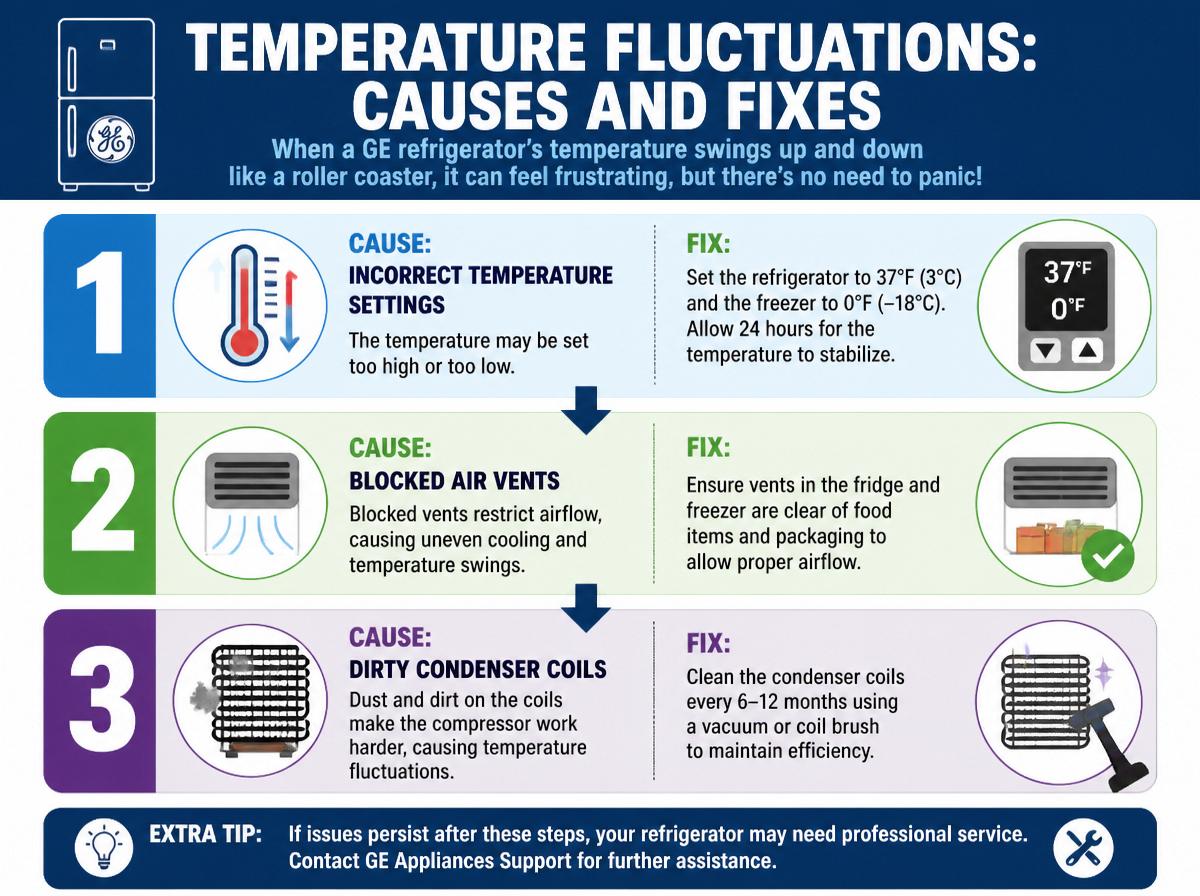
When a GE refrigerator’s temperature swings up and down like a roller coaster, it can feel frustrating, but there’s no need to panic! One of the first things to check is the temperature settings. Sometimes, these can be accidentally adjusted, leading to wild fluctuations. A quick look inside the control panel might just reveal an easy fix.
Another potential culprit is thermostat calibration. If the thermostat isn’t calibrated correctly, it can’t accurately sense the temperature, making the fridge think it needs to work harder or not work enough. To fix this, users can consult the manual for steps on recalibrating it.
With a little patience and these quick checks, anyone can get their GE refrigerator back on track. Remember, taking small steps makes troubleshooting much simpler, and soon enough, the fridge will be cool and reliable once again!
Noise Issues: Identifying and Resolving Common Sounds
Have you ever wondered why your GE refrigerator sounds like it’s hosting a concert? Noise issues can be perplexing, but with a little help, they can often be resolved. Vibration noises and motor sounds may seem alarming, but they can be easily identified.
| Sound Type | Possible Cause |
|---|---|
| Vibration Noises | Loose components like shelves or bins |
| Motor Sounds | Compressor running during cooling |
| Clicking Noises | Defrost timer engaging |
| Humming Sounds | Normal operation of the fridge |
Understanding these sounds can ease concerns. If the vibrations bother you, checking for loose parts can make a big difference. If the motor sounds are loud but regular, it’s likely just hard at work. Remember, a little investigation can lead to a quieter, more enjoyable kitchen atmosphere. Don’t hesitate to explore; you’ve got this!
Water Leaks: Diagnosing the Source and Solutions
While noise issues can cause worry, water leaks are often even more concerning for refrigerator owners. These leaks can lead to significant water damage and mold. Diagnosing the source is essential to preventing costly repairs. Here are three common causes of water leaks:
- Clogged Drains: If the drain is blocked, water can pool instead of draining away properly.
- Faulty Water Filter: A damaged or improperly installed water filter can cause leaks, so checking this part is important.
- Ice Maker Issues: Sometimes, the connection to the ice maker may become loose, leading to leaks.
For effective leak detection, it’s crucial to regularly inspect these components and follow maintenance schedules. By staying proactive, refrigerator owners can save themselves from unwanted messes and repairs. Remember, if you spot a leak, take action quickly—your refrigerator will thank you!
Ice Build-Up: Handling Frost Accumulation in the Freezer
Ice build-up in the freezer can be a puzzling problem for many refrigerator owners, but it doesn’t need to be intimidating. Often, this ice is caused by moisture, which can sneak in during regular use. Regular freezer maintenance is key to preventing frost accumulation. To tackle ice build-up, one effective method is frost removal. First, unplug the refrigerator and remove all items from the freezer. Gently scrape away the ice with a plastic spatula—no metal tools, please, as they can cause damage! If the ice is stubborn, placing a bowl of hot water inside can help speed up the melting process. Once the ice is gone, wipe the area dry. Finally, keep the freezer door closed tightly to limit future moisture. With these simple steps, anyone can conquer their freezer’s frosty foes and enjoy a smoothly running appliance. Happy defrosting!
Door Seal Problems: Ensuring an Effective Seal
When a refrigerator door doesn’t seal properly, it can lead to a host of problems, causing frustration for even the most patient of homeowners. A faulty door seal can make your fridge work harder, which can increase energy bills and spoil food. A thorough door seal inspection can help identify if an issue exists. Here are three common signs it’s time to take action:
- Warm spots inside the refrigerator.
- Condensation or frost around the door seams.
- A noticeable gap when the door is closed.
If any of these occur, it might be time for a seal replacement. Using seal replacement astuces can simplify the process and restore your fridge’s efficiency. Regular checks not only save food but also money. Remember, a well-sealed door means a happy refrigerator and a happier you! Don’t let a simple fix stress you out; you’ve got this!
Dispenser Malfunctions: Troubleshooting Water and Ice Dispensers
When GE refrigerator water and ice dispensers act up, it can be quite frustrating for anyone trying to stay cool with a rejuvenating drink. Common dispenser issues, like leaks or blockages, can often be resolved with a few quick fixes that don’t require a degree in engineering. With a little patience and the right tips, anyone can tackle these problems and enjoy ice-cold beverages again!
Common Dispenser Issues
A malfunctioning water or ice dispenser can be a real hassle, especially on hot summer days when an exhilarating cold drink is just what everyone needs. Common issues often arise, but understanding them can help. Here are three common dispenser problems:
- Clogs in the ice chute: This can block ice from making it to your glass.
- Water flow problems: Low water pressure might lead to weak water dispensing.
- Dirty dispensers: A lack of dispenser cleaning can cause buildup, affecting taste and function.
Regular maintenance is key to a smoothly operating unit. Keeping an eye on these issues will help guarantee your dispenser is always ready to provide that invigorating sip!
Quick Fix Techniques
Even the best refrigerators can have their off days, but with a little know-how, anyone can tackle dispenser malfunctions like a pro. For quick fixes, having the right quick fix tools on hand is essential. First, check the water supply line for kinks or blockages; this can be a simple repair that saves a lot of trouble. Sometimes, the dispenser buttons just need a gentle cleaning to work better. If ice is jammed, carefully clear the chute without using excessive force. A little humor goes a long way—think of it as your fridge’s way of asking for attention! Little steps like these can turn a frustrating situation into a fun DIY moment, restoring coolness to both the fridge and the kitchen.
Light Bulb Replacement: Keeping Your Fridge Well-Lit
Keeping a refrigerator well-lit is important, not just for finding midnight snacks, but also for ensuring everything stays fresh and visible. Regular light bulb replacement keeps the fridge cheerful and functional. Here are three key points to evaluate:
- Bulb Types: Check which kind is best for your GE refrigerator—incandescent, LED, or CFL. Each has different lifespans and brightness levels.
- Replacement Frequency: Aim to replace bulbs every 1-2 years. They can dim slowly over time, making it hard to see your beloved snacks!
- Safety First: Always unplug the fridge before replacing a bulb. This keeps everyone safe!
Control Panel Errors: Understanding and Resetting Codes
When a GE refrigerator’s control panel starts flashing unexpected error codes, it can feel like a mystery begging to be solved. These codes often indicate specific issues, and code interpretation is essential for understanding what’s wrong. Thankfully, it’s usually not as scary as it seems!
First, consult the refrigerator’s manual to decode those flashing lights. Each code correlates with a unique problem. It might signal a need for control panel calibration, which is like fine-tuning a musical instrument for the perfect sound.
To reset the codes, unplug the fridge for a few minutes, then plug it back in. Voila! Most errors disappear like magic. If the code returns, it might need a closer inspection or a visit from a technician. Remember, troubleshooting can feel overwhelming but it’s all part of the journey of fridge ownership. You’ve got this!
Overheating: Addressing Excessive Heat From the Refrigerator
When a GE refrigerator gets too hot, it can be concerning, but there are simple checks that can help cool things down. First, keeping the condenser coils clean is like giving your fridge a revitalizing shower, while also checking the door seals guarantees that no pesky warm air sneaks in. By taking these small steps, anyone can help their fridge run smoothly and avoid those hot-tempered moments!
Check Condenser Coils Cleanliness
While it may not seem obvious, the cleanliness of the condenser coils can have a big impact on a refrigerator’s ability to stay cool. Dirty coils can cause overheating, leading to food spoilage and wasted energy. Keeping these coils clean is essential for proper function. Here are some helpful cleaning techniques and maintenance routines:
- Inspect the coils every six months for dust and debris.
- Gently vacuum or brush away dirt with a soft brush.
- Use a damp cloth for stubborn grime.
Inspect Door Seals Integrity
Even the best refrigerator can run into trouble if the door seals aren’t in tip-top shape. A simple door seal inspection can reveal hidden issues that lead to overheating. If air escapes, it can make the fridge work extra hard.
| Problem | Emotional Impact |
|---|---|
| Tears in the seals | Frustration and wasted energy |
| Dirt or debris | Feeling hopeless about repairs |
| Loose seals | Doubt about freshness of food |
For homeowners, seal replacement options are available to restore efficiency. Regular checks can prevent unexpected heat concerns and sustain the refrigerator’s cool embrace. Remember, you’re not alone in this; with patience and a little effort, anyone can keep their refrigerator running smoothly!
Electrical Issues: Dealing With Power Disruptions and Circuit Problems
Have you ever wondered what to do when your GE refrigerator suddenly stops humming? This can be alarming, but it often points to electrical issues. First, check if the power source is working; it may be as simple as a unplugged cord. If that’s not the case, circuit breakers might be the culprit! Look out for these three signs:
- No Power: Check if your fridge lights are off.
- Tripped Breaker: If the breaker is tripped, reset it and see if the fridge responds.
- Flickering Lights: If your refrigerator lights flicker, that may indicate issues with the electrical supply.
While facing these problems can be stressful, remember it’s a fixable situation. Stay calm, follow the steps, and don’t hesitate to call a professional if necessary. It’s okay; you’ve got this!
Frequently Asked Questions
How Often Should I Clean My GE Refrigerator’s Condenser Coils?
Cleaning frequency for condenser coil maintenance is recommended every six months for maximum efficiency. Regular cleaning can help prevent overheating and guarantee the refrigerator operates effectively, prolonging its lifespan and reducing energy consumption considerably.
What Should I Do if My Refrigerator Is Not Level?
If a refrigerator is not level, it should be adjusted using its leveling legs. Proper refrigerator leveling is essential for stability, ensuring efficient operation and preventing issues such as door misalignment and improper cooling.
Can I Use Baking Soda to Eliminate Odors in My Fridge?
“Where there’s smoke, there’s fire.” In the domain of odor removal, baking soda benefits shine. It effectively neutralizes unpleasant smells in fridges, ensuring a fresher environment. Regular use keeps odors at bay, enhancing storage quality.
What Is the Recommended Temperature Setting for a GE Refrigerator?
The recommended temperature setting for a GE refrigerator is typically between 37°F and 40°F. Adhering to these temperature guidelines notably enhances cooling efficiency, ensuring food freshness and ideal performance throughout the appliance’s operation.
How Do I Reset My GE Refrigerator After a Power Outage?
Amidst the storm of power restoration, one must grasp the GE controls. A simple unplugging for five minutes often reveals the hidden path to resetting, restoring normalcy and harmony to the refrigerator’s chilled enclave.
Conclusion
In the grand adventure of fixing your GE refrigerator, remember: every hiccup is just a puzzle waiting for your solution! Whether it’s a noisy monster or a sneaky leak, you have the magic to conquer these challenges. With a little patience and the right tips, you’ll become a fridge-fixing hero in no time! So, roll up your sleeves, immerse yourself, and let that appliance shine like a star. Your refrigerator will thank you, and so will your favorite leftovers!
Explore This Topic
- Back to GE refrigerator
- Back to appliance maintenance
Related guides in this cluster: