
7 Steps to Troubleshoot Your Samsung Microwave Effectively
To troubleshoot a Samsung microwave, start by checking the power supply to confirm it’s plugged in and the circuit breaker’s not tripped. Next, inspect the door seal for dirt or damage. Reset the microwave by unplugging it for five minutes. Test the control panel for responsiveness and examine the cooking settings. Don’t forget to clean the interior, too! If all else fails, seek professional help. More tips await to keep your microwave humming happily!
Key Takeaways
- Ensure a secure power connection and check for tripped circuit breakers to verify microwave power supply.
- Inspect the door seal for obstructions and clean or replace it for better heat retention.
- Perform a reset by unplugging the microwave for 5 minutes to refresh the system.
- Verify cooking settings, including power levels and timers, for proper operation.
- If issues persist, consider checking warranty options and seek help from an authorized service center.
Check the Power Supply
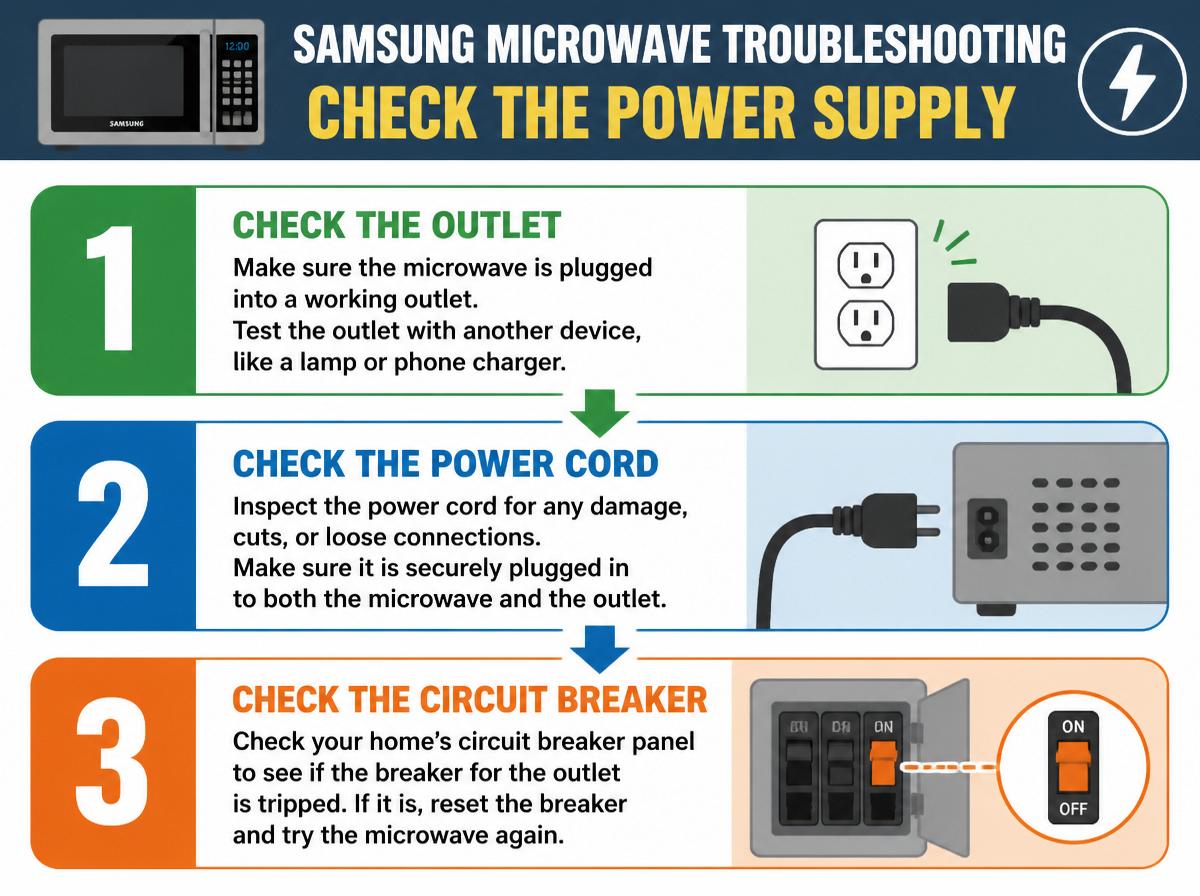
When it comes to troubleshooting a Samsung microwave, one of the first things to check is the power supply, since without power, even the fanciest microwave is about as useful as a chocolate teapot. First, make sure it’s plugged in securely. Then, look for any signs of trouble, like a tripped circuit breaker. If the breaker has flipped, reset it by switching it off and then back on. Another culprit could be voltage fluctuations; these sneaky issues can prevent the microwave from working. If the power dips too low, the microwave may not respond at all. Carefully monitor for any other electrical devices acting strangely—they might be pointing to a bigger problem. Staying calm is key! Troubleshooting can feel overwhelming, but with patience and determination, anyone can figure it out. With each step taken, confidence grows, and success becomes that much closer!
Inspect the Door Seal
Inspecting the door seal of a Samsung microwave is an important step to make sure it works well and safely. First, check for any obstructions, like food bits or grime, that might prevent the door from closing tightly. Then, take a closer look for any signs of damage; a broken seal can lead to cooking troubles, so addressing it quickly can save the day!
Check for Obstructions
Checking for obstructions in the door seal of a Samsung microwave can feel a bit intimidating, but it’s an important step in ensuring everything works smoothly. First, gently inspect the door for any food particles or debris that could block the sensor or disrupt vent airflow. Even small bits can cause issues, so don’t skip this step! If the seal appears dirty, a simple wipe with a damp cloth can help. Keeping the door seal clean prevents sensor blockage, allowing the microwave to heat properly. Remember, a well-maintained door seal also keeps heat inside, making your meals even tastier! Don’t worry, with a little attention, your microwave will be back to working efficiently in no time.
Assess for Damage
Although it might seem a bit intimidating, inspecting the door seal of a Samsung microwave for damage is an essential step in keeping it running smoothly. This seal prevents heat from escaping and keeps food cooking evenly. First, check for any structural cracks; even tiny cracks can lead to big problems! Next, look for signs of component corrosion, which may appear as rust or discoloration. A damaged door seal can not only affect cooking but also be unsafe. Remember, it’s better to be safe than sorry! If you find any issues, consider replacing the seal to guarantee a snug, secure fit. With some careful observation, you can keep your microwave in tip-top shape. Happy troubleshooting!
Reset the Microwave
Resetting a Samsung microwave can feel like a mini adventure, especially when things aren’t working as they should. Fortunately, resetting is often the first step to resolving those pesky issues. Before diving in, it’s helpful to remember the possible warranty implications of doing a firmware update; always check your warranty details.
Here’s how to reset the microwave:
- Unplug the microwave Give it a break for about 5 minutes, just like a nap!
- Check the display Look for any flickering lights or funny messages; it might be a clue.
- Press the reset button If present, this button can be your best friend.
- Plug it back in With a hopeful heart, restore power and see if it hums cheerfully.
Resetting your microwave can often do wonders, reviving it like magic! Give it a try; you can do this!
Test the Control Panel
When troubleshooting a Samsung microwave, giving the control panel a quick test can uncover issues that might be hiding right in plain sight. First, examine the button responsiveness; press each button firmly to see if they click back as they should. If any buttons feel stuck or don’t respond, it might indicate a deeper issue. For microwaves with a touchscreen, touchscreen calibration is essential. Users should check if the screen registers taps accurately. A simple test involves lightly tapping different areas to verify everything responds quickly and correctly. If there are issues, don’t panic! Often, cleaning around the buttons or recalibrating the screen can solve the problem. Remember, a functional control panel is key to a happy microwave experience. With a little patience and careful testing, users can quickly pinpoint problems and get back to cooking their favorite meals in no time!
Examine the Cooking Settings
When troubleshooting a Samsung microwave, it’s important to examine the cooking settings to make sure everything is just right. Checking the power levels can make a big difference, as too low of a setting might leave food cold, while too high can lead to burnt edges. Additionally, reviewing the time settings helps avoid the classic mistake of microwaving for just a few seconds too long—because nobody wants a surprise rubbery dinner!
Check Power Levels
Although it might seem like a small detail, checking the power levels on a Samsung microwave can make a big difference in cooking success. To guarantee proper energy calibration, understanding power scaling is essential. Here are some steps to check:
- Locate the Power Level Button – This is usually marked clearly on the control panel.
- Select Power Level – Choose the desired power setting, like low, medium, or high.
- Start with Defaults – If unsure, the default setting is often ideal for most foods.
- Experiment! – Adjust power levels as needed; sometimes high isn’t always best for delicate items.
Engaging with these details empowers users, making every meal a delicious adventure. Keep experimenting, and soon they’ll be a microwave master!
Review Time Settings
Checking the time settings on a Samsung microwave is just as important as adjusting the power levels. Incorrect time calibration can lead to undercooked or overcooked meals. To guarantee accuracy, it’s essential to verify the clock backup is functioning well. A quick review of time settings can save kitchen disasters!
Here’s a handy guide for checking time settings:
| Action | Description | Notes |
|---|---|---|
| Set the Clock | Adjust the time according to your zone | Follow the manual for instructions |
| Test the Timer | Run a short time and see if it beeps | Confirm it matches your expected time |
| Reset if Needed | Use the “Resetoption on the screen | Restores factory settings |
| Check for Updates | Verify firmware is current | Check Samsung’s website for updates |
With these steps, cooking can be both fun and stress-free!
Clean the Microwave
Keeping the microwave clean is essential for it to work properly and last longer. A messy microwave can lead to unpleasant smells and even affect cooking performance. Thankfully, cleaning it can be easy and fun! Here are some simple steps to follow:
- Steam Clean: Fill a microwave-safe bowl with water and add lemon slices or vinegar. Microwave it for about five minutes to create steam that loosens grime.
- Wipe Down: Use a cloth or sponge with natural cleaners like baking soda to gently scrub the inside and outside surfaces.
- Clean the Turntable: Remove the turntable and wash it in warm, soapy water to get rid of any stuck food particles.
- Inspect Seals: Check the door seals for any food residue and wipe them clean to guarantee a proper seal.
With these steps, the microwave will look and perform like new again! Happy cleaning!
Seek Professional Help if Needed
When a microwave acts up and simple fixes don’t work, it may be time for some extra help. Sometimes, calling in a professional is the best way to make certain everything is safe and sound. Before reaching for the phone, it’s wise to check warranty verification. Many Samsung microwaves come with a warranty that might cover repairs. This can potentially save money and headaches!
If the microwave is still under warranty, then it’s best to reach out to an authorized service center. These experts know Samsung products inside and out. They can identify and fix problems you might not even notice. Trying to fix complex issues alone can lead to unnecessary stress or even more damage, so don’t hesitate to ask for help.
Frequently Asked Questions
How Do I Know if My Microwave Is Under Warranty?
To determine if a microwave is under warranty, one should check the purchase documentation for the warranty period and perform serial verification through the manufacturer’s website or customer service for confirmation of warranty status.
Can I Use My Microwave Without the Turntable?
One may operate a microwave sans a turntable, yet it invites the treachery of uneven heating and compromises plate stability. Such a decision could lead to culinary misadventures, transforming mealtime into a gamble of flavors.
What Unusual Noises Indicate a Problem?
Unusual noises indicating a problem include a squealing motor, which may suggest belt issues, and grinding bearings, pointing to potential mechanical wear. These sounds should prompt immediate inspection and possibly professional assistance to verify proper functionality.
How Do I Clean the Grease Filter?
To clean the grease filter, remove it gently and rinse with warm water. Use baking soda for stubborn grime. Confirm if the filter is dishwasher safe for convenience, ensuring thorough cleaning before reinstallation.
Is It Safe to Microwave Metal Objects?
It is not safe to microwave metal objects, as their conductivity effects can result in sparking causes. Such interactions may damage the microwave and increase the risk of fire hazards, posing safety concerns for users.
Conclusion
In tackling microwave troubles, patience is key—after all, even the best cooks don’t whip up perfection without a few tries! By following these simple steps, anyone can become a microwave detective in their own kitchen. Remember, if all else fails, calling a pro isn’t a sign of defeat; it’s a smart move. So, roll up your sleeves, give it a go, and embrace the challenge—your trusty microwave will be back in action before you know it!
Explore This Topic
- Back to Microwave
- Back to appliance repair
Related guides in this cluster: