
10 Steps to Check Heating Element in Your Washing Machine
Checking the heating element in a washing machine can be easy and fun! First, gather your tools—screwdrivers and a multimeter are key. Always unplug the machine for safety. Next, access the heating element and look for any damage. Test the element with the multimeter to see if it works properly. Don’t forget to clean connections. After reassembling, run a test cycle to verify everything functions smoothly. Curious about more tips? There’s plenty more ahead!
Key Takeaways
- Unplug the washing machine and ensure safety by wearing gloves and goggles before starting the inspection and repairs.
- Remove access panels carefully to reach the heating element and verify power cord integrity.
- Inspect the heating element for corrosion, damage, or worn seals, and check the thermostat’s condition.
- Use a multimeter to test the heating element for continuity, ensuring appropriate resistance values are logged.
- Clean connections with a brush, allow drying time, and reassemble the machine before testing the heating element’s performance.
Gather Your Tools and Materials
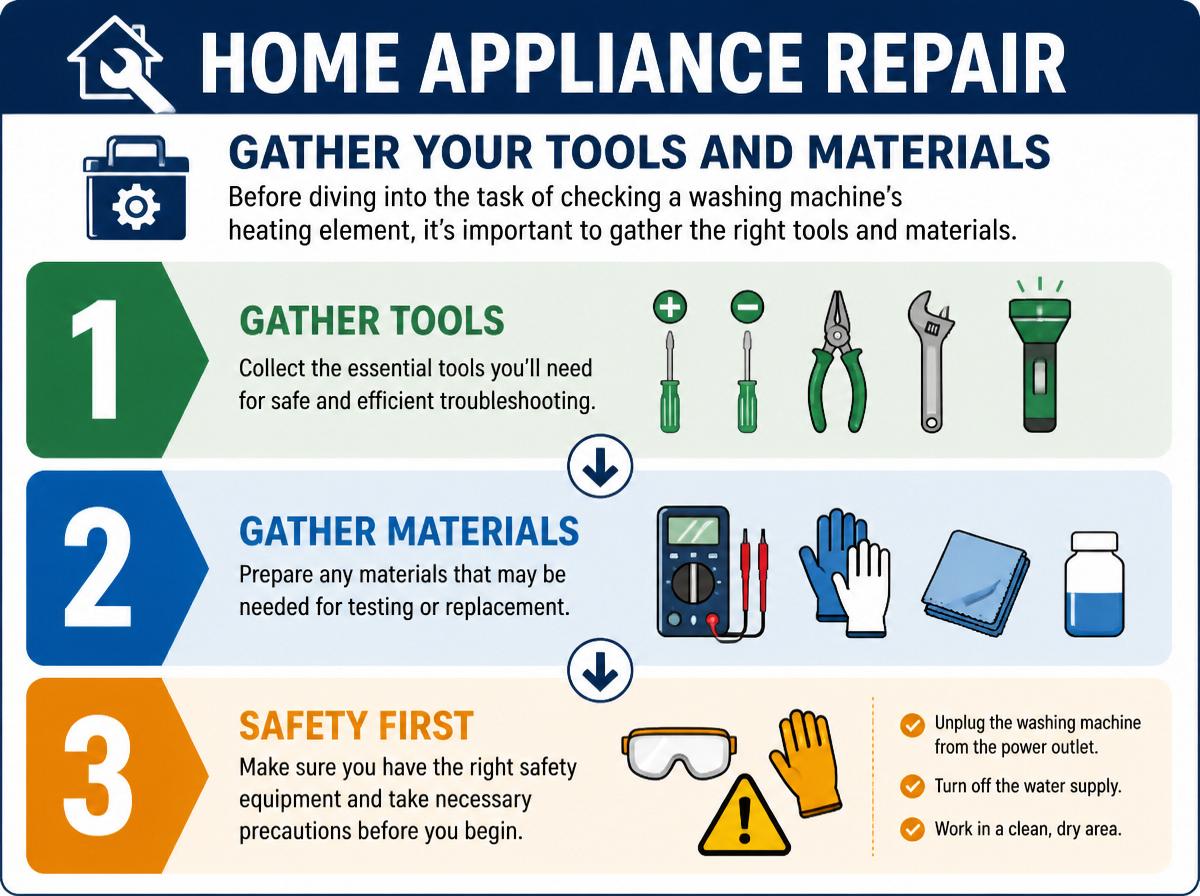
Before diving into the task of checking a washing machine’s heating element, it’s important to gather the right tools and materials. An organized safety checklist can be a lifesaver, ensuring you have everything needed and keeping you safe as you work. Key items include a multimeter for testing electrical components, screwdrivers to access the heating element, and a flashlight for spotting hard-to-see areas.
If you realize you’re missing something, don’t worry! A quick purchase guide can help you select the right tools without breaking the bank. Local hardware stores or online platforms often have everything you need.
Unplug the Washing Machine
To safely check the heating element of a washing machine, it is essential to unplug the appliance first, making sure there is no risk of electrical shock. This simple step is a vital part of electrical safety and helps prevent mishaps while working on your machine. It’s like putting on a seatbelt before starting a ride it just makes sense!
Here’s a quick reference to keep in mind about unplugging your washing machine:
| Step | Explanation |
|---|---|
| Safety First | Always unplug before any repairs. |
| Equipment Check | Confirm surge protection is working. |
| Inspect Cords | Look for frays or wear in the cords. |
| Recheck Connections | Make sure everything is properly connected. |
| Power On/Evaluate | Once everything is secure, plug it back in. |
Access the Heating Element
Once the washing machine is unplugged and all safety measures are in place, the next step is accessing the heating element, which might feel a bit tricky but is totally doable. Depending on the model variations, the location of the heating element can differ, so make sure to consult the user manual if you have it. Here’s how to get started:
- Locate the access panels: These can typically be found at the back or bottom of the machine.
- Remove the screws: Use a screwdriver to take out screws securing the access panel in place.
- Gently pop off the panel: Carefully lift or pull the panel away, revealing the inner components.
- Identify the heating element: Look for a metal component that often has wires attached to it.
With patience and care, accessing the heating element becomes a manageable task, bringing you one step closer to resolving the issue!
Inspect for Visible Damage
Inspecting for visible damage is an important step in ensuring the heating element is in good working order. Start by closely examining the heating element for signs of surface corrosion, which can appear as rust or discoloration. Even small spots can signal bigger problems down the road. Next, check the seals around the element. Look for signs of seal deterioration, like cracking or peeling; if these seals are damaged, they won’t protect against water leaks or affect how well the heating element works. Remember, this task doesn’t need to be intimidating! Think of it as a treasure hunt, where your washing machine holds secrets to its health. With a little patience and close attention, you can catch these issues early and save yourself a bigger headache later. Just like checking your favorite toy for wear and tear, this small effort goes a long way in keeping your machine happy!
Test the Heating Element With a Multimeter
Before diving into testing the heating element with a multimeter, it’s important to gather the right tools and knowledge. This task may seem intimidating, but with the right approach, it can be quite simple and rewarding! Here’s how:
- Gather Your Tools: You’ll need a multimeter and safety gear, like gloves.
- Power Down: Verify your washing machine is unplugged to avoid any accidents. Safety first!
- Use Thermal Imaging: If available, this tool can reveal heat patterns, showing whether the element heats properly.
- Logging Techniques: Document each reading to trace issues more clearly. This can make repairs much easier!
Check for Continuity
Checking for continuity is an important step in ensuring that the washing machine’s heating element is working properly. To do this, you’ll need a multimeter, which helps measure if electricity can flow through the heating element. With just a bit of practice, anyone can learn to test for continuity, making the process feel less like a chore and more like a fun challenge!
Understanding Continuity Testing
Have you ever wondered how to make sure that the heating element in a washing machine is working properly? Understanding continuity testing is key! It helps check if the part allows electric current to flow, showing it’s functioning as it should. Here’s how to grasp this process:
- Ohm’s Law guides you to predict how much resistance there should be.
- Identify the heating element’s terminals to find where you’ll measure.
- Make certain the power is off; safety always comes first!
- Perform the test using a multimeter to see if there’s continuity.
Tools Needed for Testing
To check the heating element in a washing machine, having the right tools is essential—think of them as your trusty sidekicks on this repair adventure! First, you’ll need a multimeter to test for continuity. This handy gadget helps determine if the heating element is doing its job. Next, having a pair of insulated gloves is smart; safety comes first, even in DIY. A toolkit with screwdrivers and pliers should also be ready—those pesky screws won’t budge themselves! Organizing these tools in a designated tool storage area keeps everything neat and easy to find. Finally, maintaining a calibration schedule for your multimeter guarantees accurate readings. With these tools, you’re more than equipped to tackle the challenge ahead!
Assess the Thermostat
How can one determine if the thermostat is working properly in a washing machine? Evaluating the thermostat is essential, as it helps regulate water temperature for ideal washing. Here’s how to check the thermostat:
- Visual Inspection: Look for any visible damage like corrosion or burns on the thermostat.
- Test for Continuity: Using a multimeter, check if the thermostat has continuity when it’s at the right temperature.
- Check Calibration: Verify the thermostat is calibrated correctly; miscalibration can lead to inaccurate temperatures.
- Lifespan Indicators: If the thermostat is several years old, it might be time to replace it.
A faulty thermostat can lead to cold washes or too-hot cycles, causing frustration. Remember, it’s always a good idea to replace worn-out parts to keep your washing machine running smoothly and efficiently. Keep going; you’ve got this!
Clean the Heating Element Connections
When it comes to cleaning the connections of a washing machine’s heating element, having the right tools is key to making the process smooth. First, gather items like a screwdriver and a soft cloth; these will help in getting the job done without any fuss. Following the cleaning procedure step by step will not only guarantee better performance but also keep your washing machine happy for many washes to come!
Necessary Tools Needed
Before diving into cleaning the heating element connections, it’s important to gather a few necessary tools to make the job easier and more efficient. Having the right equipment not only helps in getting the work done but also provides excellent storage solutions for future projects. Below are four essential tools:
- Screwdriver set – This helps in removing covers and accessing the connections easily.
- Multimeter – A budget alternative that aids in testing the connections for continuity.
- Wire brush – Used for cleaning the connections thoroughly.
- Safety goggles – Always a smart choice to protect the eyes during any cleaning.
With these tools on hand, anyone can tackle the task confidently. Each step will feel less intimidating, and soon, the heating element will be gleaming like new!
Cleaning Procedure Steps
Cleaning the heating element connections can feel like an intimidating task, but with a little patience and the right approach, it becomes much easier. Begin by unplugging the washing machine for safety. Using a soft brush, gently scrub the connections to remove any dirt. For better results, apply the rinse technique: spray a bit of water on a cloth and wipe down the area. This helps clear away debris without damaging parts. Once cleaned, it’s important to allow adequate drying time—about an hour or so—before reassembling. Remember, taking these steps can help maintain your washing machine’s efficiency. With a little effort, this simple maintenance task becomes rewarding, ensuring your laundry gets cleaned effectively every time!
Reassemble the Washing Machine
With a sense of accomplishment, the final step involves reassembling the washing machine, bringing everything back together like a puzzle. This process requires careful attention and a bit of patience but is quite rewarding.
- Align the panels: Make sure that the front and back panels fit snugly together, creating a tight seal.
- Secure with bolts: Use the appropriate bolts for each panel. Tighten them, achieving proper bolt torque; don’t overtighten!
- Reconnect the wiring: Gently plug the wires back into their respective places, making sure no wires are pinched.
- Reattach the top: Finally, place the top panel back on, following the same alignment.
Run a Test Cycle
After carefully reassembling the washing machine and ensuring everything is in place, it’s time for an exciting moment: running a test cycle! This step checks if the heating element functions correctly. When the cycle starts, the user should observe the spin performance. A smooth spin indicates the machine is ready, while any wobbling may signal issues.
Additionally, noise monitoring is essential. Listen closely for unusual sounds—grinding or thumping could mean something isn’t right.
To summarize the key observations, the following table can be helpful:
| Observation | Notes |
|---|---|
| Spin Performance | Smooth or wobbling? |
| Noise Monitoring | Any unusual sounds? |
| Temperature Check | Is the water warm? |
| Cycle Completion | Did it finish properly? |
Frequently Asked Questions
What Are Common Signs of a Faulty Heating Element?
Common signs of a faulty heating element include consistently cold cycles during washing and a burning smell emanating from the machine. These indicators suggest that the heating component is either damaged or not functioning properly.
How Long Does It Take to Replace the Heating Element?
Replacing the heating element typically requires one to two hours. Labor costs may vary, but the procedure duration often reflects the complexity of the washing machine, including dismantling and reassembly necessary for replacement.
Can I Test the Heating Element Without a Multimeter?
While challenging, one might attempt a visual inspection and perform a boil test as alternative methods to assess the heating element’s functionality. However, these approaches lack precision compared to traditional testing equipment, potentially leading to misunderstandings.
What Tools Do I Need to Replace the Heating Element?
To replace the heating element, one requires protective gloves to guarantee safety and a socket set for the removal and installation of the component. These tools facilitate a smooth and secure replacement process.
Is It Safe to Use the Washer Without Fixing the Heating Element?
Using a washer with a faulty heating element is like sailing a ship with a cracked hull; it’s fraught with dangers. An unrepaired unit poses electrical hazards and leads to significant energy waste, risking safety and efficiency.
Conclusion
By following these simple steps, checking your washing machine’s heating element can feel less like a chore and more like a fun puzzle to solve! Just think of yourself as a detective, uncovering the clues to keep your laundry bright and clean. With a little patience and care, you can master this task, ensuring that your clothes come out fresh and warm. Remember, you’ve got this—like a superhero in your own laundry room! Happy repairing!
Explore This Topic
- Back to heating element
- Back to appliance repair
Related guides in this cluster: