How to Replace a GE Washing Machine Belt: Step-by-Step Guide
When my GE washing machine started making strange noises, I knew it was time to take a closer look. After some research, I discovered that I could replace a GE washing machine belt myself, which sounded like a challenge I was willing to take on. I’m not a professional repair technician, but I’ve always enjoyed fixing things around the house. With the right tools and guidance, I figured I could tackle this job and save some money in the process. In this step-by-step guide, I’ll share how I diagnosed the problem and successfully replaced the belt, so you can do it too!
Diagnosing the Problem
I’ve noticed my washing machine making a strange noise during the spin cycle. It’s been vibrating more than usual, and my clothes aren’t coming out as clean. I checked for any visible signs of wear and tear, but nothing stood out. I figured it could be the belt slipping or breaking, which I’ve heard is a common issue. Now that I’ve diagnosed the problem, I’ll need to gather the necessary tools to start the repair.
Gathering Necessary Tools
I’ve gotta make sure I’ve got all the right tools before I start. I usually grab a socket set, because it makes removing screws a lot easier. A flathead and Phillips screwdriver are essential, too, so I keep those handy. I also find it useful to have a pair of pliers for any stubborn parts. Lastly, I always include a flashlight to see into those tight spaces better.
Removing the Access Panel
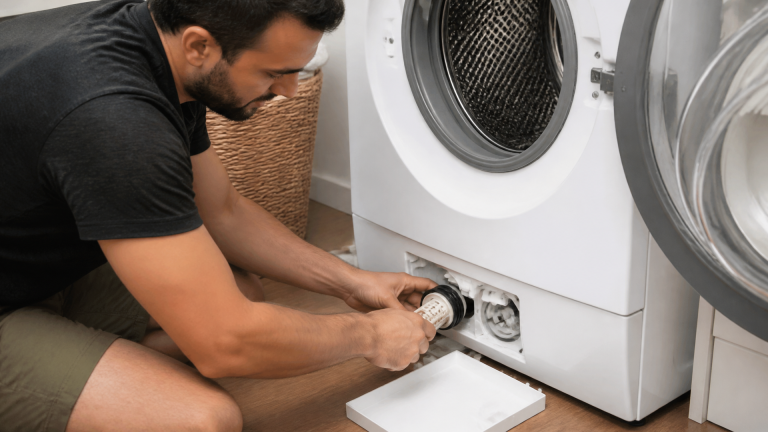
I’ve gathered my tools and am ready to remove the access panel. I start by unplugging the washing machine for safety. Then, I locate the screws securing the panel and use my screwdriver to take them out. Once the screws are gone, I gently pull the panel off, revealing the inner workings of the machine. Now that I’ve got access, it’s time to take out the old belt.
Taking Out the Old Belt
I’ll start by locating the old belt around the drum and motor pulley. Once I see it, I gently pull it off the pulleys, making sure not to damage anything else. I’m careful to note how it fits so I can install the new one correctly later. After removing it, I examine the belt for any signs of wear or damage. Now, it’s time to get the new belt ready for installation.
Installing the New Belt
I’ve carefully positioned the new belt around the motor and drum pulleys. It fits snugly, and I can feel the tension as I pull it into place. I’m double-checking that it’s aligned properly to avoid any issues later. After ensuring it’s secure, I’m ready to move on. Now, it’s time to start reassembling and testing the machine.
Reassembling and Testing the Machine
Now that I’ve installed the new belt, I’m ready to reassemble the washing machine. I’ll start by putting the front panel back in place, making sure all the screws are secure. After that, I’ll reconnect the power supply and any hoses that were removed. Once everything’s reassembled, I’m going to run a test cycle to check for any issues. If everything sounds smooth, I’ll know I’ve done it right.
Frequently Asked Questions
How do i know if my washing machine belt needs to be replaced?
I can usually tell my washing machine belt needs to be replaced if I notice unusual noises, like squeaking or grinding sounds, during the wash cycle. If my clothes aren’t spinning or agitating properly, that’s another sign something’s off. I’ve also learned to look for visible wear or fraying on the belt itself. If I see any of these symptoms, it’s definitely time to check it out further.
What are the signs of a malfunctioning washing machine?
When my washing machine starts acting up, there are a few signs I notice that indicate something’s wrong. For instance, if it makes strange noises like grinding or squeaking, I know I should check it out. I also pay attention if it’s not spinning or draining properly, which can lead to wet clothes piling up. Lastly, if I see any leaks or water pooling around the machine, it’s definitely time to investigate further.
Can i replace the washing machine belt myself, or should i hire a professional?
I think I could replace the washing machine belt myself if I feel confident with some basic tools and have a little mechanical know-how. It might save me some money, but I also know that it could get tricky if I run into any unexpected issues. If I’m not comfortable tackling it on my own, hiring a professional could give me peace of mind that it’ll be done right. Ultimately, it depends on my skill level and how much time I want to invest in the repair.
Conclusion
Replacing a washing machine belt can seem daunting at first, but following the outlined steps makes the process manageable and straightforward. Ensuring I had all the necessary tools beforehand really helped streamline my efforts. By carefully removing the access panel and taking my time with the installation, I felt more confident in my ability to tackle the repair. Once everything was reassembled, testing the machine brought a sense of accomplishment as I heard it running smoothly again. Overall, this experience not only saved me money but also gave me valuable hands-on skills for future repairs.
If you’re looking to troubleshoot common problems with your water dispenser after replacing your GE washing machine belt, I highly recommend visiting this informative page on common issues and solutions for water dispensers. It provides practical tips and insights that can help you resolve any issues you may encounter. Don’t miss out on this valuable resource!
Explore This Topic
- Back to Repair & Replacement
- Back to Repair & Replacement
Related guides in this cluster: