
7 Simple Steps to Quick Fix Your Whirlpool Refrigerator Compressor Reset
To quickly reset your Whirlpool refrigerator compressor, start by unplugging it for a few minutes—think of it as a rejuvenating nap! Next, plug it back in and make sure the power supply is steady. Afterward, adjust the temperature settings to between 35°F and 38°F for food safety. Listen carefully for humming or clicking sounds; these can tell you if the compressor is working well. Keep an eye on the internal temperature to confirm everything stays fresh. There’s more to explore to keep your fridge running smoothly!
Key Takeaways
- Unplug the refrigerator to ensure safe grounding and allow internal components to reset for a fresh start.
- Wait a few minutes for the compressor to rest and cool down, preventing potential damage.
- Check and clean the condenser coils while the fridge is unplugged to enhance efficiency before plugging it back in.
- Inspect the power cord and outlet condition, ensuring they can handle the refrigerator’s power needs before reconnecting.
- Listen for humming or clicking sounds after reconnecting to confirm proper operation and monitor for any irregular noises.
Unplug the Refrigerator
To get started on resetting a Whirlpool refrigerator compressor, the first step is to unplug the refrigerator. By doing this, one makes sure that the appliance grounding is safely in place, making the reset process smooth and worry-free. Unplugging is like giving the fridge a quick nap, preparing it for a fresh start!
While the fridge is unplugged, it’s a great chance to check and clean the coils. Dusty coils can make your fridge work too hard, causing it to act up. So, grab a brush and give them a gentle clean. This simple action helps the refrigerator run efficiently.
Wait for a Few Minutes
After unplugging the refrigerator, it is important to wait for a few minutes before plugging it back in. This pause helps the compressor rest and prepares it for a smooth restart. Think of it as giving your fridge a quick power nap—everyone feels better after a little break!
Power Cycle Duration
When resetting a Whirlpool refrigerator compressor, patience truly pays off. After turning off the refrigerator, it is important to wait for a few minutes. This short break allows the internal components to reset properly. Rushing the process can harm the component lifespan, which is something no one wants! Besides, a little waiting time guarantees that warranty implications are avoided. If the appliance is still under warranty, improper handling might void it. So, take this moment to grab a snack or enjoy a quick stretch. Remember, good things come to those who wait! By allowing the refrigerator to rest for a few moments, you can help it work more efficiently and extend its life.
Compressor Rest Time
Allowing the compressor to rest a bit is just as important as giving it a power cycle. This pause helps the unit cool down after working hard, ensuring it runs smoothly in the long term. It’s a simple step that aligns with safety standards, protecting both the refrigerator and those using it. Waiting a few minutes offers the compressor a chance to reset, reducing stress on its internal components. Think of it as letting an athlete catch their breath before the next sprint—it keeps everything running at its best! So, next time you consider jumping right back in, remember to give that compressor its well-deserved rest. It will thank you by keeping your fridge happy and efficient!
Warm-Up Period
While many may be keen to jump back into using a refrigerator after a compressor reset, it’s essential to recognize the importance of a warm-up period. This brief pause allows the refrigerator to reach thermal equilibrium, which means that temperatures inside can settle evenly. When a compressor resets, there can be some heat diffusion throughout the unit, causing uneven cooling. If someone opens the fridge too soon, they risk having warm spots where food may spoil. Thus, waiting a few minutes guarantees that everything gets cool again. It’s like giving your refrigerator a little nap! So, take a moment to relax, trust the process, and patiently wait for the magic of cooling to happen. Your food will thank you!
Plug the Refrigerator Back In
Once a few minutes have passed, it’s time to plug the refrigerator back in. Before doing so, it’s important to confirm that the power source is stable and the power cord is in good shape—nobody wants a surprise power outage! With everything checked, gently plug it back in and give your refrigerator a moment to wake up and cool down.
Ensure Power Source Stability
To guarantee a stable power source for the refrigerator, it is important to plug it back in carefully after completing any reset steps. Making sure your refrigerator has a solid connection is vital for its performance. Here are three quick tips to remember:
- Check for Load Balancing: Confirm the outlet can handle the fridge’s power needs, especially if other appliances share the same circuit.
- Verify Service Contracts: Look at any warranty or service agreements. This can help with future repairs.
- Listen for Sounds: After plugging it in, listen for humming or clicking, indicating it’s working correctly.
Taking these steps not only helps your fridge run smoothly but also gives you peace of mind that everything is set for success!
Check Power Cord Integrity
Before getting your refrigerator humming again, it’s essential to check the power cord to verify it’s in good shape. A worn or damaged power cord can cause major headaches, so start by inspecting for frayed wires. If you see any frays, it’s time to replace the cord—safety first! Next, examine the prongs where the cord plugs into the wall. If they’re corroded, they could be hindering your refrigerator’s performance. Gently cleaning them may help, but don’t hesitate to replace the entire plug if necessary. Once everything looks good, it’s time to plug the refrigerator back in with a sense of pride, knowing you’ve taken important steps to keep it running smoothly. Enjoy the satisfaction of a job well done!
Wait Before Plugging In
After giving the refrigerator some time to breathe, it’s essential to approach the moment of plugging it back in with care. Rushing this step could lead to unwanted issues. Following the manufacturer guidelines is crucial for promoting safety and efficiency. Remember these key points for condensation prevention:
- Check the surroundings: Make sure the area is clear of moisture or heat sources.
- Listen for sounds: Before plugging it in, listen for any unusual noises that might indicate ongoing issues.
- Give it a moment: Wait a few minutes after turning it off to let internal parts stabilize.
Taking time during this process allows the refrigerator to work effectively, helping to keep food fresher and saving energy. It’s almost time to enjoy a fully functioning refrigerator!
Adjust the Temperature Settings
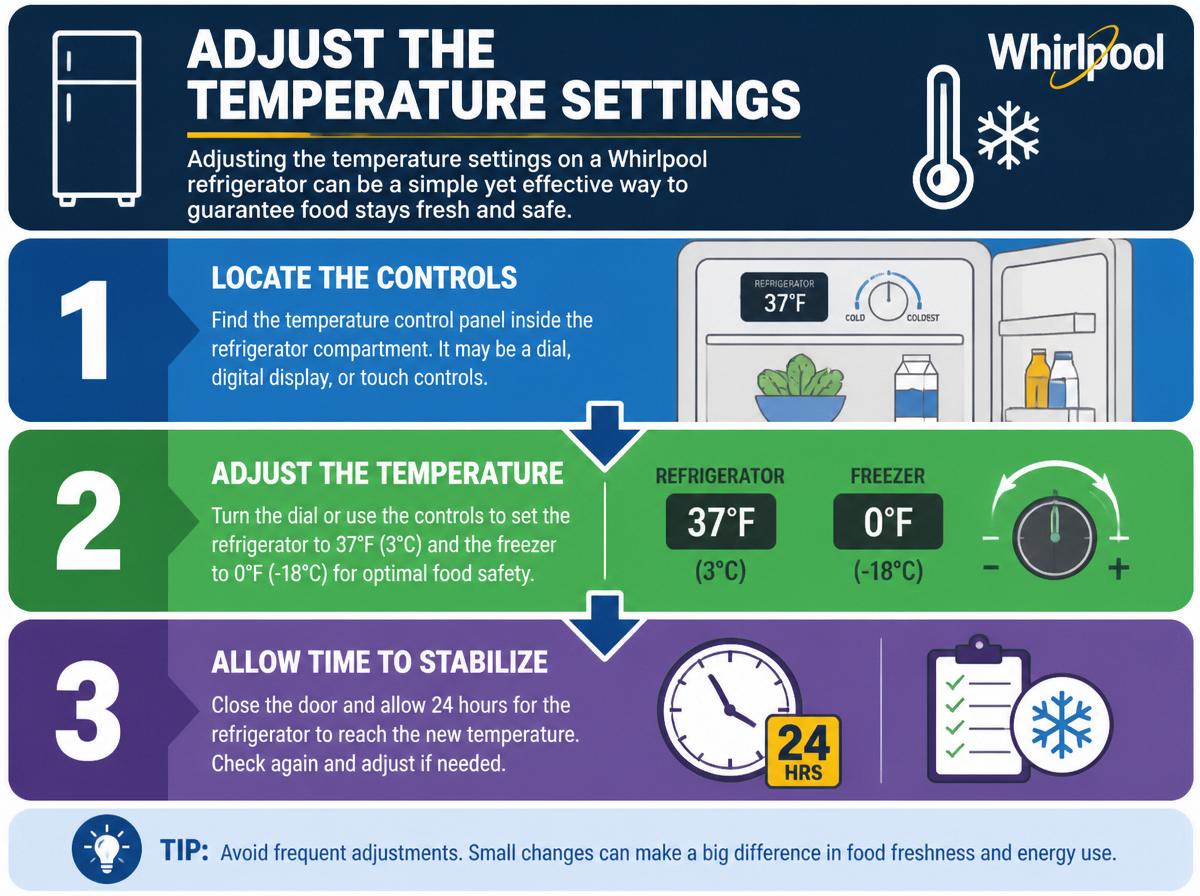
Adjusting the temperature settings on a Whirlpool refrigerator can be a simple yet effective way to guarantee food stays fresh and safe. Aiming for the right temperature, typically between 35°F and 38°F, helps preserve produce and dairy, ensuring they maintain their quality. Seasonal adjustments might be needed during particularly hot or cold times of the year. For instance, dialing down the setting in summer can help accommodate the increased workload of the compressor, while a slight increase in winter might improve energy efficiency.
When making these adjustments, it’s essential to monitor how your food reacts. If items freeze, warm it up a notch, and if they’re spoiling too fast, dial it down. With these small tweaks, anyone can enjoy fresher food and even save on energy bills—now that’s a winning combination! Remember, maintaining your fridge is like giving it a big, warm hug.
Check the Power Supply
Checking the power supply to a Whirlpool refrigerator is an important step that can help solve many issues, including those related to the compressor. A few simple checks can make a big difference. Here’s what to look for:
- Inspect the Service Panel: Make sure the power cord is firmly plugged in. Sometimes, it wants to wiggle free when you least expect it!
- Check for Breaker Tripping: Look at the breaker box. If the breaker is tripped, give it a reset. Remember, that little switch can be quite the troublemaker!
- Examine Power Cords: Look for any visible damage on the cords. A little fraying might lead to big headaches later!
Taking time for these checks can ease worries and get the refrigerator back to normal, helping to keep food fresh. A simple action now can save stress down the road. You’ve got this!
Listen for the Compressor Sounds
Often, listening for the sounds of the compressor can be a helpful way to diagnose issues with a Whirlpool refrigerator. The compressor makes several distinctive noises, and identifying these sounds is key. A humming noise typically means it’s running correctly, while clicking or rattling can suggest trouble ahead, so don’t ignore these clues! Engaging in sound identification helps you become attentive to your fridge’s health.
Additionally, consider vibration analysis; feel the fridge’s surface. If it vibrates too much, that might indicate a problem. Encourage yourself to pay close attention! By tuning in, you can catch issues early, preventing larger headaches later.
Monitor the Fridge Temperature
Keeping an eye on the temperature inside the refrigerator can help guarantee that food stays fresh and safe to eat. Maintaining the right conditions is essential for every homeowner. Regular temperature logging and humidity monitoring can prevent unpleasant surprises.
Here are three important reasons to monitor your fridge’s temperature:
- Food Safety: Proper refrigeration prevents the growth of harmful bacteria, keeping your family safe.
- Freshness: Ensuring ideal temperatures means fruits, vegetables, and leftovers stay delicious longer.
- Energy Efficiency: A fridge that runs at the right temperature uses less energy, which can save money on utility bills.
With these simple monitoring measures, the worry of spoiled food can be a thing of the past. A well-managed fridge not only saves groceries but also brings peace of mind. So, grab a thermometer and stay on top of those chilly conditions for the sake of your tummy and wallet!
Frequently Asked Questions
Can a Faulty Thermostat Affect the Compressor Reset Process?
A faulty thermostat can indeed affect the compressor reset process. Inaccurate thermostat calibration may lead to improper temperature hysteresis, causing the compressor to not cycle correctly, potentially disrupting overall refrigerator performance and efficiency.
What Tools Do I Need to Reset the Refrigerator Compressor?
To reset the refrigerator compressor, a person requires a socket set and a voltage tester. Having the right tools at hand can make the process smoother, ensuring everything runs like a well-oiled machine.
How Often Should I Reset My Refrigerator Compressor?
Typically, a refrigerator compressor should only be reset when necessary, following manufacturer guidelines. Regular seasonal maintenance can help prevent unnecessary resets, ensuring ideal performance and longevity of the refrigerator’s components and overall efficiency.
Is It Safe to Reset the Compressor Multiple Times?
Repeatedly resetting the compressor can raise concerns regarding warranty implications and may subject the appliance to unnecessary electrical stress. Consequently, it is wise to limit resets to avoid potential damage and preserve the refrigerator’s longevity.
What Other Issues Could Mimic Compressor Failure Symptoms?
Other issues that could mimic compressor failure symptoms include a faulty start relay or an evaporator blockage. These problems can disrupt the cooling process, leading to similar signs but requiring different solutions for resolution.
Conclusion
By following these seven simple steps, anyone can transform their stubborn Whirlpool refrigerator into a superhero, saving the day with coolness! Just unplug, wait a bit, and plug it back in—like giving your fridge a quick nap. Adjust those temperature settings, check the power, and listen closely for the magical hum of the compressor. With a little patience and care, you’ll have a happy fridge, working like new! So go ahead, your fridge rescue mission awaits!
Explore This Topic
- Back to compressor reset
- Back to appliance repair
Related guides in this cluster: