
Microwave: A Complete Guide on How It Works
Microwaves are amazing kitchen helpers that cook food quickly and evenly! They use electromagnetic waves to make water molecules in food move around, creating heat. Inside the microwave, a special part called a magnetron generates these waves, while a turntable guarantees everything cooks evenly. Safety features keep you secure while cooking, and there are myths about microwaves that can mislead you. With some handy tips, anyone can become a microwave master. Keep exploring to discover even more!
Key Takeaways
- Microwaves utilize electromagnetic radiation to heat food by agitating water molecules, resulting in fast and efficient cooking.
- The magnetron generates microwaves within the oven, while the turntable ensures even cooking by rotating food.
- Safety features such as child locks, automatic shut-offs, and door interlocks prevent accidents and ensure safe operation.
- Proper placement and frequent stirring or rotation of food during cooking help prevent cold spots and ensure even heating.
- Using microwave-safe containers and covering food can enhance moisture retention and improve cooking outcomes.
The Science of Microwaves
Microwaves, those handy kitchen gadgets, work in some pretty amazing ways! Since their invention in the mid-20th century, microwaves have changed the way people cook and reheat food. The microwave history is fascinating; it all began with a scientist named Percy Spencer, who discovered that radar technology could heat food. This simple idea led to microwave innovations that made cooking faster and easier than ever before!
Microwaves use electromagnetic radiation to excite water molecules in food, causing them to heat up quickly. This means you can enjoy a warm meal in just minutes, rather than waiting for a conventional oven! Many households now can’t imagine life without this revolutionary appliance. Isn’t it cool to think how a clever accident turned into something so useful? So next time you zap your leftovers, remember the brilliant history behind your microwave and the innovations that made it possible!
How Microwaves Generate Heat
Microwaves create heat using something called electromagnetic radiation, which might sound complicated, but it’s really just energy that travels in waves. When these waves meet water molecules in food, they make the molecules wiggle faster, exciting them! This excitement generates heat, cooking your food quickly and evenly, making microwave cooking both fun and efficient.
Electromagnetic Radiation Principles
Heat generation in a microwave is a fascinating process that uses electromagnetic radiation. At its core, microwaves operate on radio wave fundamentals, employing specific frequencies to create energy. These frequencies fall between radio waves and infrared waves, allowing them to interact effectively with various materials. To generate heat, microwaves use frequency modulation, which adjusts the rate of the waves to increase energy delivery to the food. This interaction causes molecules within the food to vibrate, creating heat and cooking the food evenly. Understanding these principles not only enhances one’s cooking skills but also fosters a deeper appreciation of the technology behind everyday appliances. So, the next time you see your microwave in action, marvel at the scientific magic happening inside!
Water Molecule Excitation
In the world of microwaves, water molecules play a starring role in creating heat. When microwaves enter an oven, they excite water molecules found within most foods. This process happens because microwaves specifically target the water density, causing these molecules to vibrate and move rapidly. As they dance around, their molecular movement generates warmth, cooking food from the inside out. It’s fascinating to think that this invisible energy is making your meal hot and delicious! Plus, as more water molecules get excited, it helps guarantee even cooking, reducing the chances of cold spots. So, next time you enjoy a warm dish, remember the magic of those water molecules! They are the true champions in your microwave adventure!
Heat Generation Process
While cooking with a microwave might seem like magic, it’s really the science of heat generation doing all the work! Microwaves cook food by causing water molecules in the food to vibrate and create heat through molecular agitation. This heat is then transferred to the surrounding food through thermal conduction, warming everything evenly. Here’s how it happens:
- Microwaves are generated by the magnetron.
- These waves enter the cooking chamber.
- Water molecules start to vibrate quickly.
- This vibration creates heat that cooks the food.
The Anatomy of a Microwave Oven
A microwave oven is like a superhero in the kitchen, ready to save the day with its amazing ability to cook food quickly and efficiently. Understanding the microwave components and their internal design can help users appreciate how this appliance works. The key parts include the magnetron, which generates microwaves, the cooking chamber, where food is placed, and the turntable, which guarantees even cooking.
Here’s a simple table to summarize these components:
| Microwave Component | Function | Importance |
|---|---|---|
| Magnetron | Produces microwaves | Heats food efficiently |
| Cooking Chamber | Contains food | Keeps heat inside |
| Turntable | Rotates food | Guarantees even heating |
Understanding Microwave Radiation
Microwave radiation is a fascinating topic that can help people understand how their microwave ovens work. When these waves interact with food, they create heat and cook meals quickly, making dinner time a breeze. However, it’s important to reflect on safety while using microwaves, so everyone can enjoy their tasty meals without worry!
Microwave Radiation Basics
When heat travels in the form of waves, it can create a magical cooking experience in the kitchen. Microwaves are a type of radiation that heat food quickly and efficiently. Understanding microwave absorption is key to appreciating how they work. Here are four essential points about microwave radiation:
- Wave Properties: Microwaves have unique wavelengths that interact well with food.
- Cooking Efficiency: They can heat food from the inside out, making cooking faster.
- Even Heating: Properly placed food absorbs microwaves uniformly, avoiding cold spots.
- Safety First: Microwaves are safe when used correctly, so users should always follow instructions.
With a little knowledge, cooking becomes simpler and even more enjoyable! Enjoy making delicious meals with your microwave!
Interaction With Food
Understanding how microwaves interact with food can feel like uncovering a kitchen secret. When microwaves hit food, they cause water molecules to jostle around, creating heat through microwave absorption. This heat spreads throughout the food, warming it up. It’s fascinating how this process can affect food texture! For example, a perfectly warmed pizza can have a gooey center but still crisp crust if heated right. However, if it’s in too long, that same pizza might become chewy or hard, which isn’t ideal. Knowing how long to cook different foods can keep their textures just right. So, when using a microwave, keep experimenting with time and power levels, and watch how food turns into delicious warmth. You’re the chef here!
Safety Considerations
Radiation can sound like a scary word, but it’s important to know that not all radiation is the same. Microwaves use a specific type of radiation that safely heats food. Understanding microwave safety can help everyone enjoy meals without worry. Here are some vital food precautions to take into account:
- Always use microwave-safe containers to prevent harmful chemicals from leaching into food.
- Covering food helps it heat evenly and keeps splatters inside the microwave.
- Stirring or rotating food promotes even cooking, avoiding cold spots that can harbor bacteria.
- Allow food to sit for a minute after heating; it continues cooking and helps to eliminate chilly areas.
The Cooking Process: From Start to Finish
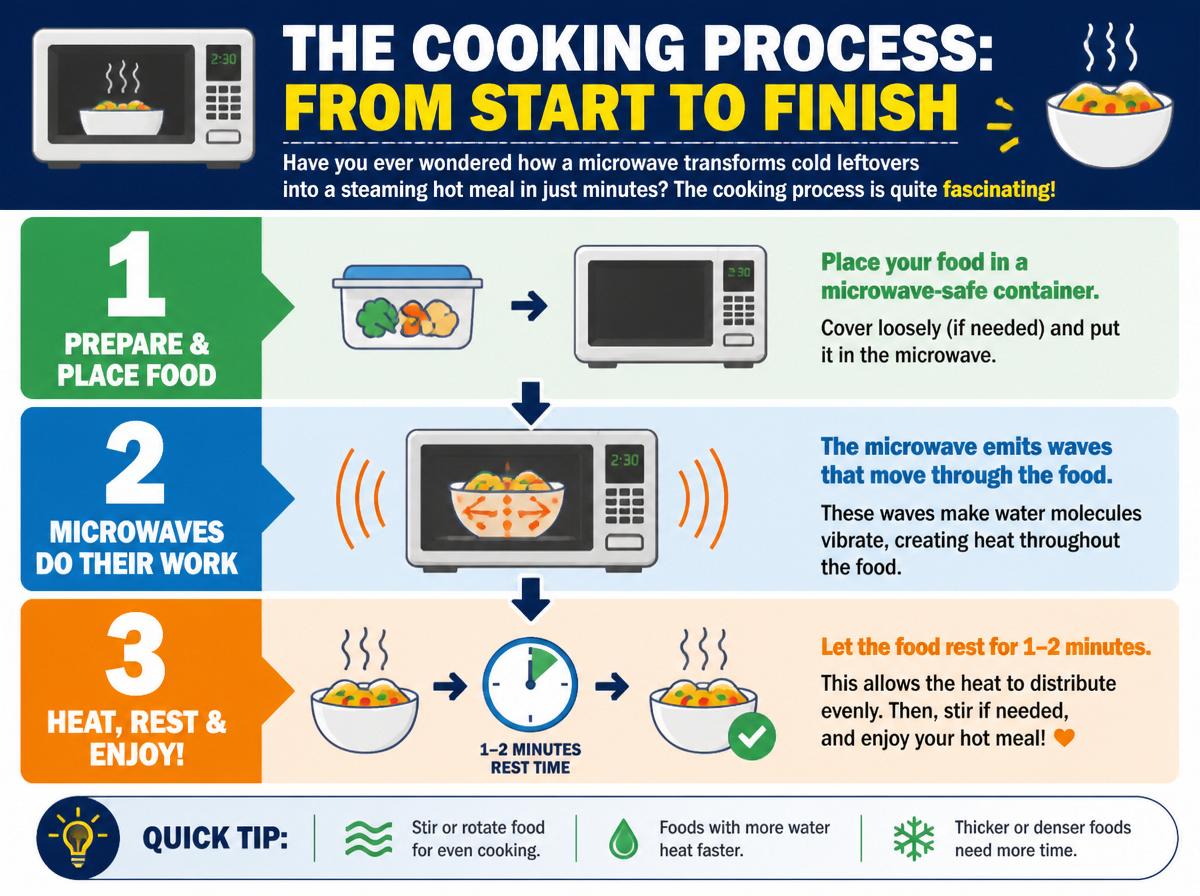
Have you ever wondered how a microwave transforms cold leftovers into a steaming hot meal in just minutes? The cooking process is quite fascinating! It begins when food is placed inside the microwave. Proper food placement is key; items should be spread out evenly on the turntable to guarantee uniform heating.
As the microwave operates, it emits microwaves that excite water molecules in the food, resulting in heat. Cooking times may vary based on food type and amount, so it’s important to monitor carefully.
Here’s a simple guide to help:
| Food Type | Suggested Cooking Time |
|---|---|
| Vegetables | 3-5 minutes |
| Rice | 10-12 minutes |
| Frozen Meals | 5-10 minutes |
| Soup | 2-4 minutes |
| Potatoes | 5-8 minutes |
With practice, anyone can master the art of microwaving! Enjoy those delicious meals!
Safety Features of Microwave Ovens
Microwave ovens come packed with a variety of safety features designed to protect users during the cooking process. Following proper microwave safety practices is vital, and manufacturers include several built-in protections. Here are four key safety features to remember:
- Child Lock: Many models offer a child lock function that prevents kids from accidentally starting the microwave.
- Automatic Shut-Off: This feature turns off the microwave if it overheats, protecting against fires.
- Door Interlock System: The microwave won’t operate unless the door is fully closed, guaranteeing no harmful radiation escapes.
- Heat Distribution Sensors: These sensors monitor temperature and adjust cooking time, reducing the risk of burns from hot containers.
Understanding these features is important for maintaining safety in the kitchen. Always follow user guidelines to guarantee a worry-free cooking experience, making meal prep fun and secure!
Common Myths About Microwaves
Although it may seem like a simple kitchen appliance, many people hold a variety of myths about microwave ovens. One common myth is that microwaves cause food to lose its nutrients. In reality, any cooking method can diminish nutrients, but microwaving often preserves them better due to shorter cooking times. Another cooking misconception is that microwaves can cook food unevenly, leading to dangerous cold spots—this can happen if the food isn’t arranged properly or stirred. In addition, some believe microwaves emit harmful radiation. While they do use electromagnetic waves, these are not dangerous like the radiation from X-rays. Finally, many think metal cannot be used in microwaves, but certain metals can be microwave-safe. Understanding these microwave myths can help users feel more confident in their cooking decisions. So, don’t let these silly myths hold you back—embrace your microwave with open arms!
Tips for Effective Microwave Cooking
Cooking with a microwave can be both fun and effective, especially when armed with the right tips! To make the most of microwave timing and cooking containers, here are some helpful suggestions:
- Use the Right Containers: Always choose microwave-safe cooking containers. Glass and ceramic are great options. Avoid metal!
- Cover Your Food: Use a microwave-safe cover to keep moisture in and help cook food evenly. It can prevent splatters too!
- Mind the Timing: Start with shorter cooking times and check frequently. It’s easier to add a little time than to fix overcooked food.
- Stir and Rotate: Stir or rotate your food halfway through cooking. This helps achieve even cooking and prevents cold spots.
With these tips, readers can become microwave whizzes in no time! Enjoy the delicious meals and the ease of microwave magic!
Frequently Asked Questions
Can Microwaves Cook Food Evenly?
Microwave technology can cook food unevenly due to its reliance on specific cooking methods, such as electromagnetic radiation. Variations in density and moisture content cause certain areas to heat at different rates, resulting in inconsistent cooking.
Do Microwaves Affect the Nutritional Value of Food?
Though microwaves may seem like a culinary lightning bolt, they generally preserve food’s nutritional impact. Research indicates that microwaving does not compromise food safety, retaining vitamins and minerals effectively compared to other cooking methods.
How Long Do Microwaves Last Before Needing Replacement?
Microwave lifespan typically ranges from 5 to 10 years, depending on usage and maintenance. Regular microwave maintenance, such as cleaning and careful handling, can extend its functionality and delay the need for replacement.
Can I Put Metal in a Microwave Oven?
Like a storm in a teacup, placing metal in a microwave can lead to sparks and potential fire hazards. It is essential to prioritize microwave safety and avoid certain materials, ensuring safe cooking experiences.
How Do I Clean a Microwave Safely?
To clean a microwave safely, one should use microwave cleaning tips such as vinegar and water solutions or baking soda. These safe cleaning products effectively eliminate odors and stains without damaging the appliance’s interior.
Conclusion
In the grand adventure of cooking, the microwave is like a superhero, zipping through time to make mealtime magic happen in minutes! With its amazing ability to turn cold leftovers into hot, delicious meals, it’s no wonder this trusty appliance has a special place in our hearts and kitchens. So, whether you’re reheating pizza or mastering microwave popcorn, remember to embrace the fun, stay curious, and let your culinary creativity soar like a comet in the night sky!
Explore This Topic
- Back to kitchen essentials
- Back to Cooking Tips
Related guides in this cluster: