
How to Unclog a Dishwasher Yourself: Step-by-Step DIY Guide
A dishwasher clog almost always comes from food debris caught in the filter, the drain basket, or the hose bend where it connects to the sink drain. You can clear most clogs in 20 minutes with just a sponge, a bucket, and a screwdriver — no plumber needed. Here’s the exact sequence that works for 9 out of 10 drainage failures.
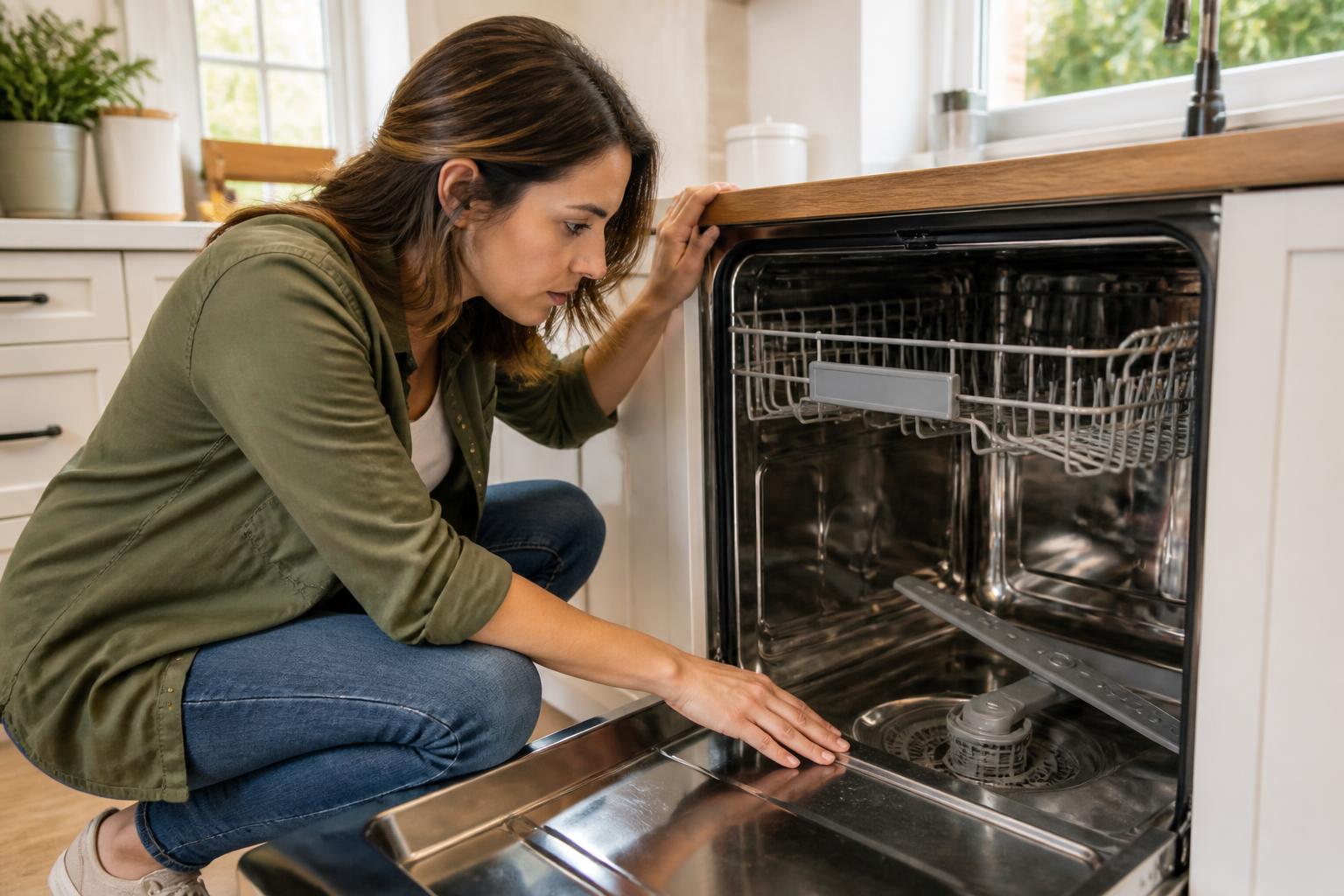
First, Confirm It’s Really a Clog
Before you start pulling apart hoses, rule out the simpler problems that look like clogs but aren’t. A dishwasher that won’t drain can also come from a stuck drain impeller, a frozen or kinked drain hose, a garbage disposal knockout plug still in place, or a failed drain pump motor.
Quick test: Put 2 cups of water in the bottom of the dishwasher and hit the Drain cycle. If the pump runs but the water level doesn’t drop, you have a clog. If the pump stays silent, you’re looking at an electrical or motor issue instead — that’s a different fix entirely.
Manufacturer service guidelines indicate that over 80% of dishwasher drainage failures are caused by debris trapped in the filter or the sump area, not by pump failure. Cleaning the filter first saves you unnecessary part replacement.
Gather Your Tools First
You don’t want to be fishing for a screwdriver with wet hands. Grab these before you start:
- Flathead and Phillips screwdrivers
- Pliers (adjustable or channel-lock)
- Small bucket or shallow pan
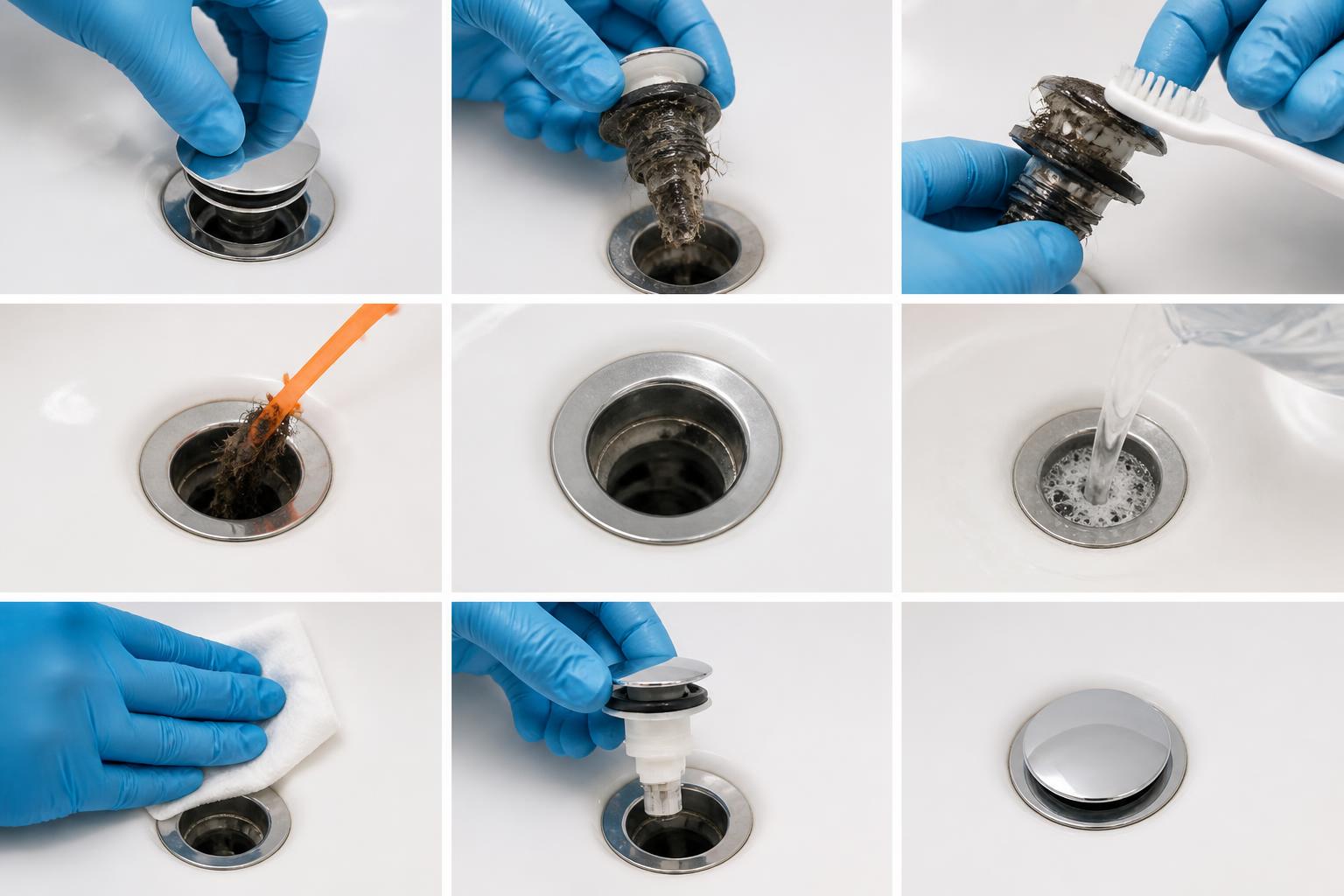
- Old towel or sponge
- Zip ties or stiff wire for snaking hoses
- Flashlight
- Needle-nose pliers for pulling debris
Step-by-Step Unclogging Process
1. Remove Standing Water Safely
If the dishwasher is full of dirty water, bail it into your bucket first. Use a cup or a turkey baster to get the last inch. Lay towels around the base to catch drips — that water can damage laminate flooring and it’s unsanitary to let it spread.
2. Pull and Clean the Filter Assembly
The filter sits at the bottom of the tub, under the bottom spray arm. Twist it counterclockwise to unlock it, pull it straight up, and rinse it under hot water. Use an old toothbrush to scrub the mesh if it feels greasy or has stuck-on bits. A greasy filter is a common hidden clog — soap scum and oil can form a layer that water can’t push through.
Decision point that changes your approach: If your dishwasher has a self-cleaning filter (common on higher-end Bosch and some KitchenAid models), you still need to check the coarse filter and the sump area below it. Self-cleaning filters only handle microscopic particles. Larger debris like fruit stickers, olive pits, and broken glass can still block the drain. Don’t assume self-cleaning means no-filter — that mistake costs homeowners unnecessary service calls.
3. Check the Drain Basket and Impeller
With the filter removed, shine your flashlight into the opening at the bottom. You’ll see a flat plastic piece with fins — that’s the drain impeller. Try spinning it by hand using a chopstick or screwdriver. If it’s stuck, something is wedged in there. Pull out any visible debris with needle-nose pliers. Broken glass, toothpicks, and those little fruit stickers are the most common offenders. I’ve also found popcorn kernels and small bones in there.
4. Clear the Drain Hose
If the drain basket and impeller are clean but the water still won’t go down, the blockage is further downstream. Disconnect the drain hose where it connects to the sink drain or garbage disposal — usually under the sink. Aim the hose into your bucket and blow into it or use a stiff zip tie to poke through. You can also disconnect both ends and run water from a faucet through it to flush out the clog.
Brand-specific trap: Some Frigidaire and GE models use a check valve inside the drain hose connection that catches debris. If you’ve cleared the hose but water backs up again, pop that valve out and clean it separately. For detailed guidance on your specific model, this step by step guide to repairing your frigidaire dishwasher covers the process thoroughly.
5. Clear the Air Gap (If You Have One)
Not every dishwasher has an air gap — that little chrome cylinder on the back of the sink. If you do have one, pop its cap off and check the hose underneath. Air gaps are notorious sludge collectors. Remove the two hoses, clean them out with a bottle brush or a stiff zip tie, and reattach them. Make sure the hose routing doesn’t have any low spots where water can pool.
6. Run a Test Cycle and Verify the Fix
Put everything back, add 2 cups of fresh water to the bottom to protect the heating element, and run a short rinse cycle.
How to confirm it worked: When the cycle finishes, the water should be completely gone — no puddles in the bottom corners. Open the door and feel the bottom of the tub. It should be warm and dry. If you see a thin film of water (less than 1/8 inch), that’s normal residual from the rinse. If you can see standing water collected around the filter area, the clog isn’t fully cleared and you need to repeat the hose-cleaning step or escalate.
Clog Type Reference Table
| Symptom | Most Likely Cause | What to Fix First |
|---|---|---|
| Water drains slowly, leaves puddles | Grease-clogged filter or drain hose | Clean filter and flush hose with hot water |
| Water drains but food bits remain on dishes | Spray arm jets blocked by hard water or debris | Remove spray arm and clean jet holes with a toothpick |
| Water drains fine but dishwasher won’t start a new cycle | Standing water still in the sump (float switch stuck) | Clear debris under the float switch (small mushroom-shaped cap in the bottom corner) |
| Suds or foam during rinse | Wrong detergent or rinse aid | Run a rinse cycle with a tablespoon of cooking oil to break down suds |
| Garbage disposal gurgles when dishwasher drains | Partial clog in the drain line between disposal and main drain | Disconnect dishwasher hose from disposal and clear the fitting |
Is This a DIY-Friendly Job for You?
Run through these five checkpoints before you commit to the full process. If any one is a no-go, it’s smarter to stop and call a pro rather than risk damaging the machine.
- Filter is removable by hand: Can you twist and lift the filter out without tools? If it’s held in place with a security Torx bit, you may need specialized screwdrivers you don’t own.
- Drain hose is reachable: Can you get to the hose connection under the sink without pulling the dishwasher out of the cabinet? If the unit is built in tight, a pro will save you from breaking the countertop seal.
- No electrical burning smell: A burnt plastic or ozone smell means the drain pump may have seized and needs replacement, not just cleaning. Continuing to run it can damage the control board.
- Garbage disposal knockout plug is removed: If your dishwasher connects to a disposal, open the disposal inlet and confirm the small circular plug inside has been punched out. Many new homes skip this step, which blocks all drainage completely.
- Water level stays below the door seal: If water is leaking out from under the door before you even start, the problem may be a worn door gasket, not a drain clog. Fixing that is a separate job.
When to Stop and Call a Pro
You’ve done every step above and the water still won’t drain. At this point, you’re likely dealing with one of three problems that require more than basic tools:
- Failed drain pump: The pump motor has seized or burned out. You’ll need a multimeter to test continuity, then source the correct replacement part.
- Cracked sump housing: A plastic crack in the sump lets air into the pump, preventing it from pulling water. You can’t patch this reliably — the housing needs replacement.
- Wiring fault: A loose connection or broken wire to the drain pump or the main control board. This requires tracing circuits with a multimeter.
A service call for a drain pump replacement typically runs $150 to $300 depending on the model — still cheaper than a new dishwasher. For deeper maintenance between clogs, follow this step by step guide on how to clean a dishwashing machine inside to prevent future buildup.
Frequently Asked Questions
Can I use Drano or chemical drain cleaner in my dishwasher?
No. Chemical drain cleaners eat through rubber seals, plastic sumps, and pump impellers. They also leave residue that causes foaming in the next cycle. Stick to mechanical cleaning — a zip tie or bottle brush does the job safely.
How often should I clean the dishwasher filter to prevent clogs?
Once a month is the standard recommendation for most brands. If you run heavy loads with baked-on food or live in a hard-water area, bump that to every two weeks. A quick rinse under hot water takes less than two minutes.
Why does my dishwasher smell even after I unclogged it?
The odor is likely trapped in the drain hose or the sump area. Run a cycle with a dishwasher cleaner tablet or place a cup of white vinegar on the top rack and run a hot rinse. If the smell persists, check for a low spot in the drain hose where water pools — reroute the hose so it slopes continuously downward toward the drain connection.