
How to Check Your Washing Machine Motor: Step-by-Step Guide
Checking your washing machine motor may seem tricky, but it doesn’t have to be! First, remember to unplug your machine for safety. Then, with the right tools, you can peek inside and look for anything unusual. Ever heard a funny noise while washing? This might be a clue! Understanding how to inspect the motor can save you time and money. So, what should you know about finding common problems that can arise?
Key Takeaways
- Start by unplugging the washing machine to ensure safety before inspecting the motor.
- Locate the motor at the bottom of the machine, often accessible by removing the outer panel.
- Use a multimeter to test voltage and continuity at the motor’s terminals, checking for power supply issues.
- Look for signs of wear or damage like frayed wires, strange noises, or burning smells indicating potential motor problems.
- Regularly clean the motor and lubricate moving parts to maintain performance and prevent future issues.
Understanding the Role of the Washing Machine Motor
The heart of a washing machine is its motor, a powerful little engine that makes laundry day possible. This motor is responsible for various motor functionalities, like spinning and agitating clothes to remove dirt. There are different motor types, such as direct-drive and belt-driven motors, each performing uniquely. Understanding these differences can help you know what might be wrong if your machine isn’t working right. For instance, a direct-drive motor connects directly to the drum, providing efficient power, while a belt-driven motor uses a belt that can wear out over time. So, if laundry day feels like a never-ending chore, remember that the motor plays a vital role. Keeping it in good shape guarantees clothes come out clean and fresh!
Tools Needed for Inspection
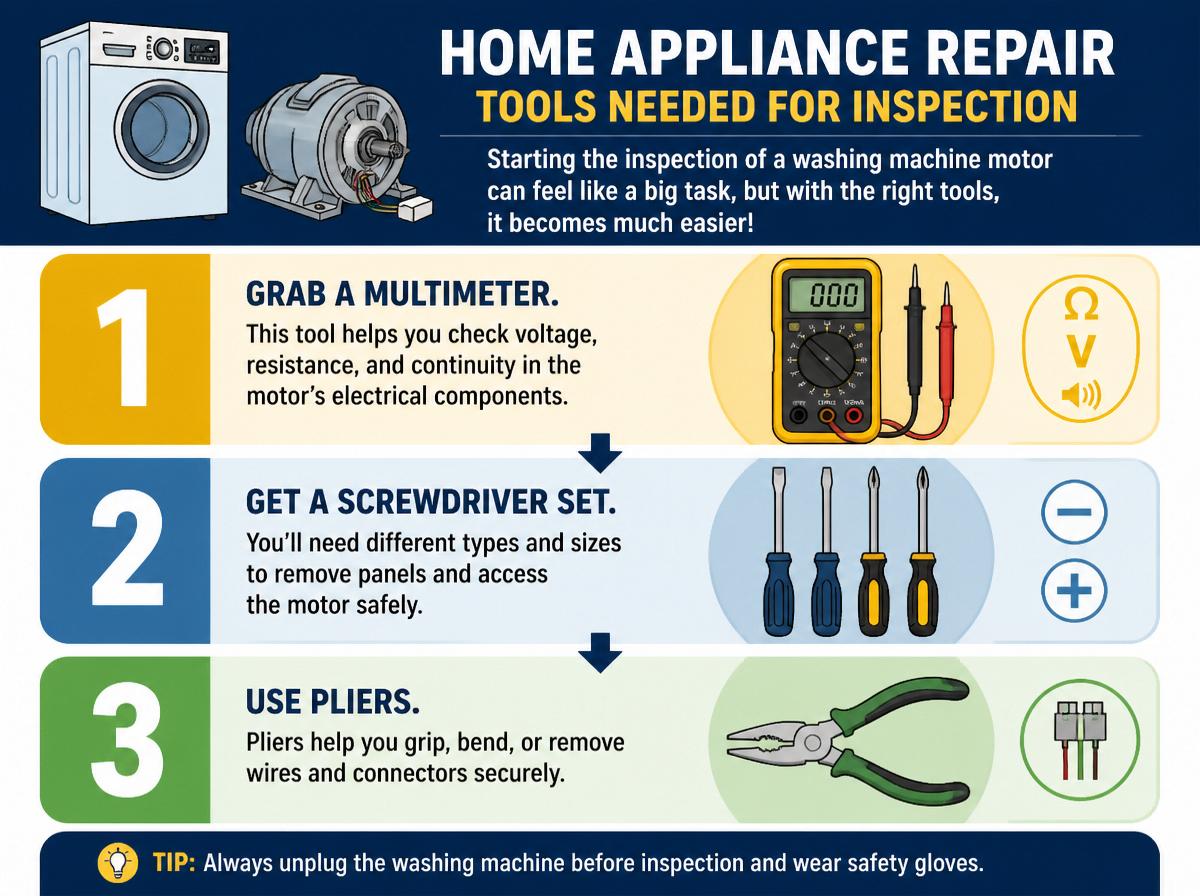
Starting the inspection of a washing machine motor can feel like a big task, but with the right tools, it becomes much easier! First, grab a multimeter to test the voltage and continuity of different motor types. Pliers, screwdrivers, and a wrench set are also essential for removing parts safely. Don’t forget a flashlight for getting a better look inside tight spots, and a notebook to jot down maintenance tips or any observations. A soft cloth can help clean any dust off the motor. Remember, being well-prepared makes the task less intimidating. With the right tools in hand, anyone can inspect their washing machine motor! It’s like having superpowers for fixing appliances. You’ve got this!
Safety First: Preparing Your Washing Machine
Before getting started with checking the washing machine motor, it is important to prioritize safety. First, unplug the appliance to confirm no electricity is flowing while working. Next, gather all the necessary tools, so everything is ready and waiting—no one wants to play hide-and-seek with a screwdriver mid-task!
Unplug the Appliance
Ensuring safety is the most important step when preparing to check your washing machine motor. Before diving into appliance maintenance, it’s essential to unplug the washing machine. This simple act keeps you safe from potential electrical shocks while you work, turning a formidable task into a manageable one. Think of it as giving your machine a little nap before it wakes up to shine again! By disconnecting the power, you can focus on your repairs without worrying about sudden starts or unexpected surprises. Safety first, right? Remember, taking these precautions not only protects you but also extends the life of your appliance. So, take a deep breath, unplug that washer, and get ready to tackle the task ahead with confidence and care!
Gather Necessary Tools
While it may seem challenging to check a washing machine motor, gathering the right tools can make the process much smoother and boost confidence. First, consider the different motor types you might encounter, as they require specific tools. You’ll need a screwdriver set, a multimeter for electrical testing, and possibly a wrench for securing bolts. Each tool plays a crucial role in diagnosing common issues, such as unusual noises or failure to spin. Don’t forget safety glasses to protect those curious eyes! Remember, having the right tools not only simplifies the task but also helps you feel prepared. With these essentials in hand, it’s time to plunge into understanding your motor—think of it as a fun puzzle waiting to be solved!
Locating the Motor in Your Washer
Finding the motor in a washing machine might seem tricky at first, but it can be done with a bit of guidance. To start, it’s important to access the washer panel by removing screws or clips that hold it in place, which can sometimes feel like a mini treasure hunt! Once the panel is open, the motor is usually easy to spot; it’s the hard-working part that helps your clothes get clean, so give it a little wave of appreciation while you’re at it!
Accessing the Washer Panel
To access the washer panel and locate the motor, one needs to gather a few basic tools and a calm mind—much like preparing for a treasure hunt. Understanding the different washer panel types is essential, as some may require specific techniques. Here’s a simple list to follow while removing access panels:
- Gather Your Tools: Usually, a screwdriver and a small flashlight will do the trick.
- Locate Screws: Look for screws that are holding the panel in place. They could be hidden under a plastic cover!
- Carefully Remove the Panel: Once the screws are out, gently pull away the panel to avoid any breakage.
With patience and focus, anyone can reveal the hidden treasures of their washing machine!
Identifying Motor Location
Locating the motor in a washing machine can feel like a mini-adventure, and it’s easier than it sounds! First, verify the washer is unplugged for safety. Most motors are found at the bottom of the machine. Depending on the washer’s motor types—be it belt-driven or direct-drive—access might differ. Look for a panel cover at the back or front; that’s where the fun begins! After removing the panel, you’ll spot the motor, usually housed in a sturdy frame. Check the motor specifications to know exactly what you’re dealing with. Remember, finding this essential component is not just a task; it’s a step toward understanding your machine better. With a little patience, anyone can conquer this challenge and feel accomplished!
Inspecting the Wiring and Connections
Inspecting the wiring and connections of a washing machine motor can feel like a treasure hunt, where each discovery brings you closer to solving the puzzle. To verify everything is in tip-top shape, follow these steps:
Inspecting your washing machine’s motor connections is an exciting adventure, revealing crucial insights to keep your appliance running smoothly.
- Consult Wiring Diagrams: Refer to the wiring diagrams provided in the manual to understand how each component fits together.
- Check Connection Integrity: Look for frayed wires or loose connections. Each should feel snug and secure like a friendly handshake.
- Clean Connections: Dust or grime can affect performance. Gently clean connectors with a cloth, like giving them a rejuvenating bath!
Testing the Motor With a Multimeter
To check a washing machine motor, one must first gather the right tools, including a multimeter. This handy device will help test the motor’s resistance
Gather Necessary Tools
Before diving into the task of checking the washing machine motor, it’s important to gather the right tools. Having the proper tools checklist guarantees success and makes the job easier. Below are three pieces of essential equipment that will come in handy:
- Multimeter – This handy device measures electrical current and resistance, helping determine if the motor is functioning properly.
- Screwdriver Set – Different screws hold the machine together, so a set with various sizes will help you access the motor.
- Safety Gear – Wearing gloves and goggles protects from any sudden mishaps while working.
Conduct Resistance Test
A thorough resistance test can make a big difference in figuring out whether the washing machine motor is working as it should. To start, verify the multimeter is properly calibrated; a well-calibrated device leads to accurate resistance measurements. Next, disconnect the motor from the power supply for safety, and then connect the multimeter leads to the motor’s terminals. If the multimeter displays a resistance within the manufacturer’s specified range, the motor is likely functioning correctly. However, if the readings are outside this range, it could mean trouble. Remember, testing a motor can feel intimidating, but each step brings one closer to troubleshooting success. With patience and a little encouragement, anyone can master this skill!
Identifying Common Motor Problems
Washing machine motors can encounter a variety of common issues, and recognizing these problems early is key to keeping laundry day stress-free. Understanding these issues helps maintain motor performance and provides helpful troubleshooting tips. Here are three common motor problems to watch for:
Recognizing common washing machine motor issues early ensures a smooth laundry experience and helps maintain optimal performance.
- Strange Noises: If a washing machine makes unusual sounds, it could signal a problem with the motor or other components.
- Burning Smell: A burning odor may indicate overheating, which could lead to severe motor damage if not addressed.
- Inconsistent Spin: If the machine struggles to spin clothes dry, it may suggest a failing motor needing immediate attention.
Cleaning and Maintaining the Motor
Keeping a washing machine motor in good shape is just as important as spotting the problems that can arise. Regular cleaning and maintenance can help it run smoothly and last longer. First, unplug the machine for safety. Then, use common cleaning methods like a damp cloth to wipe away dust and dirt. Pay attention to vents and parts that could gather lint. Next, apply proper motor lubrication techniques. A small amount of oil on the moving parts can reduce wear and tear. However, avoid using too much, as it can attract more dirt. With a little effort, anyone can keep their washing machine motor happy and healthy. After all, a well-maintained motor means cleaner clothes and fewer headaches!
When to Call a Professional
Knowing when to call a professional can sometimes be tricky, especially if the washing machine starts making strange noises or isn’t spinning properly. It’s crucial to know when to diagnose the situation or get expert help. Here are three signs needing repair:
- Unusual Noises: If the machine sounds like a rock concert, it’s time to be concerned.
- Water Leaks: Puddles around your washer are major red flags.
- Failure to Spin: If clothes come out soaked after a cycle, the motor might have issues.
Calling a professional can save time and prevent further damage, ensuring your washing machine gets back to doing what it does best—keeping your clothes clean and fresh! Remember, it’s okay to ask for help when needed!
Tips for Preventing Future Issues
To keep a washing machine running smoothly, it really helps to establish some simple habits. Following proper usage guidelines and engaging in regular maintenance can prevent many issues. Here are some practical tips:
| Action | Benefit |
|---|---|
| Load correctly | Prevents strain on the motor |
| Clean filters often | Guarantees efficient water flow |
| Use the right detergent | Reduces buildup and clogging |
| Schedule maintenance checks | Catches small issues before they grow |
Implementing these tips can extend the life of the washing machine and save money on repairs. Remember, a well-cared-for machine is a happy machine! By taking these small steps, everyone can feel proud of their washing machine’s performance. So, roll up those sleeves and make it shine!
Frequently Asked Questions
How Often Should I Check My Washing Machine Motor?
Regular motor maintenance should be conducted every six months to guarantee peak performance. This practice can substantially extend the motor lifespan, preventing unforeseen malfunctions and costly repairs, ultimately assuring the washing machine operates efficiently for years.
Can I Use a Different Multimeter for Testing?
A different multimeter can be employed for motor testing, almost as if it transforms into a wizard, interpreting electrical signals. However, guarantee it meets the necessary specifications for accurate diagnostics. Precision matters in this electrifying adventure!
What Type of Motor Is in My Washing Machine?
Washing machines typically use two motor types: direct drive motors, which connect directly to the drum, and universal motors, commonly found in less expensive models. Understanding the motor type aids in troubleshooting and maintenance efforts.
Is It Safe to Run the Washer Without a Motor?
Running a washer without a motor creates a stark contrast between functionality and idleness. Washer safety diminishes considerably, as essential mechanics fail. Without motor functionality, the appliance becomes inoperative, rendering it unsafe and ineffective for laundry tasks.
How Much Does a New Washing Machine Motor Cost?
A new washing machine motor typically costs between $100 and $300, varying by washing machine brands. Most motors come with a motor warranty of one to three years, providing reassurance against potential defects or failures.
Conclusion
By keeping your washing machine motor in tip-top shape, you’ll dodge a lot of laundry headaches down the line! Remember, with a little care and regular checks, you can guarantee it runs smoothly and efficiently. While tackling repairs can feel like a leap into the unknown, take it one step at a time, and you’ll be on the road to success. So, roll up your sleeves and jump in—you’ve got this! Clean clothes await!
Explore This Topic
- Back to Internal Components
- Back to appliance repair
Related guides in this cluster: