
7 Essential Tips for GE Refrigerator Power Maintenance
To keep a GE refrigerator running smoothly, start by cleaning and organizing it. Label shelves and rotate food. Next, monitor the temperature. Aim for around 37°F. Don’t forget to check the door seals for cracks and clean them regularly. Confirm airflow around the fridge is unobstructed, and clean the condenser coils to maintain efficiency. Use the right lightbulb, like LED, to save energy. Finally, don’t skip on professional maintenance. Keep going to uncover more helpful tips!
Key Takeaways
- Regularly clean and organize your refrigerator to reduce spoiled food and odors, improving overall efficiency.
- Monitor and maintain ideal temperature settings around 37°F (3°C) for optimal food preservation.
- Inspect and maintain door seals to prevent cold air loss and increase energy efficiency.
- Ensure proper airflow by keeping vents unobstructed and cleaning condenser coils regularly to enhance cooling performance.
- Use energy-efficient LED bulbs and schedule professional maintenance to identify potential issues and enhance performance.
Keep the Refrigerator Clean and Organized
Regularly keeping the refrigerator clean and organized can be a game-changer for anyone looking to maintain their GE appliance. Picture opening the fridge to a tidy oasis instead of a chaotic mess! Start by labeling shelves, which makes finding food much simpler. For example, a “Fruits” shelf means no more searching high and low for that stray apple. Also, practice container rotation: place newer items behind older ones. This technique helps prevent food waste, ensuring those leftovers don’t become science experiments!
Cleaning spills and organizing shelves regularly creates a friendly environment for food. Plus, it allows for easy access to snacks during movie night! Maintaining cleanliness means fewer odors and happier taste buds. So grab that sponge, label those shelves, and rotate those containers—your GE fridge deserves it! With these simple steps, keeping everything in order will feel easy, and your fridge will thank you with fresh, delicious food.
Monitor Temperature Settings
Monitoring the temperature settings of a GE refrigerator is essential for keeping food fresh and safe. The ideal temperature range is typically between 35°F and 38°F, so checking this regularly can help avoid unpleasant surprises, like spoiled milk. By taking a few moments each week to look at the temperature, anyone can make sure their fridge runs smoothly and their groceries stay happy and healthy!
Ideal Temperature Range
Have you ever wondered why keeping the right temperature in a refrigerator is so important? The ideal temperature range is between 34°F and 40°F. This magical number helps keep food safe and prevents bacterial growth. When the fridge is too warm, harmful bacteria can multiply quickly, putting everyone at risk of foodborne illnesses. That’s definitely not a party anyone wants! Maintaining this chilly range helps guarantee that leftovers stay fresh, fruits and veggies stay crisp, and you can trust that your delicious meals remain safe to eat. So, grab that thermometer and make sure your GE refrigerator is in the right zone. A little attention to this detail makes a big difference in your family’s health and keeps everyone smiling at mealtime!
Regular Temperature Checks
How often do people think about checking the temperature in their refrigerator? It’s an important task that helps keep food fresh and safe. Checking the temperature regularly verifies the sensor calibration is correct. A well-calibrated sensor means the fridge can maintain that ideal temperature range. Data logging can be beneficial, too—keeping track of temperatures over time helps catch any issues early. So, check the fridge temperature monthly, or even weekly if you often open the door! Use a simple thermometer to make sure it’s around 37°F (3°C) for the best results. With a little effort and attention, anyone can enjoy perfectly chilled foods and beverages. Happy cooling, refrigerator warriors!
Inspect and Replace Door Seals
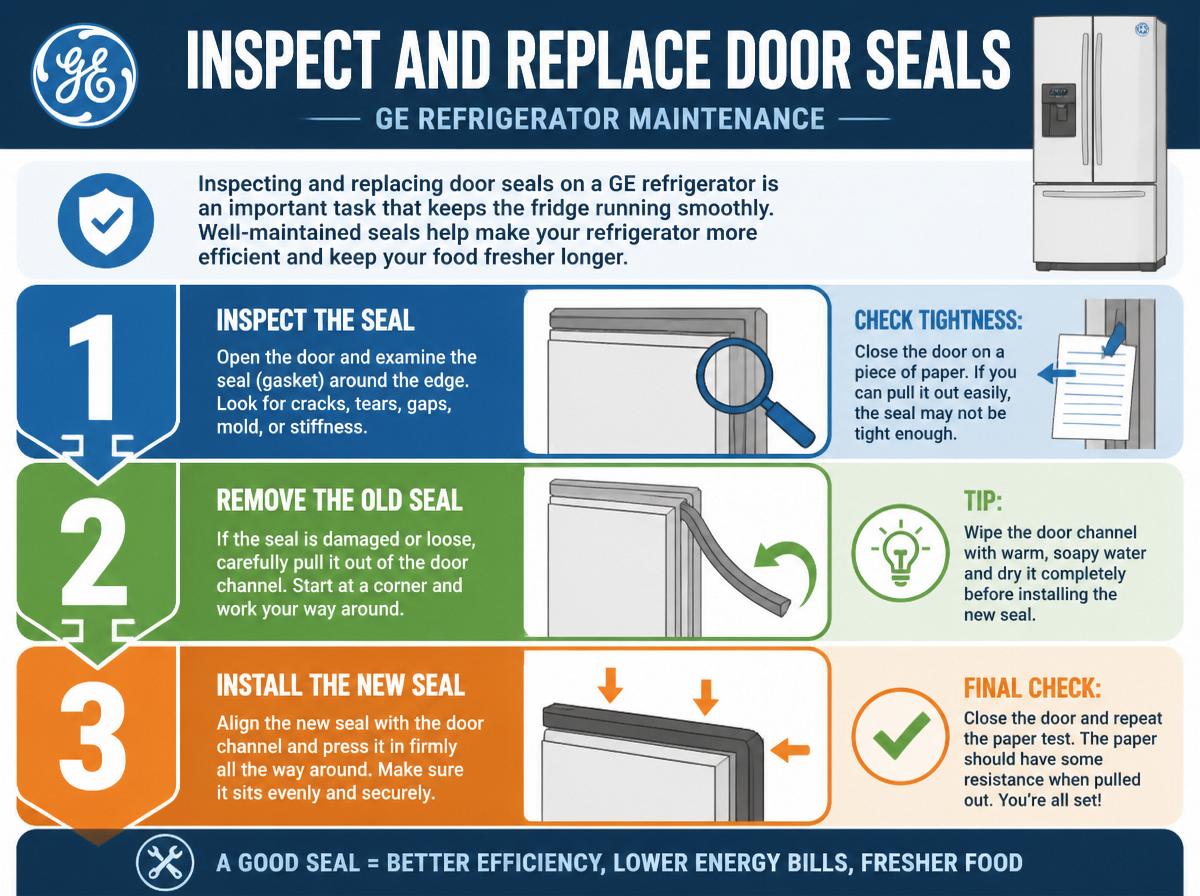
Inspecting and replacing door seals on a GE refrigerator is an important task that keeps the fridge running smoothly. Well-maintained seals help make sure that cold air stays in, which makes your food fresh. Here are some simple steps to follow:
- Check for Damage: Look closely at the magnetic strips along the edge of the door seals. If they’re cracked or worn, it’s time to replace them.
- Seal Alignment: Make sure the seals align properly with the door. Misalignment can cause problems, so gently press around the edges to check for gaps.
- Clean Regularly: Wipe the seals with warm, soapy water to remove dirt and grime, helping them stick better and last longer.
Ensure Proper Airflow
Maintaining proper airflow in a GE refrigerator is just as important as keeping the door seals in good shape. Good airflow helps the fridge work efficiently, keeping food fresh and cool. To guarantee effective fan operation, it’s essential to maintain adequate ventilation clearance. This means not blocking the vents on the back or sides of the fridge with boxes or other items.
A clear space allows the fan to circulate air properly, preventing your refrigerator from overheating. Imagine stuffing your bedroom closet so full that the air can’t flow—yikes! That’s what suffocating your fridge does.
Regularly checking the vents can keep your refrigerator running smoothly and save energy. Encourage your family to keep the area around the fridge tidy. Every little step helps, and a little effort goes a long way in ensuring your GE refrigerator stays in tip-top shape!
Check the Condenser Coils
Keeping the condenser coils clean is a simple yet essential step in ensuring a GE refrigerator runs smoothly. These coils are usually located on the back or bottom of the refrigerator and play a critical role in cooling. Over time, dust and debris can build up, affecting the refrigerator’s efficiency.
To keep those coils in tip-top shape, consider these tips:
- Locate the coils: Check the back or underneath, depending on your model.
- Use the right tools: A soft brush or vacuum nozzle works best to remove dirt and dust.
- Inspect the material: Make sure the coil material composition is intact; if damaged, it may need replacing.
Use the Right Type of Lightbulb
Once the condenser coils are clean and ready to go, it’s important to think about the lightbulbs in the refrigerator. Choosing the right type can make a big difference! For great lighting, use LED bulbs. They save energy, last longer, and they work well with most GE models, highlighting the freshness of food. However, it’s essential to check the bulb wattage before installation to avoid any issues.
Here’s a quick reference table for choosing the right lightbulb:
| Bulb Type | LED Compatibility |
|---|---|
| Standard | Yes |
| CFL | No |
| Incandescent | Limited |
| Halogen | Yes |
Installing the right bulb not only keeps your fridge bright but also helps it run efficiently. So, keep smiling while you swap out those bulbs, knowing you’re taking good care of your GE refrigerator!
Schedule Regular Professional Maintenance
Regular professional maintenance is an important part of ensuring a GE refrigerator runs at its best. Scheduling regular check-ups helps keep it efficient and healthy, just like a visit to the doctor! Plus, it can help with warranty compliance. Here are some key reasons to think about a professional tune-up:
- Identify Issues Early: Professionals can spot problems before they become major headaches, saving you time and money.
- Enhance Efficiency: Regular maintenance helps your fridge consume less energy, which can lower your electricity bill.
- Follow Service Contracts: If you have a service contract, regular upkeep may be required to keep your coverage valid.
Frequently Asked Questions
How Often Should I Defrost My GE Refrigerator?
Typically, GE refrigerators with automatic defrost systems do not require manual defrosting. However, maintaining proper temperature settings can prevent excessive frost buildup, ensuring ideal performance and efficiency for the appliance over time. Regular checks are advised.
What Are Signs My Refrigerator Needs a Power Maintenance Check?
Strange noises and frequent cycling often indicate a need for a power maintenance check. Could it be that reassurance from such checks prevents more severe problems? Observing these signs can prolong the appliance’s efficiency and lifespan.
Can I Use Extension Cords for My Refrigerator?
Using extension cords for refrigerators is not recommended. If necessary, heavy gauge cords should be used, making sure they connect to a grounded outlet to prevent electrical hazards and guarantee proper functionality of the appliance.
How Does Humidity Affect My Refrigerator’s Performance?
Humidity can negatively impact a refrigerator’s performance by increasing compressor strain and promoting condensate buildup. Excess moisture can hinder cooling efficiency, potentially leading to increased energy consumption and decreased lifespan of the appliance.
What Is the Ideal Location for My Refrigerator in the Kitchen?
An ideal refrigerator location maximizes efficiency, as appliances near sunlight exposure can increase energy use by up to 20%. Placing it away from traffic flow enhances access, facilitating smooth kitchen operations while maintaining peak performance.
Conclusion
Taking care of your GE refrigerator is a bit like tending to a garden. Just as plants need sunlight, water, and care to thrive, your fridge needs regular maintenance to keep your food fresh and safe. By following these seven simple tips, you’re ensuring a healthy ‘garden’ in your kitchen. Remember, a little effort today can prevent big problems tomorrow. So roll up your sleeves, embrace the task, and give your fridge the care it deserves!
Explore This Topic
- Back to energy efficiency
- Back to appliance troubleshooting
Related guides in this cluster: