
7 Essential Microwave Care and Maintenance Tips
To keep a microwave in tip-top shape, start by cleaning it regularly to avoid grime buildup. Cover food while heating to prevent splatters and guarantee even cooking. Remember, metal is a no-go! Always check the waveguide cover and door seal for wear. Choose the right containers, like glass or ceramic, for safe cooking. Finally, maintaining your microwave can make cooking fun and easy! There’s so much more to learn about microwave care, so let’s get started!
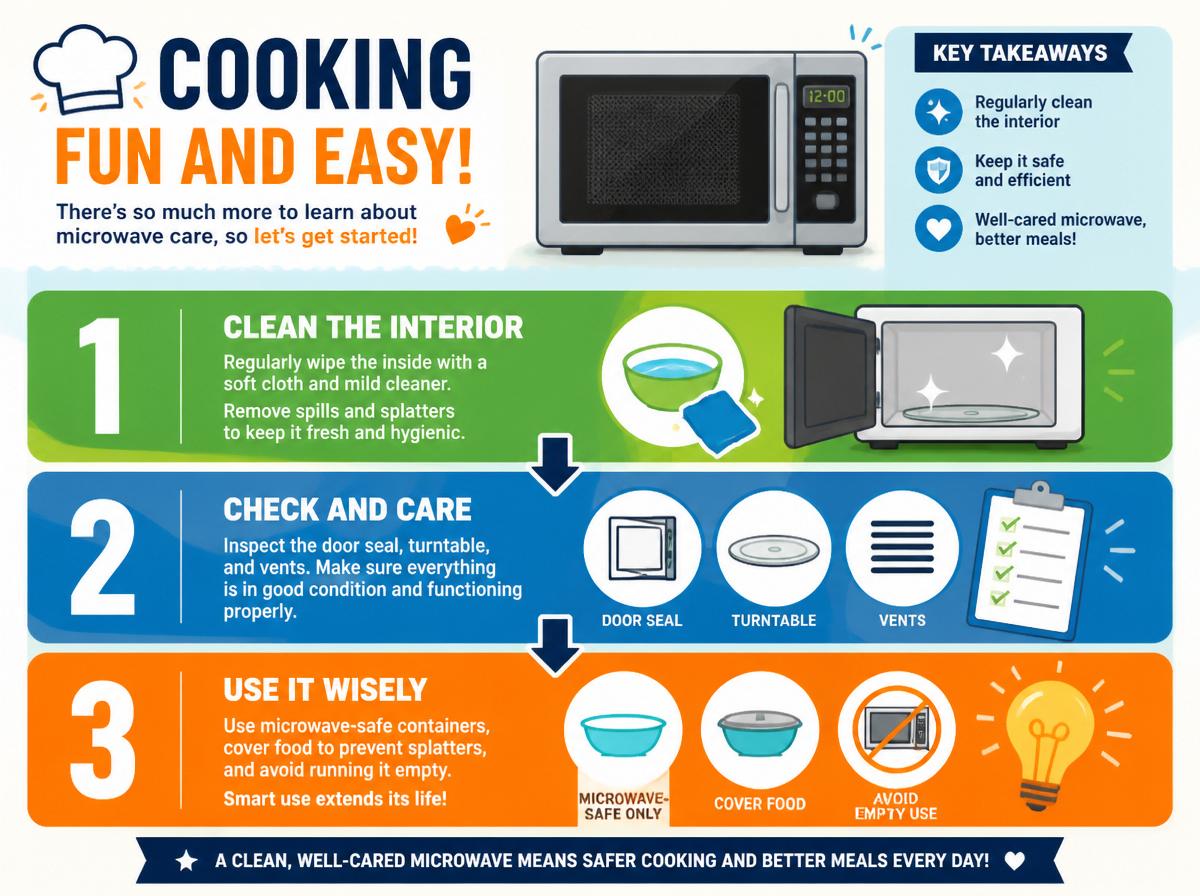
Key Takeaways
- Regularly clean the interior with a water-and-vinegar mixture to prevent moisture buildup and unpleasant odors.
- Cover food with microwave-safe lids or wraps to reduce splattering and ensure even heating.
- Check and clean the door seal regularly to maintain a snug fit and prevent heat loss.
- Avoid placing metal items or hazardous materials in the microwave to prevent fires and damage.
- Inspect the waveguide cover and lubricant hinges to ensure smooth operation and optimal performance.
Regular Cleaning Routines
Regularly, folks might overlook their microwave while cleaning the kitchen, but this little appliance deserves some love too! A regular cleaning routine is essential for keeping it in tip-top shape. To start, create a schedule checklist that outlines when to clean. It can be once a week or bi-weekly, depending on how often it’s used.
When choosing a cleaning approach, product selection matters. Instead of harsh chemicals, consider using a simple mixture of water and vinegar. Just place a bowl inside, heat it for a few minutes, and let the steam do the work. It loosens grime, making it easy to wipe down with a soft cloth. Remember, a clean microwave not only looks good but also helps food heat evenly and stay safe. So, embrace those cleaning sessions! Your microwave will thank you with longer-lasting performance, and it just might make you smile with pride!
Covering Food While Heating
Covering food while heating in the microwave is a simple yet effective way to keep the mess to a minimum. By using a lid or microwave-safe wrap, one can prevent splatters that make cleanup a chore, ensuring that your meals stay as neat as possible. Additionally, covering food allows for even heating, helping to avoid those pesky cold spots that can leave your meal less tasty than you hoped!
Preventing Splatter and Mess
When heating food in the microwave, avoiding messy splatters can be a delightful challenge. Fortunately, a little user education can go a long way! To prevent splatter and keep your microwave clean, follow these simple tips:
- Use a Microwave Cover: A microwave-safe cover helps trap steam and reduces splatters.
- Opt for Glass or Ceramic Containers: These materials tend to prevent splattering more than plastic.
- Adjust Microwave Placement: Make sure the microwave is at a height that allows for safe and easy access, minimizing spills.
- Leave Space for Expansion: When covering, make sure to leave a small gap for steam to escape, preventing pressure build-up.
With these tips, keeping the microwave tidy becomes not just a goal, but a fun challenge!
Ensuring Even Heating
A microwave can be a fantastic ally in the kitchen, especially when it comes to reheating meals. To guarantee even heating, covering food while heating is essential. This simple step helps trap steam, making the food warm and delicious. Adjusting power settings can also make a difference; lower settings can prevent hot spots. It’s like sharing the warmth!
Additionally, verifying turntable alignment is vital. If the plate isn’t centered, food may not heat evenly. A quick check can work wonders. Remember, a little attention can transform your meal from lukewarm to perfect! So, go ahead and embrace these tips! With just a few changes, microwaving can turn into a fun and effective way to enjoy meals to the fullest.
Avoiding Metal in the Microwave
When using a microwave, it’s vital to keep metals out of the cooking chamber. Some common items, like aluminum foil or metal utensils, can cause sparks and even fires, putting everyone at risk. Instead, stick to glass or microwave-safe plastic containers that make heating food safe and worry-free!
Types of Forbidden Metals
Microwaves are marvelous machines that make cooking quick and easy, but not all materials are well-suited for their cozy interiors. Some metals can create problems in microwaves, so it’s best to know which ones to avoid. Here are four types of forbidden metals:
- Aluminum Foil: While handy for wrapping leftovers, it can spark and cause fires.
- Thin Metals: Items like metal utensils are a no-go; they can lead to dangerous sparks.
- Mercury Components: Any products containing mercury should never enter a microwave.
- Beryllium Alloys: These can also pose a risk and should always be kept outside of microwaves.
Sticking to microwave-safe materials keeps everyone safe while adding a dash of joy to cooking!
Risks of Metal Use
Using metal in a microwave can turn a quick meal into a surprising and potentially dangerous experience. Metal can cause sparking fires and create interference risks that may damage the microwave or create a fire hazard. Knowing what to avoid is essential for safety.
Here’s a simple table to help remember:
| Metal Use | Potential Result | Recommended Action |
|---|---|---|
| Foil wrappers | Sparking Fires | Avoid completely |
| Metal utensils | Interference Risks | Replace with plastic |
| Dishes with gold | Sparking Fires | Use microwave-safe |
Safe Microwave Materials
Though it may be tempting to use any dish or container in the microwave, choosing the right materials can make a big difference in both safety and cooking success. To avoid accidents, it is vital to understand safe options and symbol meanings. Here are some materials that comply with microwave standards:
- Glass containers – Generally safe and non-reactive.
- Ceramic dishes – If labeled microwave-safe, they’re a great choice.
- Plastic wraps – Confirm they are microwave-safe to prevent melting.
- Paper plates – Good for short cooking times, but avoid those with metallic designs.
Using microwave-safe materials helps prevent fire hazards and keeps food tasty. Remember, always check for standards compliance to protect both yourself and your meals!
Keeping the Microwave Interior Dry
Keeping the microwave interior dry is important because moisture can lead to unpleasant odors and even mold growth. To achieve this, users should prioritize condensation control. One effective method is to open the microwave door immediately after use. This allows steam to escape, preventing water buildup.
Creating a drying routine is also helpful; regularly wiping down the interior with a clean cloth can keep things fresh. In addition, adopting ventilation strategies can promote air circulation. Keeping the area around the microwave clear from clutter allows air to flow freely, reducing trapped moisture.
Lastly, if spills occur, immediate clean-up is key. A quick response helps to maintain a dry and odor-free environment. Remember, a little effort goes a long way in ensuring a happy microwave! With these simple actions, anyone can keep their microwave clean and ready for the next delicious meal!
Checking and Replacing the Waveguide Cover
While many people may not realize it, the waveguide cover in a microwave plays an important role in how the appliance functions. This component helps direct microwaves into the cooking area, ensuring even heating. Regular checks and timely replacements are essential for smooth operation. Here are some key points for consideration:
- Model Compatibility: Always make sure the replacement cover matches the model of your microwave to fit properly and work effectively.
- Replacement Frequency: It’s wise to check the waveguide cover every six months and replace it if it’s damaged or stained.
- Signs of Damage: Look for any cracks, discoloration, or tears. These can hinder performance!
- Installation: Replacing the cover is usually a simple task. Just follow the manufacturer’s instructions, and you’ll have a functional microwave in no time!
Taking care of the waveguide cover helps keep those tasty meals coming!
Inspecting and Maintaining the Door Seal
Inspecting and maintaining the door seal of a microwave is like giving your trusty kitchen helper a little love! This seal is essential for keeping heat inside, so a good check-up is a must. Start by looking for any visible signs of wear, such as cracks or gaps—these can make the seal less effective. Next, test the seal compression by closing the door and sliding a piece of paper between it and the microwave; if you can easily pull it out, the seal might need attention. Don’t forget about hinge lubrication! A bit of food-safe lubricant can help the door open and close smoothly, ensuring a snug fit. Regularly cleaning the seal with a gentle cloth can also help keep everything in tip-top shape. Remember, a well-maintained door seal means your microwave will work better and last longer, making cooking more enjoyable!
Using the Right Containers and Cookware
After confirming the microwave door seals tightly, it’s important to think about what goes inside it. Using the right containers and cookware can make a big difference. Not all dishes are microwave-friendly, so choosing wisely guarantees safety and better cooking outcomes. Here are some tips for selecting the perfect microwave containers:
- Material Matters: Use glass, ceramic, or microwave-safe plastic. They handle durability well and won’t warp.
- Check Labels: Always look for the “microwave-safelabel. This means the dish is designed for cooking.
- Avoid Metal: Metal containers can spark and damage the microwave. Steer clear of them!
- Size It Right: Make sure the dish fits comfortably. A snug fit helps achieve even cooking.
Frequently Asked Questions
How Often Should I Replace My Microwave’s Light Bulb?
Microwave light bulbs typically require replacement every 1-3 years, depending on usage. Factors like bulb lifespan and wattage recommendations should guide consumers in choosing suitable replacements, ensuring peak performance and safety for the appliance.
Can I Microwave Paper Towels Safely?
Microwaving paper towels is generally safe due to their paper composition; however, caution is essential as overheating can pose a fire risk. Users should monitor closely to prevent ignition and promote safe heating practices.
What Should I Do if My Microwave Makes Strange Noises?
If a microwave makes strange noises, it may indicate a faulty door latch or fan obstruction. Checking the door mechanism and ensuring the fan is free from debris can help identify and resolve the issue.
Is It Safe to Run an Empty Microwave?
Running an empty microwave is unsafe, as it can lead to magnetron damage and create arcing risks. Such conditions may cause the appliance to malfunction, potentially resulting in costly repairs or total failure.
How Do I Troubleshoot a Microwave That Won’t Start?
A silent microwave can evoke frustration akin to a forgotten promise. To troubleshoot, first check the door switch for proper function; if intact, consider potential magnetron failure, which may require professional assistance to resolve effectively.
Conclusion
Caring for your microwave can be a magnificent mission! By practicing these simple steps, you’ll keep your kitchen companion clean, safe, and satisfied. Remember, regular routines and careful choices help maintain a marvelous microwave experience. So, as you pop popcorn or zap leftovers, smile knowing you’re a responsible and resourceful microwave master. With a little love and attention, your trusty appliance will be ready for many more delicious dishes to come! Keep up the great work!
Explore This Topic
- Back to kitchen appliance care
- Back to cleaning tips
Related guides in this cluster: