
Complete Guide: What Do You Need to Know About GE Refrigerator Thermostat?
The GE refrigerator thermostat uses a clever combo of a capillary tube and bimetal strip to keep your food perfectly chilled. When it senses warmth, it kicks the compressor on, and when cool enough, it switches it off—simple magic! If your fridge feels like a roller coaster of temperatures or freezes veggies unexpectedly, the thermostat might be acting up. Basic troubleshooting can help, but swapping it out requires care and the right tools. Stick around to discover easy fixes and pro tips for lasting freshness.
Key Takeaways
- GE refrigerator thermostats use a capillary tube and bimetal strip to regulate interior temperature through a cooling control feedback loop.
- Common thermostat problems include unpredictable temperature swings, uneven shelf cooling, unexpected freezing or warming, and frost buildup.
- Troubleshoot by checking ambient temperature, blocked vents, faulty door seals, overcrowding, and thermostat settings for stable cooling performance.
- To replace the thermostat, unplug the fridge, remove the control panel, disconnect wires carefully, install the new thermostat, and follow safety protocols.
- Call a professional if cooling issues persist after troubleshooting, strange noises or smells occur, or if the refrigerator is under warranty.
How the GE Refrigerator Thermostat Functions
How does the GE refrigerator thermostat keep food fresh and drinks icy cold? It all starts with a clever tool called the capillary tube, a thin, coiled tube filled with a special gas. As the fridge cools or warms, this gas expands or contracts, sending a signal to the thermostat. Inside, a bimetal strip—made of two different metals bonded together—bends just enough to turn the cooling system on or off. When the fridge gets too warm, the bimetal strip flexes, triggering the compressor to start cooling. Once the desired chilly temperature is reached, it moves back to stop the compressor. This dance between the capillary tube and the bimetal strip keeps everything balanced, making sure fruits stay fresh and sodas stay delightfully cold. Understanding these parts might sound tricky, but recognizing their teamwork encourages confident troubleshooting if the fridge’s chill ever seems off. Simple science, yet incredibly effective.
Signs of a Malfunctioning Thermostat
Sometimes, the fridge feels like a roller coaster, with temperatures rising and falling at odd times. If food starts freezing when it shouldn’t or mysteriously warms up, the thermostat might be acting up. These weird cooling patterns can be frustrating, but spotting them early means the fix isn’t far behind.
Temperature Fluctuations Noticeable
Although refrigerators are designed to keep food fresh and drinks cool, noticeable temperature swings inside can signal a thermostat issue. If some shelves feel colder or warmer than others despite proper shelf placement, the thermostat might not be regulating well. Food density also plays a role—crowding the fridge or placing dense items in one area can worsen fluctuations, but a working thermostat adjusts to these changes smoothly. When temperatures jump unpredictably, it’s not just annoying—it can spoil food and waste energy. Checking the thermostat’s settings and observing if cooling cycles are inconsistent helps identify the problem early. A quirky fridge might be trying to tell you something, so listen carefully! Fixing this can save your snacks and your sanity.
Refrigerator Overcooling Symptoms
When a refrigerator’s thermostat isn’t doing its job right, one common trouble is overcooling—when the inside gets colder than it should. This can turn fresh fruits and veggies into frozen produce, ruining textures and flavors you wanted to enjoy. Another sneaky sign is condensation damage inside the fridge, which might cause water droplets to form where they shouldn’t, leading to mold or rust over time. Overcooling wastes energy, too, so it can make your electric bill look unhappy. Spotting these signs early helps you fix or replace the thermostat before bigger problems pop up. It’s not just about cold—keeping the right temp protects your food and your fridge’s health. So, check for frozen spots or damp patches regularly, and don’t hesitate to call for help if needed!
Inconsistent Cooling Patterns
Even if a refrigerator feels cold one minute and not cold the next, it doesn’t always mean the whole fridge is broken—sometimes, the thermostat just isn’t doing its job right. When a GE refrigerator shows inconsistent cooling patterns, it signals the thermostat might be malfunctioning. This can cause:
- Sudden energy spikes as the compressor turns on and off too often.
- Food spoilage due to uneven or improper temperatures inside.
- Frost buildup or melting in certain spots, confusing the fridge’s cold zones.
- Inability to maintain a steady temperature, making it hard to keep food fresh.
Recognizing these signs early can save lots of food and money, offering a friendly reminder: a faulty thermostat isn’t the end, just a fix-away hurdle.
Troubleshooting Common Thermostat Problems
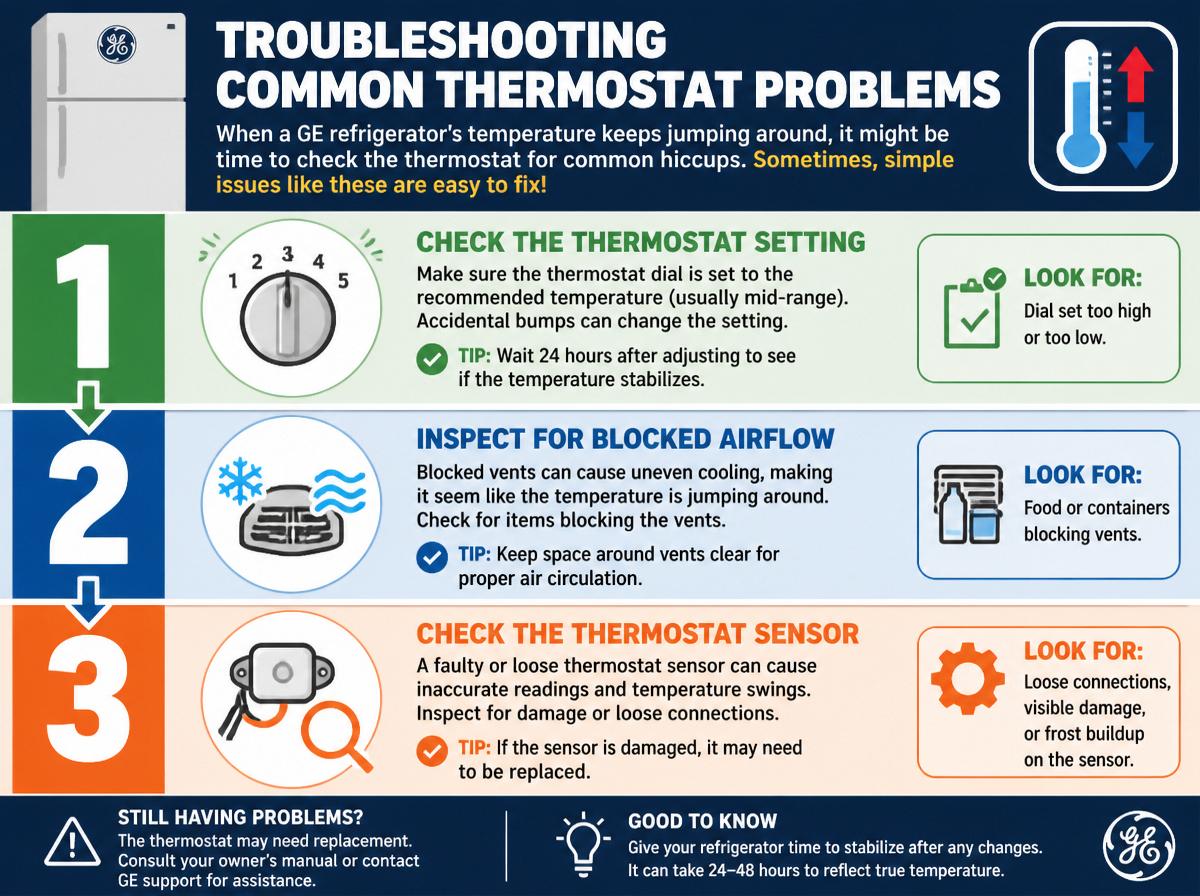
When a GE refrigerator’s temperature keeps jumping around, it might be time to check the thermostat for common hiccups. Sometimes, simple issues like loose connections or worn parts cause these chilly mood swings. If problems persist, knowing when and how to replace the thermostat can save both your food and your sanity.
Temperature Fluctuation Causes
Although refrigerators are designed to keep food fresh and cool, the thermostat can sometimes cause the temperature to swing unexpectedly, leaving leftovers less than happy. Several common issues may cause these fluctuations:
- Ambient temperature: If the room is too hot or cold, the fridge struggles to maintain a steady temperature.
- Blocked vents: When vents inside the fridge are blocked, cold air can’t circulate properly, leading to hotspots or freezing.
- Faulty door seals: Warm air sneaking in makes the thermostat work overtime, causing swings.
- Overloading: Stuffing the fridge full stops air from moving freely, confusing the thermostat.
Understanding these causes helps keep the fridge comfy for your food and your peace of mind. Tackling these fixes early saves meals and stress!
Thermostat Replacement Tips
Since a malfunctioning thermostat can turn a fresh-food haven into an icy wasteland or a warm mess, knowing how to replace it is a handy skill. First, check if your refrigerator’s warranty transfer applies before buying a new thermostat. Always unplug the fridge to avoid shocks, then locate and remove the old thermostat carefully. Proper recycling of the old part helps the planet and avoids extra waste. If unsure, consult a professional.
Here’s a quick troubleshooting guide:
| Problem | Possible Cause | Solution |
|---|---|---|
| No cooling | Thermostat failure | Replace thermostat |
| Temperature too cold | Thermostat miscalibration | Adjust or replace |
| Fridge runs constantly | Sensor wiring issues | Inspect wiring |
| Temperature fluctuates | Loose connections | Tighten connections |
| Freezer ice buildup | Thermostat stuck | Replace thermostat |
How to Adjust Your GE Refrigerator Thermostat Settings
Tackling the task of adjusting a GE refrigerator thermostat might seem tricky, but it’s actually pretty straightforward once the basics are understood. The User Interface on most GE models is designed for simple use, helping users fine-tune settings for ideal cooling and Energy Savings. Here’s how to do it:
- Locate the thermostat control, usually found inside the fridge near the top or back.
- Turn the dial or press buttons gently to raise or lower the temperature—lower numbers mean warmer, higher for colder.
- Wait 24 hours after adjusting to let the temperature stabilize before making more changes.
- Monitor food freshness and frost buildup, tweaking settings as needed for best performance and energy use.
With these simple steps, anyone can confidently adjust their refrigerator to keep food fresh and save on power bills, proving that a little thermostat tweak goes a long way!
Tools Needed for Thermostat Maintenance and Repair
A reliable set of tools is like a trusty sidekick when repairing or maintaining a GE refrigerator thermostat. First and foremost, safety gloves are a must. They protect your hands from sharp edges and electrical parts, making the task safer and more comfortable. Next, a magnetic tray comes in handy to hold screws and small components securely, preventing frustrating losses that can turn a simple repair into a scavenger hunt. Basic screwdrivers of different sizes help access thermostat covers without causing damage. A multimeter is also useful for testing electrical connections, ensuring the thermostat is the real culprit before replacing parts. Finally, a flashlight shines light into tight fridge corners, making details easier to see. Equipped with these tools, anyone can tackle thermostat maintenance confidently, turning a challenging job into a manageable and even satisfying project. Remember, having the right gear is half the victory!
Step-by-Step Guide to Replacing a GE Refrigerator Thermostat
Having the right tools ready makes fixing a GE refrigerator thermostat less scary and more like a fun little project. Replacing the thermostat can save money, usually costing between $20 and $50, and can take about 30 to 60 minutes depending on experience. Here’s a simple step-by-step guide to help:
- Unplug the fridge to stay safe and locate the thermostat, usually inside near the control panel.
- Remove the cover panel carefully using a screwdriver to expose the thermostat and its wires.
- Disconnect the old thermostat by loosening screws and gently pulling wires off the terminals—note their positions for the new one.
- Install the new thermostat, reconnect wires exactly, and replace the cover panel.
This step-by-step method offers a clear time estimate and cost breakdown, making it easier for anyone to tackle the job with confidence and a smile.
Tips for Extending the Life of Your Thermostat
Often overlooked, the thermostat inside a GE refrigerator works quietly behind the scenes, keeping food fresh and drinks cool. To help this little hero last longer, simple steps go a long way. First, good Warranty Management means checking warranty details right away—sometimes, a simple fix or replacement is free if caught early. Next, Placement Considerations are key: avoid slamming the fridge door or overcrowding inside, which can force the thermostat to work overtime. Keeping the fridge clean and well-ventilated stops dust and grime from gumming up the gears. It’s also wise to avoid abrupt temperature changes by resisting the urge to crank the dial up or down too quickly—slow and steady wins the race here. With these tips, extending the thermostat’s life feels doable and even a little fun. After all, a happy thermostat means a happy fridge—and fewer food-panic moments!
When to Call a Professional for Thermostat Issues
How can someone tell when it’s time to call in a professional for thermostat troubles in a GE refrigerator? Sometimes, the problem is more than just a quick fix. Knowing when to seek expert help can save time, money, and frustration. Here are four key signs:
- The refrigerator isn’t cooling properly despite adjusting the thermostat.
- Unusual noises or smells come from the fridge, hinting at electrical issues.
- There are repeated failures even after trying common troubleshooting steps.
- The refrigerator is still under warranty coverage or a service contract, making a professional repair the smartest choice.
Calling a pro guarantees safety and the right repair tools, especially if warranty coverage or service contracts are involved. Remember, trusting an expert doesn’t mean defeat—it means smart care for your fridge, which is like family for your food!
Frequently Asked Questions
Does the GE Refrigerator Thermostat Affect Energy Consumption?
The GE refrigerator thermostat affects energy consumption by controlling temperature settings, which influence compressor cycling frequency. Proper adjustment promotes efficient compressor operation, reducing energy waste, while incorrect settings cause excessive cycling, increasing electricity usage and wear on the appliance.
Can a Thermostat Issue Cause Uneven Cooling in the Fridge?
A thermostat issue can indeed cause uneven cooling in a fridge. Improper sensor placement or airflow obstruction may mislead the thermostat, resulting in inconsistent temperature regulation and cold spots within the refrigerator compartments.
Are GE Refrigerator Thermostats Compatible With Smart Home Systems?
GE refrigerator thermostats typically lack direct App Integration or Voice Control features. However, some models paired with smart adapters or hubs can achieve limited compatibility with smart home systems for monitoring and temperature adjustments.
How Often Should the Thermostat Be Inspected for Optimal Performance?
The thermostat should undergo a seasonal inspection to guarantee peak performance. Additionally, professional servicing is recommended annually to identify potential issues, maintain efficiency, and prevent unexpected malfunctions in the refrigeration system.
Do Different GE Refrigerator Models Use Different Thermostat Types?
Different GE refrigerator models do not confuse users with a thermostat identity crisis; some sport classic mechanical thermostats, while others flaunt sleek electronic thermostats—because even refrigerators enjoy variety in their cold-control personalities.
Conclusion
Understanding the GE refrigerator thermostat can turn a chilly challenge into a breeze. When things go south, small fixes often save the day, but sometimes it’s best to call in the pros. With the right tools and patience, anyone can keep their fridge running smoothly, avoiding costly surprises. Remember, a little know-how goes a long way, so stay cool and tackle problems early to keep your food fresh and your worries frozen solid.
Explore This Topic
- Back to GE refrigerator
- Back to appliance troubleshooting
Related guides in this cluster: