
Complete Guide to Using Your Kenmore Ice Maker
Using a Kenmore ice maker is easy when set up on a stable spot with power and water ready. The control panel shows helpful lights, making starting or stopping ice a breeze. Regular cleaning every three months keeps ice fresh and tasty. Watch for clues like slow ice or odd noises—these can mean it’s time for simple fixes or a pro’s help. Storing ice right matters, too. Stick with these tips, and you’ll have smooth, tasty ice ready—keep going for expert hints and tricks!
Key Takeaways
- Place the Kenmore ice maker on a flat, stable surface away from heat and direct sunlight, ensuring proper air circulation and grounded electrical power.
- Use the control panel to power on, check indicator lights, and manage Vacation Mode to start or stop ice production efficiently.
- Clean the unit every 3 months with warm water and mild soap, avoiding bleach or vinegar, and follow sanitation to prevent ice contamination.
- Address issues like low water pressure, clogged drains, or thermostat problems by troubleshooting promptly to maintain ice output and quality.
- Store and transport ice in sealed, insulated containers to keep cubes fresh, preventing odors, melting, and mess during dispensing and use.
Setting Up Your Kenmore Ice Maker
Getting started with setting up a Kenmore ice maker is easier than you might think, and soon enough, you’ll be enjoying perfectly chilled cubes without missing a beat. First, Placement Considerations matter a lot. Make sure the ice maker sits on a flat, stable surface, away from direct sunlight or heat sources—this keeps it running smoothly and ice clear. Also, check there’s enough space around it for air to circulate. Next come the Electrical Requirements. The Kenmore ice maker needs to be plugged into a grounded outlet with the right voltage—usually 120 volts. Avoid using extension cords, as they can cause power hiccups or even hazards. Following these simple steps not only protects the machine but also brings peace of mind. With a bit of care and the right setup, your ice maker will be a trusty partner for cool drinks, parties, and everyday refreshment. It’s as easy as that!
Understanding the Controls and Features
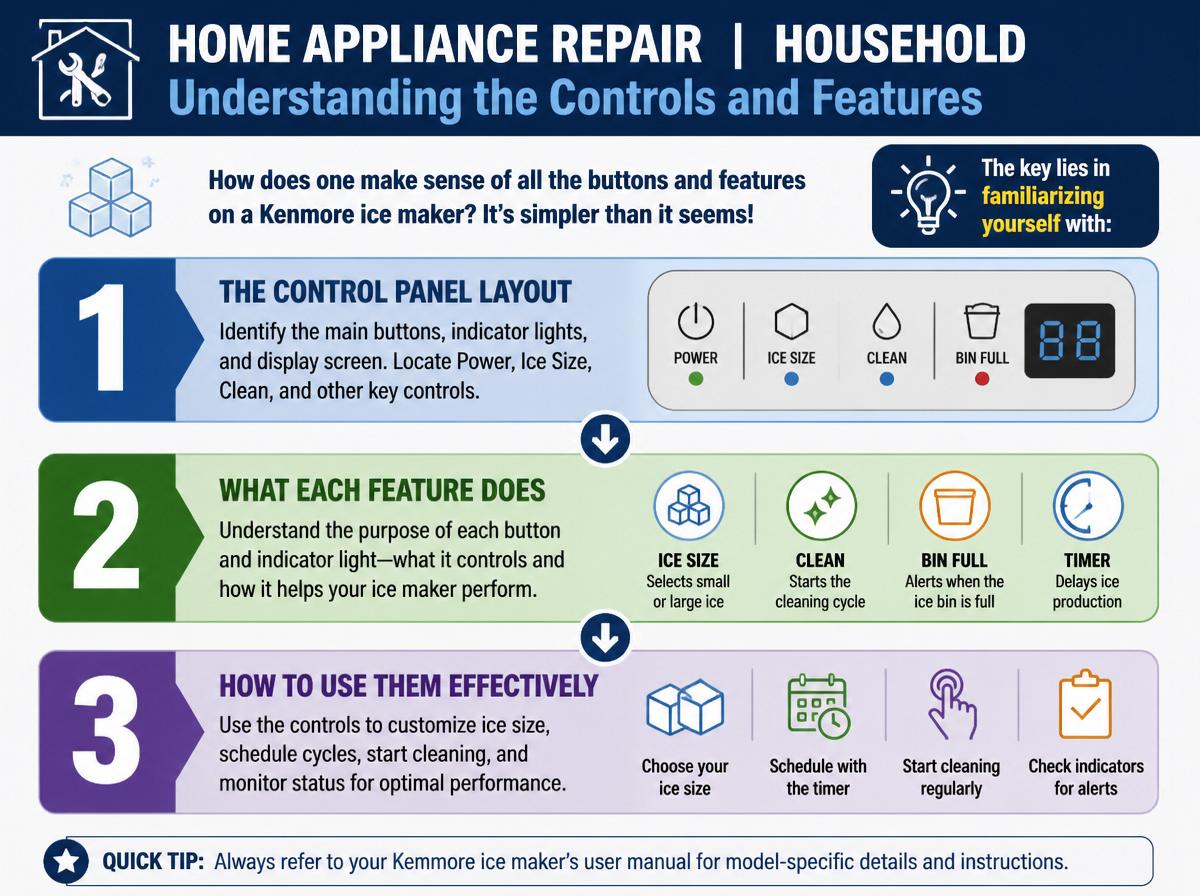
How does one make sense of all the buttons and features on a Kenmore ice maker? It’s simpler than it seems! The key lies in familiarizing oneself with the Display Indicators and Sensor Functions. These little helpers tell users when the ice is ready, when water levels are low, or if the ice bin is full—no crystal ball needed! Display Indicators glow or flash in easy-to-understand colors, giving clear signals about the ice maker’s status. Meanwhile, Sensor Functions silently work behind the scenes, detecting temperature and moisture to keep ice production smooth and efficient. Getting comfortable with these features means fewer surprises and more ice for cold drinks. Remember, these controls are designed to assist, not confuse, so exploring each button gently brings confidence. With a little patience, anyone can master these tools to enjoy the cool benefits of Kenmore’s smart ice-making technology. It’s like having a friendly ice assistant right in the kitchen!
How to Start and Stop Ice Production
Starting and stopping the Kenmore ice maker is easier than you might think—just a few simple steps can have it churning out ice or taking a break. Knowing when and how to control ice production helps avoid headaches like overflow or wasted water. With a little practice, anyone can become confident in managing their ice supply, even if they’ve never tried before!
Starting Ice Production
Activating a Kenmore ice maker is easier than it sounds—just a few simple steps will have ice cubes ready to chill your drinks in no time. First, conduct a quick compressor check to make certain it’s running smoothly; a silent or humming compressor signals good health. Next, follow a startup checklist: confirm water supply is connected, the ice bin is in place, and the power is switched on. Be sure to set the ice maker lever to the “onposition, allowing the machine to begin its freezing cycles. From here, patience is key—typically, the first batch takes a few hours. With this clear, friendly approach, users can confidently kick off ice production and prepare for invigorating, cool beverages anytime.
Halting Ice Production
After ice production is up and running, there might be times when a break is needed—whether it’s to clean the machine, save energy, or simply pause for the day. Halting ice production on a Kenmore ice maker can be simple and smart, especially to boost water conservation or activate vacation mode.
To stop ice production:
- Press the dedicated “Vacation Mode” button or switch, which suspends ice making and minimizes water use.
- Manually turn off the ice maker using the control panel or power button to pause production.
- Unplug the unit if a longer break is planned, ensuring no unnecessary energy or water is wasted.
These easy steps protect your appliance, prevent leaks, and save resources, making your break worry-free—and maybe even a tiny adventure for your ice maker!
Tips for Maximizing Ice Output
When ice seems to disappear faster than magic, knowing how to boost a Kenmore ice maker’s output can turn the tide in your favor. One key factor is maintaining the right supply pressure; if the water pressure is low or inconsistent, ice production slows down. Checking and adjusting this pressure guarantees a steady flow, which boosts efficiency. Another smart tip is to pay attention to ice morphology that’s the shape and size of the ice cubes. Smaller, evenly formed cubes freeze faster and stack neatly, making better use of freezer space. Keeping the ice bin not too packed helps, too overcrowding can cause cubes to stick and slow down production. Also, a clean water filter makes a big difference; dirty filters reduce flow and ice quality. With these simple adjustments, Kenmore users can keep a steady supply of ice coming, ready to chill every glass or party tray with ease.
Common Problems and How to Fix Them
Why does a trusted Kenmore ice maker sometimes decide to play hide-and-seek with ice production? Often, it’s due to simple hiccups like thermostat failure or drain clogs. These issues can stop your ice maker from doing its job, but fear not—solutions are within reach!
Here are three common problems and how to fix them:
- Thermostat Failure If the ice maker isn’t freezing properly, the thermostat might be the culprit. Check if it’s set too high or malfunctioning. Replacing a broken thermostat can bring back the chill.
- Drain Clogs Water stuck due to clogged drains can halt ice production. Clear these blockages carefully to keep the flow going.
- Water Supply Issues Low water pressure or blocked supply lines can reduce ice output. Make sure pipes are clear and water flows freely.
Tackling these fixes can revive your ice maker’s mojo, turning it from shy to ice-making superstar!
Cleaning Your Kenmore Ice Maker
How often does an ice maker need some tender loving care to keep those perfect cubes coming? For a Kenmore ice maker, cleaning every three to six months usually does the trick, depending on usage. It’s important to skip popular cleaning myths, like using harsh bleach or vinegar directly in the machine, which can cause ingredient hazards by damaging parts or leaving unpleasant tastes. Instead, a gentle mix of warm water and mild dish soap works wonders. First, unplug the ice maker for safety. Remove ice and trays, then wipe down all accessible parts with a soft cloth soaked in the soapy solution. Be sure to rinse well and dry thoroughly before restarting. Regular, careful cleaning prevents buildup, keeping ice fresh and the machine happy. Remember, a clean ice maker isn’t just about looks—it’s about your health and the taste of those cubes! So, don’t delay—grab that cloth and show your machine some love.
Routine Maintenance for Longevity
Keeping a Kenmore ice maker clean is a fantastic start, but regular care doesn’t stop there. To keep it running smoothly for years, routine maintenance is key. Seasonal inspections help catch small problems before they grow. Plus, lubricating moving parts prevents wear and keeps everything humming quietly—like a well-oiled machine (literally!). Here are three easy steps to extend your ice maker’s life:
- Perform Seasonal Inspections: Check for leaks, cracks, or frost buildup every few months. These simple checks can save headaches down the road.
- Lubricate Components: Use food-safe lubricant on hinges and motor parts to reduce friction and noise. It’s like giving your ice maker a little spa day!
- Test Ice Production: Watch for changes in ice size or speed. If something feels off, troubleshoot early.
With these easy tips, your Kenmore ice maker will stay a trusty, cool companion for all your refreshment needs!
How to Store and Use Ice Efficiently
Keeping ice fresh and clean starts with proper storage, which helps avoid unwanted clumps and sneaky odors. Using ice efficiently means choosing the right size for your drink and not fumbling with overfilled trays or containers. Plus, steering clear of contamination is easier than you think—just a little care and attention go a long way toward safe, tasty ice every time.
Proper Ice Storage Tips
Although ice might seem simple, storing it properly can make a big difference in its quality and usefulness. Poor storage leads to melting, clumping, or weird smells, which no one wants. Here are three easy tips to keep ice fresh and handy:
- Use Presentation Containers: Clear containers with lids show off the ice and protect it from odors. Plus, they look neat in your freezer!
- Keep it Sealed: Always seal the container tightly to avoid moisture and freezer burn, which spoil the ice.
- Use Transport Insulation: When carrying ice outside, use insulated bags or coolers. This keeps cubes solid longer and stops soggy messes.
Efficient Ice Dispensing
When ice is dispensed efficiently, it not only saves time but also prevents waste and keeps every cube in perfect shape. Using good dispense ergonomics means positioning your hand and cup carefully, making sure the cup alignment is just right under the dispenser. This simple move stops ice from spilling or bouncing out. A well-aligned cup captures ice quickly, reducing the risk of melting or clumping. It’s like giving your ice a smooth exit, so every cube lands where it should. Plus, adopting these habits means less mess and fewer spills—a win for everyone! Remember, a little attention to how you dispense ice turns a daily task into a quick, neat routine. Efficient ice use feels great and keeps the chill going strong.
Avoiding Ice Contamination
Prevent ice contamination by storing and handling ice with care, ensuring it stays fresh and safe for every use. The quality of ice starts with clean source water, so always check filtration and source water cleanliness first. Following proper sanitation protocols is key to keeping ice uncontaminated and tasty. To keep things crystal clear:
- Use clean, airtight containers to store ice and avoid exposure to smells or dust.
- Always wash hands before handling ice or contact surfaces, to prevent germs from hitchhiking onto your cubes.
- Regularly clean your Kenmore ice maker following the manufacturer’s instructions to maintain sanitation protocols.
With these simple steps, anyone can enjoy perfect, contamination-free ice—because nobody wants their drinks to taste like a science experiment!
When to Call for Professional Repair
How can someone tell if a Kenmore ice maker needs a professional fix instead of a quick DIY? If the ice maker stops making ice entirely, leaks water, or produces odd noises, it might be time to call in an expert. Also, persistent issues that don’t improve after basic troubleshooting suggest professional help is needed. Checking warranty coverage is smart before diving into repairs—sometimes, a fix might be free or cheaper when handled by an authorized technician. When selecting a repair person, verify technician credentials to confirm they’re trained specifically on Kenmore models, which helps prevent more damage. Remember, a skilled technician saves time and frustration while preserving your ice maker’s lifespan. If the problem seems too tricky or involves complex parts, it’s better to pause the DIY and get professional support. In the end, a well-timed call to a qualified repair expert makes ice making hassle-free and keeps cool refreshments flowing smoothly!
Frequently Asked Questions
Can I Use Flavored Water in My Kenmore Ice Maker?
Using flavored water in a Kenmore ice maker is not recommended, as the machine may absorb odors and flavors, requiring increased cleaning frequency to prevent buildup and maintain ice quality and machine hygiene.
Is It Safe to Drink Ice From My Kenmore Ice Maker?
“An ounce of prevention is worth a pound of cure.” Drinking ice from a Kenmore ice maker is safe when proper sanitation practices are followed, minimizing bacterial contamination by regular cleaning and maintenance of the ice maker components.
What Is the Warranty Period for Kenmore Ice Makers?
Kenmore ice makers typically have coverage lengths ranging from one to two years. The claim procedure involves contacting Kenmore customer service with proof of purchase and product details to initiate warranty service or repair for eligible issues.
Can I Connect My Kenmore Ice Maker to a Water Filtration System?
Kenmore ice makers can be connected to water filtration systems, provided installation requirements are met and the filter compatibility guarantees proper water pressure and purity. Using compatible filters maintains ice quality and prolongs the appliance’s lifespan.
Does Kenmore Offer Eco-Friendly Ice Maker Models?
Kenmore plants seeds of innovation by offering eco-friendly ice makers, embracing energy efficiency as sunlight fuels growth and sustainable materials as fertile soil. These appliances yield cool refreshment while nurturing the planet’s future with thoughtful design.
Conclusion
Mastering the Kenmore ice maker is like cracking a secret recipe—it takes a bit of care but rewards with perfect ice every time. By following simple steps for setup, cleaning, and maintenance, users can enjoy a steady ice supply without fuss. When problems arise, a little troubleshooting goes a long way. With patience and attention, anyone can keep their ice maker humming, turning everyday moments into a cool, invigorating delight.
Explore This Topic
- Back to ice maker
- Back to appliance maintenance
Related guides in this cluster: