
Complete Guide to Samsung Dryer Moisture Sensor: How It Works
A moisture sensor in Samsung dryers helps detect how wet your clothes are. It uses electrical signals to tell the dryer when to keep going or stop. This smart feature prevents over-drying, saving energy and keeping your fabrics safe. Regular cleaning helps the sensor work properly, too! Plus, there are simple troubleshooting tips if things go wrong. Stick around, and you’ll find out how to make the most of your dryer’s clever technology!
Key Takeaways
- Samsung dryer moisture sensors detect fabric moisture levels using electrical signals, ensuring proper drying without over-drying fabrics.
- The sensors generate signals based on electrical resistance and capacitance changes when clothes are wet, adjusting drying time appropriately.
- Various sensor technologies, including capacitive and resistive sensors, work together to accurately measure moisture levels for efficient drying.
- Regular maintenance, including monthly sensor cleaning and diagnostics, helps maintain moisture sensor functionality and accuracy.
- App integration allows for remote monitoring and alerts when laundry is done, enhancing user convenience and energy efficiency.
What Is a Moisture Sensor in Samsung Dryers?
Have you ever wondered how a Samsung dryer knows when your clothes are dry? A moisture sensor plays a crucial role in this process. This clever device detects the amount of moisture left in your laundry. When your clothes are damp, the sensor sends signals to the dryer to keep working. Once the clothes reach a dry state, the sensor tells the dryer to stop, saving energy and protecting your garments from damage.
Safety considerations are essential when using dryers, which is why these sensors adhere to strict industry standards. They guarantee that your dryer operates correctly, reducing the risk of overheating and potential fires. With a moisture sensor, users can feel confident their laundry will dry effectively without wasting energy. Next time you toss in a load, remember, this smart technology is working tirelessly to help keep your clothes fresh and your home safe!
How Do Samsung Dryer Moisture Sensors Work?
How exactly do moisture sensors in Samsung dryers work their magic? These clever devices use two metal strips that measure the moisture in your clothes. When the laundry is wet, it creates a tiny electrical signal between those strips. This is where signal processing comes into play; the dryer’s control board interprets these signals to figure out how damp your items are.
Now, thanks to firmware integration, the dryer can adjust its drying time based on these readings. If the clothes are still wet, the dryer keeps going; if they’re dry, it stops! This means no more over-drying or wasting energy. Understanding this technology can feel a bit overwhelming, but it’s really just about teamwork—between the sensors and the dryer. With them in sync, users can have fresh, dry laundry without the guesswork! Isn’t that handy?
Benefits of Using Moisture Sensors
Using moisture sensors in dryers brings great benefits that can make laundry day easier and more efficient. These handy devices help save energy by ensuring clothes are not dried longer than necessary, which is good for the planet and the wallet. Plus, they also take extra care of fabrics, so clothes stay looking fresh and new while saving valuable time for other fun activities!
Energy Efficiency Improvements
Moisture sensors in Samsung dryers play a essential role in helping save energy while keeping clothes fresh and dry. These sensors detect when clothes are dry enough, which means the dryer doesn’t run longer than necessary. This smart technology works great with heat pump dryers, making them even more efficient. By using the right duct insulation, homeowners can reduce energy loss, further enhancing their dryer’s performance. When clothes dry faster and more efficiently, it saves on electricity bills, leaving more money for fun things like ice cream or movies! Choosing a Samsung dryer with moisture sensors is a win-win solution for the environment and the family budget. So, drying clothes can be easy, efficient, and a little more enjoyable!
Enhanced Fabric Care
Enhancing fabric care is one of the fantastic benefits that come with Samsung dryers equipped with moisture sensors. These helpful gadgets do more than just dry clothes; they focus on protecting your favorite fabrics. Here are three key advantages of using moisture sensors for enhanced fabric care:
- Color Preservation: By preventing over-drying, moisture sensors help keep colors bright and vibrant, so your clothes look new for longer.
- Delicate Handling: These sensors detect moisture levels, allowing the dryer to adjust settings for delicate fabrics, which need extra care.
- Reduced Wear and Tear: Proper drying minimizes the risk of shrinking and damage, ensuring your clothes stay in great shape.
With moisture sensors, you can have confidence that every wash is treated with the utmost care!
Time-Saving Convenience
When it comes to saving time in laundry day routines, moisture sensors play an essential role that many might not realize. These little gadgets help dryers understand when clothes are dry, so they don’t waste time running longer than needed. With one touch controls, users can effortlessly start the drying process, making laundry less of a chore. Additionally, the remote start feature allows them to operate the dryer from another room, perfect for those busy moments when they are multitasking. This combination means clothes are dried efficiently, saving energy and time. Embracing these modern conveniences helps families spend less time on laundry and more time enjoying activities together, creating happy moments and clean clothes. Who wouldn’t want that?
Types of Moisture Sensors Used in Samsung Dryers
In Samsung dryers, different types of moisture sensors help make sure your clothes come out perfectly dry. Capacitive and resistive moisture sensors are two popular choices that work in unique ways, while hybrid sensor technologies combine the best features of both. Understanding these sensors can make laundry day more efficient, so let’s explore how they work together to keep your clothes fresh and fluffy!
Capacitive Moisture Sensors
Understanding how capacitive moisture sensors work can make laundry day a breeze! These sensors play an essential role in Samsung dryers by detecting moisture levels through dielectric characterization. They function by changing frequency response based on the moisture content in clothes. Here’s how they help:
- Efficient Drying: They guarantee clothes dry perfectly, avoiding dampness and saving energy.
- User-Friendly: Easy to operate, the sensors adjust drying times automatically, giving peace of mind.
- Durability: Built to last, these sensors often require minimal maintenance over time.
With capacitive moisture sensors, users can enjoy a smooth laundry experience. No more guesswork! Instead, you can relax, confident your dryer knows just what to do. Happy drying!
Resistive Moisture Sensors
While both capacitive and resistive moisture sensors play important roles in Samsung dryers, resistive moisture sensors offer a unique approach to detecting wetness in clothes. These sensors work by measuring the electrical resistance of the fabrics. When clothes are damp, the resistance changes, indicating moisture presence. A key part of this process involves signal conditioning, which helps convert the resistance data into meaningful information for the dryer. The performance of resistive sensors can also depend on the electrode materials used. Manufacturers often choose highly conductive materials to enhance accuracy. This technology helps guarantee that clothes are dried efficiently, preventing over-drying, and saving energy. Overall, resistive moisture sensors are a clever way to keep laundry fresh and dry!
Hybrid Sensor Technologies
When it comes to drying clothes perfectly, Samsung dryers often rely on innovative hybrid sensor technologies that combine the best features of different moisture sensors. This approach, known as sensor fusion, helps dryers detect moisture levels more accurately, ensuring every load comes out just right.
Here are three key types of hybrid sensors found in Samsung dryers:
- Conductive Sensors: These measure moisture through electric conductivity.
- Capacitive Sensors: They detect changes in capacitance caused by moisture.
- Thermal Sensors: These track temperature variations to assess moisture.
How to Optimize the Use of Moisture Sensors
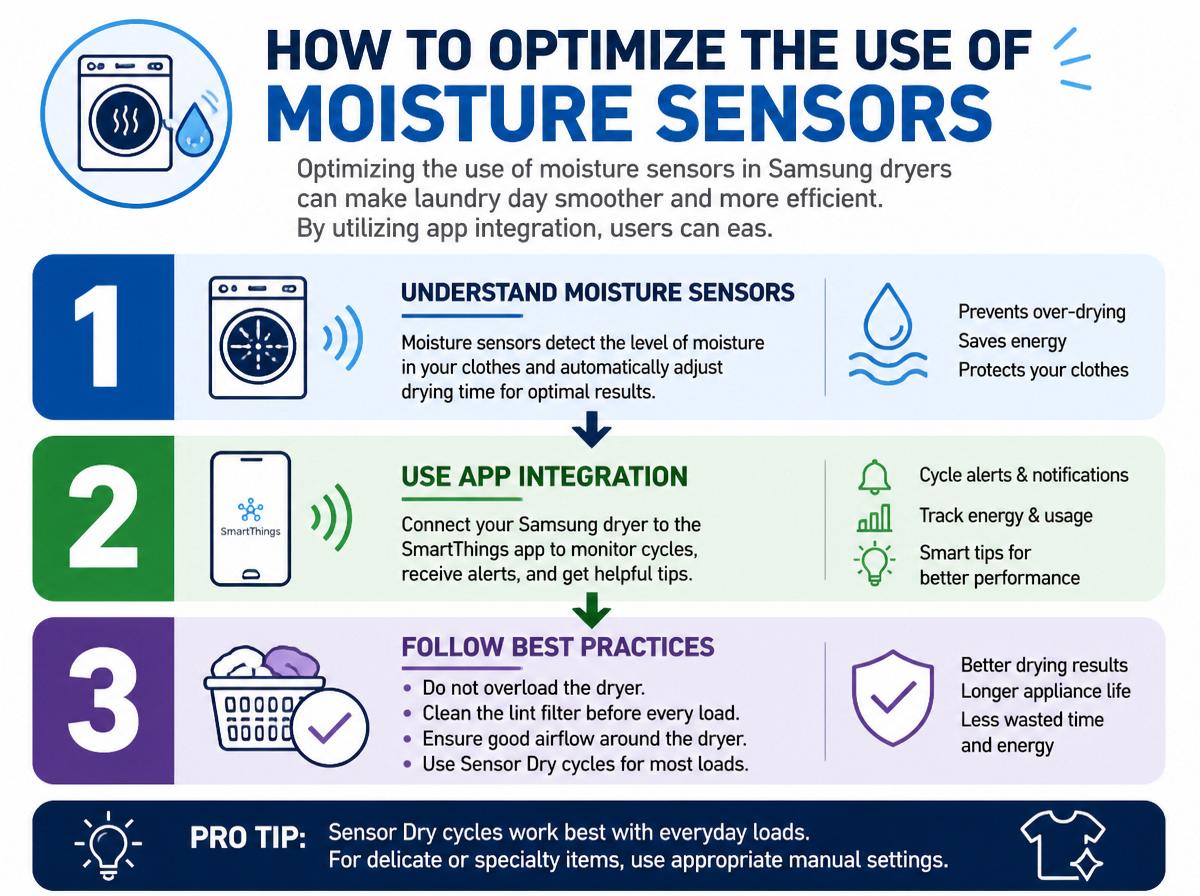
Optimizing the use of moisture sensors in Samsung dryers can make laundry day smoother and more efficient. By utilizing app integration, users can easily monitor their drying cycles right from their smartphones. This feature allows for better load scheduling, guaranteeing that clothes dry perfectly without wasting energy.
Here’s a helpful table for consideration:
| Tip | Description | Benefits |
|---|---|---|
| Use App Notifications | Get alerts when your laundry is done | No more forgotten clothes! |
| Choose the Right Cycle | Select appropriate drying settings | Saves time and energy |
| Regularly Clean Sensors | Keep moisture sensors free of lint | Guarantees accurate readings |
| Avoid Overloading | Dry smaller loads for better airflow | Clothes dry evenly |
| Schedule Wisely | Use evenings for quieter drying | Less noise, more peace |
Following these tips can lead to a better laundry experience, making tasks simpler and more satisfying.
Troubleshooting Common Moisture Sensor Issues
Troubleshooting common moisture sensor issues in Samsung dryers can feel like a puzzle, but it’s one that can be solved with a little patience and know-how. When the dryer isn’t drying clothes properly, users might need to delve in and explore a few key areas. Here are three essential steps to check:
- Inspect Wiring Issues: Look for any frayed or loose wires connected to the moisture sensor. Tightening connections can do wonders!
- Use Diagnostic Tools: Employ a multimeter to test the sensor’s functionality. This can help identify if the sensor needs to be replaced.
- Clean the Sensor: Sometimes, lint buildup can interfere with the sensor’s performance. Gently wipe the sensor to guarantee accurate readings.
Maintenance Tips for Your Samsung Dryer Moisture Sensor
Maintaining the moisture sensor in a Samsung dryer is an important step that can help keep clothes drying efficiently. To guarantee peak performance, establish a regular cleaning schedule. Wipe the moisture sensor with a soft cloth and mild detergent every month, removing any lint or residue that may accumulate. This simple task enhances accuracy and prevents drying issues.
In addition to cleaning, following calibration steps is essential. If the dryer doesn’t seem to dry clothes properly, check the user manual for specific calibration instructions designed for your model. Remember, a well-maintained sensor not only saves energy but also keeps clothes fresher and saves time.
Frequently Asked Questions
Can I Replace the Moisture Sensor Myself?
Yes, one can replace the moisture sensor themselves. However, it is essential to follow safety precautions and have the necessary tools on hand to guarantee a successful and safe replacement process without causing damage to the dryer.
Are Moisture Sensors in All Samsung Dryer Models?
Not all Samsung dryer models include moisture sensors, as feature differences exist. Some models may offer this sensor for enhanced drying efficiency, while others may lack it, highlighting the importance of checking specific model availability.
How Long Do Moisture Sensors Typically Last?
Moisture sensors typically last around 5 to 10 years; however, degradation factors like usage frequency and exposure to lint can substantially shorten their expected lifespan. Regular maintenance can help extend their functionality and overall performance.
Do Moisture Sensors Affect Drying Time?
Moisture sensors substantially impact drying time by enabling energy savings and preventing overdry conditions. By accurately gauging dampness, they optimize cycles, ensuring that clothes dry efficiently while reducing energy consumption and extending fabric life.
Is There a Warranty on Samsung Dryer Moisture Sensors?
Yes, Samsung offers a limited warranty on their dryer moisture sensors. Additionally, customers have the option to purchase an extended warranty, providing further coverage and peace of mind for their appliance’s performance and durability.
Conclusion
In conclusion, Samsung dryer moisture sensors make drying clothes a breeze. With their smart sensitivity, they can sense sogginess and help avoid over-drying. By understanding how these nifty sensors work, users can guarantee perfectly dried laundry every time. So, embrace your dryer’s delightful technology, troubleshoot with confidence, and maintain those moisture sensors with care. After all, fresh and fluffy clothes are just a cycle away, turning laundry day into a joyous journey of clean and cozy creations!
Explore This Topic
- Back to dryer troubleshooting
- Back to Dryer
Related guides in this cluster: