
DIY Solutions for Common Samsung Dryer Belt Problems
When a Samsung dryer belt acts up—making odd noises or leaving clothes damp—it’s time for a fix. Gather essentials like screwdrivers and pliers, cut power, and carefully remove the back panel. Slide off the old belt by releasing the idler pulley, then slip on the new one correctly, making sure it fits snugly and runs smoothly. A test run should roar, not squeak. Keeping vents clean and loads balanced helps belts last longer. The next steps will guide through each stage with helpful tips, making the task less intimidating.
Key Takeaways
- Identify faulty dryer belt by unusual noises, burning smells, intermittent stops, or uneven drying in your Samsung dryer.
- Disconnect power using the lockout method and remove the back panel to safely access the dryer belt.
- Release idler pulley tension to remove the old belt, noting its orientation for accurate replacement.
- Install the new belt with smooth side on the drum and ribbed side on the motor pulley, ensuring proper alignment.
- Test the dryer for smooth drum rotation and perform regular maintenance to prevent future belt problems.
Identifying Signs of a Faulty Dryer Belt
How can one tell if a Samsung dryer belt is waving a red flag? First, listen for unusual sounds—squeaks or thuds might hint the belt is slipping or fraying. A burning smell is another critical warning; it signals friction caused by a damaged belt struggling to spin properly, so don’t ignore it! Additionally, if the dryer makes intermittent stops during cycles, it’s a sign the belt might be faulty or struggling under load. These stops can feel like pauses, frustrating but telling, like the machine begging for help. Notice if clothes aren’t drying evenly or at all—that’s a classic belt trouble sign. Catching these symptoms early not only saves time but also prevents more expensive repairs. With attention to these hints, anyone can spot a problematic dryer belt before it completely fails, turning a possible chore into a simple fix—as doable as tying shoelaces. Remember, your dryer needs a healthy belt to keep the spin going smoothly!
Tools Needed for Dryer Belt Repair
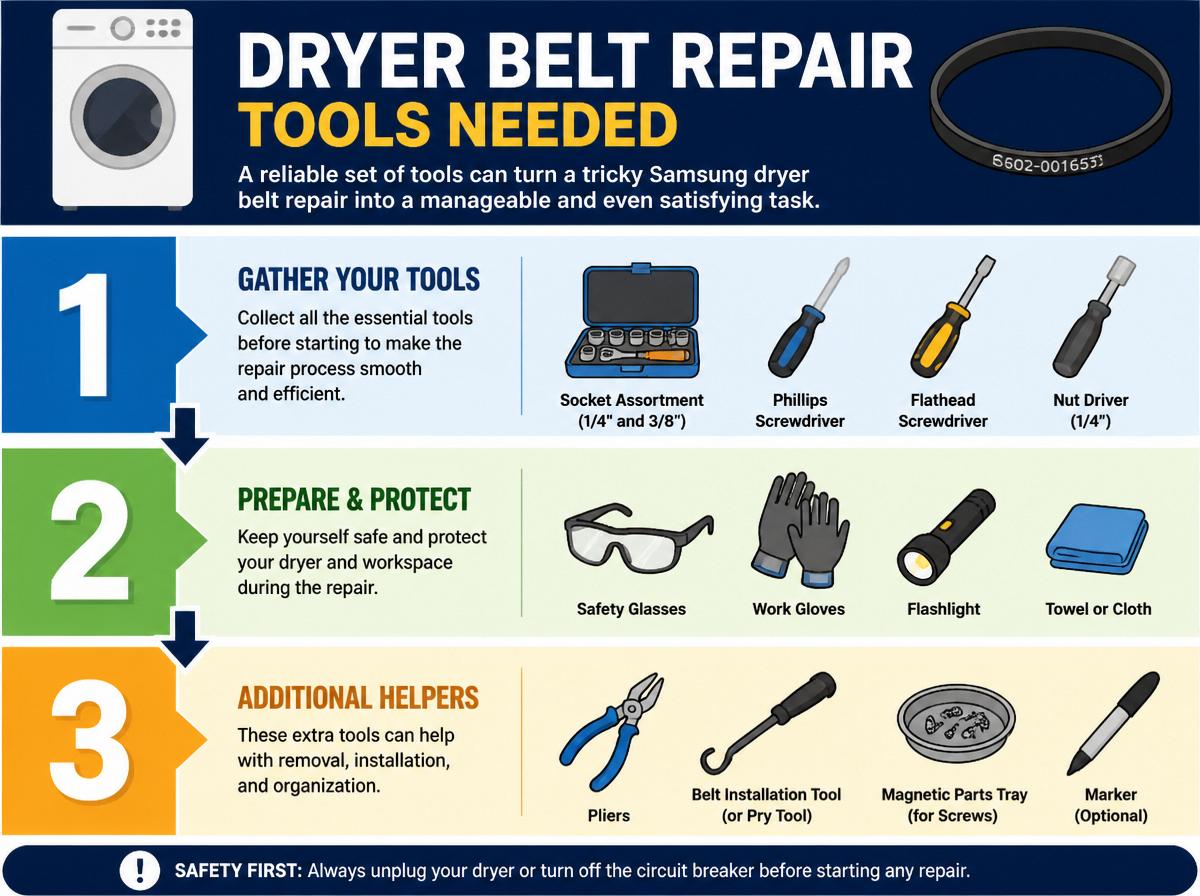
A reliable set of tools can turn a tricky Samsung dryer belt repair into a manageable and even satisfying task. Essential tools include a socket assortment, which offers various sizes needed to remove bolts quickly and easily. This assortment keeps you prepared, so you don’t have to hunt for the perfect fit mid-job. A magnetic tray is also invaluable, holding screws and small parts firmly to prevent those frustrating, “Where did that go?moments. Besides these, a screwdriver with interchangeable heads helps tackle different fasteners without extra trips to the toolbox. A pair of pliers and a flashlight round out the kit, offering grip and better visibility when reaching tight spots. Having these items on hand not only speeds up the repair but builds confidence, turning what seems like a challenge into a straightforward fix. With the right tools, even a first-timer can feel proud and ready to tackle the next dryer issue.
How to Safely Disconnect Power and Access the Dryer Belt
Before diving into the dryer itself, ensuring the power is completely disconnected is the first—and most important—step for safety. This means using an electrical lockout method to prevent accidental re-energizing while working. Start by locating the breaker box, where each switch controls different appliances. Proper breaker labeling helps quickly identify the dryer’s circuit, making disconnection straightforward and foolproof. Flip the correct breaker switch to the “offposition, then double-check no power remains by attempting to start the dryer or using a non-contact voltage tester. Once confident, unplug the dryer from the wall outlet to completely isolate it from electricity. Now, gently pull the dryer away from the wall to access the back panel. Unscrew this panel carefully; this step reveals the inner parts, including the dryer belt, ready for inspection or repair. Safety first and steady hands go a long way—think of this as the exciting start to a hands-on adventure!
Steps to Remove the Old Dryer Belt
Carefully loosening the dryer’s components opens the path to removing the old belt, a task that might seem tricky at first but quickly becomes manageable with a little patience. Keeping track of the belt’s orientation marking is key—it helps when it’s time to compare or install the new one. Here’s a simple way to get the old belt off:
- Gently release the tension on the idler pulley to free the belt’s grip on the drum.
- Slide the belt off the drum, noting how the orientation marking faces to keep track of its placement.
- Remove the belt completely from the motor shaft and pulley system, making sure no parts are snagged.
- Dispose of the old belt responsibly—belt disposal should follow local guidelines to avoid environmental harm.
Installing a New Dryer Belt Properly
With the old belt removed, putting on the new one may seem a bit like trying to thread a very stubborn noodle around some tricky spots—but it’s actually not as tough as it looks. Start by paying close attention to the belt orientation; the smooth side should grip the drum, while the ribbed side fits snugly around the motor pulley. Loop the belt evenly over the dryer drum, making sure it’s centered and flat—no twists allowed! Next, carefully guide the belt around the idler pulley. Proper pulley seating is key here; the belt must sit correctly in each groove to avoid slipping or wear. As you pull the belt taut, check that it passes smoothly over the motor pulley without twisting. A little patience and steady hands go a long way—in no time, the new belt will be ready to keep your Samsung dryer spinning happily. Remember, each step brings you closer to a job well done!
Testing the Dryer After Belt Replacement
Once the new belt is in place, the first step is to power on the dryer carefully, like waking up a sleepy giant. Watch the drum move smoothly, spinning as it should without any strange noises or jerks. If everything turns and hums just right, it’s a good sign the belt replacement was a success, and the dryer is ready for its next load.
Initial Power-On Check
Although replacing a dryer belt can feel like a big job, testing the dryer afterward is the moment to shine and see all that effort pay off. The initial power-on check confirms the belt’s proper installation and reveals any hidden hiccups. To start:
- Plug in the dryer and turn on the power.
- Watch the display diagnostics closely for any flashing lights or error codes.
- Listen for smooth drum rotation without unusual noises.
- If error codes appear, refer to the user manual to pinpoint issues quickly.
This simple check helps catch problems early and saves time. It’s like giving your dryer a thumbs-up before the big spin–a satisfying way to celebrate your DIY success!
Monitor Dryer Drum Movement
How can one be sure the dryer drum is moving just right after swapping the belt? First, a gentle test run helps, watching for smooth drum rotation without hiccups. Samsung dryers often use rotation sensors to track drum spin, ensuring the belt moves correctly. If the drum wobbles or stops suddenly, that’s a sign to double-check belt placement. Vibration analysis can also provide clues—too much shake means the belt might be loose or misaligned. Listening closely, if you hear odd noises or feel uneven movement, it’s time to pause and inspect. Remember, patience now saves frustration later. With clear eyes and calm hands, monitoring the dryer drum’s movement confirms the fix is solid, setting a confident tone for dryer success. Keep going; it’s worth the effort!
Preventative Maintenance Tips to Extend Dryer Belt Life
Why wait for a dryer belt to snap when a few simple steps can help keep it spinning smoothly for years? Preventative maintenance is the secret sauce for a happy Samsung dryer. Keeping the vent clean is like giving the dryer fresh air to breathe, preventing overheating and reducing belt strain. Load balancing matters too; an even load stops the belt from tugging unevenly, which can wear it down faster.
Try these easy tips to extend your dryer belt’s life:
- Vent Cleaning: Clear lint from the vent regularly to avoid blockages and heat buildup.
- Load Balancing: Spread clothes evenly inside to keep the belt’s workload fair and square.
- Inspect the Belt: Check for fraying or cracks every few months for early warning signs.
- Avoid Overloading: Too many clothes make the dryer work harder, stressing the belt.
A little care goes a long way, turning belt breaks from scary surprises into rare memories!
Frequently Asked Questions
Can a Dryer Belt Be Repaired Without Replacing It?
A dryer belt generally cannot be permanently repaired without replacement. Belt splicing or other temporary fixes may provide short-term function, but these solutions are unreliable and prone to failure, making full replacement necessary for lasting repair.
How Much Does a Professional Dryer Belt Replacement Cost?
A professional dryer belt replacement typically requires a modest investment, often ranging between $150 and $300. Labor estimates vary by service, while warranty coverage may help alleviate some repair expenses, providing added peace of mind.
Are All Samsung Dryer Belts the Same Size?
Samsung dryer belts are not all the same size; model compatibility is essential when selecting one. Variations in belt materials and dimensions depend on specific dryer models to guarantee proper fit and ideal performance.
Can a Broken Dryer Belt Cause the Dryer to Overheat?
Can a broken dryer belt cause a dryer to overheat? Yes, because motor strain increases as the drum fails to rotate properly, leading to airflow restriction that raises internal temperatures and risks damaging the unit’s components.
How Long Does It Typically Take to Replace a Dryer Belt?
The estimated timeframe to replace a dryer belt typically ranges from 30 to 60 minutes. A proper tool checklist includes a screwdriver, socket wrench, and sometimes a putty knife, ensuring efficient and accurate belt installation throughout the process.
Conclusion
Fixing a dryer belt might seem tricky, but with the right tools and clear steps, anyone can do it safely. It’s true that many dryer problems stem from a worn belt, so spotting the signs early really pays off. Taking a little time for maintenance not only saves money but also spares frustration. Remember, a dryer with a new belt runs smoothly—and so can your DIY skills! Keep calm, follow the steps, and enjoy the sweet sound of drying success.
Explore This Topic
- Back to Dryer
- Back to appliance repair
Related guides in this cluster: