
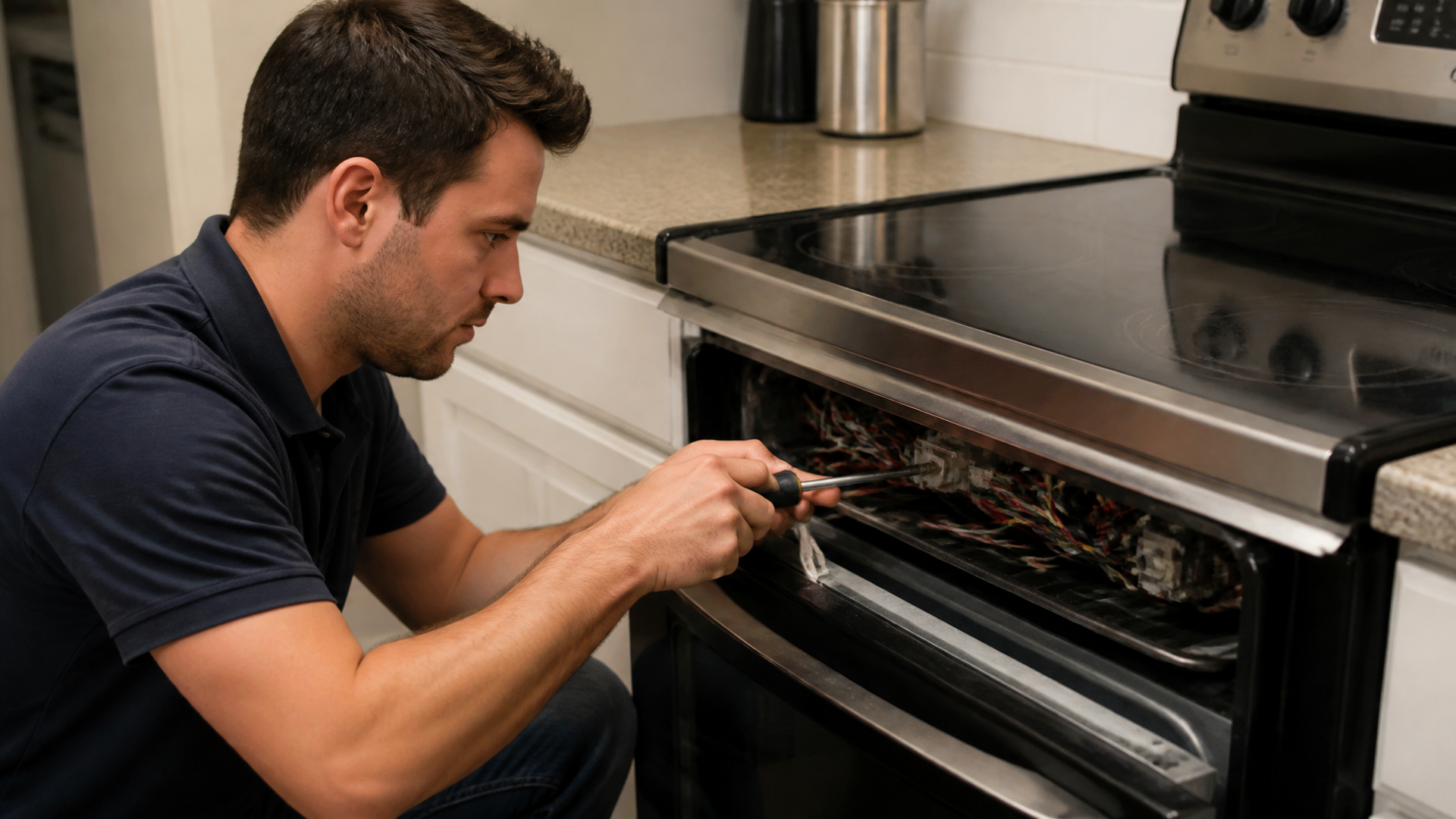
Fixing Common Problems With Your Frigidaire Stove and Solutions
Frigidaire stove troubles? Start by cleaning and aligning burners—food gunk loves hiding there and stops ignition. Uneven oven heat? Calibrate with a trusty thermometer and check sensors; a faulty sensor is no fun. Control panel acting up? A quick wipe or reset might save the day. Don’t forget to check gas connections and seals to keep everything safe and cozy. For knobs struggling with their job, replacements are easy-peasy. Stick around to discover simple fixes that make cooking a breeze again.
Key Takeaways
- Clean and align burner parts, inspect igniters, and clear clogged ports to fix burners that won’t ignite.
- Soak burner caps in vinegar, clean spills promptly, and replace rangehood filters to reduce smoke and odors.
- Calibrate oven temperature, inspect heating elements, and replace faulty sensors to fix uneven oven heating issues.
- Clean control panel touchpads, update firmware, and replace broken knobs to resolve control malfunctions and operation issues.
- Inspect gas lines, regulators, and safety sensors; tighten connections or call professionals for gas supply and safety problems.
Troubleshooting Burners That Won’t Ignite
Although it can be frustrating when a burner on a Frigidaire stove refuses to ignite, there are simple steps anyone can take to figure out what’s wrong. First, checking if the burner parts are clean and properly aligned often solves the problem. Food spills or grease can block the spark, so a gentle scrub helps. If cleaning doesn’t work, remote diagnostics might be available—this technology allows technicians to remotely examine the stove’s electronic system, saving time and effort. Remember to consult the stove’s warranty coverage before trying complex fixes; some repairs might be free or require professional service under the warranty terms. Also, ensuring the gas supply is turned on and the burner knob is correctly set can prevent unnecessary worries. Little problems like loose connections or clogged ports are common and easy to fix. With patience and simple checks, most burners can be brought back to life without headaches or extra costs.
Resolving Uneven Oven Heating Issues
Uneven oven heating can turn a simple meal into a guessing game, but fixing it is often easier than expected. Starting with oven temperature calibration guarantees the heat reads just right, while checking the heating element reveals if it’s working hard or needs a break. With a little patience and a few tools, even a tricky problem can be tamed, making cooking more reliable—and a lot less stressful.
Oven Temperature Calibration
Why does a Frigidaire oven sometimes feel like it has its own secret cooking rhythm? Often, it’s because the oven’s temperature needs fine-tuning. Oven temperature calibration helps fix this by aligning the display with the actual heat inside. Calibration methods usually involve adjusting the oven’s thermostat using a reliable oven thermometer as a guide. Start by placing the thermometer inside, preheat the oven, and compare the thermometer reading to the oven’s setting. If the numbers don’t match, use the oven’s control panel to make small adjustments. Accuracy verification is key here—it guarantees the oven won’t burn your cookies or turn cakes into rubber. With a little patience, anyone can master this task, keeping meals tasty and stress low. Remember, your oven just wants a little friendly correction!
Heating Element Inspection
Start by examining the heating elements inside the oven, as they play the starring role in making sure heat spreads evenly while cooking. Uneven baking or roasting often points to faulty elements. Checking for element continuity is key—use a multimeter to verify the electrical path is complete. Visible signs like surface corrosion or broken spots can cause uneven heating and should not be ignored. Here’s how to inspect them safely:
- Unplug the stove before inspection.
- Look for cracks, blisters, or corrosion on elements.
- Use a multimeter to test element continuity.
- Replace any element showing damage or no continuity.
- Clean gently to remove minor corrosion without damaging elements.
This approach boosts oven performance, making mealtime a little smoother and a lot tastier!
Fixing Control Panel Malfunctions
Dealing with a malfunctioning control panel on a Frigidaire stove can feel like trying to communicate with a stubborn robot, but it’s nothing that patience and a little know-how can’t fix. First, try a simple touchpad cleaning; grease and dirt often jam the buttons. If that doesn’t work, checking for a firmware update might be the key, as software glitches can cause weird button behavior. Here’s a quick guide to troubleshoot control panel issues:
| Issue | Possible Cause | Solution |
|---|---|---|
| Unresponsive buttons | Dirt or grease | Touchpad cleaning |
| Random button activation | Firmware glitch | Firmware update |
| Display not lighting up | Power or connection | Check power connections |
| Flickering display | Electrical issue | Reset stove or call pro |
| Error codes showing | System malfunction | Refer to manual or service |
With calm persistence, most control panel problems can be conquered without stress, turning frustration into success.
Cleaning and Maintaining Stove Burner Components
Keeping stove burner parts clean and well-maintained is key to a happy cooking experience. Simple steps like wiping burner caps, checking igniters for sparks, and clearing blockages can save a lot of frustration later. With a little care and attention, even a busy kitchen can stay bright and ready to cook up a storm.
Burner Cap Cleaning Tips
Although burner caps might seem like simple parts of a stove, they play a big role in making sure your burners work just right. Keeping them clean helps flames burn evenly and prevents cooking mishaps. A quick fix is a vinegar soak—it loosens stubborn grime without harsh chemicals. After soaking, gentle scrubbing with a soft brush or cloth removes leftover dirt without scratching the cap’s surface. Here are some handy tips for cleaner burner caps:
- Remove the caps carefully and avoid bending any parts
- Soak caps in a vinegar solution for 15-20 minutes
- Use gentle scrubbing to clean cracks and edges
- Rinse thoroughly with warm water and dry completely
- Reassemble caps properly to avoid uneven heating
Clean burner caps make cooking smoother and safer, so take a little time—they’ll thank you with better performance!
Inspecting Burner Igniters
While clean burner caps help flames burn evenly, the burner igniters are the sparks that actually start the fire beneath your pots and pans. Checking these igniters means inspecting the mounting hardware to verify everything is tight and secure. Loose mounts can stop sparks from jumping. Also, beware of damaged wire integrity; frayed or broken wires can prevent ignition altogether.
Here’s a quick guide:
| Step | What to Check | Why It Matters |
|---|---|---|
| 1: Mounting screws | Tighten if loose | Prevents misfires |
| 2: Wire condition | Look for breaks or frays | Maintains spark flow |
| 3: Igniter tip | Clean dirt or residue | Sparks ignite better |
| 4: Dry and dry area | Confirm no moisture present | Avoids shorts and errors |
Regular checks keep cooking smooth and safe.
Removing Burner Blockages
How does a clogged burner affect your stove’s performance? It makes cooking frustrating uneven heat or no flame at all. Removing burner blockages is key for smooth cooking. First, locate the access panels to safely reach burner parts. Choosing the right tool selection, like a soft brush or needle, helps avoid damage.
To clean effectively:
- Turn off the stove and unplug it
- Remove burner caps and heads carefully
- Use a toothpick or needle to clear tiny holes
- Brush away residue with a soft brush
- Reassemble all parts properly before testing
With a little care and the right tools, your Frigidaire stove will cook perfectly again, making meal prep less stressful and more enjoyable!
Addressing Oven Door Seal Problems
Why does the oven door seal matter so much? It keeps heat trapped inside, helping your Frigidaire oven cook food evenly and efficiently. When the seal wears out, heat sneaks out, leading to longer cooking times and higher energy bills. Starting with a gasket inspection is smart—look closely for cracks, tears, or any signs of damage. If the seal feels brittle or looks misshapen, it might be time for seal replacement. Don’t worry—this is a fix many tackle at home with just a few tools and some patience. Replacing the gasket restores the oven’s snug fit, saving energy and helping meals cook perfectly. Remember, a tight seal is like a warm hug for your oven—it keeps everything cozy and working right. Checking and fixing the door seal is a small step that makes a big difference, turning your stove back into a reliable kitchen hero.
Repairing Faulty Temperature Sensors
Spotting a faulty temperature sensor in a Frigidaire stove can be a game-changer for anyone frustrated with uneven cooking or mysterious temperature swings. When the stove’s sensor acts up, it can cause your oven to overheat or barely warm at all, ruining meals and patience alike. Using simple diagnostic tools can help identify sensor problems quickly. Sensor replacement is often the best fix and doesn’t require a rocket scientist—just patience and a little know-how.
Here’s a quick guide to tackle this issue:
- Unplug the stove for safety before opening the oven panel.
- Locate the temperature sensor, usually a thin probe inside the oven.
- Use a multimeter or diagnostic tools to check if the sensor has the right resistance.
- If readings are off, order a compatible sensor replacement.
- Install the new sensor carefully, then test the oven’s temperature control.
Stay confident—this repair might just be your stove’s new best friend!
Handling Gas Supply and Connection Troubles
When a Frigidaire stove refuses to light or the flame sputters like a candle in the wind, the root of the problem often lies in the gas supply or its connections. First, check the gas regulator—a device that controls gas pressure—to make sure it’s working smoothly. Regulator maintenance is key, as a clogged or worn regulator can starve the stove of fuel. Then, move on to pipe inspection; look for any dents, rust, or loose fittings along the gas line. Even a tiny leak can cause trouble or be dangerous. If anything seems off, don’t hesitate to tighten connections carefully or replace faulty parts. Remember, gas work can be tricky, so if unsure, calling a pro is the safest bet. With patience and a little attention, many gas supply issues can be fixed, bringing back the warm glow and steady flame to your trusted Frigidaire stove.
Replacing Broken Stove Knobs and Controls
After confirming the gas supply is steady and all connections are secure, attention often turns to the stove’s knobs and controls—those little handles that do a big job. When they break or wear down, cooking can become tricky and unsafe. Before purchasing replacements, checking knob compatibility is essential—Frigidaire stoves have specific types that fit perfectly. Using an installation guide helps avoid mistakes, making the swap smooth and stress-free.
To replace broken knobs and controls:
- Identify the exact model number of your stove.
- Purchase knobs designed for your Frigidaire model to guarantee knob compatibility.
- Remove old knobs gently by pulling them straight off.
- Follow the installation guide carefully to install new knobs correctly.
- Test each control to confirm they turn smoothly and control the burners properly.
With patience and the right tools, even nervous beginners can fix these problems confidently, bringing the stove back to life.
Dealing With Smoke or Odors During Use
Although smoke or strange odors can surprise anyone while cooking, understanding their common causes and quick fixes can turn a frustrating moment into a simple kitchen victory. Often, cooking residues left on burners or in pans cause these smells. Cleaning spills promptly and wiping down stovetops helps prevent buildup. Another key player is proper rangehood maintenance; a clogged filter can’t whisk away smoke or odors effectively. Regularly replacing or cleaning filters keeps the air fresh and kitchen happy.
Here’s a quick guide to handle smoke and odors:
| Issue | Cause | Fix |
|---|---|---|
| Smoke after cooking | Burnt food residue | Clean stovetop and burners |
| Strange odors | Old cooking residues | Deep clean pans and surfaces |
| Lingering smells | Dirty rangehood filters | Replace or clean filters |
| Persistent smoke | Blocked airflow in rangehood | Check and clear vents |
With simple care, smoky surprises become a thing of the past!
Testing and Resetting Stove Safety Features
When a stove acts up, checking safety features can feel like solving a mystery, but it’s easier than you think. Testing the safety sensors, resetting the circuit breaker, and making sure flame failure devices work are key steps to keep things safe and sound. With a bit of patience and these simple checks, anyone can make their Frigidaire stove behave like new again—no detective hat required!
Testing Safety Sensor Function
Checking the safety sensor on a Frigidaire stove might seem tricky, but it’s a smart step toward keeping your kitchen safe and your cooking smooth. Over time, sensor aging or ambient interference—like nearby lights or heat sources—can mess with how well the sensor works. To test the sensor function, try these simple steps:
- Turn on the stove and carefully watch for error codes.
- Gently clean the sensor area to remove dust or grease.
- Use a flashlight to check for any visible damage.
- Move the stove away from appliances that might cause ambient interference.
- If the sensor keeps failing, consider replacing it before a bigger problem arises.
These steps help make sure the sensor is spot-on, making cooking safer and more fun!
Resetting Stove Circuit Breaker
After making sure the safety sensor is working properly, it’s good to check the stove’s circuit breaker. The breaker location is usually found in the home’s main electrical panel, often labeled clearly for the stove or kitchen appliances. Sometimes, a breaker trips to protect the stove or the house from electrical issues. To fix this, follow a simple reset procedure: first, turn the breaker fully off, then wait about 30 seconds before flipping it back on. This little pause helps the system refresh. If the stove still doesn’t work, repeating the reset procedure can help—just don’t rely on it as a permanent fix. Staying calm and tackling this step gives a real boost in getting the stove back in action quickly!
Verifying Flame Failure Devices
How can one be sure that a stove’s safety features are doing their job? Verifying Flame Failure Devices is a smart step to protect your home and guarantee smooth cooking. These devices stop gas flow if the flame goes out, preventing hazards. First, check your stove meets Installation Standards—correct setup is key. Before proceeding, review your Warranty Verification to avoid voiding coverage.
Follow these quick steps:
- Turn off the stove and let it cool completely.
- Light a burner and watch if the flame stays steady.
- Gently blow on the flame; it should go out and shut the gas off.
- If gas continues, the flame failure device may need adjusting.
- Call a professional if unsure or warranty coverage applies.
Safety first, always!
Frequently Asked Questions
How Do I Install a New Frigidaire Stove Safely?
To install a new Frigidaire stove safely, one must complete a ventilation checklist ensuring proper airflow and install appropriate floor protection to prevent damage. Following manufacturer guidelines and using proper tools is essential for secure installation.
What Are the Best Cookware Types for Frigidaire Stoves?
Shimmering stainless cookware and rugged cast iron glisten atop Frigidaire stoves, offering durability and even heat distribution. These choices guarantee meals cook evenly, enhancing the stove’s performance while providing reliability and a touch of kitchen elegance.
Can I Convert My Frigidaire Stove From Gas to Electric?
A Frigidaire stove cannot be converted from gas to electric by the owner. It requires professional conversion due to distinct electrical requirements, ensuring safety and proper functionality. Purchasing a dedicated electric model is recommended instead.
How Do I Adjust the Stove’s Timer or Clock Settings?
Ah, the sacred ritual of Clock Calibration! To adjust the Frigidaire stove’s timer or clock, one must press and hold the “Clockbutton, set the correct time with or ,then confirm—perfect for Timer Troubleshooting enthusiasts.
What Warranty Options Are Available for Frigidaire Stoves?
Frigidaire stoves typically come with a standard Manufacturer Coverage warranty, lasting one year. Customers can also purchase an Extended Warranty for additional protection, prolonging coverage beyond the initial period to safeguard against repairs and defects.
Conclusion
Fixing a Frigidaire stove can feel tricky, but simple steps often solve the problem. For example, when Jane’s burners wouldn’t light, a quick check of the gas connection and cleaned burners got her cooking again—no expensive repair needed! With patience, clear guidance, and a little humor, anyone can tackle these common issues. Remember, each fix brings confidence and peace, turning frustration into triumph, one burner at a time. Keep calm and cook on!
Explore This Topic
- Back to Cooking Appliances
- Back to appliance repair
Related guides in this cluster: