
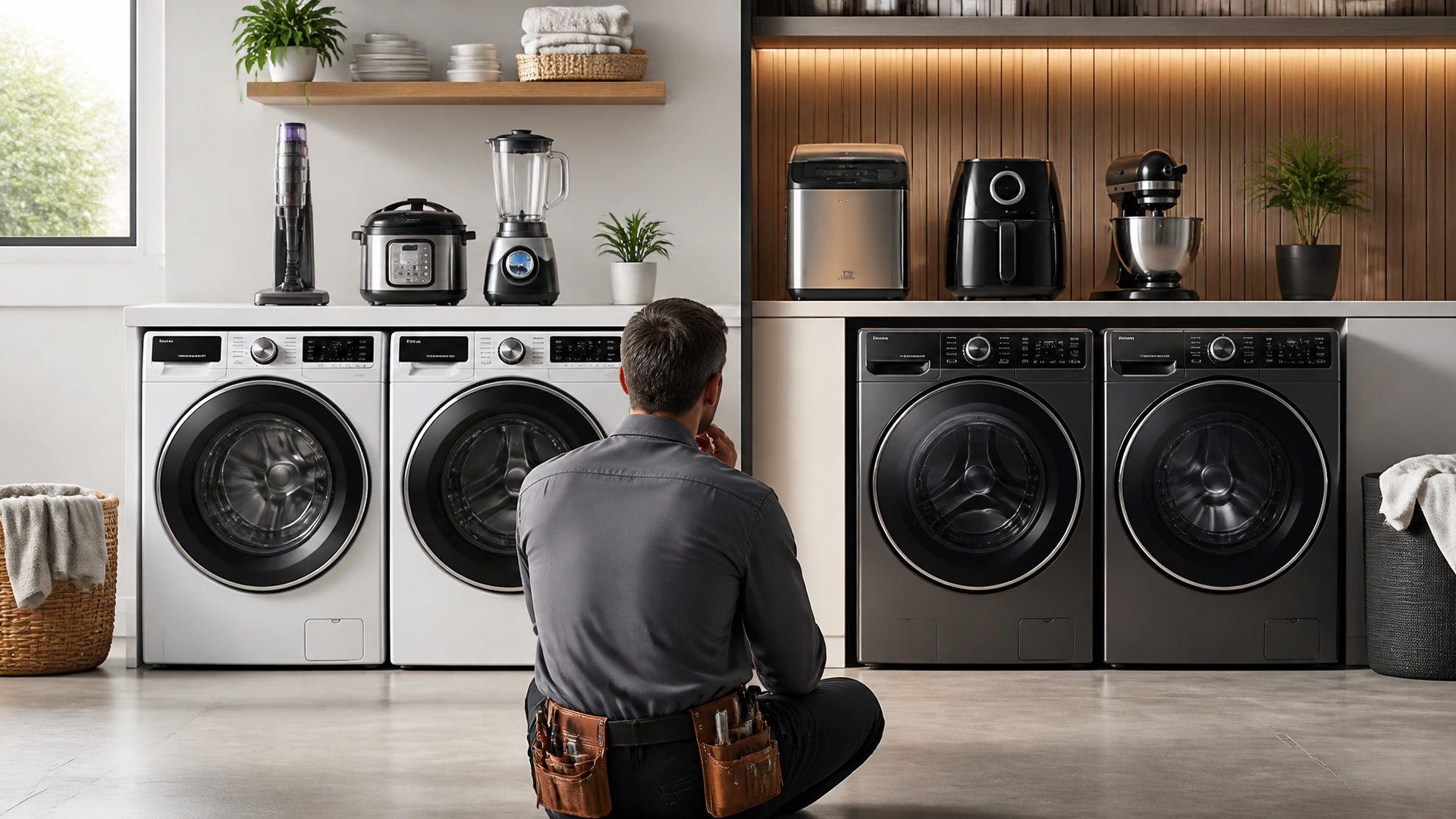
Best Washing Machines Recommended by Repairmen in 2026
The washing machines repair technicians consistently recommend in 2026 are Speed Queen (for durability that outlasts the mortgage), LG (for reliability in a feature-packed front-loader), and Maytag (for solid performance without breaking the bank). But each comes with trade-offs that can turn a smart buy into a regret if you pick the wrong one for your household. This guide breaks down the real-world differences, shows you how to verify fit, and warns you where these recommendations fall short.
Quick answer
If you want a machine that will run for 15+ years with minimal service calls, Speed Queen (especially the TC5 top-loader) is the unanimous choice among repairmen. For a front-loader that balances energy efficiency with quiet operation, LG’s WM4000 series is the frequent pick. Maytag’s MVW7232HWE offers the best value under $700, though repairmen note that its control board often fails around year five.
What does this mean for your next purchase? If longevity is your non-negotiable, accept that Speed Queen’s smaller tub and aggressive wash action may damage delicate fabrics. If you prioritize modern cycles and water savings, LG is your best bet—but budget for a $150–$250 drain pump replacement around year six. Maytag gives you the lowest upfront cost but requires proactive lid-open habits to extend board life; otherwise, you’re looking at a $200–$300 repair.
| Model | Key advantages | Common repair issues cited by technicians | Approximate out-of-warranty repair cost |
|---|---|---|---|
| Speed Queen TC5 | All-metal transmission, mechanical timer, no HE detergent restriction | Rough agitation, small 3.5 cu ft tub, higher water usage | $50–$150 for basic parts (rarely needed) |
| LG WM4000HBA | Direct-drive motor (no belt/brushes), steam, quiet spin | Drain pump fails from debris, control board vulnerable to surges | $150–$250 for pump, $200–$350 for board |
| Maytag MVW7232HWE | Affordable upfront, easy self-service, deep-fill | Control board delamination, lid lock wear, suspension rod breaks | $200–$300 for board, $100 for lid lock |
How repairmen compare the top picks
Technicians judge machines on three factors: serviceability (how easy parts are to replace), failure frequency (how often they see a model in their van), and part cost (what you’ll pay out of pocket). Speed Queen wins on the first two—its mechanical timer and all-metal drivetrain mean you rarely need a technician. LG dominates front-loaders because its direct-drive motor eliminates belt and brush replacements, but the drain pump and control board are weak spots. Maytag is the pragmatic middle: it’s cheap to buy and easy to repair, but the control board is prone to moisture damage, and you’ll likely replace it well before the motor wears out.
Use these five checks to see which machine matches your situation:
- You run more than 7 loads per week and want 15+ years of service → Speed Queen fits
- You want a quiet front-loader with steam and low water use → LG fits
- Your budget is under $700 and you accept a higher repair probability at year 5 → Maytag fits
- You frequently wash bulky items like comforters (need 5.0+ cu ft) → LG or Maytag fits; Speed Queen’s 3.5 cu ft tub will feel cramped
- You live in an area with frequent power surges or brownouts → Speed Queen fits (mechanical timer ignores surges); LG/Maytag may need a surge protector at minimum
Best-fit picks by use case
The “install and ignore” household – Speed Queen TC5
This is the machine most repairmen own personally. The mechanical timer and heavy-duty suspension mean there’s no computer board to fry. What technicians warn about: the wash action is aggressive—sheets and towels can tangle, and the cycle is short but rough on synthetics. Early detection test: run a mixed load of cotton T-shirts and microfiber towels. If you hear loud thumping during spin or see excessive balling up, the machine may need leveling, or you may want a gentler model. Verification step for fit: check the tub diameter—Speed Queen’s TC5 has a 24-inch tub. Measure your largest blanket; if it’s over 8 feet wide, you’ll likely need to take it to a laundromat.
The efficiency-conscious household – LG WM4000HBA (or WM4500 series)
LG’s direct-drive motor is the repairman’s favorite because it needs zero maintenance. The drain pump, however, is the #1 failure point—often because coins or bra wires bypass the filter. Verification step for pump health: once a month, remove the lower access panel, unscrew the filter cap, and check for visible debris. If the filter is clean but the machine still shows “OE” error, the pump impeller may be broken.
Early detection signal: a whining sound during the drain cycle that gets louder over three washes. Don’t ignore it—a failed pump can leave water sitting in the drum, leading to mold and motor strain. Mismatch to watch: LG’s control board is sensitive to power fluctuations. If your home has frequent flickering lights, add a high-quality surge protector; otherwise, you risk a dead board after one lightning storm.
The budget-conscious owner – Maytag MVW7232HWE
This top-loader uses a traditional agitator (no removable impeller) and is straightforward to repair. The control board is the weak link—heat and steam cause circuit traces to delaminate. Verification step for board condition: after a hot wash, open the lid and place your hand near the control panel. If you feel a blast of moist air, steam is rising directly into the electronics. Expert tip: leave the lid open for 30 minutes after every wash to let moisture escape. This one habit can extend board life by 1–2 years. Early detection signal: if the “Clean Washer” light flashes or the machine ignores the start button mid-cycle, the board is failing. Catch it before it fails completely—a dead board can leave the drum full of water, which can warp the outer tub.
Trade-offs to know
Expert tip 1 – Don’t skip the drain pump filter on any front-loader
Actionable step: set a monthly calendar reminder to remove and rinse the filter (located behind the lower access panel). Common mistake: waiting until the machine drains slowly or throws an error code. Once debris packs the pump impeller, it can break the blades, requiring a full pump replacement. This is the #1 preventable call for LG and Samsung machines. Understanding the best brands of washing machines recommended by repairmen helps you see which models are more tolerant of maintenance gaps—Speed Queen’s simpler pump design clogs less often because it uses a larger drain hose.
Expert tip 2 – Leveling is not optional, and here’s how to verify it
Actionable step: place a 4-foot level on the top of the machine, front-to-back and side-to-side. Adjust each foot until the bubble is centered. Then run a test spin—if the machine walks more than 1 inch, recheck. Common mistake: assuming the machine will settle in. An unlevel Speed Queen or Maytag accelerates suspension rod wear and can crack the outer tub. Detection signal: after a few months, check for rust stains around the tub seal—that’s a sign the tub has been banging against the frame. Knowing what model info helps find best washing machine—including suspension type and tub material—can help you avoid models prone to balance issues on uneven floors.
Expert tip 3 – The water heater setting determines how long seals last
Actionable step: verify your water heater is set to 120°F–125°F using a thermometer at the nearest tap. Common mistake: turning it up to 140°F “for better stain removal.” That extra heat degrades rubber door seals, warps plastic detergent dispensers, and speeds up mineral buildup in valve solenoids. On Speed Queen, it can also cause the mechanical timer to stick. Stick to 120°F for all three brands to avoid premature seal and component failures.
One failure mode these recommendations can hide
The common thread across repairman-favored machines is a trade-off you may not see until it’s too late. Speed Queen is built like a tank, but its aggressive wash action can cause premature fabric wear—sheets may develop thinning spots after three years. LG and Maytag are feature-rich, but their control boards are sensitive to power conditions and moisture. Early detection signal that works for all three: a sudden change in cycle behavior that repeats across two washes, even with a different load.
For Speed Queen, a rhythmic thud that gets louder indicates the transmission may be binding (rare, but possible). For LG and Maytag, any error code that returns after a power reset signals a board or pump issue. If you catch either early, you can decide to repair or replace before you’re left with a full tub of soaked laundry and no working machine.
Related questions
Q: Do repairmen actually own Speed Queen machines at home?
A: Yes—field surveys and technician forums show that a majority of independent repairmen choose Speed Queen for their own homes, though many buy older used models with mechanical timers to avoid the electronic control boards found on the newest units.
Q: Is LG more reliable than Maytag for front-loaders?
A: For front-loaders specifically, LG’s direct-drive motor gives it a reliability edge over Maytag’s belt-drive models. However, LG’s drain pump and control board failure rates are slightly higher, so the advantage narrows significantly if you don’t maintain the filter or install a surge protector.
Q: How often should I expect to repair a washing machine from these brands?
A: Speed Queen typically requires no major repairs for the first 10–12 years. LG front-loaders often need a drain pump or control board replacement around years 5–7. Maytag top-loaders in this class may need a lid lock or control board repair around year 4–6, but the motor and transmission usually outlast the electronics.