
Quick Fix for Resetting GE Refrigerator Compressor
To quickly reset a GE refrigerator compressor, first unplug the fridge to avoid any electrical mishaps. Wait about 10 minutes—it’s like giving your fridge a little nap. Then, plug it back in and check if the thermostat setting is right. Listen carefully for the compressor to hum to life. If it’s still having issues, don’t worry! There are more tips and tricks ahead that can help your fridge stay cool and trouble-free.
Key Takeaways
- Unplug the refrigerator for at least 10 minutes to allow the compressor to reset properly.
- Ensure the work area is dry and use safety gear like gloves and goggles.
- Reconnect the power and verify that the thermostat settings are correct.
- Listen for any unusual noises from the compressor to confirm a successful reset.
- Regularly clean coils and check seals to prevent future compressor issues.
Understanding the GE Refrigerator Compressor Function
When thinking about a GE refrigerator, it’s easy to overlook the hardworking compressor, yet it is the heart of the cooling system. This little powerhouse keeps food and drinks cold by running through cooling cycles. Each time it turns on, it helps lower the temperature, ensuring everything stays fresh. The compressor efficiency is essential, as a well-functioning compressor uses less energy and saves money on utility bills.
Imagine it as the fridge’s superhero! When it’s working properly, it keeps everything chill and happy. However, like any hero, it can get tired or overwhelmed. If that happens, folks might notice they need to give it a little help. Knowing how the compressor works can make all the difference. So, next time they pour a cold drink, they can appreciate the hard work happening inside their GE refrigerator, a true champion of kitchen appliances!
Signs That Your Refrigerator Compressor Needs a Reset
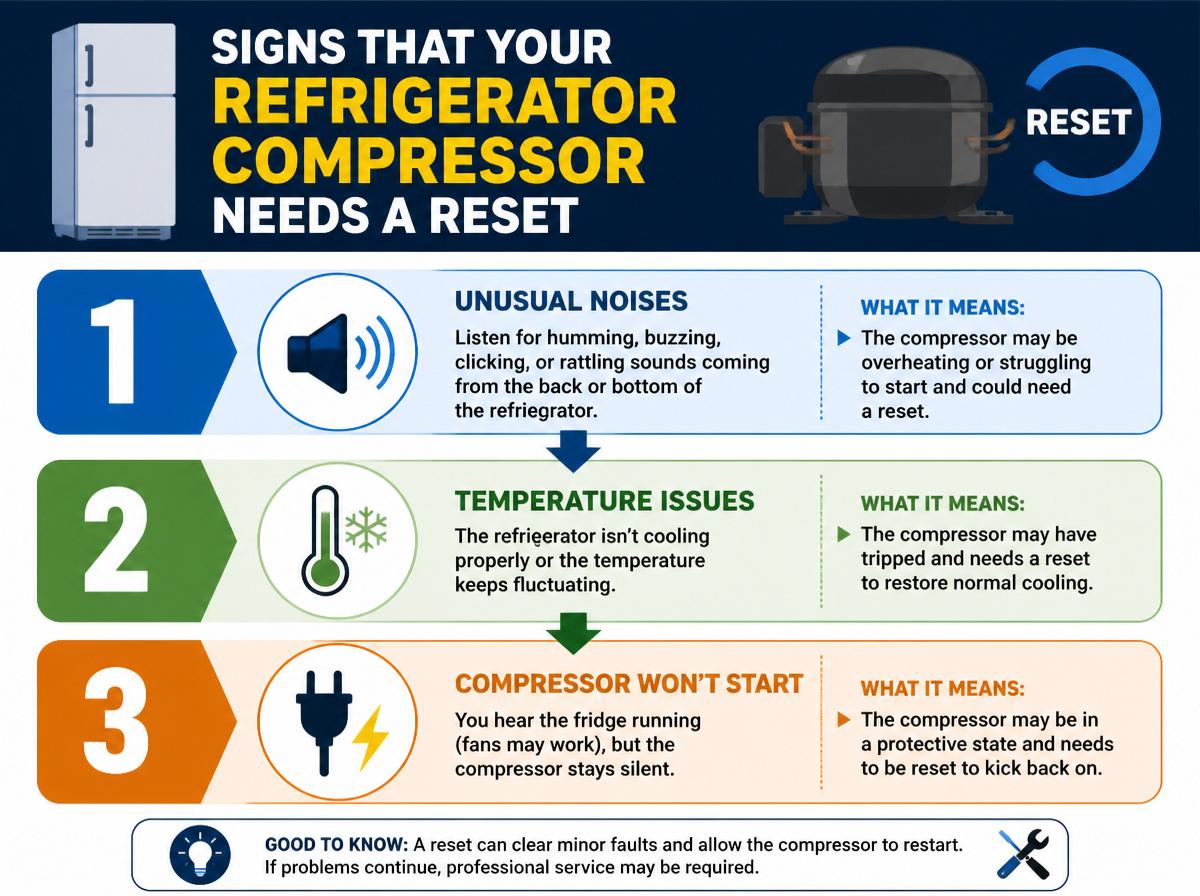
When a refrigerator compressor is acting up, there are a couple of telltale signs to watch for. Unusual noises, like humming or rattling, and strange vibrations can signal that something isn’t right. Additionally, if the temperature inside your fridge keeps jumping around like it’s playing hopscotch, it could be time for a reset!
Unusual Noises and Vibration
Sometimes, a loud clatter or an unexpected rattle from a refrigerator can feel more alarming than a sudden barking dog in the middle of the night. These unusual noises often indicate that the compressor may need a reset. Noise dampening inside the fridge can help, but when vibrations become excessive, it signals a problem that shouldn’t be ignored. Vibration reduction solutions, like leveling the fridge or placing mats underneath, may help eliminate some unsettling sounds. If the noises persist, it might be time to act. Taking action not only quiets the refrigerator but also gives peace of mind. Remember, you’re not alone in this, and with a little effort, you can bring back the calm in your kitchen!
Inconsistent Temperature Fluctuations
Inconsistent temperature fluctuations in a refrigerator can be frustrating, especially when it leads to spoiled food and wasted groceries. When a refrigerator struggles with temperature stability, it may indicate that the compressor needs a reset. Observing these signs can help identify the issue:
- Food freezes in the fridge compartment.
- Ice builds up in the freezer unnecessarily.
- Drinks feel warmer than usual, despite being in the fridge.
- The compressor runs constantly without stopping.
These signs often point to poor cooling efficiency, urging homeowners to address the situation promptly. A simple reset might just restore the appliance’s performance, ensuring food stays fresh and enjoyable. Remember, acting quickly can save money and prevent further issues!
Preparing for the Reset Process
Before starting the reset process for the GE refrigerator compressor, it is crucial to prioritize safety. Readers should gather the necessary tools, like a screwdriver and a towel, while also locating the power source to avoid any surprises. With these preparations in place, they will be equipped to tackle the reset with confidence and ease!
Safety Precautions First
While preparing to reset a GE refrigerator compressor, it’s important to keep safety in mind to ascertain a smooth and worry-free process. Before starting, taking some basic precautions can protect against electrical hazards that could cause accidents. Here are essential safety tips to reflect on:
- Wear safety gear like gloves and goggles to protect yourself from possible sharp objects or electrical issues.
- Unplug the refrigerator to ascertain there is no power running through the unit while you work.
- Keep the area dry to avoid any risks of slips or electrical shocks.
- Know your tools and their purposes, so you can handle everything with confidence and care.
Gather Necessary Tools
Once the refrigerator is safely unplugged and all safety measures are in place, it’s important to gather the right tools for the job. Having a screwdrivers set will be essential to open up panels and access parts within the refrigerator. The multimeter tool is also vital; it checks if the electrical components are working properly. With these tools in hand, the process becomes smoother and more manageable. It’s like getting ready for an adventure in appliance repair! Remember, being prepared helps boost confidence. So take a deep breath, gather your tools, and get excited about fixing that compressor! You’re one step closer to making your refrigerator work again, and you totally got this!
Locate Power Source
Finding the power source for the GE refrigerator is a crucial step in preparing for the reset process. Confirming the refrigerator has power before attempting a reset can save a lot of time and hassle. Here’s how to locate the power source:
- Inspect the power outlet: Look for the outlet where the refrigerator is plugged in. Make sure it’s working properly.
- Check the circuit breaker: Go to the circuit breaker panel and see if any breakers have tripped.
- Test the plug: Unplug the refrigerator and try another appliance in the same outlet to verify it’s functioning.
- Use a voltage tester: For extra confirmation, a simple voltage tester can confirm that power is reaching the outlet.
Taking these steps will set the stage for a successful reset!
Step-by-Step Guide to Reset the Compressor
Occasionally, a GE refrigerator’s compressor may need a little nudge to start working again, and resetting it can be a straightforward solution. This process can help improve the compressor’s lifespan and boost energy efficiency. Here’s a simple guide to follow:
| Step | Action | Details |
|---|---|---|
| 1 | Unplug the fridge | Disconnect from power |
| 2 | Wait for 10 minutes | Allow the system to reset |
| 3 | Plug it back in | Reconnect to the power |
| 4 | Check thermostat | Verify it’s set correctly |
| 5 | Listen for sounds | Listen for the compressor running |
Following this guide can reduce stress and frustration. Remember, a little patience goes a long way! If the compressor doesn’t start after a reset, it may need professional help. Keep your refrigerator happy, and it will take care of you!
Tips for Maintaining Your Refrigerator’s Compressor
Maintaining a refrigerator’s compressor is like giving a little care and attention to a hardworking friend. Just as friends need support, so does the compressor. Taking good care of it not only boosts energy efficiency but also extends its life. Here are some helpful tips for maintaining your refrigerator’s compressor:
- Regular compressor cleaning: Dust and debris can hinder performance, so cleaning it occasionally is essential.
- Check the temperature settings: Make sure it’s set correctly to avoid straining the compressor.
- Keep the area around the fridge clear: Confirm there’s enough space around the unit for proper airflow; too much clutter can cause overheating.
- Monthly coil inspections: Look for dirty coils; cleaning them improves energy efficiency.
Troubleshooting Common Compressor Issues
When a GE refrigerator’s compressor starts acting up, it can feel a bit like a mini crisis in the kitchen. Recognizing the symptoms of compressor failure is the first step to getting things back on track, and luckily, there are common reset techniques that can help. If things don’t improve, knowing when to ask for help can save the day, keeping the cool in your fridge and your kitchen.
Symptoms of Compressor Failure
A refrigerator that isn’t keeping food cold can be quite alarming, and it often hints at a serious issue, like compressor failure. Recognizing the symptoms early can help avoid further damage and extend the compressor lifespan. Here are some common signs of compressor issues:
- Food Temperature: If food is spoiling or not staying cold, the compressor may be struggling.
- Unusual Sounds: Loud or strange noises may indicate internal problems within the compressor.
- Frequent Cycling: If the refrigerator turns on and off too often, this could be a sign of compressor failure.
- Condenser Issues: High temperatures around the condenser coils can signal compressor diagnostics are needed.
Addressing these symptoms promptly can help maintain your refrigerator’s efficiency.
Common Reset Techniques
Troubleshooting a refrigerator compressor can feel a bit intimidating, but with the right techniques, it often becomes manageable. One common method is to unplug the refrigerator for a few minutes and then plug it back in. This simple reset can improve compressor efficiency, getting it back in working order. Another tip is to check the thermostat settings, adjusting them up or down to see if it helps. Regular maintenance tips, like cleaning the coils and ensuring proper airflow, can also prevent future issues. If there’s still trouble, listening for unusual sounds can be a clue. Remember, you’re not alone in this! With patience and these techniques, anyone can handle a compressor hiccup like a pro!
When to Seek Help
Recognizing when to call for help with a refrigerator compressor can make all the difference. Understanding compressor efficiency is key, and some issues may require professional assistance. Here are four signs to watch for:
- Loud Noises: If the compressor is excessively noisy, it might be struggling.
- Frequent Cycling: Constantly turning on and off can indicate a problem.
- Food Spoilage: If items aren’t staying cold, it’s time to investigate.
- Unusual Smells: Foul odors may suggest a need for expert assistance.
If any of these issues arise, it’s wise to explore service options. Professionals can guarantee your refrigerator runs smoothly again, relieving the burden of DIY repairs. Seeking help can save time and effort, and that’s something everyone deserves!
When to Seek Professional Help
How can someone know when it’s time to call in the pros for refrigerator troubles? If your GE refrigerator compressor is acting up and basic resets haven’t worked, it might be time to seek help. A professional diagnosis is important, especially if strange noises or temperature issues persist. Additionally, checking the compressor warranty is vital. If it’s still covered and the problem continues, contacting a technician can save money and stress. Don’t wait until your food is spoiled to take action!
If you’ve tried everything you can think of—like checking the power supply and cleaning the coils—and the issue remains, the signs are clear. When in doubt, getting professional help is often the best choice. Remember, experts have the skills and tools to get your fridge running smoothly again. So, don’t hesitate to reach out when things get tricky; you’ll be back to enjoying your favorite snacks in no time!
Benefits of Regular Refrigerator Maintenance
Regular refrigerator maintenance is something that everyone should do—it’s like giving your appliance a little TLC! This simple practice offers several advantages that enhance the lifespan and performance of a refrigerator. By performing routine inspections, users can catch small problems before they become big headaches.
Here are some key benefits of regular maintenance:
- Improved Energy Efficiency: A well-maintained fridge uses less energy, saving money on electricity bills.
- Extended Appliance Lifespan: Caring for your refrigerator means it will last longer and serve you better.
- Consistent Cooling Performance: Ensuring all parts function properly keeps food fresh and delicious.
- Prevent Expensive Repairs: Routine checks can help avoid costly breakdowns and repairs down the line.
Taking time for regular maintenance is like giving your fridge a warm hug! It’s a small effort with huge rewards, making life a little easier and more enjoyable.
How to Prevent Future Cooling Problems
Keeping a refrigerator cool and running smoothly is a task that brings peace of mind for everyone who relies on it to keep food fresh. To prevent future cooling problems, it’s important to regularly check the cooling settings. Adjust them according to the seasons; warmer months may need a little boost! Also, humidity control plays a big role. High humidity can make food go bad faster, so make certain your refrigerator has good airflow.
Cleaning the coils at the back or bottom of the fridge is another easy task to keep things running efficiently. This simple effort prevents dust buildup, which can harm cooling performance.
Finally, keeping the door seals in good shape is essential. A tight seal guarantees cold air stays inside. Remember, a happy refrigerator means happy, fresh food! Taking these steps can help everyone enjoy their meals worry-free, letting them focus on more important things—like sharing laughs at the dinner table!
Additional Resources for GE Refrigerator Owners
For GE refrigerator owners, finding helpful resources can make all the difference when it comes to keeping their appliance in top shape. Several guides and tips can support them on their refrigerator journey. Here’s a handy list:
- Owner’s Manual: Always a great reference for troubleshooting and refrigerator tips tailored to specific models.
- Online Forums: Communities where experience meets advice, allowing owners to share their stories and solutions.
- YouTube Tutorials: Visual guides for hands-on problems, making repairs feel less intimidating and more engaging.
- Maintenance Schedule: A simple checklist to help with regular tasks like cleaning coils and checking seals, ensuring appliances run smoothly.
Frequently Asked Questions
Can I Reset the Compressor Without Unplugging the Refrigerator?
The compressor cannot typically be reset without unplugging the refrigerator. Effective compressor troubleshooting often requires following specific reset procedures, which commonly include disconnection from power to guarantee proper functionality and safety during the process.
How Long Should I Wait Before Plugging the Fridge Back In?
After waiting approximately five to ten minutes, one can plug the fridge back in. This pause allows for ideal compressor function, restoring the fridge cooling that keeps food fresh, contrasting the anxiety of potential spoilage.
What if My Refrigerator Is Still Not Cooling After a Reset?
If the refrigerator remains warm after a reset, it may indicate cooling problems related to thermostat issues. Checking the thermostat settings and ensuring the compressor is functioning properly could help resolve these ongoing cooling difficulties.
Is There a Risk of Damaging the Compressor During a Reset?
There is a minimal risk of damaging the compressor during a reset procedure. However, improper resets can affect compressor longevity, making it essential to follow manufacturer guidelines to guarantee ideal operation and prevent potential damage.
Can a Reset Fix Other Refrigerator Issues Beyond the Compressor?
Curiously, nearly 20% of refrigerator issues stem from temperature fluctuation causes. A reset can indeed address various problems, proving valuable among effective refrigerator maintenance tips for ensuring peak performance and longevity of the appliance.
Conclusion
Ultimately, resetting your GE refrigerator compressor can be a breeze if you follow the steps outlined. Remember, a little troubleshooting can save you a lot of hassle down the line. So, when the fridge isn’t keeping things cool, don’t just throw your hands up in despair! Instead, roll up your sleeves and give it a try. By taking good care of your fridge, you’ll keep it running smoothly and save money, too!
Explore This Topic
- Back to cooling tips
- Back to compressor reset
Related guides in this cluster: