Dryer Motor Inspection Checklist: What Should Be Included?
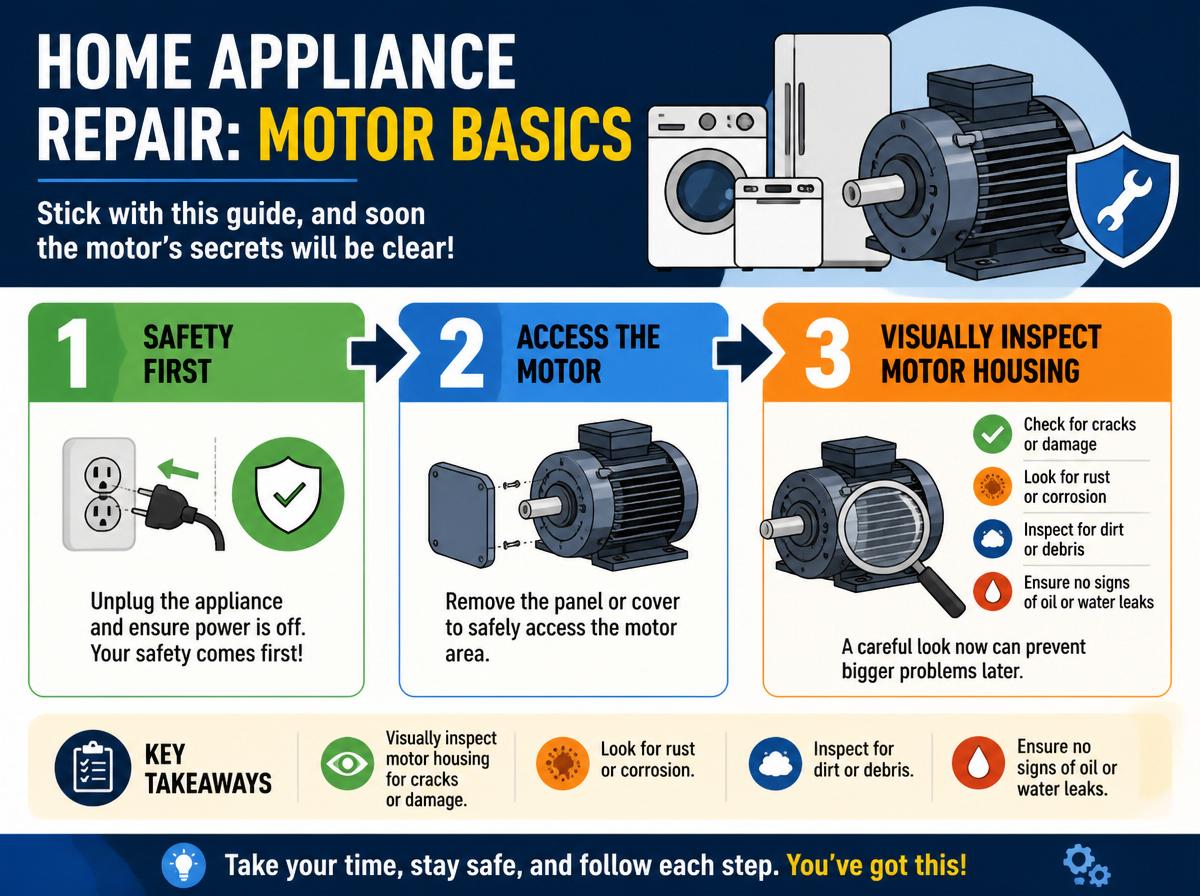
A dryer motor inspection checklist includes a visual check for cracks, loose parts, and clear labels, plus listening for odd noises like squeaks or grinding. It’s smart to inspect motor brushes, belts, pulleys, and bearings for wear or damage. Electrical tests verify safe wiring and winding integrity while checking motor temperature avoids overheating. Proper mounting and vibration control prevent extra wear. Finally, drum rotation should be smooth without jerks. Stick with this guide, and soon the motor’s secrets will be clear!
Key Takeaways
- Visually inspect motor housing for cracks, dents, loose parts, and verify label legibility for model and voltage information.
- Check motor mounting torque and vibration isolation components to prevent rattling, noise, and premature wear.
- Assess drum rotation consistency for pauses, jerks, and ensure proper load balancing to reduce motor stress.
- Inspect motor brushes and commutator for wear, surface condition, and replace brushes matching exact type and size.
- Measure motor temperature with calibrated infrared thermometer, ensuring operating range stays below 200°F to prevent overheating.
Visual Assessment of the Dryer Motor
Although inspecting a dryer motor might sound tricky, taking a close look with your own eyes is the easiest and most important first step. Start by examining the housing integrity; check for cracks, dents, or loose parts that could signal trouble. If the housing looks damaged, it’s a red flag that the motor may not work properly or could become unsafe. Next, focus on label legibility. The motor’s label holds crucial information like model number and voltage. If it’s faded or missing, future repairs might become a guessing game, so clear labels help you stay one step ahead. This kind of visual check doesn’t require tools—just your attention and a bit of patience. Taking these small, careful steps builds confidence, making the whole process less scary. Remember, each glance makes you stronger as a DIYer, ready to tackle the next inspection phase with ease.
Checking for Unusual Noises
Why pay attention to strange sounds coming from a dryer motor? Unusual noises often hint at underlying issues that, if ignored, can cause bigger problems. When inspecting, careful noise documentation is essential. This means noting when noises occur—whether during startup, steady running, or overloading—to spot patterns. It’s helpful to distinguish motor-related sounds from ambient interference, like rattling from nearby household appliances or creaky floorboards, which might confuse the diagnosis. Using a quiet room or turning off other devices can reveal the true source of these sounds. Listening closely lets one detect grinding, humming, or buzzing, each suggesting different motor troubles. Documenting every sound, along with its timing and pitch, provides clear clues for repair or replacement. This approach makes inspecting less intimidating and more like solving a fun mystery. With patience and a bit of humor, even tricky dryer noises become manageable clues on the path to a smoothly running appliance.
Inspecting Motor Brushes and Commutator
Next up is checking the motor brushes and commutator—these little parts work hard to keep the motor running smoothly. Look closely for worn-down brushes that may need replacing, and inspect the commutator’s surface for any rough patches or buildup. A clean, well-maintained commutator helps your dryer motor hum along happily, so don’t skip this step!
Brush Wear Assessment
Checking the motor brushes and commutator might sound tricky, but it’s actually one of the most important steps to keep a dryer running smoothly. When evaluating brush wear, it’s essential to know the replacement guidelines specific to the dryer model. Brushes are usually made of carbon or graphite—their material composition matters because it affects how they wear down. If the brushes look shorter than usual or have rough edges, it’s time to swap them out. Worn brushes can cause sparks or poor motor performance, which nobody wants! Remember to handle brushes gently, and always match new ones to the exact type and size required. Keeping an eye on brush wear can save both time and money, ensuring your dryer stays happy and healthy for the long haul.
Commutator Surface Condition
The commutator, a vital part of the motor, looks like a shiny copper ring that brushes gently rub against. It must be smooth and clean to keep everything running smoothly. Checking its condition means looking beyond just the surface shine. First, verify there are no scratches or grooves deeper than manufacturing tolerances allow; these can cause poor contact. Second, inspect for signs of burning or discoloration, which hint at serious issues. Finally, assess the cosmetic finishing—while not just for looks, an uneven surface may affect brush performance. Keeping the commutator in top shape helps avoid costly repairs and keeps the dryer humming happily. Remember, a little care here goes a long way!
Testing the Motor Windings
How can one make sure a dryer motor is still spinning strong inside? Testing the motor windings is a good place to start. This involves checking the insulation resistance, which tells if the wires are safely wrapped and not leaking electricity. A simple tool called a megohmmeter measures this resistance, showing whether the motor’s windings are healthy or breaking down—kind of like a superhero’s invisible shield. Surge testing adds another layer by sending a quick burst of electrical energy through the windings to spot hidden faults or weak spots. It’s like giving the motor a mini workout to see if it can handle stress without wobbling. Both methods help catch problems early, saving time and money. Testing windings isn’t scary; with patience, the right tools, and some care, anyone can check if their dryer motor is ready to keep spinning and drying laundry for loads more cycles!
Examining the Dryer Belt and Pulley Alignment
Once the motor windings have been given a clean bill of health, attention can shift to the dryer belt and pulley alignment—a tag team that keeps the drum spinning smoothly. Checking this duo is essential; a misaligned belt or pulley can cause loud noises or stop the dryer altogether.
Here’s what to focus on:
- Belt Tracking: Make sure the belt runs straight along the pulleys without slipping off. Proper tracking helps avoid wear and tear.
- Tension Adjustment: The belt should be tight enough to grip the drum but not so tight it strains the motor. This balance keeps everything moving without stress.
- Pulley Condition: Inspect pulleys for cracks, damage, or buildup. Clean, undamaged pulleys help maintain smooth rotation and prevent hiccups in performance.
Verifying Electrical Connections and Wiring
Even though electrical connections might seem tricky, giving them a good check is a smart move to keep a dryer running smoothly and safely. It’s important to make sure all wires are secure, and grounding integrity is solid to prevent shocks. Checking circuit continuity helps spot breaks that could stop the motor from working right. A quick test with a multimeter can confirm if wires are properly connected and energized. Loose connections or worn wires might cause sparks or failure, so catching these early saves a lot of trouble.
| Step | What to Look For |
|---|---|
| Visual Inspection | Frayed wires, burnt marks |
| Grounding Integrity | Secure ground wire connection |
| Circuit Continuity Test | Use a multimeter |
| Connection Tightness | Screws and terminals snug |
| Signs of Overheating | Discoloration or melted parts |
Regular checks here protect the motor and keep dryers humming happily.
Assessing Motor Bearings and Lubrication
After confirming that all electrical connections are solid and safe, the next step is turning attention to the motor bearings and lubrication. These parts keep the dryer motor running smoothly and quietly, so taking good care of them matters. Here’s how to do it right:
- Check seal integrity. Look for cracks or leaks around the bearing seals. Damaged seals let dirt and dust in, which can cause bearings to wear out faster—nobody wants that!
- Assess grease compatibility. Use grease recommended by the manufacturer. Mixing different types can gum up bearings, leading to overheating or noise. Think of it like mixing soda flavors—some combos just don’t work!
- Add lubrication carefully. Don’t overdo it; too much grease can trap heat, while too little makes bearings squeaky. A little goes a long way.
Following these steps guarantees the dryer motor stays happy and healthy—ready for countless loads ahead!
Measuring Motor Operating Temperature
Measuring a dryer motor’s temperature helps spot problems before they become big headaches. Using simple tools like infrared thermometers or temperature strips, anyone can check if the motor is running too hot usually, a safe range is between 100°F and 150°F. If the motor feels hotter than a fresh cup of coffee, it might be time to investigate further and prevent overheating issues.
Normal Temperature Range
Although it might seem tricky at first, understanding the normal temperature range of a dryer motor is key to keeping it running smoothly and safely. The motor’s operating temperature must be just right—not too hot, not too cold—to avoid damage from thermal expansion or other stress. Ambient influence, like room temperature, also affects this range, so it’s important to factor in the environment. Generally, a dryer motor should stay within these limits:
- 120°F to 160°F during normal operation
- Slightly cooler if the ambient temperature is low
- Avoid exceeding 200°F to prevent motor overheating
Temperature Measurement Tools
Temperature-measuring tools are essential sidekicks in keeping a dryer motor cozy and healthy. These tools help check if the motor runs at the right temperature, preventing surprise breakdowns. Popular choices include infrared thermometers and thermocouples, both relying on spot-on sensor accuracy to give trustworthy readings. Calibration methods are key—just like tuning a guitar, these tools need regular adjustment to stay reliable. Without proper calibration, the readings might dance around, leading to confusion. When inspecting, making sure the tool’s sensor matches the motor’s surface or internal parts guarantees more precise results. With careful use and timely calibration, these measurement tools make the job less scary and more fun, helping anyone keep their dryer motor’s temperature just right!
Overheating Indicators
Keeping an eye on how hot a dryer motor gets can save a lot of headaches down the road. Overheating can cause serious damage, but spotting the signs early helps avoid costly repairs. Here are three key overheating indicators to watch for:
- Thermal cutoff activation When the motor gets too hot, this safety device trips, shutting it down to prevent damage.
- Smoke detection Any smell of burning or visible smoke means the motor is dangerously overheated and needs immediate attention.
- Unusual heat levels Use a temperature tool to measure if the motor feels hotter than usual during operation; this signals a problem.
Confirming Proper Motor Mounting and Vibration Levels
When inspecting a dryer motor, ensuring it is mounted properly and checking vibration levels are key steps that can save a lot of future headaches. The motor’s mounting torque should be just right—not too loose to wobble, and not too tight to cause stress. This balance helps keep the motor firmly in place, preventing parts from shaking loose over time. Vibration isolation also plays a big role; it involves using special mounts or pads designed to soak up shaking and reduce noise. If these are worn or missing, the motor might rattle like a maraca and cause premature wear. So, take a moment to feel for any unusual vibrations and listen for odd sounds during operation. Addressing mounting torque and vibration isolation early means fewer surprises down the road. After all, no one wants their dryer turning into a noisy dance partner!
Evaluating Dryer Drum Rotation and Motor Performance
Watching the dryer drum spin smoothly is like seeing a well-oiled dance performance—any jerks or pauses might mean the motor needs attention. Listening closely to the motor’s speed and sound can reveal subtle clues, like a whisper that something’s off beat. Checking these signs helps keep the dryer running happily, saving frustration and dry socks.
Drum Rotation Consistency
Examining the drum’s rotation can reveal a lot about the dryer motor’s health and overall performance. When checking drum rotation consistency, three key points stand out:
- Load Balancing: Uneven loads can wobble the drum and stress the motor. Ensuring clothes are spread evenly helps keep rotation smooth.
- Cycle Selection: Different cycles command the motor differently. Selecting the correct cycle avoids overworking the motor and supports steady rotation speed.
- Rotation Steadiness: Watch for pauses, jerks, or uneven speed. Consistent spinning means the motor and drum work harmoniously.
Motor Speed and Sound
How fast should a dryer motor really spin, and what kind of sounds should it make? Typically, the motor speed must meet spec compliance, ensuring the drum turns at the right pace for drying clothes efficiently. If it spins too fast or slow, problems like uneven drying might pop up. Regarding sound, the perceived loudness is a big clue—motors should hum smoothly, not roar or squeak. Strange noises often signal wear or damage, so listen closely. If the motor sounds louder than usual, it’s time to check for issues like loose parts or worn bearings. Staying alert to speed and sound helps catch problems early, saving frustration and money. Remember, a happy motor means happy laundry days!
Frequently Asked Questions
How Often Should I Replace a Dryer Motor?
A dryer motor should be replaced according to manufacturer guidelines, typically after lifespan estimates ranging from 7 to 12 years. Regular inspection helps identify wear, but adherence to these recommendations guarantees peak performance and safety.
Can a Faulty Dryer Motor Cause Overheating?
A faulty dryer motor can be a ticking time bomb, causing overheating due to compromised motor insulation and increased bearing friction. These issues generate excessive heat, risking damage to the appliance and potential fire hazards if left unaddressed.
What Are Common Signs of a Failing Dryer Motor?
Common signs of a failing dryer motor include unusual noises such as grinding or squealing and increased drum resistance during rotation. These symptoms often indicate motor wear, bearing failure, or electrical issues affecting dryer performance.
Is It Safe to Clean the Dryer Motor Myself?
Like negotiating a labyrinth, cleaning a dryer motor demands cautious steps. It is safe only with strict safety precautions, including disconnecting power to avoid electrical hazards. Otherwise, professional help is strongly advised for risk mitigation.
How Much Does It Typically Cost to Repair a Dryer Motor?
Typical dryer motor repair costs range from $150 to $400, depending on labor rates and parts prices. Higher-end models or complex issues increase expenses, while basic repairs tend to be more affordable.
Conclusion
Inspecting a dryer motor may seem like a tough nut to crack, but with this checklist, it’s easier than it looks. A careful look, a few simple tests, and some gentle listening can reveal a lot. When all parts work smoothly together, the dryer hums happily, saving time and headaches. Remember, a stitch in time saves nine—early checks keep your dryer spinning strong and your laundry day worry-free!
Explore This Topic
- Back to Dryer
- Back to appliance repair
Related guides in this cluster: